
Tag Archives: Logic

What is self-refutation and what are some examples of self-refutation?

Why, self-refutation is the most wonderful thing in the world, next to irony.

Look at this post from Thinking Matters New Zealand.

First, they define what self-refutation is:

In his Introduction to Logic, Harry Gensler defines a self-refuting statement as “[A] statement that makes negative claims so sweeping that it ends up denying itself.” [1] In other words, it results when an argument or position is undercut by its own criteria  (An example of this would be saying, “I cannot speak a word of English” in English).

Then they have a list of examples of self-refutation. Here are some:

  1. Truth does not exist (Is that a true statement?)
  2. Nothing is absolute (Is that absolutely true?)
  3. I do not exist (You must exist to deny that you exist)
  4. Science is the only way to know (Can you scientifically prove that?)
  5. Only what can be perceived by the five senses exists (Can you prove that by the five senses?)

Go here to read the rest.

I work in the software engineering industry, so we have a lot of nerds running around who believe all kinds of crazy things that are self-refuting. There is a lot of skepticism of the laws of logic and analytical philosophy. A self-refuting statement that I hear a lot is: “Don’t judge me, because it’s wrong to judge other people”. And I just ask them: “Well if it’s wrong to judge other people, then why are you judging me?”. (Actually, I noticed that MandM has a post up about judging right now!)

I wonder if my regular readers have ever heard any self-refuting statements? If you know any more, leave it in the comments.

On another topic, it turns out that the author of this post on self-refutation blogs at Rational Thoughts. I added their blog to the blog roll. Check them out.

Video of William Lane Craig explaining the Kalam cosmological argument

This is the video from his appearance at Saddleback Church (Rick Warren) that got such a big response. Saddleback is a pretty ordinary church, which lots of people with different levels of knowledge. How did Bill explain the Kalam argument to so many different ordinary people?

Watch and see!

Part 1:

Part 2:

Part 3:

Part 4:

    You can also find a more technical version of the lecture here. This version is based on a research paper published in an astrophysics journal, and was delivered to an audience of students and faculty, including atheist physicist Victor Stenger and prominent atheist philosopher Michael Tooley, at the University of Colorado at Boulder. Craig has previously debated Stenger and Tooley. And they both asked him questions in the Q&A of this lecture.

    You might also be interested in this exchange in which William Lane Craig takes on prominent atheist Daniel Dennett.

    Related posts

    Videos from apologist William Lane Craig and economist Thomas Sowell

    William Lane Craig

    Bill Craig
    William Lane Craig

    First, one from William Lane Craig, called “In Intellectual Neutral”. (H/T Apologetics 315)

    It’s 40 minutes long.

    This lecture is Dr. Craig’s appeal to the church to use their minds as a way to serve Christ. This is a very passionate and accessible lecture designed to motivate people to take the life of the mind more seriously. His focus is on getting Christians to focus on learning arguments and evidence, so that when they discuss these topics they can appeal to logic and objective reality (science and history) to confirm their views. He is concerned that unless we get good at this, that people will not regard Christianity as a “live option” when choosing their worldview.

    I’ve heard this lecture delivered in person at Wheaton College one year when he spoke in the chapel to all the students. It was very moving. But this version is twice as good. This time he’s really letting loose.

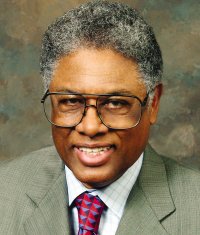
    Thomas Sowell

    Thomas Sowell

    This one features my favorite living economist, Thomas Sowell. (H/T ECM)

    It’s 40 minutes long.

    Thomas Sowell’s new book is about intellectuals, those who deal primary with words and ideas, not arguments and evidence. These intellectuals have the goal of reforming society based on the ideas that they learn in classrooms. (Sowell is not talking about engineers, medical doctors, accountants, etc. – people who actually have hands-on knowledge in advanced areas)

    Sowell is concerned with people who are specialized in one narrow area such as linguistics, and then make pronouncements on public policy or economics without knowing anything about those areas. He argues that intellectuals have a low opinion of people who don’t go to the best schools, but instead focus on practical things. This conviction that other people are stupid makes them want to seize control and force their vision onto the world. The vision of the intellectuals includes metaphysical and moral beliefs.

    In addition to what Sowell says in the video, I would expect that these intellectuals also disdain the morality and theology of Christians, whom they see as non-intellectuals, because they never hear reasons why people believe in Christianity and Christian morality in their Ivy-league classrooms. This absence of a defense is what causes them to be so aggressive about trying to marginalize what they view as unfounded beliefs and antiquated moral rules. Maybe they would not be so aggressively secular and collectivist if we were all as prepared to give a defense as William Lane Craig is?

    More economists

    If you like what you see in these videos, you might want to consider reading one of my favorite papers by economist Robert Nozick entitled “Why do Intellectuals Oppose Capitalism?” He uses a similar definition of intellectuals as being “wordsmiths”, rather than engineers, entrepreneurs, and doctors. My other favorite living economists are Walter Williams (#2) and Jennifer Roback Morse (#3).