Tag Archives: Life

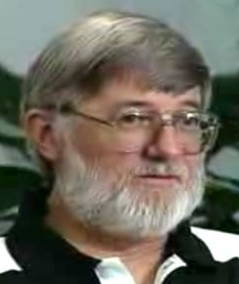
Video interview of Charles Thaxton on the origin of life

Charles Thaxton
Charles Thaxton

When I was a younger man, just starting full-time work with a hot Internet start-up in the big city, my biggest interest was in the origin of life. I liked to listen to debates about it (e.g. – Walter Bradley versus Robert Shapiro, etc.) and lectures and interviews. Two of my favorite interviews are from the University of California series on Origins, featuring Charles Thaxton and Dean Kenyon.

I found the one with Charles Thaxton in miniature form on Youtube.

About Charles Thaxton:

Charles Thaxton received his Ph.D. in physical chemistry from Iowa State University. He completed two post-doctoral programs, one in history of science at Harvard University and the second in the molecular biology laboratories of Brandeis University.

He has specialized in the origin of life and in science’s relationship with Christianity through history.

He is co-author of The Mystery of Life’s Origin and also The Soul of Science. He is Academic Editor of the high school biology book Of Pandas and People. He has contributed significant chapters to the books God and Culture and The Creation Hypothesis.

He has published technical articles in Journal of Inorganic Chemistry, Journal of Scientific Instruments, and Journal of Cell Biology.

He has lectured widely in American universities including Princeton University, Yale University, University of Michigan, University of Delaware, Rice University, Texas Universtiy, Johns Hopkins University, Vanderbilt University, and Harvard Law School.

He has lectured outside the country at the Korean Advanced Institute of Science, the Russian Academy of Science, and in various universities in Mongolia, Romania, Poland, Hungary, and the former Czechoslovakia.

He has held appointments at Slovak Technical University in Bratislava, Czechoslovakia, the Biomathematical Institute in Craiova, Romania, and at Charles University in Prague, where he was a Templeton scholar in the department of natural sciences.

He is a member of American Chemical Society, American Association for the Advancement of Science, and Fellow of American Institute of Chemistry, American Scientific Affiliation, and Discovery Institute.

He and his wife Carole homeschooled two sons, both of whom are college graduates. He is a survivor of two bouts of cancer, which left him with one leg and one lung. He and his wife reside near Atlanta, Georgia, where they teach homeschooled teens at Konos Academy. He also is writing two books, punctuated by speaking stints.

Here’s the lecture I liked so much featuring Charles Thaxton:

And here are the questions:

1. How did you first get interested in the origin of life?
2. How did you come to write The Mystery of Life’s Origin with Walter Bradley and Roger Olsen?
3. Was there an advantage to having the three of you collaborate on the project?
4. What is the primary argument of your book, The Mystery of Life’s Origin?
5. Have scientists come close to developing a plausible naturalistic explanation to the origin of life or do you still consider the origin of life to be a mystery?
6. Do you see a particular irony in the timing of Stanley Miller’s experiments and the discovery of DNA by Watson and Crick?
7. How does the emergence of modern genetics tie in with the Darwinian scenario of life going from simple to complex?
8. What are the major problems with origin of life simulation experiments?
9. Isn’t it rather impressive that amino acids were produced in the Miller experiments?
10. How close is the development of amino acids to the threshold of life?
11. What are the steps involved in producing proteins from amino acids?
12. Why are amino acids isolated during this process?
13. How can the investigator affect the outcome of a simulation experiment?
14. How did you evaluate the different chemical evolution experiments?
15. Are the initial conditions in the simulation experiments plausible?
16. What did the earth’s early atmosphere contain?
17. Will the simulation experiments work with this atmosphere?
18. There seems to be an underlying assumption that the origin of life resulted without any intelligent input whatsoever yet the simulation experiments appear to rely upon intelligent guidance. Could you comment on this irony?
19. Are there any natural processes that would have filtered out destructive ultraviolet light?
20. What additional steps beyond creating amino acids would be required to develop life?
21. What is so difficult about making proteins or nucleic acids?
22. In addition to the energy problem in protein synthesis isn’t there a sequencing problem?
23. Are DNA sequences analogous to a written language?
24. Has Hubert Yockey made similar claims?
25. In The Mystery of Life’s Origin you refer to order, randomness, and specified complexity. Could you give us an overview of these concepts?
26. What do you think the presence of specified complexity in a living system indicates about its origin?
27. In inferring the necessity of intelligence to produce life haven’t you ventured from the realm of science to religion?
28. Could you summarize the reasons why you believe intelligence was involved in the origin of life?
29. What are the major objections to your current point of view?
30. How was The Mystery of Life’s Origin received by the scientific community?
31. What was Dean Kenyon’s response to your critiques of his book, Biochemical Predestination?
32. What was Dean Kenyon’s response to The Mystery of Life’s Origin?
33. Were you a bit apprehensive about meeting Kenyon after writing a book which was quite critical of his views in Biochemical Predestination?
34. Are self-organizational theories plausible?
35. Would you comment on the work done by Prigogine and Eigen?
36. What is your assessment of RNA scenarios?
37. What other problems do you see with an RNA world?

This is an argument you never hear in William Lane Craig debates, but it’s worth knowing well.

Related posts

If you are looking for a good charity, try the Alliance Defense Fund

The Alliance Defense Fund secured a matching grant of 1.25 MILLION dollars. These guys do more for religious liberty in the world than anybody. A great organization. It’s all about getting a return for your investment, and these guys provide a huge return on investment.

Watch the video:

What they’ve done:

Christian attorneys trained at the ADF Legal Academy are on the frontlines fighting for religious freedom in communities like yours every day. These faithful allied attorneys are protecting the Body of Christ from legal attacks – and by God’s grace, are winning case after crucial case.

Some ADF victories:

  • Charles LiMandri achieved an important victory for four San Diego firefighters who were forced to endure sexual harassment during a lewd city-sponsored parade celebrating homosexual behavior.
  • Natalie Decker successfully defended a Christian couple in Colorado who were criminally charged for disciplining their child in accordance with church teaching.
  • Steven O’Ban helped the Christian non-profit organization, World Vision, win an important victory after the ministry was sued by two former employees who were dismissed after admitting that they didn’t believe in the Holy Trinity.

What they’re doing:

ADF Legal Academy-trained attorneys are in communities across America defending the constitutionally protected rights of Christians who have been censored and punished for expressing their faith. Please be in prayer for these and so many other important allied attorney cases being fought to protect Our First Liberty – religious freedom – and to keep the door open for the spread of the Gospel.

Some current ADF cases:

  • Randall Wenger is representing a 5th-grade public school student in Pennsylvania who was prohibited from distributing fliers that invited classmates to a Christmas party at her church because the school district has a policy that bars speech “promoting Christianity.”
  • Karen Mueller is defending a nurse-practitioner in Wisconsin who was fired for sharing her faith with the patients for whom she cared.
  • Daniel Cox is assisting with the defense of three young women who were arrested, shackled, strip-searched, and detained overnight by Maryland state police after peacefully expressing their pro-life views.

Religious liberty is what I would call my “core value”. The freedom to be who I really am, and to say what I really think in public, whether people like it or not. The ADF defends my religious liberty, and no one does it better.

I never give money to charities that don’t promote my worldview. My goal is not to alleviate people’s suffering, primarily. My goal is to persuade others about the truth of the gospel. And that takes legal work, policy work and research on arguments and evidence. I want to defend God’s existence and character, and to promote the social conditions (e.g. – protection of unborn children, traditional marriage, low taxes, free trade, school choice, security from terrorism, etc.) that maximize the opportunities of non-Christians to investigate the gospel for themselves.

Yes, arguments and evidence are very important, but arguments and evidence are not weighed in a vacuum. Every person on the planet was created to know God, and my job is to make sure they get their best opportunity to do that. Part of that opportunity is letting Christians have the freedom to be who they are in public, in front of non-Christians. It’s also important for me to be able to find a job, to keep what I earn, and to spend my earnings on the causes that I think are important – not to let someone else take my money and spend it buying votes from special interest groups with wasteful government spending.

My favorite charities are Reasonable Faith, Stand to Reason, Please Convince Me, CrossExamined, Faith Beyond Belief, Heritage Foundation, Family Research Council, Access Research Network, Discovery Institute Center for Science & Culture, and Alliance Defense Fund. These are charities that move the ball forward effectively.

Stephen C. Meyer in FOUR John Ankerberg online videos

From Evolution News. (H/T Stephen C. Meyer)

Excerpt:

In four television episodes of the John Ankerberg Show broadcast across the US and over 200 nations worldwide, Dr. John Ankerberg interviewed Dr. Stephen C. Meyer, author of the groundbreaking book Signature in the Cell: DNA and the Evidence for Intelligent Design. The series will begin broadcasting on April 3 at 5:30pm EDT on the Daystar Network and on April 10 at 9:30pm EDT on the INSP Network.

In the interviews Dr. Meyer explains how even Charles Darwin, in his book The Origin of Species, admitted he did not know how the first cell came into being, or how life came to be.

Scientists in Darwin’s day thought the cell was a simple glob of plasm, but today we have discovered that the cell is an almost unimaginably complex system of molecular machines and rich in digital code.

Where did this high-tech in low life come from? Ankerberg and Meyer explore the mystery surrounding this question, which Meyer calls the DNA enigma. Click on the links below to watch full episodes of the show online!

  • Week 1: Every person’s body consists of over a trillion cells. Almost every one of these cells includes a DNA molecule. What is DNA? Why is it so special? What does it do? Where did the digital code embedded in DNA originate? Why does the specified information in DNA point to a designing intelligence?
  • Week 2: As scientific technology has progressed, scientists have realized the cell is more and more complex. According to Microsoft’s Bill Gates, the DNA within each cell is far more complex than any computer software ever created. Where did the coded information within DNA come from? What naturalistic theories have been proposed? What is the possibility of the precise genetic information in DNA evolving by chance?
  • Week 3: In addition to chance, scientists have offered other answers to the origin of the precise genetic information found in DNA. Why is it that natural selection, self-organizing natural laws, or some combination of these with chance cannot explain where the information originated? We’ll also see why DNA exhibits signs of a designing intelligence.
  • Week 4: What is the scientific theory of Intelligent Design (ID)? Is ID true science or just religion masquerading as science? We’ll also answer the objections to ID such as, “Is ID just an argument from ignorance?” (“We don’t know what the naturalistic causes are right now for the origin of life.”) We’ll also see why ID is based on scientific reasoning but may have larger religious implications.

And Meyer is not making this up. This is the state of science today.

From Scientific American.

Excerpt:

As recently as the middle of the 20th century, many scientists thought that the first organisms were made of self-replicating proteins. After Francis Crick and James Watson showed that DNA is the basis for genetic transmission in the 1950s, many researchers began to favor nucleic acids over proteins as the ur-molecules. But there was a major hitch in this scenario. DNA can make neither proteins nor copies of itself without the help of catalytic proteins called enzymes. This fact turned the origin of life into a classic chicken-or-egg puzzle: Which came first, proteins or DNA?

RNA, DNA’s helpmate, remains the most popular answer to this conundrum, just as it was when I wrote “In the Beginning…” Certain forms of RNA can act as their own enzymes, snipping themselves in two and splicing themselves back together again. If RNA could act as an enzyme, then it might be able to replicate itself without help from proteins. RNA could serve as gene and catalyst, egg and chicken.

But the “RNA-world” hypothesis remains problematic. RNA and its components are difficult to synthesize under the best of circumstances, in a laboratory, let alone under plausible prebiotic conditions. Once RNA is synthesized, it can make new copies of itself only with a great deal of chemical coaxing from the scientist. Overbye notes that “even if RNA did appear naturally, the odds that it would happen in the right sequence to drive Darwinian evolution seem small.”

The RNA world is so dissatisfying that some frustrated scientists are resorting to much more far out—literally—speculation. The most startling revelation in Overbye’s article is that scientists have resuscitated a proposal once floated by Crick. Dissatisfied with conventional theories of life’s beginning, Crick conjectured that aliens came to Earth in a spaceship and planted the seeds of life here billions of years ago. This notion is called directed panspermia. In less dramatic versions of panspermia, microbes arrived on our planet via asteroids, comets or meteorites, or drifted down like confetti.

John Horgan is not a Christian, nor even a theist. The origin of life is not explainable on the basis on unintelligent causes. But it is perfectly explainable as the result of intelligent causes. Just like the sequence of letters arranged in this blog post to have meaning are best explained as the result of an intelligence.