Tag Archives: Life

Can naturalism account for the origin of the 20 amino acids in living systems?

Do the Miller-Urey experiments simulate the early Earth?

The origin of life

There are two problems related to the origin of the first living cell, on naturalism:

  1. The problem of getting the building blocks needed to create life – i.e. the amino acids
  2. The problem of creating the functional sequences of amino acids and proteins that can support the minimal operations of a simple living cell

Normally, I concede the first problem and grant the naturalist all the building blocks he needs. This is because step 2 is impossible. There is no way, on naturalism, to form the sequences of amino acids that will fold up into proteins, and then to form the sequences of proteins that can be used to form everything else in the cell, including the DNA itself. But that’s a topic for a separate post.

Today, let’s take a look at the problems with step 1.

The problem of getting the building blocks of life

Now you may have heard that some scientists managed to spark some gasses to generate most of the 20 amino acids found in living systems. These experiments are called the “Miller-Urey” experiments.

The IDEA center has a nice summary of origin-of-life research that explains a few of the main problems with step 1.

Miler and Urey used the wrong gasses:

Miller’s experiment requires a reducing methane and ammonia atmosphere,11, 12 however geochemical evidence says the atmosphere was hydrogen, water, and carbon dioxide (non-reducing).15, 16 The only amino acid produced in a such an atmosphere is glycine (and only when the hydrogen content is unreasonably high), and could not form the necessary building blocks of life.11

Miller and Urey didn’t account for UV of molecular instability:

Not only would UV radiation destroy any molecules that were made, but their own short lifespans would also greatly limit their numbers. For example, at 100ºC (boiling point of water), the half lives of the nucleic acids Adenine and Guanine are 1 year, uracil is 12 years, and cytozine is 19 days20 (nucleic acids and other important proteins such as chlorophyll and hemoglobin have never been synthesized in origin-of-life type experiments19).

Miller and Urey didn’t account for molecular oxygen:

We all have know ozone in the upper atmosphere protects life from harmful UV radiation. However, ozone is composed of oxygen which is the very gas that Stanley Miller-type experiments avoided, for it prevents the synthesis of organic molecules like the ones obtained from the experiments! Pre-biotic synthesis is in a “damned if you do, damned if you don’t” scenario. The chemistry does not work if there is oxygen because the atmosphere would be non-reducing, but if there is no UV-light-blocking oxygen (i.e. ozone – O3) in the atmosphere, the amino acids would be quickly destroyed by extremely high amounts of UV light (which would have been 100 times stronger than today on the early earth).20, 21, 22 This radiation could destroy methane within a few tens of years,23 and atmospheric ammonia within 30,000 years.15

And there were three other problems too:

At best the processes would likely create a dilute “thin soup,”24 destroyed by meteorite impacts every 10 million years.20, 25 This severely limits the time available to create pre-biotic chemicals and allow for the OOL.

Chemically speaking, life uses only “left-handed” (“L”) amino acids and “right-handed” (“R)” genetic molecules. This is called “chirality,” and any account of the origin of life must somehow explain the origin of chirality. Nearly all chemical reactions produce “racemic” mixtures–mixtures with products that are 50% L and 50% R.

Two more problems are not mentioned in the article. A non-peptide bond anywhere in the chain will ruin the chain. You need around 200 amino acids to make a protein. If any of the bonds is not a peptide bond, the chain will not work in a living system. Additionally, the article does not mention the need for the experimenter to intervene in order to prevent interfering cross-reactions that would prevent the amino acids from forming.

Usually when you hear the origin of life debated, they sort of skirt about the problem of where the amino acids come from, but there is no reason not to make that an issue. The naturalist has to explain how the first living cell could come about naturalistically.

Positive arguments for Christian theism


What did early church fathers think about abortion and infanticide?

Unborn baby scheming about early church traditions

This is from Birds of the Air.

Summary:

Recently I came across a reading of the Didache. “The what?” you may ask. The Didache is a book written somewhere in the first or second century. For a long time it was up for consideration as Scripture. It was believed to be the Teaching of the Twelve Apostles. Eventually it was agreed that the book was an excellent book, but not inspired Scripture. So I was pleased to be able to download this admirable book containing good teachings from the early Church fathers.

The book seemed to be largely a lot of quotes from Scripture. You’ll learn the basic rules of Christianity — “First, you shall love God who made you; second, love your neighbor as yourself.” You’ll learn that “grave sins” are forbidden, like adultery, murder, fornication, and so on. (They specifically include pederasty in the list.) There are instructions regarding teachers, prophets, Christian assembly, and so on. Lots of the normal, good stuff. But, since this was written sometime prior to 200 AD, I was somewhat surprised at this instruction: “You shall not murder a child by abortion” (Didache, Ch 2).

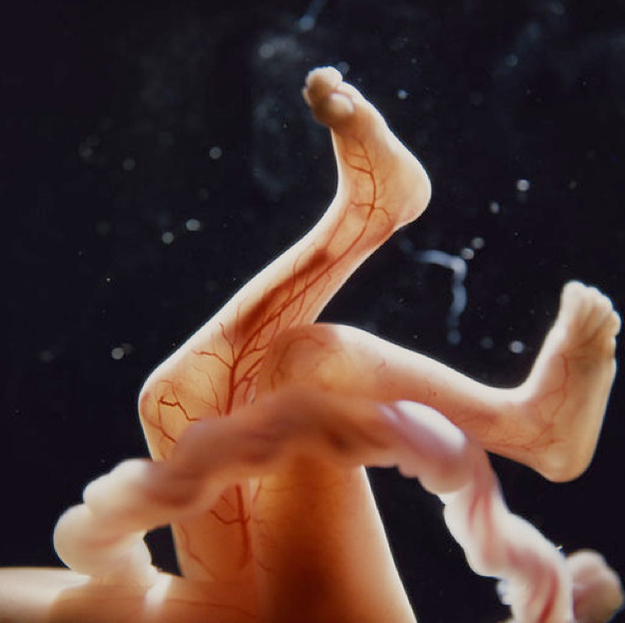
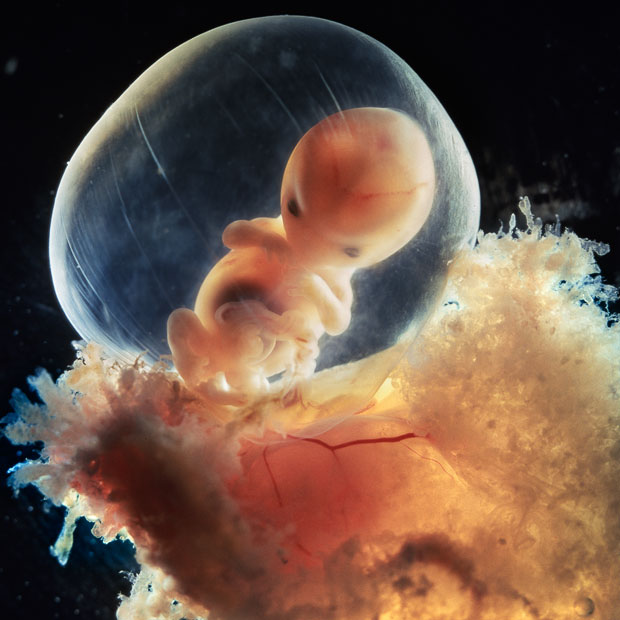
I got curious about what babies look like when they are just a few weeks old, so I went looking for pictures of them.

This post from Life News has ten excellent pictures of life inside the womb.

Here’s my favorite from 10 weeks:

Unborn Baby - 10 weeks old
Unborn Baby – 10 weeks old

This is a first trimester baby!

I decided to go hunting to see what is developed at this time, and found this list:

  • From this week until birth, the developing organism is called a fetus.
  • The fetus is now the size of a small strawberry.
  • The feet are 2mm long (one tenth of an inch).
  • The neck is beginning to take shape.
  • The body muscles are almost developed. Baby has begun movement.
  • While still too small for you to feel, your little one is wriggling and shifting.
  • The jaws are in place. The mouth cavity and the nose are joined.
  • The ears and nose can now be seen clearly.
  • Fingerprints are already evident in the skin.
  • Nipples and hair follicles begin to form.

The unborn baby is now called a fetus. Though the fetus is constantly moving, you will not be able to actually feel fetal movement for several more weeks. All of the organs, muscles, and nerves are in place and beginning to function. As the hands and feet develop fingers and toes, they have lost their paddle like look. The touch pads on the fingers form and already have fingerprints.

During this week of pregnancy the crown to rump length of the fetus is 0.9 inch to 1.2 inches (22 to 30mm), weight 0.07 ounce (2gm). They are now on the way to forming their testicles or ovaries, getting ready for the next generation. Until the ninth week of fetus development, the fetal reproductive apparatus is the same one for the both sexes. The head is still large and curves into chest.

Each week your uterus grows larger with the baby growing inside it. You may begin to see your waistline growing thicker by this time. A pelvic exam will detect that your uterus has grown from it’s normal, size of your fist, to a little bigger than a grapefruit.

Fascinating!

Philosopher Doug Groothuis explains the logic of the pro-life position

I'm Scheming Unborn Baby, and I approve this study
I’m Scheming Unborn Baby, and I approve this message

At Christian Post, an article by Douglas Groothuis. (H/T Mary)

Here’s the most useful bit:

When we separate personhood from humanity, we make personhood an achievement based on the possession of certain qualities. But what are these person-constituting qualities? Some say a basic level of consciousness; others assert viability outside the womb; still others say a sense of self-interest (which probably does not obtain until after birth). All of these criteria would take away humanity from those in comas or other physically compromised situations.4 Humans can lose levels of consciousness through injuries, and even infants are not viable without intense and sustained human support. Moreover, who are we to say just what qualities make for membership in the moral community of persons?5 The stakes are very high in this question. If we are wrong in our identification of what qualities are sufficient for personhood and we allow a person to be killed, we have allowed the wrongful killing of nothing less than a person. Therefore, I argue that personhood should be viewed as a substance or essence that is given at conception. The fetus is not a lifeless mechanism that only becomes what it is after several parts are put together—as is the case with a watch or an automobile. Rather, the fetus is a living human organism, whose future unfolds from within itself according to internal principles. For example, the fertilized ovum contains a complete genetic code that is distinct from that of the mother or father. But this is not a mere inert blueprint (which is separable from the building it describes); this is a living blueprint that becomes what its human nature demands.

Yet even if one is not sure when personhood becomes a reality, one should err on the side of being conservative simply because so much is at stake. That is, if one aborts a fetus who is already a person, one commits a deep moral wrong by wrongfully killing an innocent human life. Just as we do not shoot target practice when we are told there may be children playing behind the targets, we should not abortion fetuses if they may be persons with the right not to be killed. As I have argued, it cannot be disputed that abortion kills a living, human being.

Many argue that outside considerations experienced by the mother should overrule the moral value of the human embryo. If a woman does not want a pregnancy, she may abort. But these quality of life considerations always involve issues of lesser moral weight than that of the conservation and protection of a unique human life (which considers the sanctity or innate and intrinsic value of a human life).6 An unwanted pregnancy is difficult, but the answer is not to kill a human being in order to end that pregnancy.

I think that the real question in the abortion debate right now is whether a living organism with a human nature and a human genetic code that is distinct from its mother and father deserves the right to life, or whether it needs to develop some other capability in order to be worthy of protection from violence.

Consider something from philosopher Francis J. Beckwith.

Excerpt:

Some argue that personhood does not arrive until brain waves are detected (40 to 43 days).11Others, such as Mary Anne Warren,12 define a person as a being who can engage in cognitive acts such as sophisticated communication, consciousness, solving complex problems, self-motivated activity and having a self-concept. This would put the arrival of personhood at some time after birth. Still others, such as L. W. Sumner, 13 hold a more moderate position and argue that human personhood does not arrive until the fetus is sentient, the ability to feel and sense as a conscious being. This, according to Sumner, occurs possibly as early as the middle weeks of the second trimester of pregnancy and definitely by the end of that trimester.

Although these criteria differ from each other in important ways, they all have one thing in common: each maintains that if and only if an entity functions in a certain way are we warranted in calling that entity a person. Defenders of these criteria argue that once a human being, whether born or unborn, acquires a certain function or functions–whether it is brain waves, rationality, sentience, etc.– it is then and only then that a person actually exists. Those who defend these personhood criteria typically make a distinction between “being a human” and “being a person.” They argue that although fetuses are members of the species homo sapiens, and in that sense are human, they are not truly persons until they fulfill a particular set of personhood criteria.

Although functional definitions of personhood may tell us some conditions that are sufficient to say that a being is a person, they are not adequate in revealing to us all the conditions that are sufficient for a particular being to be called a person. For example, when a human being is asleep, unconscious, and temporarily comatose, she is not functioning as a person as defined by some personhood criteria. Nevertheless, most people would reject the notion that a human being is not a person while in any of these states. In other words, while personhood criteria, such as the ones presented by Warren can tell us that a being is a person, these criteria are not adequate to declare a being a non-person: The exercise of rational thought tells us that a being is a person; when that person is sleeping, and thus is not exercising rational thought, that lack of exercise of the thought function does not make her a non-person at that time. Consequently, it seems more consistent with our moral intuitions to say that personhood is not something that arises when certain functions are in place, but rather is something that grounds these functions, whether or not they are ever actualized in the life of a human being. Thus, defining personhood strictly in terms of function is inadequate.

If you are pro-life because of your feelings, or because someone told you to be, you ought to know that being pro-life is quite rational and supported by medical evidence. People who are pro-abortion are pro-abortion because they want recreational sex without the complications of having to care for the consequences (babies!) of their own actions. Even if they do not engage in the sex and the abortions themselves, they advocate for abortion rights, and they are guilty of encouraging a culture where 57 million unborn children have died since 1973. We’re long past Stalin numbers with this thing now.

We ought to care about not hurting other people. If grown-up’ selfish pursuit of happy feelings conflicts with another person’s right to life, then maybe we need to take a step back from being happy and start trying to be good instead.