Tag Archives: Leader

Father arrested and strip-searched because daughter drew picture of gun

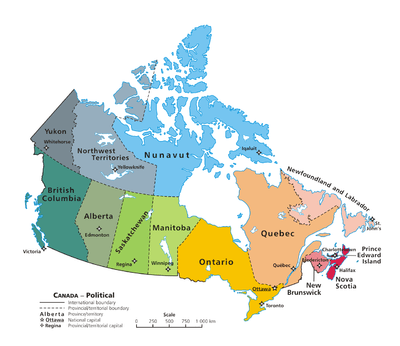
Political map of Canada

From the Toronto Sun.

Excerpt:

The Sansone family is not getting any apologies after they were put through hell by school officials, social workers and police last week.

And, the smoking gun — a child’s drawing that triggered the whole thing — will never be seen.

“I am really sorry that the family is as upset as they are, but we followed proper standards and procedures,” said Alison Scott, executive director of Family and Child Services for the Waterloo Region.

She told QMI Agency if the same situation happened again tomorrow, her organization would do the exact same thing over again.

“I do not see any need for our agency to apologize for fulfilling our mandated responsibility,” Scott said.

The drawing that startled the teacher, who started the domino effect, has vanished.

Scott told QMI Agency it was drawn on a white board and had been erased. She doesn’t know if anyone other than the teacher ever saw it. She also doesn’t know if anyone took an image of it.

Jessie Sansone, a 26-year-old father of four, was arrested at his children’s school, strip searched and held by police, told he was being charged with illegal possession of a firearm. Three of his children were taken by Family and Child Services to be questioned and his pregnant wife, Stephanie, was hauled down to the police station after their four-year-old daughter drew a picture of her dad holding a gun.

Police searched their house and neighbours said cops were going through the house all afternoon.

Eventually, police let Sansone go, saying all they found was a transparent plastic toy that shoots little plastic balls. The toy gun costs $16 at Canadian Tire.

Scott said it wasn’t just the picture, but the resulting conversation with the junior kindergarten teacher that caused the state workers to go into red alert – but she won’t say what was said.

“If there is a drawing where there is some information relayed through that drawing that children may have access to what is described as a gun, and that access may be unsupervised and these children may be concerned because the gun was pointed at them and they didn’t feel safe, that would concern anyone,” said Scott, speaking theoretically.

The social workers still have an “open investigation” on the family, despite police dropping all charges and launching a review of their own conduct.

The walls of the modest Sansone home are covered with family photos, certificates of achievement and framed scripture. The soft spoken young couple now have a lawyer and wanted to share with QMI Agency they are humbled and encouraged by all of the messages and posts supporting them.

Sansone said earlier that he had felt humiliated and isolated sitting in a cell, not knowing where his children were, or why he was being charged with anything, but getting messages from Tahsis B.C. to Truro, N.S., is balm for the soul.

The education system is dominated by liberalism. There is strong desire for completely control of thoughts and actions in order to prevent anyone from being different from others. They think that absolute uniformity will prevent conflict and make everyone feel “happy”. I wonder how happy that little girl was, though? And I wonder how happy her father was while he sat in a jail cell reflecting on how his tax dollars were being used by secular leftists to persecute him? I hope he did not vote for the Ontario Liberal Party or the NDP – they are ones who support this kind of thing.

A common occurence

This sort of thing happens all the time in socialist welfare states like Canada. The Supreme Court just ruled that educational bureaucrats should have more authority than parents to educate children. In Alberta, the government wants to make it illegal for parents to tell children that homosexuality is morally wrong.

Here is a story from Canada that shows why we need to be careful about enacting compassionate, non-judgmental, liberal social policies.

Excerpt:

A Gatineau father lost an appeal Monday after a lower court ruled last June that he had issued a too severe punishment against his 12-year-old daughter.

The case involves a divorced man who says that in 2008 he caught the girl, over whom he had custody, surfing websites he had forbidden and posting “inappropriate pictures of herself” online. The girl’s father told her as a consequence that she would not be allowed to go on her class’ graduation trip to Quebec City, even though her mother had already given permission for her to do so.

The girl then contacted a legal-aid lawyer who was involved in the parents’ custody battle, who convinced the court to order that the girl be allowed to go on the trip with her class.  The father appealed the decision on principle, although his daughter went on the trip in the meantime.

The appeals court reportedly warned in its ruling that the case should not be seen as an open invitation for children to take legal action against their parents when grounded.

The girl now lives with her mother.

The more you reduce the male role and male authority in the family, the fewer men will want to take on the responsibilities of being a Dad. We need to be careful not to replace husbands and fathers with big government social programs and intrusive, anti-male courts. Men like to make decisions. We don’t want the nanny state telling us what to do – and paid for by the taxes we pay.

There is more to the story.

You may think that this would be overturned on appeal, but the father LOST his appeal, too.

Women need to stop voting for bigger government

So, what the daughter, wife, prosecuting attorney and judge (all feminists?) are all telling this Dad that he can donate sperm, pay bills, and pay taxes for social programs, but that he cannot PARENT his own children.

I have two questions:

  • Does anyone care what men want, or should we just be ordered around like little boys?
  • Do we really think that state coercion is going to make men be more involved with their marriages and children?

I think that marriage should allow men to express themselves as fathers, just as much as women can express themselves as mothers. Parenting should be an equally shared responsibility, and the father should have as much parental authority as the mother. Equality. It’s very important to understand that women in general, and single women in particular, tend to vote for bigger government, with the goal of making everyone feel good, shutting down free speech that offends people,  and providing social programs and welfare to protect those who act recklessly and irresponsibly. But I think that’s time that women realize that bigger government means less power for individuals and families.

If women want to get married and have a family and let a man be a father and husband, then they  need to stop voting for more social programs and higher taxes. Voting for more government is killing the traditional family. Instead, women need to take responsibility for evaluating men and choosing men who can perform the traditional roles expected of men in marriage. Do not outsource the roles of men to government, it just results in fewer and fewer men who are willing and financially able to get married.

It’s important to know what men want and need from marriage, and then to promote laws and policies that equip them to marry and provide incentives to them to get married and stay married. Marriages are best when men are respected as leaders, earners and decisions makers – that’s how men are. If women don’t want men to be empowered to lead and provide, then women don’t want real marriage – and they’re not going to get marriage. Marriage is dying right before our eyes already – because of of our own votes.
Jennifer Roback Morse: Father’s Day is also Husband’s Day

Jennifer Roback Morse is one of my favorite writers on family issues, because she is just so positive about men and the roles that men play in the family, and the challenges that men face while performing those roles.

She wrote this article in appreciation of her husband, and it’s a must-read, especially for men looking for some appreciation and encouragement.

Excerpt:

The feminist movement introduced an unbelievable amount of tension into the relationships between men and women. Feminism gave us women permission to nag and criticize our husbands, which most women can do just fine without any special permission. The legacy of the feminist movement has been to turn the home, which should be the place of cooperation, into a sphere of competition between men and women. And ironically, feminism, which was supposed to be about getting beyond stereotypes, supported the most negative of stereotypes about men.

I have my own pet theory about the stereotype of men dragging their feet about getting married. The socio-biologists claim that men want to invest their seed in as many women as possible, and therefore do not want marriage. I think this is only a dim shadow of the whole truth. The whole truth must include this great fact about men: They are capable of heroic loyalty. When men finally do marry, they are capable of committing themselves to the care of their wives and children. Many men spend a lifetime working at jobs they don’t like very much, for the love of their families. When men marry, they take it very seriously. It is women who initiate most divorces. It is divorced men who commit suicide at twice the rate as married men, while divorce has little impact on the suicide propensities of women.

When women marry, we get things that we want and value. We get the opportunity to become mothers. We get a home, our nest for our little ones. What do men get? They get the right to throw themselves on a live grenade for the protection of their families. Or, as St. Paul suggested to the Ephesians, husbands get the right to be crucified.

Most men, with an insignificant number of exceptions, are capable of this heroic loyalty. We women can call this out of our men. We don’t achieve this by nagging. We certainly don’t achieve it by competing with them over who makes the most money, or by keeping score with them on who does the most household chores. We need to build them up, as St. Paul says. Watch them sit up straighter and taller when we appreciate and admire them.

We need to build up our marriages because our children suffer from broken relationships or non-relationships. We now know that father absence inflicts a wound on children that social science can measure, but only partially fathom. We are finding that even the children conceived by artificial means long for a relationship with their fathers.

So if we are going to honor fathers, we women have to honor our husbands, as husbands. And sometimes, just sometimes, we will find that they will honor and build us up as well.

A woman cannot go wrong by studying what men do, why men matter, and what men want from women and children. Creating the conditions for a married man to thrive in his roles is an important goal for women, after their goal of pleasing God. To get the man to perform, a woman has to create the ideal conditions for him to perform. And that means providing the right environment and loving him as if she had never been hurt. Dr. Morse knows what men are supposed to do, and she knows what she has to do to create the conditions where her husband can perform. Wives need to create the right incentives for husbands to performing their roles, and to fill them up with love by encouraging, acknowledging, recognizing, affirming, accepting and desiring them. If men don’t get the things that they need from their wives, then they won’t be able to perform. They’ll just go silent and withdraw.

Dr. Morse’s podcasts are here, and the recent interview with Warren Farrell is worth listening to for those who would like to understand men a little better.

NDP leader Jack Layton wants consumers to pay higher prices for lower quality goods

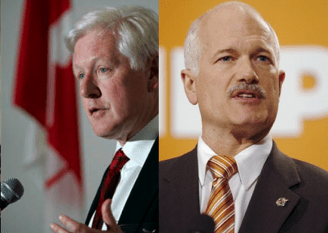
NDP leaders Bob Rae and Jack Layton

Jack Layton is opposed to free trade with other nations, and Jack Layton supports the imposition of tariffs on imported goods. Stephen Harper favors free trade and opposes tariffs, and has pushed through numerous free trade deals during his terms in office. So now we have to ask the questions: is free trade good for Canada? Is free trade good for Canadian consumers? Is free trade good for Canadian companies? Is free trade good for the poor in other countries?

Let’s start by noting that free trade is supported by virtually ALL economists, regardless of their political persuasion. Moderate economist Gregory Mankiw of Harvard University lists the policies that are accepted by virtually all economists.

Here’s Greg’s list, together with the percentage of economists who agree:

  1. A ceiling on rents reduces the quantity and quality of housing available. (93%)
  2. Tariffs and import quotas usually reduce general economic welfare. (93%)
  3. Flexible and floating exchange rates offer an effective international monetary arrangement. (90%)
  4. Fiscal policy (e.g., tax cut and/or government expenditure increase) has a significant stimulative impact on a less than fully employed economy. (90%)
  5. The United States should not restrict employers from outsourcing work to foreign countries. (90%)
  6. The United States should eliminate agricultural subsidies. (85%)
  7. Local and state governments should eliminate subsidies to professional sports franchises. (85%)
  8. If the federal budget is to be balanced, it should be done over the business cycle rather than yearly. (85%)
  9. The gap between Social Security funds and expenditures will become unsustainably large within the next fifty years if current policies remain unchanged. (85%)
  10. Cash payments increase the welfare of recipients to a greater degree than do transfers-in-kind of equal cash value. (84%)
  11. A large federal budget deficit has an adverse effect on the economy. (83%)
  12. A minimum wage increases unemployment among young and unskilled workers. (79%)
  13. The government should restructure the welfare system along the lines of a “negative income tax.” (79%)
  14. Effluent taxes and marketable pollution permits represent a better approach to pollution control than imposition of pollution ceilings. (78%)

Now let’s drill down to the research on free trade in particular.

Here’s an article from the  libertarian Cato Institute, a respected think tank.

Excerpt:

There are three important reasons voluntary exchange is good not only for the contracting parties but the world as a whole:

(1) Trade improves global efficiency in resource allocation. A glass of water may be of little value to someone living near the river but is priceless to a person crossing the Sahara. Trade delivers goods and services to those who value them most.

(2) Trade allows partners to gain from specializing in the producing those goods and services they do best. Economists call that the law of comparative advantage. When producers create goods they are comparatively skilled at, such as Germans producing beer and the French producing wine, those goods increase in abundance and quality.

(3) Trade allows consumers to benefit from more efficient production methods. For example, without large markets for goods and services, large production runs would not be economical. Large production runs, in turn, are instrumental to reducing product costs. Lower production costs lead to cheaper goods and services, which raises real living standards.

Evidence supports the idea nations more open to trade tend to be richer than those that are less open. Columbia University economist Arvind Panagariya wrote in a paper “Miracles and Debacles: Do Free-Trade Skeptics Have a Case?”: “On the poverty front, there is overwhelming evidence that trade openness is a more trustworthy friend of the poor than protectionism. Few countries have grown rapidly without a simultaneous rapid expansion of trade. In turn, rapid growth has almost always led to reduction in poverty.”

According to the Cato Institute’s 2004 report on Economic Freedom of the World, which measures economic freedom in 123 countries, the per capita gross domestic product in the quintile of countries with the most restricted trading was only $1,883 in 2002. That year’s per capita GDP in the quintile of countries with the freest trading regimes was $23,938.

Harper holds the B.A. and the M.A. in economics from the University of Calgary. He knows this stuff cold.

Here’s an article from The Heritage Foundation, another think tank. This article outlines five reasons why free trade is the best economic policy.

Here is an excerpt from one reason from the list of five:

REASON #1: Higher Standard of Living

The most compelling reason to support free trade is that society as a whole benefits from it. Free trade improves people’s living standards because it allows them to consume higher quality goods at less expensive prices. In the 19th century, British economist David Ricardo showed that any nation that focuses on producing goods in which it has a comparative advantage will be able to get cheaper and better goods from other countries in return. As a result of the exchange, both trading parties gain from producing more efficiently and consuming higher quality goods and services at lower prices.

Trade between nations is the same as trade between people. Consider what the quality of life would be if each person had to produce absolutely everything that he or she consumed, such as food, clothing, cars, or home repairs. Compare that picture with life as it is now as individuals dedicate themselves to working on just one thing–for example, insurance sales–to earn a salary with which they can freely purchase food, a car, a home, clothing, and anything else they wish at higher quality and lower prices than if they had done it themselves.

It simply makes sense for each person to work at what he or she does best and to buy the rest. As a nation, the United States exports in order to purchase imports that other nations produce more skillfully and cheaply. Therefore, the fewer barriers erected against trade with other nations, the more access people will have to the best, least expensive goods and services in the world “supermarket.”

Producers benefit as well. In the absence of trade barriers, producers face greater competition from foreign producers, and this increased competition gives them an incentive to improve the quality of their production while keeping prices low in order to compete. At the same time, free trade allows domestic producers to shop around the world for the least expensive inputs they can use for their production, which in turn allows them to keep their cost of production down without sacrificing quality.

In the end, the results benefit both producers–who remain competitive and profitable–and consumers–who pay less for a good or a service than they would if trade barriers existed.

There is no loser to free trade exchanges, otherwise the participants to the trade would not make the trade at all. Both parties gain – that’s why they choose to make the trade.

NDP candidates are not economists

NDP candidates are not known for their demonstrated knowledge and experience in economics, unlike Stephen Harper.

Excerpt:

Usually an election call means all bets are off for politicos wanting to take a Vegas vacation.

But, if you’re a New Democrat, you can be in Sin City with just days to go in the federal election campaign.

That’s where the party’s long shot candidate for the Quebec riding of Berthier-Maskinonge, Ruth Ellen Brosseau, finds herself.

Ruth works in the campus pub at Carleton University. She is not an economist.

But there’s more:

Some NDP candidates in Quebec could prove to be wild cards if they end up winning on May 2.

Several are still university students.

Charmaine Borg in Terrebonne-Blainville and Sherbrooke candidate Pierre-Luc Dusseault are both studying political science.

Actress and former camp counsellor Marie-Claude Morin in Saint-Hyacinthe-Bagot is working on a degree in social work.

Others have off-beat political backgrounds.

Alexandre Boulerice, the NDP candidate in Rosemont-La Petite-Patrie, is a member of the left-wing separatist party Quebec Solidaire.

In the Pontiac riding, the New Democrats have nominated Mathieu Ravignat. He was a Communist Party candidate in the Montreal area in 1997.

You can watch a video report on some of the NDP candidates here at Blazing Cat Fur.

How did former NDP leader Bob Rae govern in Ontario?

If you want to know what New Democrats do to an economy, you can read about how NDP leader Bob Rae wrecked the Ontario economy in the 1990s.

Excerpt:

The Liberal government had forecast a small surplus earlier in the year, but a worsening North American economy led to a $700 million deficit before Rae took office. In October, the NDP projected a $2.5 billion deficit for the fiscal year ending on March 31, 1991.[40] Some economists projected soaring deficits for the upcoming years, even if the Rae government implemented austerity measures.[41] Rae himself was critical of the Bank of Canada’s high interest rate policy, arguing that it would lead to increased unemployment throughout the country.[42] He also criticized the 1991 federal budget, arguing the Finance Minister Michael Wilson was shifting the federal debt to the provinces.[43]

The Rae government’s first budget, introduced in 1991, increased social spending to mitigate the economic slowdown and projected a record deficit of $9.1 billion. Finance Minister Floyd Laughren argued that Ontario made a decision to target the effects of the recession rather than the deficit, and said that the budget would create or protect 70,000 jobs. It targeted more money to social assistance, social housing and child benefits, and raised taxes for high-income earners while lowering rates for 700,000 low-income Ontarians.[44]

A few years later, journalist Thomas Walkom described the budget as following a Keynesian orthodoxy, spending money in the public sector to stimulate employment and productivity. Unfortunately, it did not achieve its stated purpose. The recession was still severe. Walkom described the budget as “the worst of both worlds”, angering the business community but not doing enough to provide for public relief.

[…]Rae’s government attempted to introduce a variety of socially progressive measures during its time in office, though its success in this field was mixed. In 1994, the government introduced legislation, Bill 167, which would have provided for same-sex partnership benefits in the province. At the time, this legislation was seen as a revolutionary step forward for same-sex recognition.

[…]The Rae government established an employment equity commission in 1991,[49] and two years later introduced affirmative action to improve the numbers of women, non-whites, aboriginals and disabled persons working in the public sector.

[…]In November 1990, the Rae government announced that it would restrict most rent increases to 4.6% for the present year and 5.4% for 1991. The provisions for 1990 were made retroactive. Tenants’ groups supported these changes, while landlord representatives were generally opposed.

Be careful who you vote for, Canada. We voted for Obama, and now we have a 14.5 trillion dollar debt and a 1.65 trillion deficit – TEN TIMES the last Republican budget deficit of 160 billion under George W. Bush in 2007. TEN TIMES WORSE THAN BUSH.

Related posts