Tag Archives: Hedonism

Why did the lead vocalist of a Christian rock band abandon belief in God?

A conflict of worldviews

Carla told me about this celebrity singer who decided to leave Christianity. Since we’ve had a few high profile departures, I thought it might be worth giving my very controversial view on Christian musicians, artists, athletes and celebrities. I’ve always been suspicious of celebrities claiming to be Christians and there’s a very simple reason why.

Anyway, here is the story from Christian Post.

It says:

Jon Steingard, the Canadian Christian rock band Hawk Nelson’s lead vocalist, has declared on social media that “I no longer believe in God,” explaining “it didn’t happen overnight.”

[…]“After growing up in a Christian home, being a pastor’s kid, playing and singing in a Christian band, and having the word ‘Christian’ in front of most of the things in my life — I am now finding that I no longer believe in God.”

He has three objections, the first being the problem of evil, the second being Old Testament violence, and finally the doctrine of the atonement:

“If God is all loving, and all powerful, why is there evil in the world? Can he not do anything about it? Does he choose not to?”

[…]”Why does he (God) say not to kill, but then instruct Israel to turn around and kill men women and children to take the promised land?” and “Why does Jesus have to die for our sins (more killing again)?”

[…]I am not looking for a debate at all — just a chance to share my story in the hopes some good can come from it.

He mentions having his “heart changed”, and that’s how most people these days approach religion. Whether they accept it or not depends on their feelings, experiences, and peer approval. Their Christian worldview isn’t compelled by logic and evidence. They have a non-STEM approach to religion. If they like it, they keep it. And this is why so many people who are raised in the church give it up in high school and college. They feel that Christianity isn’t truth in the same way as math, science, engineering or history. Christianity, they are taught, is about their family, their feelings, their community. If it feels good, and helps them fit in, they keep it. But when they get to high school or college, they find things to do that are more fun, feel better, make them look smarter, and make their new friends like them more.

Regarding his three objections. For the problem of evil, William Lane Craig answers that in “Hard Questions, Real Answers”, or more technically in “Philosophical Foundations for a Christian Worldview”. For the Old Testament challenge, Paul Copan answers that in “Is God a Moral Monster?” The third objection is just philosophical theology. William Lane Craig has written on the logic of the doctrine of penal substitutionary atonement, for example, and found parallels in the insurance business. These topics are debated in formal academic debates, but Mr. Lead Vocalist probably won’t find the answers by watching TV and asking his artist friends.

By the way, the Christian Post article notes that he was objecting to the moral demands of the Christian life prior his atheism:

In 2015, talking about the song “Live Like You’re Loved” from Hawk Nelson’s album Diamonds, Steingard told The Christian Post that it was “inspired by growing up and learning the dos and don’ts of Christianity and how to be a good Christian.”

[…]“I just had an epiphany … all this running around and trying to do everything exactly right, these are not the things that bring us closer to God. Our relationship with God is already secured with what was done on the cross. What if we went into life with confidence of knowing we are already loved?”

Lyrics to “Live Like You’re Loved” include: “So go ahead and live like you’re loved, it’s OK to act like you’ve been set free / His love has made you more than enough so go ahead and be who he made you to be / And live like you’re loved.”

He had an epiphany. Doing what the Bible teaches isn’t how you love God. No, no. You just follow your heart, and God will love you for that. That’s so convenient and very popular in the feminized church today. But it’s also exactly the opposite of what the Bible teaches:

1 John 5:1-3:

1 Whoever believes that Jesus is the Christ is born of God, and whoever loves the Father loves the child born of Him.

2 By this we know that we love the children of God, when we love God and observe His commandments.

3 For this is the love of God, that we keep His commandments; and His commandments are not burdensome.

I don’t know his personal life, but I know a lot of Christians who went nuts in college drinking and having sex, and then subsequently found “reasons” for thinking Christianity was false.

I meet so many Christians whose entire reading life consists of reading fiction, romance novels and popular female preachers. Instead of learning how to engage against challenges to the faith like socialism, feminism, atheism, etc. we’re more focused on entertaining ourselves, and trying to be liked. Not only is this narcissistic, it also doesn’t result in a stable and influential Christian life.

Most of the adult Christians I know today slipped into the wild life of atheism as soon as they left home. They came back to the faith later, but they’re still politically liberal and they have a non-cognitive understanding of Christianity. They may have returned to the faith and church, but it’s still all about their feelings, experiences and peer approval. They aren’t working for God, they’re making God work for them.

This is the exact opposite of my experience of Christianity. I wasn’t raised in a Christian home. I wasn’t raised in a church. I don’t sing songs. I don’t have fun. I am not trying to be popular. I don’t drink. I’m a virgin. I have multiple STEM degrees. I work in a STEM field. I read evidential apologetics. I engage in debates with non-Christians. I’m a non-white immigrant. My view of Christianity is masculine, not feminine. It’s effective, not emotional.

Christian scholars are more important than “Christian” entertainers

I don’t think that Christians should waste their time on Christian entertainers and celebrity preachers. And I’m going to lump in pastors and preachers who focus on feelings and experiences into that group. If you’re going to pick someone to look up to as a Christian, then choose people who have put in the time to study the truth claims of the Christian worldview enough to defend them to other scholars, using arguments and evidence.

I admire people like William Lane Craig, Stephen C. Meyer, Michael Licona who actually debate non-Christians on university campuses and other public forums. In contrast, an entertainer isn’t usually qualified to defend truth claims in public settings. Defending Christian truth claims is a low priority for most Christian entertainers and celebrities. Don’t be like them.

Positive arguments for Christian theism

Famous pick-up artist Roosh V urges men not to act like clowns for casual sex

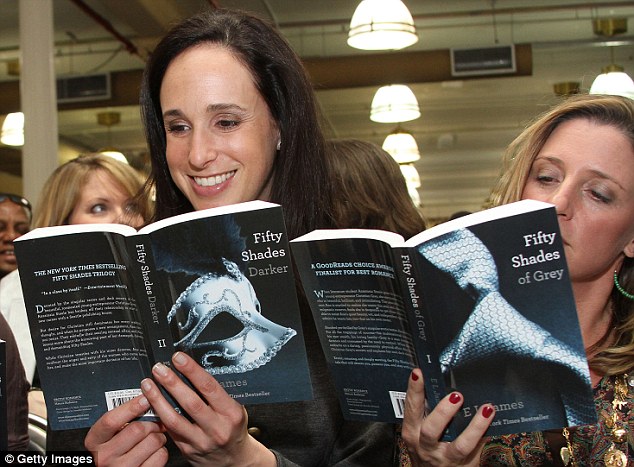
Fifty Shades of Grey was very popular with women
Fifty Shades was popular with women, including “Christian” women – why?

Is it meaningful and rewarding for men to spend their time and money pursuing casual sex? I would expect that men who tried and failed to obtain casual sex to say that it’s a waste of time and money. But what about a man who was so successful at obtaining casual sex that he wrote bestselling books about it? Did he find his achievements meaningful in the end?

Roosh V is a well-known pick-up artist who is a master at seducing women. He’s traveled all over the world and seduced many women from many countries.

In a post from April 2019, he reaches a startling conclusion about his success:

I began pursuing women for mostly sexual reasons in 2001. I must’ve logged tens of thousands of hours into the task. I’ve been also traveling or living abroad near continuously since 2007. I’ve spent a lot of time trying to fornicate, fornicating, traveling to more effectively fornicate, and writing over a million words about fornication. What did I learn from all that? It’s an experience that gets more dull with repetition, like any other experience. However, it also leaves you with a massive hangover where you find yourself at a loss. What was the point of all that? Is there anything I’ve truly gained? What lasting glory have I achieved? If I wasn’t a writer, I would have nothing to “show” for my efforts besides memories that are as likely to make me cringe as give me happiness.

If society were healthy, and if women were more traditional, most of my time would have been spent writing different kinds of books, maybe concerning religion or history. I would have a family, and spend much of my time nurturing the love between them without degenerate interference from the government or cultural elites. […]While there is nothing in life that is solid, my family and community would give me a stronger feeling of continuity. Tomorrow, things that are likely to be here would still be there, compared to the easy-come-easy-go modern lifestyle where putting your penis inside a girl is not even close to a guarantee you’ll see her again, and where any job you have, or apartment you live in, is as transitory as the next bus that rolls down the street.

[…]As I approach 40 years of age, I see most of my hedonistic and travel pursuits as expensive life lessons than a source of meaning. My nature, and I believe the nature of most masculine men I meet, is one of creation, strength, and provision for family, things we’re increasingly not allowed to do, or allowed to do only at impossible cost.

Indeed. Speaking for myself, one of the main reasons that I’ve avoided casual sex (or premarital sex of any kind) is because from earliest days, I could not stomach the idea of a woman that I had sex with walking away. So, my education, career and finance decisions were oriented to winning the heart of one woman who would commit to me for life, so that we could built something nice for the Lord together.

In another post, from March 2014, Roosh explains why casual sex didn’t provide him with validation:

There is definitely not a single woman alive in the Western world who needs a man. While in the past a woman had to put forth effort to obtain a husband who would help her survive, today she is protected by a welfare state that ensures she will never go hungry or spend one night on the street.

[…]From a young age, girls are brainwashed to believe that they don’t need men and that the key to their happiness is self-empowerment by sleeping around and becoming a corporate wage slave. It’s hard to dispute the notion that a woman who believes she doesn’t need a man won’t make as good of a relationship partner as one who does. She will treat you as a distraction to her more important job, girls’ nights out, and social networking validation happy time. Men have become an utterly replaceable and expendable commodity in a girl’s life. Her interest in a man is not unlike her interest in a new television show or Apple product, and your only hope is to have sex with her as many times as possible until her attraction diminishes and she moves on to the next guy in line.

Women don’t seek out comfort or stability in men anymore—they seek entertainment. They seek distraction. They seek hedonistic pleasure. […]Once the entertainment or novelty you provide her declines—and it inevitably will—she moves on to something or someone else. In essence, the only way you can keep a girl is if you adopt the mentality of a soap opera writer, adding a cliffhanger to the end of each episode that keeps a woman interested when being a good man no longer does.

When I look at myself in the mirror, I don’t see a man who has improved himself over the years to be the best that his genes allow—I see a glittery skirt that a girl encounters in the mall. Is the skirt too expensive or is it on sale? Is there only one left of her size or is the rack full of them? Does she already have something similar or is it totally novel? Does her friends think it’s cute or just alright? After trying it on, does it flatter her body or make her look fat? Either she makes the impulsive decision to buy the skirt or not, because odds are she won’t come back for it. There are so many stores with so many skirts that she will soon forget it, forever. We are like glittery pieces of fashion to women—items that she truly doesn’t need. Not only has she already collected so many of them, but she can easily obtain more within walking distance from where she lives. She can even browse online from home while in her pajamas through a nearly unlimited selection.

We are not men in the traditional sense—we are clowns.

Well, I’m a virgin who never spent money or time pursuing casual sex, and precisely because I refuse to be any woman’s clown. It’s very easy for a man to not be a woman’s clown. All he has to do is choose a woman who will let him lead her, instead of a woman who wants him to entertain her. Women use the offer of premarital sex in order to get men to stop trying to lead them. Men who don’t mind acting like clowns in order to get sex will take this bargain. Men who expect women to rise up to the roles of wife and mother will reject the bargain. A Christian man’s goal is to lead a woman away from her self-centeredness, feelings, desires and need for peer-approval, so that she can perform the roles of wife and mother.

How to avoid becoming a clown for casual sex

So, let me give some advice for men about how to get into relationships where they can lead a woman upward, and avoid becoming her clown. It begins and ends with the woman you choose, because some women will let you lead, while others will not.

Research (here, here) shows that women who are virgins are more likely to be content in their marriages, and therefore less likely to financially ruin you with a frivolous divorce. Therefore, women who are virgins are to be preferred. Women who abstain from alcohol, drugs and tattoos should be preferred. Women who have a conservative father who they have respected should be preferred. Women who have STEM degrees should be preferred. Women who are debt-free should be preferred. Women who have challenging STEM careers in the private sector should be preferred. Women who don’t want to outsource the education of their children to daycare, public schools, etc. should be preferred. Women who want three or more children should be preferred. Women who think that a man’s earnings should not be taxed to pay for husband-substitute social programs should be preferred. Women who have demonstrated public opposition to no-fault divorce, premarital sex, abortion and same-sex marriage should be preferred. Women who blame and shame other women for choosing hot bad boys should be preferred. Women who can demonstrate knowledge of intermediate-level science apologetics (e.g. Stephen C. Meyer, Michael Behe, Hugh Ross, etc.) should be preferred. (Philosophical and historical apologetics are useful, but are not forceful enough in a debate). Women who avoid fun and thrills (beaches, FOMO travel, reading fiction, thrill-seeking, etc.) should be preferred. Women who serve others (elderly, disabled, etc.) should be preferred.

Basically, you’re looking for someone who is comfortable with responsibilities, expectations and obligations. You’re looking for someone who respects your demonstrated ability in areas like education, career and finance. (You have led other people to do well in education, career, finances, ministry, etc. right?) You’re looking for someone who lets her logical reasoning override her feelings and intuitions when she makes decisions.

The retreat from male leadership

It used to be the case that you could count on pastors to warn Christian men about wasting their time and money on women who wanted them to be clowns instead of leaders. Even the progressive fideist John Piper wrote against women rebelling against male leadership way back in 1983. Men used to be wary of this desire of women to usurp the leadership role from men. But today, it seems like men are anxious to dance to a woman’s tune – reducing themselves to spineless commodities, like a pair of shoes or a handbag. But men were not designed to be women’s accessories, men were designed to lead. When you tell a woman no to premarital sex, there is the possibility of leading her out of the pig sty of feminism and socialism. But if you say yes to her, you become her clown. If you waste all your 20s and 30s clowning for casual sex, you will have no meaningful legacy.  To any man who works for the Lord, this is unacceptable. Christian men, you were bought at a price, and you are expected to produce a return.

Therefore, focus your attention on an early marriage to a good woman, and avoid the hot bad girls who just want to pump and dump you for their own pointless entertainment. If you can’t find a decent wife, then it’s better to remain a virgin and put points on the board some other way.

More and more women are asking why they can’t find a good man to marry

Do young women understand how to get to a stable marriage?

In the last few months, I’ve met 5 different Christian women in their 30s who all asked me the same question: where are all the good men who want to marry me?

Christian men’s rights blogger Dalrock had two different posts where he described the answer to this question.

Here is the first post from Dalrock that concisely illustrates the problem:

As I wrote in A very long season, feminists don’t want to waste a day more of their youth and fertility on their husbands than absolutely necessary. As if to prove this very point, 30 year old Mona Chalabi writes in the NY Times* I Want My 2.3 Bonus Years:

If I could prolong my time as a young adult by, say, 2.3 years, here is a list of things I would like to do:

• Go to more parties. Preferably wild parties that I can think about, years later, at mild parties.

[…]• Have more romantic partners.

[…]• Get a bit higher up the career ladder a bit earlier on. That would probably boost my earnings, giving me more financial security. I could use that money to go to more parties, get a membership to a fancy gym and maybe even meet a romantic partner on the ab machines.

To drive the message home, the image at the top of the article is a cartoon of a resentful Chalabi giving her future husband the side eye for her lost years of sampling penises!

Surely, this must be an isolated case just for New York Times feminists, right? It’s not widespread, is it?

Second post from Dalrock:

Margaret Wente at the Globe and Mail* asks where all the good men have gone.  Wente comes to the conclusion that women need a sex cartel:

…it’s up to us to make the rules. “Why buy the cow when you can get the milk for free?” my father used to say. It drove me crazy when he said that. Now, it’s dawned on me that he was right.

Since the women’s cartel collapsed, women’s bargaining power has seriously eroded. That’s why so many single women hate Tinder, which has further commodified sex for the benefit of men. Women are just another consumer good in the shop window.

The apex fallacy aside, Wente is partially right.  Women (as a group) have signaled to men that what they really want are exciting sexy badboys, not boring loyal dudes. It isn’t that women no longer want to marry beta providers, they just don’t want to waste a day more of their youth and fertility on their husband than absolutely necessary.

As a result, some up and coming boring loyal dudes aren’t knocking themselves out in their twenties while they wait for their future wife to tire of having sex with other men.

If you wonder why men are no longer performing in school, and exchanging careers for video games, the answer is simple. Men have realized that young women today, under the influence of feminism, are not interested in traditional husbands during their late teens and 20s. During these years, women are interested in travel, fun, drinking, hook-ups and cohabitation with amoral atheists. This is what I have personally observed. In the minds of young women, the highest value men are good-looking men who have no religion, and make no moral judgments, and are left of center politically – especially on abortion.

There are actually many other men who don’t meet this standard – marriage-minded men – who want to get married young and have children. But when these men see what young women really want, they just give up on school and work, since doing the traditional male roles has no value to young women. Many good men even give up on morality and Christianity, because they want a relationship with a woman so badly. They know that women don’t want marriage-minded men when women are youngest and prettiest.

More from second post:

What Wente doesn’t understand is that timing is everything.  From an economic point of view, women are dividing up sexual access that traditionally would have been reserved only for their husband into two blocks.  The first block contains their most attractive and fertile years, and it is dedicated to no strings sex with exciting badboys.  Then, once women reach what Rollo calls the epiphany phase, they want to bargain sexual access in their remaining (older and less fertile) years for maximum beta bucks.

The problem with this strategy is (generally speaking) not that the previously overlooked beta men will refuse to marry the suddenly reformed party girls.  The problem is that young men now look at the men 3-5 (and even 5-10) years older than them and don’t see an indication that signaling provider status will make them attractive to women.  They also see a society that holds married fathers in contempt**.  Most of these men are still working hard in their late teens and twenties to prepare to signal provider status in their 30s.  But a growing minority of young men are no longer doing so.  These men are instead working like women.  Once the reformed party girls are ready to find Mr. Beta Bucks, there is a shortage of 30 something men who fit the bill.  Even worse, no amount of complaining or shaming will cause the missing beta providers to go back in time and spend the prior decade preparing for this moment.

I’m one of the last men who followed the marriage-preparedness script for traditional men who wanted to marry and have four children and have a stay-at-home homeschooling mom to raise them from birth to graduate school. I find myself now in my mid-40s, with a 6-figure income and a 7-figure net worth. I never used my success to play the field with hot bad girls. I wanted to keep my sexual past completely clean for my eventual wife. However, what I observed in my late teens and 20s and even early 30s was a complete lack of interest in marriage ability, from non-Christian women and Christian women alike. Christian women aren’t learning to value early marriage from their married parents or their evangelical churches. None of the traditional husband skills are valued by young women, i.e. – chastity, gapless resume, alcohol abstinence, undergraduate and graduate STEM degrees, experience nurturing and mentoring others, stewardship of earned income.

I recently caused an uproar on my Facebook page by saying that even if the perfect woman showed up right now to marry me, I would not pursue her because the critical time where the woman could have applied maximum youth, beauty and fertility as a wife to make an impact on my education, early career, health, and finances has passed. A younger woman develops value to her husband precisely by applying herself to him and to her family in these critical early years. Men who have experienced this self-sacrificial love and support are loyal to their wives even after their wives lose their youth and beauty. Why? Because the men know that they are much better than they could have been, having enjoyed that early investment of value made by their young wives.

Young women very supportive of premarital sex

As Christian writer Matt Walsh notes in a recent article at the Daily Wire, this “follow your heart” focus on happiness in women is lethal to marital stability, and men know it.

Excerpt:

There was an article in Cosmo this week with a title that summarizes all that’s wrong with Cosmo and modern society as a whole: “I eloped at 25, divorced at 26, and dated my way across Europe all summer.” Of course, by “dated my way across Europe” she means that she slept with half the continent.

The author, Elise, says she “started fighting” with her husband and within a few months they both decided that their differences were irreconcilable. Despite counseling, she says, “neither of us was happy.” So, exhausted from 12 whole months of marriage, Elise embarked on a voyage of self-discovery and STD cultivation. She met random dudes in half a dozen countries and had sex with them, learning quite a lot as she went, though she can’t really explain what exactly she learned or why sex was a necessary component in learning it. Finally, she came home and started dating some other guy. The end.

Well, not really the end. 20 years from now I’m sure we’ll get the follow up article: “I’m alone and miserable and it’s everyone’s fault but mine.” After all, you may be able to fill the emptiness in your soul with frivolous sex when you’re young and physically desirable, but that phase is fleeting. People who don’t want to “waste” their beauty and youth on a spouse, so they waste it instead on strangers who don’t love them or even care what happens to them tomorrow, will be shocked when a tomorrow comes where even strangers aren’t interested anymore. This is where the single-minded, utterly selfish pursuit of “happiness” at all costs inevitably leads: to rejection, despair, and a quiet, unnoticed death on a lonely hospital bed.

As Elise helpfully demonstrated, “do what makes you happy” is poison in a marriage. Many a vow has been broken because one or both partners decide to chase “happiness” instead of commitment, fidelity, and love. “I deserve to be happy,” reports the legion of serial divorcees, as they drift on to the next spouse, and the next, and the next, and the next, looking for the one — the one, finally — who might cure the misery they’ve inflicted on themselves. Increasingly unhappy, yet increasingly convinced that they deserve to be.

And this follow your heart to happiness situation is alive and well in the church today. Marriage-minded Christian men who have prepared for husband roles are surprised to find that there is often little or no difference between Elise and the Christian women the church produces. Christian men who desire to invest in a marriage that is stable, productive and influential have nowhere to turn for a wife who is able and willing to help. In my experience, the problem with happiness-focused women who delay marriage is never discussed in churches from the pulpit. The “good men to marry” that today’s 30-something women are looking for were plentiful back when those same women were in their early-to-mid 20s.