Tag Archives: Creation

Physicist Michael Strauss discusses Christianity and science at Stanford university

This is one of my favorite lectures, by one of the people I admire the most for his scientific work and robust, evangelical Christian faith.

About Michael Strauss:

His full biography is here. (I removed his links from my excerpt text below)

Excerpt:

I had an interest in science and theology, so in 1977 I chose to go to Biola University where I could study both subjects in detail. I thoroughly enjoyed college and participated in intramural sports, was elected to student government, served as a resident assistant, competed in forensics, and studied a lot. As I neared college graduation my dual interest continued so I applied to seminary and to graduate school. After graduating summa cum laude from Biola, I decided to pursue a graduate degree in physics at UCLA.

During my first few years of graduate school, I developed an increased interest in quantum mechanics and subatomic physics and decided to do research in a field that dealt with these subjects. I joined a High Energy Physics experimental group doing research at the Stanford Linear Accelerator Center (SLAC) and moved to the San Francisco Bay Area to actively participate in research at SLAC. I graduated in 1988 with my Ph.D in High Energy Physics (a.k.a. Elementary Particle Physics). If you would like to know more about High Energy Physics, the Particle Data Group at Lawrence Berkeley Laboratory has a very nice interactive adventure that teaches you all about the subject. My research advisor was professor Charles Buchanan and my disertation was titled “A Study of Lambda Polarization and Phi Spin Alignment in Electron-Positron Annihilation at 29 GeV as a Probe of Color Field Behavior.”

After graduation, I accepted a post-doctoral research position with the University of Massachusetts at Amherst. I continued to do research at SLAC where I joined the SLD experiment. My research interests centered on the SLD silicon pixel vertex detector. I wrote most of the offline software for this device, and did physics analysis which used the vertex detector, including tagging b quark events for flavor specific QCD (Quantum Chromodynamics) analysis. In the seven years I was employed by UMASS, I only spent 3 days on the Amherst campus. The rest of the time was spent in California.

[…]In August 1995, I accepted a job as an Assistant Professor of Physics at the University of Oklahoma (OU) in Norman, Oklahoma. The University of Oklahoma has a vibrant high energy physics research group involved in experiments at the Fermi National Accelerator Center (Fermilab), and CERN. I joined the DØ experiment at Fermilab where I continue to do research in elementary particle physics. As a member of the DØ collaboration I have made contributions to the testing of silicon sensors for the upgraded vertex detector, to the track finding algorithms, to a measurement of the photon production cross section which probes the gluon content of protons, and to other QCD measurements. I am currently studying properties of B mesons that contain a b-quark, the production cross section of jets coming from quarks and gluons, and other QCD analyses. At CERN, I am a collaborator on the ATLAS detector.

I received tenure in 2001 and was promoted to the rank of Professor in the summer of 2010. Most of the time at OU I have taught introductory physics classes to physics majors, engineers, and life science majors. In these classes I have used a number of interactive techniques to facilitate student participation and learning. I have been privileged to win a few awards for my teaching. In 1999, the Associated Students selected me as the Outstanding Professor in the College of Arts and Science, and in 2000 I was awarded the BP AMOCO Foundation Good Teaching Award. In 2002, I was given the Regents Award for Superior Teaching. I received the Carlisle Mabrey and Lurine Mabrey Presidential Professorship in 2006 which is given to “faculty members who excel in all their professional activities and who relate those activities to the students they teach and mentor.”

He seems to have done a fine job of integrating his faith with a solid career in physics research. It would be nice if we were churning out more like him, but that would require the church to get serious about the integration between science and faith.

The lecture:

Dr. Strauss delivered this lecture at Stanford University in 1999. It is fairly easy to understand, and it even includes useful dating tips, one of which I was able to try out recently at IHOP, and it worked.

You can also listen to the audio here. (MP3)

Summary:

What does science tell us about God?
– the discoveries of Copernicus made humans less significant in the universe
– the discoveries of Darwin should that humans are an accident
– but this all pre-modern science
– what do the latest findings of science say about God?

Evidence #1: the origin of the universe
– the steady state model supports atheism, but was disproved by the latest discoveries
– the oscillating model supports atheism, but was disproved by the latest discoveries
– the big bang model supports theism, and it is supported by multiple recent discoveries
– the quantum gravity model supports atheism, but it pure theory and has never been tested or confirmed by experiment and observation

Evidence #2: the fine-tuning of physical constants for life
– there are over 100 examples of constants that must be selected within a narrow range in order for the universe to support the minimal requirements for life
– example: mass density
– example: strong nuclear force (what he studies)
– example: carbon formation

Evidence #3: the fine-tuning of our planet for habitability
– the type of galaxy and our location in it
– our solar system and our star
– our planet
– our moon

Positive arguments for Christian theism

How long are the days of Genesis? Hugh Ross and Jason Lisle debate

I found this radio debate about the age of the Earth on the Apologetics 315 Twitter feed.

Speakers:

Jason Lisle

Dr. Lisle graduated summa cum laude from Ohio Wesleyan University where he double-majored in physics and astronomy, and minored in mathematics. He did graduate work at the University of Colorado where he earned a Master’s degree and a Ph.D. in Astrophysics. While there, Dr Lisle used the SOHO spacecraft to investigate motions on the surface of the sun as well as solar magnetism and subsurface weather. His thesis was entitled “Probing the Dynamics of Solar Supergranulation and its Interaction with Magnetism.” Among other things, he discovered a previously unknown polar alignment of supergranules (solar convection cells), and discovered evidence of solar giant cells. He has also authored a number of papers in both secular and creation literature.

Hugh Ross

At age seventeen he became the youngest person ever to serve as director of observations for Vancouver’s Royal Astronomical Society. With the help of a provincial scholarship and a National Research Council (NRC) of Canada fellowship, he completed his undergraduate degree in physics (University of British Columbia) and graduate degrees in astronomy (University of Toronto). The NRC also sent him to the United States for postdoctoral studies. At Caltech he researched quasi-stellar objects, or “quasars,” some of the most distant and ancient objects in the universe.

So both have impeccable scientific credentials. But just wait until you hear what one of them does at about 28 minutes into the debate. Oh my goodness. You will not believe the bombshell that gets dropped during this debate.

The MP3 file is here. (This is the updated version that Brian Auten fixed to remove the commercials!)

I don’t always agree with Frank Pastore, (only 95%), but he knows the topic of the debate back to front, and guides the discussion in an incredibly useful, accurate way. This is a fine debate to listen to! You will learn a lot. And you will have fun learning.

The Bible and the early church fathers

Jason Lisle

  • we take Genesis literally
  • the starting point of YEC is Scripture
  • the plain meaning of Scripture is that the earth was made in 6 24-hour days
  • science has to be interpreted in a way that fits a plain reading of Genesis 1
  • the evidence for an old universe and old Earth must be rejected a priori

Hugh Ross

  • we take Genesis literally
  • the Hebrew word for day (yom) can mean 24 hours or a long period of time
  • there are multiple creation accounts in the Bible
  • interpreting yom as long periods of time harmonizes all the accounts
  • the Bible says that the seventh day is not even ended
  • we believe in a literal Adam and Eve living thousands of years ago

Jason Lisle

  • there’s only 1 account of creation in the Bible: Genesis
  • the normal view in church history is 6 24-hour days
  • there are some early church fathers who that the days are long
  • the other places where creation is discussed are not real accounts

Hugh Ross

  • the early church did not spend a lot of time talking about the age of the Earth
  • there is not unanimous agreement about the age of the Earth
  • there is no definitive statement on the age of the Earth until Isaac Newton
  • Newton strongly favored an old earth, hundreds of years before Darwin
  • there are other creation accounts, Job 38-39
  • Pslam 104 is a creation account

Jason Lisle

  • a Psalm is not written in the genre of historical narrative
  • Psalm 104 is not a creation account – it talks about ships, etc
  • it’s talking about the modern era, not a creation account

The evidence from science

Hugh Ross

  • both of us believe in an absolute beginning of time, space and matter
  • both of us believe that space is expanding now
  • stars form as matter coalesces during the expansion of the universe
  • star formation requires a universe aged on the order of billions of years

Jason Lisle

  • if you pre-suppose my interpretation of Genesis, then the universe is young

Hugh Ross

  • the speed of the expansion of the universe proves an old universe
  • the light emitted from the oldest stars also proves an old universe

Jason Lisle

  • if you pre-suppose my interpretation of Genesis, then the universe is young

Was the universe made with the appearance of age

Jason Lisle

  • any evidence for an old universe is wrong
  • stars didn’t form gradually, they were created by God instantly
  • stars have the appearance of age, but they’re actually young

Hugh Ross

  • God doesn’t lie in the Bible or in the book of nature
  • Scientists can look back in time by looking further out into the universe
  • Because light takes a long time to travel to the Earth, we can see the past
  • we can see a time when there were no stars yet
  • stars formed slowly over time, not instantaneously
  • we have photos of the universe before stars and after stars
  • we can see a history of the universe by looking closer and further away

Does nature provide us with knowledge about creation?

They discuss Psalm 19 now, so here’s Psalm 19:1-5:

1 The heavens declare the glory of God; the skies proclaim the work of his hands.

2 Day after day they pour forth speech; night after night they display knowledge.

3 There is no speech or language where their voice is not heard.

4 Their voice goes out into all the earth, their words to the ends of the world.
In the heavens he has pitched a tent for the sun,

5 which is like a bridegroom coming forth from his pavilion, like a champion rejoicing to run his course.

Jason Lisle

  • nature isn’t a book
  • nature doesn’t provide knowledge about God
  • Psalm 19 doesn’t say that nature communicates to us
  • verse 3 says “There is no speech nor language”

Hugh Ross

  • If you read all of verse 3, it says the exact opposite of what you just said it says
  • Verse 1: “The heavens declare the glory of God; the skies proclaim the work of his hands”
  • Verse 2: “Day after day they pour forth speech; night after night they display knowledge.”
  • Verse 3: “There is no speech or language where their voice is not heard.
  • Verse 4: “Their voice goes out into all the earth, their words to the ends of the world.”

Jason Lisle

  • You can’t take the Bible literally all the time

How important is the age of the Earth?

Hugh Ross

  • it’s a non-essential because it has nothing to do with salvation or inerrancy
  • both sides of the debate affirm the same views of salvation and inerrancy
  • professional scientists have multiple lines of evidence saying the universe is old
  • the only reason it matters is that young earth creationism is a barrier to faith
  • if you have to deny science to be a Christian, then it stops people from being saved
  • young earth opposition to science has been used by secularists to marginalize Christianity

Jason Lisle

  • there was no death in the Garden of Eden, animal or human, before the Fall
  • the Bible says that death was a consequence of Adam’s sin
  • so there was no death before the Fall, according to the Bible
  • old earth people believe in death before the Fall

Consider Romans 5:12:

12Therefore, just as sin entered the world through one man, and death through sin, and in this way death came to all men, because all sinned—

Hugh Ross

  • Romans 5:12 says that Adam’s sin caused death to come to all men
  • old earth people believe that only animal death existed before the Fall, not human death
  • plant and animal death existed before the Fall – Adam and Eve were eating!

Jason Lisle

  • I interpret the Bible to say that plants aren’t living creatures

What about dinosaurs, the Flood, and Noah’s ark?

Jason Lisle

  • dinosaurs were created on the 6th day
  • dinosaurs lived alongside humans and were vegetarians before the Fall
  • dinosaurs were on the Ark – they’re not that big – just take baby dinosaurs
  • it’s a global flood

Hugh Ross

  • dinosaurs were created on the 5th day
  • they were extinct before before humans ever appeared
  • nobody in history ever wrote about dinosaurs until 200 years ago
  • it’s a local flood

Related posts

Wes Widner from Reason to Stand pointed out another debate on this topic.

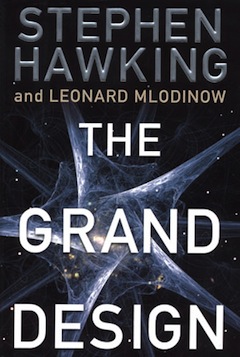
Book review of Stephen Hawking’s “The Grand Design” by Edgar Andrews

First, who is Edgar Andrews?

Professor Edgar H. Andrews (BSc, PhD, DSc, FInstP, FIMMM, CEng, CPhys.) is Emeritus Professor of Materials at the University of London and an international expert on the science of large molecules. In 1967 he set up the Department of Materials at Queen Mary College, University of London, and served both as its Head and later as Dean of Engineering. He has published well over 100 scientific research papers and books, together with two Bible Commentaries and various works on science and religion and on theology. His book From Nothing to Nature has been translated into ten languages.

Edgar Andrews was an international consultant to the Dow Chemical Company (USA) for over thirty years and to the 3M Company (USA) for twenty years. He was a non-executive director of Denbyware PLC throughout the 1970s and for five years a member of the Scientific Advisory Board of Neste Oy, the national oil company of Finland.

And now an excerpt from the book review: (H/T Apologetics 315)

Hawking and Mlodinow declare: ‘According to M-theory, ours is not the only universe. Instead, M-theory predicts that a great many universes were created out of nothing. Their creation does not require the intervention of some supernatural being or god. Rather, these multiple universes arise naturally from physical law. They are a prediction of science’ (p.9).

So what is this magical M-theory? The authors are rather coy about it. ‘M-theory’, they say, ‘Is not a theory in the usual sense. It is a whole family of different theories, each of which is a good description of observations only in some range of physical situations’ (p.8). Theoretical physicist Lee Smolin is more explicit: ‘… we still do not know what M-theory is, or whether there is any theory deserving of the name’ (The trouble with physics, Allen Lane, 2007, p.146).

The fact is that M-theory is an untestable mathematical construction which many scientists believe has no bearing on physical reality. But that doesn’t deter our authors because they don’t believe in ‘objective reality’ anyway. What we think is ‘real’, they say, is simply a model assembled in our brains from raw data input by our senses. But, confusingly, the authors then claim that the best models are those that reflect the way things really do happen in the real world — appealing to the very objective reality they say does not exist! Confused? Me too.

But it gets worse. They claim that M-theory (whatever it might be) predicts not one universe but a multiverse — a vast collection of universes which cannot be observed or known to us in any way. On their own criterion, this makes M-theory a very bad model indeed. So it’s hardly a useful replacement for God.

Here’s a better book to read if you want to understand how belief in God relates to experimental science.

My Dad just finished reading his book “Who Made God?” and called me up to tell me how much he liked the book. My Dad is not a scientist, yet he read the whole thing and learned a lot about science. This is the book for people who haven’t read a thing about science and religion. It’s easy to understand because he explains the same thing over and other giving more and more detail. Even a child can understand the first explanation, and then he keeps layering on details until he gets up to the state-of-the-art.

Remember Brian Auten of Apologetics 315 picked this book as his favorite of 2010. You can’t go wrong!

My Dad is now reading my copy of “Is God Just a Human Invention?” by Jonathan Morrow and Sean McDowell. I’m working on “Is God a Moral Monster?” by Paul Copan. I like books where difficult questions are asked and then careful answers are given. Then when people ask me the same questions, I can answer them using what I’ve learned – and often phrase the question even more clearly and forcefully than they did when they asked me.