

Tag Archives: Christian Apologetics

The Mysterious Drew lectures on Christianity and the culture war in Defenders

Investigation in progress

Drew taught Dr. William Lane Craig’s Defenders class for two weeks in a row while Dr. Craig was in Australia. He chose to focus on secularism.

Note: Drew has some problems with the microphone for the first 2.5 minutes of part 1. Be patient.

Part 1 deals with how Europe and America became secular in different ways.

Part 1 topics:

  • Secularism: the attempt to take values based on religion (e.g. – Judeo-Christian values) out of the public square
  • Television programs that are targeted to more thoughtful viewers favor secular or liberal worldviews
  • Consider the sexual revolution – a new set of beliefs about sex are being pushed into the culture
  • Sex revolution includes: same-sex marriage, pornography, hookup culture, no-fault divorce
  • The effect of the sexual revolution has been to introduce widespread fatherlessness, which is very bad for children
  • The sexual revolution is being pushed in the popular culture, but also in the school sexual education programs
  • You can see where secularism has led to by looking at Europe, which has largely rejected its Christian roots
  • For example, Germany and Sweden are very aggressive about stamping out homeschooling
  • They do this because they are trying to push a government-approved set of beliefs and meanings onto children
  • How bad could it get? You can look at how Orthodox Judaism was persecuted in Russia after the communist revolution
  • How did Europe become so secular?
  • Wars in Europe between Protestants and Catholics caused people to think that theistic religion was bad
  • Secularists first attacked theism philosophically by trying to replace it with deism – the view that miracles do not occur
  • Secularists then pushed a radical empirism which attempted to reduce religious claims to meaningless irrationality
  • The Christian church responded by retreating from philosophical and theological claims and focusing on moral claims
  • That’s how Europe became secular, but how did America become secular?
  • America became secular because Christianity was transformed from a knowledge tradition to an emotional tradition
  • Pastors started to move away from presenting Christianity as true and instead presented it as emotionally fulfilling
  • Pastors emphasized personal experiences instead of philosophical theology and apologetics
  • European ideas arrived: deism, Darwinism, Bible criticism, etc.
  • Christianity responded to this by abandoning the centers of learning it had founded (universities) into pious isolation
  • As the universities became more secular, they turned out the next generation of influencers, including the media
  • This retreat from intellectual engagement was augmented by a fixation on end-times speculation (e.g. Left Behind)
  • (Drew talks to Jeremy, a philosophy student at Georgia State University, about whether Christianity is respected in his classes)
  • How politicians and the media used the Scopes Monkey Trial to marginalize Christianity as anti-science
  • The perception of Christians in the public square changed – they were viewed as ignorant, irrational and anti-science
  • Instead of causing Christians to work harder at science, they became even more fundamentalist, and less influential
  • Christians today are a tiny minority of influential groups, e.g. – scientists, media, etc.
  • In contrast, secular Jews, who tend to grow up in a culture that values learning, have a much greater influence
  • Even if Christians try to retreat to the country where they can homeschool, there is no hiding from the Internet
  • Which organizations are working against secularism today?
  • Example of what Christians can do: Plantinga’s refutation of the problem of evil
  • Example of what Christians can do: widespread use of ultrasound to move people to the pro-life view
  • Example of what Christians can do: Liberty University’s effort to produce Christians who can work in media
  • A story about William Lane Craig and a secular physicist who had lost her faith

People must have liked what they heard and saw in the first week, because he got a big turnout in the second week.

Part 2 deals with practical tips for engaging in the culture.

Topics in Part 2:

  • The real root cause of opposition to Christianity is from the sexual revolution
  • For example, moral relativism is so popular in the university, but it is almost entirely driven by sexual liberation
  • Evangelism and culture-shaping are not the same thing – each requires a different set of skills
  • Where do people get their information? Public school, news media, late night comedy shows, etc.
  • Two things for every Christian need to do: 1) Get informed, and 2) Get involved
  • First: you do not need to be smarter than average. Dr. Craig is a leading scholar because he studies 9 hours a day
  • Implying that people with influence are “smart” just provides us with an excuse not to try if we are not “smart”
  • Ordinary Christians need to be willing to give up fun more than they need to be naturally “smart”
  • Asks Cody: what about that Christian apologist who hung out mostly with internet atheists and then became one
  • Famous quantum chemist: you’re right, I am not much smarter than most people, I just work a lot harder at it
  • Drew: to get informed, you should follow good Christian blogs like Apologetics 315 and Wintery Knight
  • Drew knows Wintery Knight personally and WK is someone who knows apologetics but he also knows other things
  • WK connects the Christian worldview to lots different things, e.g. = marriage – he can find you the right people and books
  • (Drew holds up “What is Marriage?” book) This is the best book to argue the same-sex marriage issue
  • (Drew hold up “The Case for Life” book) This is the best book to argue the pro-life position
  • Slacktivism: don’t just send people links that you find on the Internet – read the articles and books and then talk about them
  • (Drew holds up the Lee Strobel “Case for” books) These are the best introductory books on basic Christian apologetics
  • Audio books are a great way for people to take in the information, and you can get them for free from the library
  • The Internet is not the best place for arguing about the things you learn – face to face conversations are much better
  • Biola’s apologetics certificate program is an excellent resource, and it’s all audio lectures so you just listen to them
  • You can get free apologetics audio from Apologetics 315 and Phil Fernandes
  • We also need to learn how to how to change the culture and how the other side changes the culture
  • To really make a difference, then a graduate degree might be for you – especially the M.A. in apologetics from Biola
  • The university is also very important – Christianity needs to be represented in the university
  • Influential people like Supreme Court justices come out of the university, which is why we need to be there
  • The Discovery Institute is doing the most to provide a credible rival to naturalistic science
  • They have a budget of $4 million dollars and they are punching way above their weight
  • If every evangelical sent them $20, they’d have a budget of $1.2 billion – what could they do with that?
  • (Drew puts a check for $20 for Discovery Institute in an envelope and seals it, to show how it’s done)
  • The Truth Project, which is put out by Focus on the Family – it’s another excellent training resource
  • When it comes to politics, focus on discussing policy issues, not on pushing particular candidates
  • If every evangelical Christian just pulled their own weight, it would make a big difference
  • It all starts by making the decision to take some leisure time to do things that really work

I could not agree with him more on his selections on the marriage debate and the abortion debate. I have bought at least a half-dozen of each of those for people. And I highly recommend getting the Strobel books on audio, especially the Case for a Creator. Love that book. Listen to it a bunch a times and you will start to talk like Lee Strobel.

I listened to all the Biola University lectures before they even had the certificate program, along with the Stand to Reason Masters Series in Christian Thought and about 60 Veritas Forum leture sets. Those things probably did the most for me to become a capable defender of Christianity.

The point he made about giving money to the Discovery Institute is important. In the last month, I sent out $300 to a Ratio Christi chapter for a lecture they gave, and $500 for a Christian group in Canada that put on an apologetics conference.

I think he’s right when he talks about everyone pulling their own weight. I spend about 2-3 hours a day reading and blogging. I donate a portion of my earnings to Christian scholars who study and/or speak at the university. I support Christian students who are doing degrees in philosophy, science and engineering. In church, I don’t anything yet, but I have a network of friends who do things in church, like organize lectures, debates and apologetics book studies. My current pastor is aware of my abilities, and he’s already asked me to help them with an evangelism program they are starting up.

I got started on apologetics by putting in the time on some of the things he mentioned in part 2 of his talk. The basic things to do are reading introductory books on apologetics, especially the ones on philosophy of religion, historical Jesus and physical sciences. If you can’t read, then at least get hold of lectures from Biola University and listen to those, along with Lee Strobel audio books, Brian Auten interviews, William Lane Craig debates. Just put them in the car and listen, and soon you’ll be sounding just like them.
William Lane Craig debates Peter Atkins: Does God Exist?

Here is the video of a debate with Peter Atkins, from the Reasonable Faith speaking tour in the UK:

This is a must-see debate. It was extremely fun to watch.

Details:

On Wednesday 26th October 2011 William Lane Craig debated Peter Atkins on the topic: Does God Exist? This debate took place at the University of Manchester  as part of the UK Reasonable Faith Tour with William Lane Craig. The debate was chaired by Christopher Whitehead, Head of Chemistry School at the University. Post-debate discussion was moderated by Peter S Williams, Philosopher in Residence at the Damaris Trust, UK.

Dr. William Lane Craig:

William Lane Craig (born August 23, 1949) is an American analytic philosopher, philosophical theologian, and Christian apologist. He is known for his work on the philosophy of time and the philosophy of religion, specifically the existence of God and the defense of Christian theism. He has authored or edited over 30 books including The Kalam Cosmological Argument (1979), Theism, Atheism and Big Bang Cosmology(co-authored with Quentin Smith, 1993), Time and Eternity: Exploring God’s Relationship to Time (2001), and Einstein, Relativity and Absolute Simultaneity (co-edited with Quentin Smith, 2007).

Craig received a Bachelor of Arts degree in communications from Wheaton College, Illinois, in 1971 and two summa cum laudemaster’s degrees from Trinity Evangelical Divinity School in Deerfield, Illinois, in 1975, in philosophy of religion and ecclesiastical history. He earned a Ph.D. in philosophy under John Hick at the University of Birmingham, England in 1977 and a Th.D. underWolfhart Pannenberg at the University of Munich in 1984.

Dr. Peter Atkins:

Peter William Atkins (born 10 August 1940) is a British chemist and former Professor of Chemistry at the University of Oxford and a Fellow of Lincoln College. He is a prolific writer of popular chemistry textbooks, including Physical ChemistryInorganic Chemistry, and Molecular Quantum Mechanics. Atkins is also the author of a number of science books for the general public, including Atkins’ Molecules and Galileo’s Finger: The Ten Great Ideas of Science.

Atkins studied chemistry at the University of Leicester, obtaining a bachelor’s degree in chemistry, and – in 1964 – a PhD for research into electron spin resonance spectroscopy, and other aspects of theoretical chemistry. Atkins then took a postdoctoral position at the UCLA as aHarkness Fellow of the Commonwealth fund. He returned to Oxford in 1965 as fellow and tutor of Lincoln College, and lecturer in physical chemistry (later, professor of physical chemistry).

You can get the audio of the debate here, along with links to their previous debate from 1998. This debate is accessible and understandable to novice-level Christians.

I am happy when debates like this come out. I have friends who are Christians who doubt the importance of apologetics in evangelism, because they don’t think that apologists can prove anything or win arguments. I have friends who are skeptical of using arguments that assume a 14-billion year old universe, because they think that the Big Bang is compatible with atheism (!). I have friends who think that philosophical arguments have no persuasive force. I have friends who think that nothing can be proven from history, beyond a reasonable doubt. I have co-workers who ask me whether anyone wins these debates. I think that this debate answers all of those questions.

This debate clearly shows why Christians should not shy away from studying science, philosophy and history. We will not discover anything that harms Christian theism by thinking logically and by looking at the evidence. To the contrary, it is the atheist who makes war on the progress of science, and who is forced to resist the clear experimental evidence, and to resort to baseless speculations and blind faith. If you want to see a good debate with an intelligent atheist, I recommend watching the debate between William Lane Craig and Peter Millican instead. But if you want to see a really, really overwhelming defeat for atheism, watch this debate. It is very clear at the end of this debate why Richard Dawkins refused to debate William Lane Craig at Oxford.

SUMMARY OF THE OPENING SPEECHES

I only had time to summarize the first two speeches. Keep in mind that Dr. Craig always shines in his rebuttals, and this debate is no different. So you’ll want to watch those rebuttals. Dr. Atkins literally says in this debate in his first rebuttal “There was nothing here originally. There is nothing here now. But it is an interesting form of nothing which seems to be something.” And the audience laughs nervously. This debate is like that. You will see a clear winner and clear loser in this debate. This fight is decided by knockout.

William Lane Craig opening speech:

1. the origin of the universe
2. the moral argument
3. the resurrection of Jesus

Peter Atkins opening speech:

1. Dr. Craig is stupid, lazy and evil:
– Dr. Craig’s arguments are old: from the 11th century! Old arguments can’t be true
– Dr. Craig is just asserting that “God did it” because he is lazy
– Dr. Craig feels pressured to agree with the theistic majority
– Dr. Craig needs a psychological crutch to comfort him
– Dr. Craig is fearful of death
– Dr. Craig is just wishing for an eternal life of bliss
– Dr. Craig is driven by his heart, and not by his head

2. Origin of the universe:
– Maybe the universe is eternal and has no beginning – we don’t know
– Maybe mommy universes can give birth to daughter universes
– It is naive to think that a cause is needed to cause the creation of the universe from nothing
– Science is just about to show how it is possible that something appears out of nothing without cause
– Some scientists have already begun to speculate about about how something can come into being out of nothing
– Maybe nothing is not really nothing, but it is actually something
– It would be admitting defeat to say that God created the universe out of nothing

3. Fine-Tuning:
– It could be the case that the fundamental constants are not variable
– It could be the case that the fine-tuning of the cosmic constants is a happy accident
– It could be the case that there are billions of billions of unobservable universes that are not fine tuned
– It could be the case that the cosmic constants in these billions and billions of unobservable universes are all random so that some are fine-tuned
– Anyone who infers that an intelligence is the best explanation of a finely-tuned set of life-permitting cosmic constants is lazy

4. Purpose:
– Philosophers and theologians are stupid
– I don’t think that there is purpose in the universe
– I think that the universe is more grand if there is no purpose, so there is no purpose

5. Miracles:
– I don’t think that miracles happen
– The resurrection is a fabrication
– It could be the case that Jesus didn’t exist
– It could be the case that Jesus wasn’t really crucified
– It could be the case that Jesus didn’t  really die after being crucified
– It could be the case that the disciples stole his body
– It could be the case that the women went to the wrong hole in the ground
– the gospels are political propaganda written long after the events they are reporting on

6. Theodicy:
– God has no morally sufficient reason for allowing humans to perform actions that result in suffering
– God has no morally sufficient reason for allowing nature to cause suffering

7. Morality:
–  customs and conventions emerges arbitrarily in different times and places based on an awareness of the consequences of actions, as well as various anecdotes and experiences
–  these customs and conventions are decided based on the goal for survival, in much the same way as politeness and manners emerge for decorum and to avoid offense
– it is childish to presume that there is an umpire God who decides moral values and duties

8. Religious believers are stupid, lazy and evil:
– the notion of God has arisen because people are stupid and want to be comforted
– there are no arguments or evidences for belief in God
– people who believe in God do not think, but instead take refuge in incomprehensible nonsense

What is the criterion of embarrassment, and what are some examples of it?

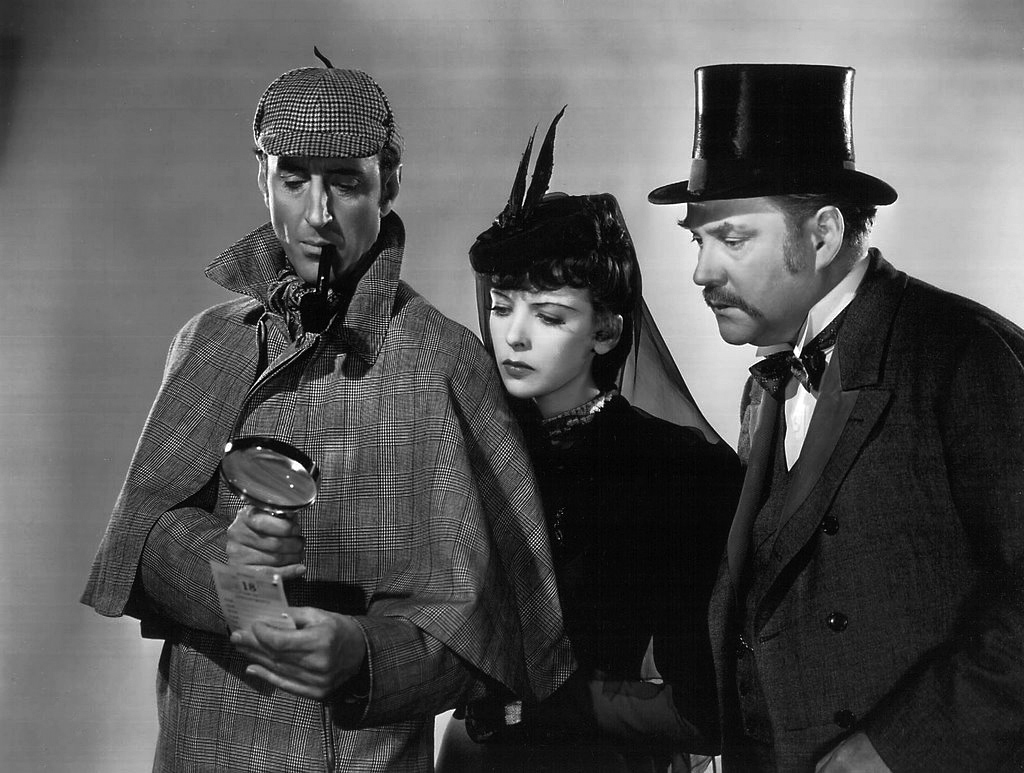
Sherlock Holmes and John Watson are going to take a look at the data

The criterion of embarrassment is just one of the historical criteria used to select the parts of a piece of ancient literature that are likely to be historical. Other things in the source may have happened, but we can’t know them as history. If significant parts of a text are historical, it is possible to accept it as historical until there are specific reasons to say that some part of it is NOT historical.

Here is William Lane Craig’s list of criteria for a saying or event to be historical:

  1. Historical congruence: S fits in with known historical facts concerning the context in which S is said to have occurred.
  2. Independent, early attestation: S appears in multiple sources which are near to the time at which S is alleged to have occurred and which depend neither upon each other nor a common source.
  3. Embarrassment: S is awkward or counter-productive for the persons who serve as the source of information for S.
  4. Dissimilarity: S is unlike antecedent Jewish thought-forms and/or unlike subsequent Christian thought-forms.
  5. Semitisms: traces in the narrative of Aramaic or Hebrew linguistic forms.
  6. Coherence: S is consistent with already established facts about Jesus.

The criteria is the same for liberal historians and conservative historians, although some historians weight one criteria more than others when trying to evaluate the historicity of different New Testament parts.


What’s amazing is that even liberal historians will give you facts that are embarrassing to the authors as “historical”.

Anyway, here are 8 examples of parts of the New Testament that exhibit the criterion of embarrassment, thanks to theologian C. Michael Patton.

  1. Jesus’ Baptism
  2. Jesus’ Family Did Not Believe
  3. John the Baptist’s Doubt
  4. The Disciples Doubted After the Resurrection
  5. Jesus Does not Know the Time of His Coming
  6. Women are the First to Witness the Resurrection
  7. Jesus Cursed a Fig Tree
  8. Death and Resurrection of Christ

I think 6 and 8 are the ones I want you to take away with you when you finish this post.

Here they are:

Women are the First to Witness the Resurrection

This is one that is often brought up. Craig Keener puts it well enough: “The witness of women at the tomb is very likely historical, precisely because it was so offensive to the larger culture — not the sort of testimony one would invent. Not all testimony was regarded as being of equal merit; the trustworthiness of witnesses was considered essential. Yet most of Jesus’ Jewish contemporaries held much less esteem for the testimony of women than for that of men; this suspicion reflects a broader Mediterranean limited trust of women’s speech and testimony also enshrined in Roman law.” (Keener, The Historical Jesus, 331)

And:

Death and Resurrection of Christ

This easily escapes our notice since the basic story of Christ is so well known. However, both the death and resurrection of Christ are, from the standpoint of the culture of the day, embarrassing and damaging. Concerning the death of Christ on a cross, Paul sees this problem: “But we preach Christ crucified: a stumbling block to Jews and foolishness to Gentiles” (1 Cor. 1:23). The word used for “stumbling block” is skandalon. Louw-Nida defines this as “that which causes offense and thus arouses opposition.” Why? Because the Jews would never have thought their Messiah would have been hung on a tree. “Cursed is one who hangs on a tree” (Gal. 3:13; Deut 21:23). The Greeks thought of the resurrection as foolishness as they were dualist, essentially believing that the material world was evil and the spiritual world good. They would have scoffed at the idea that Christ returned to physical form. This is why later Greeks attempted to adapt the Christ story, doing away with the physical resurrection. Marcion is the most famous promoter of this view (see Docitism).

Now, when you are talking about the New Testament to your non-believing friends, you definitely want to draw attention to passages that are embarrassing to the authors. It will help you to be more convincing when you explain the New Testament like a historian.

By the way, you can read an entire post I did on all the criteria that historians use to evaluate ancient historical documents.