
Why wasn’t Hillary Clinton indicted for her private e-mail server?

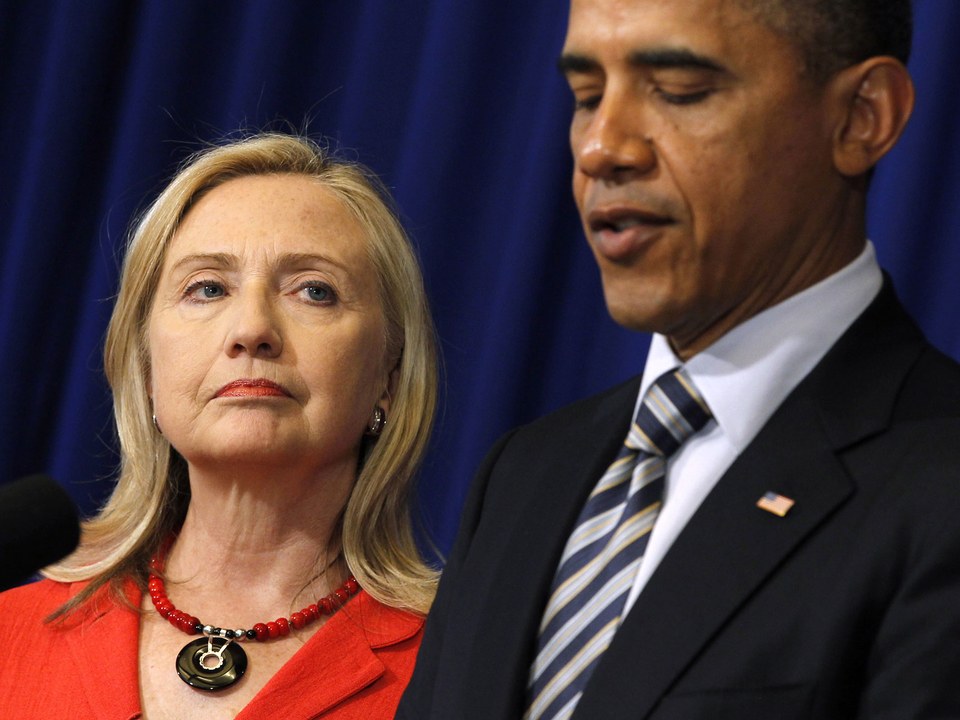
Hillary Clinton and Barack Obama

Andy McCarthy writes about it at National Review. McCarthy is a former assistant U.S. attorney, and that he led the 1995 prosecution of the World Trade Center bombers, as well as prosecuting other prominent terrorism cases. So, he’s familiar with the law, and familiar with national security. The National Review is one of the most prestigious conservative publications.

Excerpt:

From the first, these columns have argued that the whitewash of the Hillary Clinton–emails caper was President Barack Obama’s call — not the FBI’s, and not the Justice Department’s. […]The decision was inevitable. Obama, using a pseudonymous email account, had repeatedly communicated with Secretary Clinton over her private, non-secure email account.

These emails must have involved some classified information, given the nature of consultations between presidents and secretaries of state, the broad outlines of Obama’s own executive order defining classified intelligence (see EO 13526, section 1.4), and the fact that the Obama administration adamantly refused to disclose the Clinton–Obama emails. If classified information was mishandled, it was necessarily mishandled on both ends of these email exchanges.

If Clinton had been charged, Obama’s culpable involvement would have been patent. In any prosecution of Clinton, the Clinton–Obama emails would have been in the spotlight. For the prosecution, they would be more proof of willful (or, if you prefer, grossly negligent) mishandling of intelligence. More significantly, for Clinton’s defense, they would show that Obama was complicit in Clinton’s conduct yet faced no criminal charges.

That is why such an indictment of Hillary Clinton was never going to happen.

He explains how we know that Obama knew about the Clinton private, unsecure, bathroom closet e-mail server:

As his counselors grappled with how to address his own involvement in Clinton’s misconduct, Obama deceptively told CBS News in a March 7 interview that he had found out about Clinton’s use of personal email to conduct State Department business “the same time everybody else learned it through news reports.” Perhaps he was confident that, because he had used an alias in communicating with Clinton, his emails to and from her — estimated to number around 20 — would remain undiscovered.

His and Clinton’s advisers were not so confident. Right after the interview aired, Clinton campaign secretary Josh Scherwin emailed Jennifer Palmieri and other senior campaign staffers, stating: “Jen you probably have more on this but it looks like POTUS just said he found out HRC was using her personal email when he saw it on the news.”

Scherwin’s alert was forwarded to Mills. Shortly afterwards, an agitated Mills emailed Podesta: “We need to clean this up — he has emails from her — they do not say state.gov.” (That is, Obama had emails from Clinton, which he had to know were from a private account since her address did not end in “@state.gov” as State Department emails do.)

They needed to “clean this up”.

Just to reiterate, there is only one reason why someone has a private e-mail server, and that is to escape the record-keeping requirements of their employer. If all your e-mails are stored on your private, unsecure, bathroom closet server, then you can just delete them when you want, and your employer will never know about them. And then if you’ve been pedaling the foreign policy of the United States for donations to your “foundation”, then no one will ever find out.

This could not be allowed to be linked back to Obama, and so it was not allowed to be linked back to Obama.

McCarthy explains:

In April 2016, in another nationally televised interview, Obama made clear that he did not want Clinton to be indicted. His rationale was a legally frivolous straw man: Clinton had not intended to harm national security. This was not an element of the felony offenses she had committed; nor was it in dispute. No matter: Obama’s analysis was the stated view of the chief executive. If, as was sure to happen, his subordinates in the executive law-enforcement agencies conformed their decisions to his stated view, there would be no prosecution.

Within a few weeks, even though the investigation was ostensibly still underway and over a dozen key witnesses — including Clinton herself — had not yet been interviewed, the FBI began drafting Comey’s remarks that would close the investigation. There would be no prosecution.

On June 27, Lynch met with Clinton’s husband, former President Bill Clinton, on an out-of-the-way Arizona tarmac, where their security details arranged for both their planes to be parked.

Over the next few days, the FBI took pains to strike any reference to Obama’s emails with Mrs. Clinton from the statement in which Comey would effectively end the “matter” with no prosecution.

And remember, we have a second FBI scandal being investigated, now. We’re trying to figure out whether the FBI used the Trump-Russia dossier, which was funded by the Clinton campaign, in order to get FISA court warrants to conduct surveillance on Trump and Trump associates. Just a little extra help for their favored presidential candidate, Hillary Clinton. Again, if true – we’re still investigating.

I used to think that the worst thing the Obama administration did was the IRS persecution of conservative groups ahead of Obama’s re-election campaign in 2012. And now there’s this new scandal.  Now we’re finding out little by little what the Obama administration really did, but we’ll probably never know the whole truth.
What is masculinity, and why do leftists oppose it?

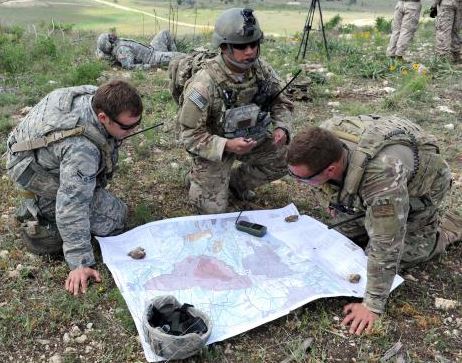
Air Force TACPs confirm target locations with their map
Air Force TACPs confirm target locations with their map and GPS

My friend Adina shared a splendid article from the American Thinker with me. People often ask me why I speak about policy and politics so much on a Christian apologetics blog. My usual answer is that things like money and religious liberty are central to how Christians run their lives. But this article made me think of a deeper reason, one that’s been the driving force in my life for a long time.

First, let’s see some of the article, then I’ll talk about why this article is a key to really understanding men like me.

Excerpt:

An ongoing mantra of the left is that everyone is a victim, with a singular carve-out for white men.  A large group of the female population has embraced this chant.

While there may be a number of grievances put forth by this movement, there also comes a theme that is particularly dangerous: the feminist attack on masculinity.  This is derived not only from feminists; it comes from the left in general.

There has emerged a war on masculinity.  Why?  Because masculine men are harder to control under tyrannical socialism.  The modern beta male, on the other hand, craves socialism.  This is why the left has branded masculinity as toxic: it stands as a roadblock to their endgame.

That’s the thesis of the article, and here is a snippet that I want to talk about:

The feminist hatred for masculinity is only another tool in the toolbox of communism.  Masculinity tends to make a man individualistic.  Individualistic men are capitalists, not communists.  They are men who cherish individual liberty, and they rely on themselves rather than on government.  Self-reliance is a four-letter word for leftists, and masculine men are generally self-reliant.  Beta males like Pajama Boy rely on government, and such modern men, devoid of any semblance of masculinity, are ideal for leftist indoctrination.

Were the frontiersmen communists or capitalists?  How about the cowboys?  How about the Navy SEALs or Army Rangers?  Sure, the press may find in the military a few Che Guevara t-shirt-wearing idiots and parade them all over the place, but I am willing to bet that the majority of SEAL Team 6 comprises masculine capitalists.

What games do young boys play?  They pretend to be cowboys.  They pretend to be soldiers.   They don’t pretend to be soviet textile workers slaving under Stalin’s system.  They don’t pretend to be entitled Millennial brats who congregate at Starbucks and talk about the wonders of socialism, either.  Most boys hit the ground embracing masculinity.  Some maintain it, but many have it berated out of them by the weak society they walk in or by their leftist parents.

Masculinity leads a man to seek to better himself in many regards, while collectivism thrives on mediocrity.  Collectivism in this country is sought by the lazy who don’t want to work but feel entitled to free handouts of all kinds.

I can confirm from my reading of SEAL and Ranger autobiographies that they are overwhelmingly conservative in their politics.

OK, so two points about this. First, I grew up in a very liberal environment where masculinity was already under attack starting from elementary school. It started in the public schools with the lazy public school teachers. In college, I saw lazy college students doing non-STEM degrees because they were easy. And then they wanted bailouts for their unpaid student loans.

I really noticed it when I worked for the government during a couple of summers. Most people in unionized jobs just don’t have the marketable skills to make it in the private sector, where people are paid based on performance and can easily be fired for failure to perform. Public schools and government are two places where people who can’t perform go in order to make money without having to perform. Even their raises are defined by collective bargaining, not individual merit. (My public school system even went on strike, and I would see the teachers holding signs in order to get paid more, instead of doing what normal people do, and producing more). Working in the public sector just not acceptable to people who want to work hard and advance by merit.

The more I experienced this, as a student and as a government employee, the more I realized that I wanted to get as far away as possible from laws and policies that reflect a desire to provide security for lazy people. I wanted these people out of my life. I didn’t want them getting my money. I did not want them making the rules that I had to live by. I wanted to cut government funding and enact right-to-work and school choice laws. Just to stop the forced funding of lazy people through mandatory taxes. I didn’t yet realize that there was any masculine-feminine distinction going on, I just knew that these were lazy people, they made poor choices because of their desire for fun and laziness, and they ought to be starving, not getting paid. And as the left started to crack down on free speech, guns, and other freedoms, I started a lifelong journey from blue states to red states. I just wanted nothing to do with these people interfering in my life, and leeching off of me. I wanted to post pictures of a Steyr Aug on Twitter and tag all my female public school teachers and their nanny state allies, who didn’t like guns because “they are loud and scary”. (Note: I do not yet own a Steyr Aug. Maybe some day.).

My second point is about how this denigration of masculinity works out in relationships.

I wanted to get married pretty much from high school. Since I didn’t have a stay at home mom, I decided early on that I wanted that for my children. I can remember thinking about this in my junior year of high school (grade 11). So, I talked to my Dad about it, and he suggested that I not follow my dream of becoming an English teacher, and instead focus on computer science. I was just as good at computer science as English literature in those days – good enough for the class awards every year in both subjects. So, I got the BS and the MS, and then moved to find work that would pay a lot. And I saved a lot of what I earned.

Fast forward to my relationships. What I found is that women who were influenced by leftism had zero respect for my ability to lead in areas like education, career and finance. Since they had been taught that masculinity was toxic, they would often prefer younger, penniless, unemployed students who were more easily manipulated. They resented that I would offer them advice about what to study, where to work, and how to save more, which – along with apologetics and raising parrots – is about the only stuff I’m qualified to give advice about! Basically, they had been trained to see male competence as toxic. Male leadership – even when it was clearly demonstrated from past success – was toxic. And the “best” men were the men who let them make decisions based on their feelings, which mostly involved pursuing fun and being irresponsible – and sometimes even immoral. Men exist to give women “feelings”, and for no other purpose than that.

Well, that’s what I wanted to say about how my experience with anti-masculinity in education, career and relationships has affected me. My masculinity came about naturally, as a result of encountering leftism in different areas of my life. And I think having to deal with it up close just pushed me further in the masculine direction. That is not to say that I am a promiscuous, risk-taking thug. I’m chaste, I’m a software engineer, I don’t drink, I have no tattoos or piercings, I’ve never been arrested, and I’ve saved most of what I earned. But if I could move to a place where government kept out of my business and out of my wallet, then I’d move. If I could find a woman who respected the strengths of men, then I’d marry her.

I basically want to be in a place where the government and the women around me are respectful of my different priorities and different life goals. Unfortunately, I’m living in a time of great foolishness, and much of that has been brought about by leftism. Much of my income is confiscated so that other people can spend it and call themselves “generous” with money they did not, and could not, earn themselves. My liberty is constrained, and the people who cost me money or do me harm – illegal immigrants, criminals, terrorists, etc. – are treated better than I am. All in the name of “compassion”. We are in a time and place where people in high places are at war with masculinity. I wish I could opt out of every nanny state policy, but there’s no opt-out.

William Lane Craig debates Austin Dacey: Does God Exist?

Two tough rams butt heads, and may the best ram win!

Here is the video and summary of a debate between Christian theist William Lane Craig and Austin Dacey at Purdue University in 2004 about the existence of God.

The debaters:

The video: (2 hours)

The video shows the speakers and powerpoint slides of their arguments. Austin Dacey is one of the top atheist debaters, and I would put him second to Peter Millican alone, with Walter Sinnott-Armstrong in third place. This is the debate to show people who are new to apologetics. The debate with Peter Millican is better for advanced students, and that’s no surprise since he teaches at Oxford University and is familiar with all of Dr. Craig’s work. The Craig-Dacey debate is the one that I give to my co-workers.

By the way, you can get the DVDs and CDs for the first Craig-Dacey debate and the second Craig-Dacey debate and the second Craig-Sinnott-Armstrong debate. The Peter Millican debate is not available on DVD, but the link above (Peter Millican) has the video and my summary.

Dr. Dacey’s 5 arguments below are all good arguments that you find in the academic literature. He is also an effective and engaging speaker, This is a great debate to watch!

SUMMARY of the opening speeches:

Dr. Craig’s opening statement:

Dr. Craig will present six reasons why God exists:

  1. (Contingency argument) God is the best explanation of why something exists rather than nothing
  2. (Cosmological argument)  God’s existence is implied by the origin of the universe
  3. (Fine-tuning argument) The fine-tuning of the universe for intelligent life points to a designer of the cosmos
  4. (Moral argument) God is the best explanation for the existence of objective moral values and objective moral duties
  5. (Miracles argument) The historical facts surrounding the life, death and resurrection of Jesus
  6. (Religious experience) God’s existence is directly knowable even apart from arguments

Dr. Dacey’s opening argument:

There are two ways to disprove God’s existence, by showing that the concept of God is self-contradictory, or by showing that certain facts about ourselves and the world are incompatible with what we would expect to be true if God did exist. Dr. Dacey will focus on the second kind of argument.

  1. The hiddenness of God
  2. The success of science in explaining nature without needing a supernatural agency
  3. The dependence of mind on physical processes in the brain
  4. Naturalistic evolution
  5. The existence of gratuitous / pointless evil and suffering

One final point:

One thing that I have to point out is that Dr. Dacey quotes Brian Greene during the debate to counter Dr. Craig’s cosmological argument. Dr. Craig could not respond because he can’t see the context of the quote. However, Dr. Craig had a rematch with Dr. Dacey where was able to read the context of the quote and defuse Dr. Dacey’s objection. This is what he wrote in his August 2005 newsletter after the re-match:

The following week, I was off an another three-day trip, this time to California State University at Fresno. As part of a week of campus outreach the Veritas Forum scheduled a debate on the existence of God between me and Austin Dacey, whom I had debated last spring at Purdue University. In preparation for the rematch I adopted two strategies: (1) Since Dacey had come to the Purdue debate with prepared speeches, I decided to throw him for a loop by offering a different set of arguments for God, so that his canned objections wouldn’t apply. I chose to focus on the cosmological argument, giving four separate arguments for the beginning of the universe, and on the evidence for Jesus’ resurrection. (2) I reviewed our previous debate carefully, preparing critiques of his five atheistic arguments. In the process I found that he had seriously misunderstood or misrepresented a statement by a scientist on the Big Bang; so I brought along the book itself in case Dacey quoted this source again. I figured he might change his arguments just as I was doing; but I wanted to be ready in case he used his old arguments again.

[…]The auditorium was packed that night for the debate, and I later learned that there were overflow rooms, too. To my surprise Dr. Dacey gave the very same case he had presented at Purdue; so he really got clobbered on those arguments. Because he wasn’t prepared for my new arguments, he didn’t even respond to two of my arguments for the beginning of the universe, though he did a credible job responding to the others. I was pleased when he attacked the Big Bang by quoting the same scientist as before, because I then held up the book, specified the page number, and proceeded to quote the context to show what the scientist really meant.

Dr. Craig is always prepared!