Category Archives: Commentary

What is the real issue in the push for legalized abortion?

I think the main cause of the desire for legalized abortion, is that women and men do not want to take responsibility for their actions.

The sexual act always has a chance of making a baby. If people who are having sex are not ready to take care of a baby, without the government’s help, then they should not have sex. We should not take chances with other people’s lives just so we can do risky things that make us feel good. The needs of grown-ups to feel good does not trump the right to life of another (unborn) human being. We have to sometimes give up things that make us feel good in order to avoid harming others.

I think the reason why people push abortion is because they want to believe that pre-marital recreational sex is normal. The people who push these policies are often those who had sex themselves before they were married, perhaps because it was fun (men) or perhaps because they wanted attention from the opposite sex (women). They wanted the recreational sex to feel good, but didn’t want to be saddled with the consequences of their desire for happiness.

I think the solution is to replace recreational pre-marital sex with chastity, courting and marriage. Men need to learn to control their desires, and make good decisions to prepare for being a husband and father, and get married, before they have sex. Women need to learn to do without male attention, to prepare themselves for having a husband and children, and to have sex only after they are married. Pre-marital sex isn’t an appropriate way for a woman to get attention from a man. There are other ways. And we should be training men to respond to those other ways. We should also be encouraging fathers to stay married and model love for their children by loving their wives.

We should not have any laws or policies that discourage men from preparing for their role of protector/provider/moral-and-spiritual-leader in a marriage. Sex education should not be subsidized or promoted by government because it makes children learn about sex outside of the context of marriage. And we should likewise not have any laws or policies that discourage women from preparing for marriage, by making husbands seem unnecessary to having and raising children. For example, we should end welfare payments for single mothers to make it clear that men are needed to provide for children, and that men should be selected by women for that role.

Children need a stable relationship with their married biological mother and father. So government has to promote marriage. Government may have to give up promoting third-wave feminism so that we can strengthen marriage, since third-wave feminism is opposed to marriage. We may need to to roll-back to first-wave (equal opportunity) feminism and give up the misguided quest to equate men with women in every area of life.

And we shouldn’t be pushing sex education as a way of removing the moral prohibitions on pre-marital sex. Those prohibitions were there for a reason and people who have pre-marital sex SHOULD feel bad. The solution is NOT to tell everyone that there is nothing wrong with it just because the people who do it want to feel better about themselves by making everyone agree with them. I think the left uses the public schools to beat down moral standards so that they will feel better about their own immorality. But immorality is harmful – and it’s better for young people to abide by traditional moral rules and avoid harming themselves and others than for grown-ups to avoid feeling bad for breaking those rules. Sorry grown-ups, but maybe it feels bad because it is bad – and stop trying to tell everyone that what you did was fine. It wasn’t fine. It was wrong.

Related posts

How lawsuit abuse hurts businesses and raises unemployment

Consdier this paper from the Heritage Foundation, featuring a variety of views on lawsuit abuse.

Excerpt:

LAWRENCE J. McQUILLAN, Ph.D.: I am an economist. I focus on this issue as an economic issue, an economic problem. I have been working on this issue for about four years as a full-time project, and the first study that we did in 2006 was Jackpot Justice, which Hans mentioned earlier.

In this study, what we set out to do is measure the total cost of the U.S. tort liability system and put that cost in perspective. Hans mentioned a figure of $252 billion a year. That is the direct cost of the tort liability system, but what we wanted to do in this study is also measure the indirect cost. When we crunched the numbers, we arrived at a total of $865 billion annually as the cost.

It is a lawsuit industry. That’s really the way to look at it. It truly is an industry in terms of the size, scope, and amount of resources devoted to it. To put it in perspective, it’s roughly the size of the U.S. restaurant industry: About 6.5 percent of GDP would be the equivalent. It is about 30 times what the National Institutes of Health spends each year on finding cures for deadly diseases. It’s a huge amount of resources that are diverted toward, basically, a transfer system.

The Costs of Lawsuit Abuse

Every year, lawsuit abuse costs each American about $2,000. That is the cost that is factored into all the goods and services that we buy, from ladders to lawnmowers. Built into every price is a component to pay for liability insurance and lawsuit defense.

We estimated the wasteful part of that $865 billion to be about $589 billion a year. In other words, you could remove that part from this total cost and not change manufacturers’ incentives to produce safe products. You could still fully compensate truly injured individuals.

Here is one of the ways that lawsuit abuse changes the free market:

Indirect Costs: Defensive Medicine[…]The first one that gets talked about a lot these days is defensive medicine. Ninety-three percent of all physicians report practicing defensive medicine. These are basically unnecessary tests, procedures, referrals that they know are not really medically necessary to protect the patient, but they do them anyway to protect themselves from litigation. About 25 percent of all procedures, according to a survey last year by the Massachusetts Medical Society, are deemed by the physicians themselves to be unnecessary defensive medicine procedures.

We crunched the numbers in terms of how much this defensive medicine costs the economy. We arrived, in 2007, at $124 billion a year, which is about 8 percent of total health care expenditures. Today, that number would be roughly about $191 billion a year.

You also have to remember that these defensive medicine expenditures get passed along to all of us. We all end up paying for this in terms of our insurance. So insurance premiums go up, which then crowds out a lot of people from being able to afford insurance that they normally would be able to afford. We wanted to estimate what that costs. After crunching the numbers, we estimate that about 3.4 million Americans would have insurance today but do not because of the higher premiums due to just defensive medicine: today about $191 billion.

I think yesterday there was a report that came out that showed something like 14,000 people a year die because they do not have health insurance. It would not surprise me if a lot of these 14,000 people that die every year are part of those 3.4 million people.

And one more:

Indirect Costs: Research and Development

Another indirect cost of the excessive tort liability system is R&D impact. Of course, businesses have to spend a lot more money on legal defense that would otherwise go to product research and development, new product innovation, and new products being introduced. We estimated that total at about $367 billion a year of lost sales of new products that would otherwise come to market but do not because of the diversion of resources basically away from R&D and new product development toward legal defense: again, another huge indirect cost where it is hard to measure what would have been but is not.

Basically, the vaccine industry has fled the country. It is hard to find a manufacturer anymore in the U.S. that does vaccine development and manufacturing, primarily because of liability concerns. It was reported that the FDA granted the H1N1 virus vaccine to four companies to be manufactured, and without much of a surprise, three of the four companies are actually located outside the U.S.: Swiss, Australian, and French companies were all awarded the vaccine licenses.

There is one company in the U.S in Maryland, but I think it got the license to manufacture only because they have a technological advantage. They are going to produce an inhalable version of the vaccine rather than the standard injectable version. I think that is probably why they got a license. Otherwise, I think all of the manufacturers would have come from Europe or Australia.

That is a great example of how it really does impact U.S. business and how the liability system is forcing more and more business overseas. As a result, it hurts us in terms of the economy and job growth.

As another example, Volkswagen was going to introduce a three-wheel vehicle, very green technology, that gets about 49 miles per gallon. They were going to sell it in the U.S. for about $17,000 a vehicle. Probably most people in this room would not want to drive this vehicle, but I can tell you that where I come from in California, it would have sold well. It would have had a big market. It actually got qualified, too, to use the HOV lanes in California.

At the last minute, Volkswagen decided to pull it from the U.S. and not market it here because of liability concerns, but it is available in Europe. So once again, another example where European markets are perceived to be more favorable in terms of liability than the U.S.

I do not think it is any accident, too, that they tend not to have punitive damages in Europe and, also, that they have the loser pay system. This is another example of the indirect costs, fewer products available in the U.S. A lot of people probably would have loved to buy this car, but it is not available.

In terms of how expensive the U.S. system is compared to other countries of comparable standards of living, the estimate is that we have about 59 percent higher tort costs. These are direct costs. These are awards, attorneys’ fees, and administrative expenses. This does not include the indirect costs that I just talked about, but it gives you a good indication of our system compared to other systems in the world. It is just much more expensive for compensating injured individuals.

That is just one of the perspectives provided in this excellent article.

If we expect to have jobs in the future, then we should be thinking about who we expect to hire us. Tacking on frivolous costs onto business owners who develop products and services that we need means that there will be fewer businesses to hire us when we are looking for jobs and less choice and competition when we make purchases.

Keep in mind that trial lawyers are one of the pillars of the Democrat party, and they fight against any regulation of lawsuit abuse.

I noticed that Hans Bader published an article here talking about how the Supreme Court has been attacking businesses. This is one of the reasons why we are bleeding jobs to other countries. Judicial activism is hostile to business and the free market.

Does the church prepare people for the difficulty of evangelism?

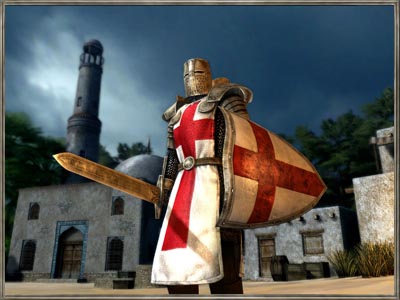
Battle-scarred means battle-ready

This post over at Reason to Stand is the kind of post that I wish I had written.

Excerpt:

There is an old saying that “war is hell”. That saying applies as much to ideological warfare as it does to physical warfare. Sure, the pain and consequences are often (though not necessarily) radically different, but the brutality is no less real.

I am constantly amazed by other Christians who oooh and ahhh when I relay stories of past exploits where I’ve engaged people from various ideological backgrounds. They are usually enamored by such tailes and some even form a desire to join in such exploits themselves among the people they encounter on a daily basis.

But for far too many, it ends there. I never see them later and hear their grand tales of past exploits. They never take the steps to become a warrior.

Why is that?

And then he quotes a quote from Dietrich Bonhoeffer which has a special meaning for me. I know that quote very well.

This post really struck at the core of my frustration with the church. Basically, the biggest problem with church is that it is all about having fun and having your emotions tickled. There is no part of church that suggests the idea that being an authentic Christian might require any work at all. And certainly nothing to make you think that being a Christian might involve any conflict – like opposing atheism in debates, or opposing abortion, or even secularized public schools that teach evolution and sex education with taxpayer money.

I was recently listening to an episode of Unbelievable where an atheistic female politician was debating Os Guinness, who I consider to be a functional atheist. But forget about the debate. The main thing that was interesting was that the woman was quite a high ranking politician and she attended church because she enjoyed the beautiful building, the community of nice people dressed up, and especially the nice music and singing. But, her actual beliefs were atheistic.

I actually know a few women who are pro-abortion, pro-same-sex-marriage, pro-big-government, who also enjoy attending church for the singing, and such. And my point is that church, as Wes noted in his post, does nothing to tell people that there is anything more to Christianity than singing, pageantry and community. What matters is the show. In Catholic and Orthodox churches, the show is the liturgy. In Protestant churches, the show is the dancing and the singing and the talking about life having meaning and someone looking out for us who will give us goodies no matter what we do.

Do you know who gets left out of the church in this picture? People who actually think that Christianity is true, and who know how to talk about it, and how to live it out. It’s disgusting. Read Wes’ post and think about it. We need to be celebrating our warriors, not the pastors and especially not the worship leaders. The people who actually talk about Christianity outside the church. That should be the marker of authentic Christianity – not singing, and not talking about things from a pulpit in a sing-song voice.