
Category Archives: Commentary

Why do atheists like Dan Barker abandon their faith?

Unbelievable’s latest radio show featured a discussion with former Christian Dan Barker, the founder and co-President of the Freedom From Religion Foundation.

The MP3 file is here. (60 minutes)

I thought that I would make some general comments about why I think that many people leave the Christian faith, and what you should be careful of in order to avoid following in Dan Barker’s footsteps, specifically.

Basically, there are four major reasons why people leave Christianity.

  1. They want to do something immoral with impunity. This type of person wants to do something immoral that is forbidden by Christianity, like pre-marital sex. They dump Christianity in order to feel better about seeking happiness in this life, apart from God and his moral duties.
  2. They want to pursue happiness in irresponsible ways. This type of person thinks that God’s job is to save them when they act irresponsibly while pursuing happiness. When God disappoints them by not giving them what they want in order to be happy, they leave the faith.
  3. They want to be loved by people, not by God. This type of person thinks that Christianity is a tool that they can use to become popular. When they first try to articulate the gospel in public, they find that people don’t like them as much, and they feel bad about offending people with exclusive truth claims that they cannot back up using logic and evidence. So, they water down Christianity to get along with atheists, liberal Christians and other religions. Finally, they jettison Christianity completely and focus on making everyone feel good about whatever they believe.
  4. They don’t want to learn to defend their faith. This type of person is asked questions by skeptics that they cannot answer. Usually this happens when people go to university after growing up in the shelter of the Church. The questions and peer pressure make them feel stupid. Rather than investigate Christianity to see if it’s true and to prepare to defend it in public, they dump it so they can be thought of as part of the “smart” crowd.

Now listen to the discussion and see if you can identify some of these factors from Barker’s own carefully-prepared words. He is trying very hard to make himself look honest and moderate, because he wants Christians to be sympathetic with his story and his motives for leaving Christianity. But I think that there is enough in his statements to construct a different hypothesis of why he left Christianity.

I’ve grouped the data by risk factor. (These are not his exact views)

Non-rational, emotional approach to Christianity

  • he was raised in a devout Christian family where he probably wouldn’t have faced skeptical questions
  • he converted to Christianity at age 15 as a result of a religious experience, not a serious investigation
  • his idea of God was probably idealized and uninformed, e.g. – a loving God who wants us to be happy
  • he wandered around from church to church preaching, with no fixed address or source of income
  • he earned money by collecting “love offerings” from churches where he performed his music
  • he wrote Christian songs and Christian musicals, but nothing substantive on apologetics and theology
  • he worked in three churches known for being anti-intellectual and fundamentalist
  • there’s no evidence that of any deep study of philosophy, science and history during this time

Desire to gain acceptance from non-Christians

  • he began to notice that some people were uncomfortable with sin and Hell
  • he began to avoid preaching about sin and Hell in order to make these people comfortable
  • he watered-down the gospel to focus on helping people to be happy in this life
  • his manic approach to Christian ministry was challenged by the “real life” needs of his growing family
  • he met liberal pastors while performing his music in their churches
  • he found it difficult to disagree with them because they seemed to be “good” people
  • he watered down his message further in order to appeal to people across the theological spectrum

Ignorance of Christian apologetics

  • he began to think that if there are many different views of religion, then no view can be correct
  • he was not intellectually capable of using logic and evidence to test these competing claims to see which was true
  • he decided to instead re-interpret Christian truth claims as non-rational opinions, so they could all be “valid”
  • he became a theological liberal, abandoning theism for an impersonal “ground of being”
  • he embraced religious pluralism, the view that all religions are non-rational and make no testable truth claims
  • he began to see God as a “metaphor” whose purpose is to make people have a sense of meaning and purpose
  • he jettisoned God completely and focused more on helping people find meaning and morality apart from God
  • seems to think that religion is about having a “great life”, and felt that you can have a “great life” without religion
  • seems to think that religion is about being “good”, and felt that you can be “good” without religion
  • religion makes people feel bad by telling them what to do instead of letting them do anything they want
  • religion makes people feel bad by telling them what is true, instead of letting them believe whatever they want
  • religion makes people feel bad by telling them that God will hold them accountable for their beliefs and actions

So what do I think happened?

I think he abandoned his faith because he wanted people to like him and because he needed to be invited to liberal churches in order to make money to pay for the “real life” needs of his family.

He seems to have thought that Christianity is about having his needs met and being liked by others. I think he wanted to feel good and to make people feel good with his preaching and singing. He seems to have become aware that the exclusive claims of Christianity made other people feel offended, so he cut them out. He hadn’t studied philosophy, science or history so that he would have been able to demonstrate to other people whether what he was saying was true. It’s hard to offend people when you don’t really know whether your claims are true or not, and when you don’t know how to demonstrate whether they are true or not.

I also think money was a factor. It seems to me that it would have hurt his career and reduced his invitations from liberal churches if he had kept up teaching biblical Christianity. In order to appeal to a wider audience, (like many Christian singers do – e.g. – Amy Grant, Jars of Clay, etc.), he would have felt pressured to water down the unpleasant parts of his preaching and singing. Lacking apologetics skill, he instead abandoned his message. He needed to account for his family’s needs and “real life”, and exclusive truth claims and Hell-talk would probably have reduced his ability to do that. It seems to me that he should have scaled back his extreme schedule of preaching and singing, and instead gotten a steady job so that he could afford “real life” and a family without being pressured into altering his message.

Life isn’t a fairy tale. God isn’t there to reward risky behavior. We need to be more shrewd about financial matters so that we have the ability to not care about what people think of us. Look at this blog. I work all day as a senior software engineer with two degrees in computer science so that I can refuse donations. I save most of what I make in case a tragedy strikes. Since I am financially secure, I can say what I think, and disregard anyone who wants me to change my message because they are offended. Becoming a Christian isn’t a license to behave irrationally and immaturely with money. For some people, (like William Lane Craig), stepping out in faith works. But if it doesn’t work, it’s better to retreat and re-trench, rather than to compromise your message for money.

Barker didn’t seem to make any effort to deal intellectually with typical challenges like the existence of Hell and religious pluralism. He just wanted to be liked by people instead of being liked by God. He seemed to have thought that being a Christian would make him happy and that other people would all respond to him and like him without having to do any work to explain why Christianity is true. But that’s not Biblical. When the singing and preaching is over, you still have to know how to give an answer to non-Christians. But Barker couldn’t give an answer – not one that allowed him to retain his beliefs. He had not prepared a defense.

What does Dan Barker think about Christianity today?

Many atheists today are interested in eradicating public expressions of Christian beliefs in the public square, because they hate Christianity and believe that Christians should not be allowed to make them feel bad by exercising their rights of free speech. Is Dan Barker one of these militant atheists?

Well, take a look at this video, in which he objects to a nativity scene and demands that an atheistic denunciation of theism be posted alongside it. In the video, Barker explains that the nativity scene is hate speech, and that the baby Jesus is a dictator. He seems to be totally oblivious to the the idea that if Christianity is true, then it doesn’t matter whether it’s mean and exclusive. And this seems to me to have been his problem all along, from the day of his “conversion”.

So the real question is this: is it true? Barker seems to be much more interested in asking “is it nice?” and “will it make me happy?”.

Graduate students with non-STEM degrees increasingly dependent on welfare programs

From the Chronicle of Higher Education.

Excerpt:

Melissa Bruninga-Matteau, a medieval-history Ph.D. and adjunct professor who gets food stamps: “I’ve been able to make enough to live on. Until now.”

“I am not a welfare queen,” says Melissa Bruninga-Matteau.

That’s how she feels compelled to start a conversation about how she, a white woman with a Ph.D. in medieval history and an adjunct professor, came to rely on food stamps and Medicaid. Ms. Bruninga-Matteau, a 43-year-old single mother who teaches two humanities courses at Yavapai College, in Prescott, Ariz., says the stereotype of the people receiving such aid does not reflect reality. Recipients include growing numbers of people like her, the highly educated, whose advanced degrees have not insulated them from financial hardship.

“I find it horrifying that someone who stands in front of college classes and teaches is on welfare,” she says.

Ms. Bruninga-Matteau grew up in an upper-middle class family in Montana that valued hard work and saw educational achievement as the pathway to a successful career and a prosperous life. She entered graduate school at the University of California at Irvine in 2002, idealistic about landing a tenure-track job in her field. She never imagined that she’d end up trying to eke out a living, teaching college for poverty wages, with no benefits or job security.

Ms. Bruninga-Matteau always wanted to teach. She started working as an adjunct in graduate school. This semester she is working 20 hours each week, prepping, teaching, advising, and grading papers for two courses at Yavapai, a community college with campuses in Chino Valley, Clarkdale, Prescott, Prescott Valley, and Sedona. Her take-home pay is $900 a month, of which $750 goes to rent. Each week, she spends $40 on gas to get her to the campus; she lives 43 miles away, where housing is cheaper.

Ms. Bruninga-Matteau does not blame Yavapai College for her situation but rather the “systematic defunding of higher education.” In Arizona last year, Gov. Jan Brewer, a Republican, signed a budget that cut the state’s allocation to Yavapai’s operating budget from $4.3-million to $900,000, which represented a 7.6 percent reduction in the college’s operating budget. The cut led to an 18,000-hour reduction in the use of part-time faculty like Ms. Bruninga-Matteau.

“The media gives us this image that people who are on public assistance are dropouts, on drugs or alcohol, and are irresponsible,” she says. “I’m not irresponsible. I’m highly educated. I have a whole lot of skills besides knowing about medieval history, and I’ve had other jobs. I’ve never made a lot of money, but I’ve been able to make enough to live on. Until now.”

She’s irresponsible, because she expects the people who choose to study rather difficult and unpleasant subjects like nursing and computer science and economics to pay for her lifestyle through taxation and “higher education funding”. I do think it’s important to point out that the main driver of higher tuition is increasing government funding of education, and that this increasing funding of higher education is nothing but corporate welfare.

Excerpt:

The most obvious way that colleges might capture federal student aid is by raising tuition. Research to date has been inconclusive, but Stephanie Riegg Cellini of George Washington University and Claudia Goldin of Harvard have provided compelling new analysis. Cellini and Goldin looked at for-profit colleges, utilizing the key distinction that only some for-profit schools are eligible for federal aid. Riegg and Goldin find that that aid-eligible institutions “charge much higher tuition … across all states, samples, and specifications,” even when controlling for the content and quality of courses. The 75 percent difference in tuition between aid-eligible and ineligible for-profit colleges — an amount comparable to average per-student federal assistance — suggests that “institutions may indeed raise tuition to capture the maximum grant aid available.”

Here are some of the comments that I posted in a Facebook discussion about the CHE story:

I know that some may disagree with me, but this is why people need to focus on STEM fields and stay away from artsy stuff and Ph.Ds in general. We are in a recession. Trade school and STEM degrees only until things improve.

Also, no single motherhood by choice. Get married before you have children, and make sure you vet the husband carefully for his ability to protect, provide, commit and lead on moral and spiritual issues. This woman is not a victim. She chose her life, and the rest of us are paying for it. Nice tattoos by the way – that will really help when she’s looking for a job.

I am actually better at English than computer science, but I find myself with a BS and MS in computer science. We don’t get to do what we like. We do what we have to in order to be effective as Christians. According to the Bible, men have an obligation to not engage in premarital sex, and to marry before having children, and to provide for their families, or they have denied the faith. I would like to have studied English, but the Bible says no way.

I have no problem with people who can make a career out of the arts, like a Robert George or a William Lane Craig. But you can’t just go crazy. And I think men have a lot less freedom than women to choose their major, we have the obligation to be providers and we have to be selected by women based on whether we can fulfill that role (among other roles).

Women have more freedom because they are not saddled with the provider role like men are. However, I think that the times now are different than before. There is more discrimination against conservatives on campus in non-STEM fields and fewer non-STEM jobs in a competitive global economy. The safest fields are things like petroleum engineering, software engineering, etc.

If [people who major in the humanities] can make a living and support a family without relying on government-controlled redistribution of wealth, then I salute and encourage you. If you rely on the government, know that this money is being taken away from those who are doing things they don’t like at all in order to be independent and self-reliant. It is never good to be dependent on government. That money comes from people like me.

In response to an artsy challenger:

I am happy to be scorned by those who make poor choices so long as I can have my money back from them so that I can pursue my dreams. I didn’t see any of these artsy people in the lab at 4 AM completing their operating system class assignments, nor do I see them here working overtime on the weekend in the office. They can say anything and feel anything they want, and write plays and poetry all about their feelings, too. Just give me the money I earned back first. It’s not their money. They have no right to it.

One person asked why I was “always winter, never Christmas”, and I replied:

It is Christmas for the Christians who I send books and DVDs to, as well as for the Christian scholars I support, and the Christian conferences, debates and lectures I underwrite across the world. Unfortunately, every dollar taken from me is a dollar less for that Ph.D tuition of a Christian debater, a dollar less for the flight of that Christian apologetics speaker, a dollar less for that textbook for that Christian biology student, and a dollar less for the flowers being sent to that post-abortive woman who I counseled who is now in law school. I have a need for the money I earn, and when it’s sent to Planned Parenthood to pay for abortions by the government, my plan to serve God suffers. And finally, should I ever get married, I would like my wife to have the option of staying home with the children and even homeschooling them. That costs money. Somehow, I feel that given the choice between my homeschooling wife and the public school unions, the government will choose to give my money to the unions. Just a hunch.

I’m not Santa Claus – I have goals for the money I earn.

I think that people should go into the humanities when they are serious about making a career of it and can get the highest grades. But if they are coasting and only getting Bs and Cs and not paying attention in class, then drop out and go to trade school. Don’t complain later when you can’t find a job. STEM careers pay the most.

Top-earning degrees / college majors

Here’s my previous post on the woman who accumulated $185,000 of student debt studying the humanities and is likewise demanding handouts and claiming not to be responsible.

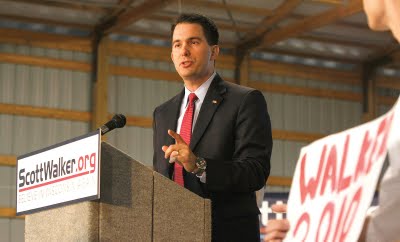
Looking for some inspiration? Here’s an interview with Wisconsin governor Scott Walker

Wisconsin Governor Scott Walker

This interview was conducted by John Hawkins, who runs Right Wing News.

Here’s a quick summary of why Scott Walker is famous – he stood up to the public sector unions:

Q. Outside of Wisconsin you are most famous for taking on the unions in your state; briefly tell us what you did legislatively and what the impact of it has been on the state.

A. The easiest way to explain it is we had a choice.  In the past the big union bosses had been in charge of both state and local government.  We made a change that ultimately put the hard working taxpayers back in charge and by that, what I mean is under the old system of collective bargaining, not only the state but local governments had to abide by union contracts that many times were run contrary to the best interest of the taxpayers and to the people they newly elected.  So we came in early 2011, we faced a big budget deficit, $3.6 billion per capita, one of the biggest in the country — and we knew to balance our budget we weren’t going to raise taxes, we weren’t going to do massive layoffs, we weren’t going to cut things like Medicaid.  Instead we put in place these long-term structure reforms that put the power back in the hands of, again, of the hard working taxpayers.

By pulling back on collective bargaining we empowered local governments, school districts, counties, cities, towns, villages, and the state to go out and control and not only get things like reasonable pension and healthcare contributions which were nowhere in line with the private sector, but they got to change work rules and everything else as part of running a government.  We went from a $3.6 billion budget deficit to today we finished our fiscal year off with just shy of a $760 million surplus.  We cut taxes a billion and a half and an unemployment rate that was once 9.2% is now 6.3% —  so we’ve had some positive results and we’re going to keep on that path.

What Scott Walker is famous for is that he passes laws that work so well that even in one of the bluest states, he can win elections. Why is that? It’s because if your policies are good, you will get good results. And people recognize good results regardless of their party identification. If you couple good results with sincerity and honesty, then you can win over a lot of independents and even some conservative Democrats.

And this is the part that made me the happiest to read:

Q. In your book you encourage Republicans to do something important that the GOP, much to its detriment, has gotten out of the habit of doing.  You said we should champion the vulnerable.  Talk a little bit about that, talk about why that’s important for Republicans to do.

A. Yeah, one of the things that frustrates me so much in the Presidential election is I thought there was a tremendous lost opportunity — and obviously the clearest example of that was when Republican nominees talked about the 47% and also in a similar conversation talked about not worrying about the poor because the poor had a safety net.  That really, truly doesn’t match where I’m at.  I don’t think it matches with people like Ronald Reagan who was a great inspiration for me as a kid.  I went back in the book and talked about how Reagan in 1980 at the National Convention in Detroit in his acceptance speech talked about things like saying if you’re living in poverty, we want to lift you out.  If you’re living in despair, we want to be hope, but that hope isn’t based on more government.  It’s based on empowering people with the skills and the talents and the abilities that they need to go out and control their own lives and so I think the message is really simple, I believe, and I think this was the missed opportunity.  I believe the president and his allies in Washington in particular measure success in government by how many people are dependent on government, by how many people are on Medicaid, by how many people are on food stamps, by how many people are on unemployment.  That’s why they want to extend unemployment benefits.  They want more people signed up, more people dependent.  I think we as Republicans should measure success by just the opposite — by how many people are no longer dependent on the government, not because we’ve got to be careful to articulate this correctly, not because we don’t care about people or because we want to push people out to the streets, but because we understand that true freedom and prosperity don’t come from the mighty hand of the government.  It comes from empowering the people to control their own lives and their own destiny.  One example that I give in the book that I’ve talked about before is we made a change in food stamps that said if you want to get food stamps, if you don’t have kids, you’re an adult in our state and you want to get food stamps, you’ve either got to be working part-time or you’ve got to be in one of my employment training programs, and I said it’s simple.

I don’t want to make it harder to get government assistance.  I want to make it easier to get a job and we’ve got to show people.  I think any of us who either have our own households or who have friends who have sons or daughters who are in their 20’s, they’re at college and at some point you say to your son or daughter eventually in their best interest, “Hey, it’s time to move out of the house.  It’s time to get your own job and your own place.”  That’s not about being heartless and cold.  That’s just the opposite.  It’s about you love your kids so much you want to get them out and help them get on their own two feet so they can have the pride that comes from work in controlling their own destiny.

Now, recently there was  post on Politico about 10 people who should give the Republican response to the state of the union address (SOTU), and Walker was in the top spot. I heard about this list on Dennis Prager’s show, and it came up again on Michael Medved’s show. Now I think Prager is more of a principled conservative, and Medved is more of a pragmatic moderate. And yet they both thought that Walker should do the response. I think that Republicans across the spectrum are realizing that we need to pick someone competent in order to be different from the Democrats.

During the Christmas vacation, I read governor Walker’s new book, which was a Christmas present from my friend ECM. If you want to learn more about governor Walker, I recommend picking that up. I actually got the audio version, and it’s read by governor Walker himself.

Related posts