
Tag Archives: Wisdom

The surprising pro-masculinity message in the “Far From the Madding Crowd” film

A man leading a woman upward
A man leading a woman upward: another in a series of posts designed to defeat feminism

So, I have about a half-dozen older and/or experienced Christian women who advise me and assist me in various ways. The wisest and most experienced is calm and thoughtful Dina. She has a very stressful job dealing with demanding women, and what she admires most in men is “masculinity”, which she defines as a man’s ability to tell a woman what is right and wrong, what God expects from her, what she should be doing with her life, and guiding her and providing for her through the steps to get there.

What makes Dina angry is when a man makes a fool of himself for youth and beauty, abdicating his role as moral and spiritual leader because of attraction / lust. According to Dina, men who have self-control think about what a woman should do that is morally right, with the goal of her producing a return for God. Men who are swayed by youth and beauty are willing to give up that leadership role in exchange for attention and/or sex.

So, with that said, Dina asked me to watch a recent movie called “Far From the Madding Crowd“, based on a novel by Thomas Hardy. I immediately said “no” because I know about Thomas Hardy from Tess of the D’Urbervilles, where he presents Tess as the helpless victim of Providence. I really hate that view of women, where they can do reckless, selfish things and then blame everyone but themselves for the destructive consequences of their own free-will decisions. But Dina said “wasn’t I right about the debate between David Robertson and Matt Dillahunty?” I said yes, and watched the movie. And of course, she was right, as she almost always is. This movie is a punch in the face to radical feminism, and the leading man is indeed a masculine leader, according to Dina’s definition of masculinity.

Here is a review of the movie by another lady I admire, Rebekah, up at her blog “The Thoughtful Christian Parent”.

Rebekah writes:

What does this 19th century tale offer to modern audiences?  This latest rendering emphasizes something actually surprising and unexpected given that it is made in our age of radical feminism.  It is Gabriel Oak’s character that shines the most, not the proto-feminist Bathsheba.  […]In Bathsheba and Gabriel we see how men and women support one another in such a way as to ensure a flourishing in any role that fate might thrust on them.

[…]The relationship between Gabriel and Bathsheba, though unequal in earthly terms of authority and wealth, is one of mutual dependence.  We see Oak taking on a role of both counselor and conscience with Bathsheba – roles that in her striving towards independence she struggles to admit her need for.  She is not unlike the modern feminist in this regard, nor is she unlike all of us in our relationship with the Lord.  Her struggle is best seen in the various times she repels Gabriel only to find herself in desperate situations in which only he can help.  The filmmakers’ clever use of a recurring theme of Bathsheba galloping after Gabriel on a horse when he is needed is particularly moving (and surprising) here.  In the end, the film resists the urge to pander to our more extreme modern views on what women require to thrive.

Gabriel Oak also seems to be an embodiment of the biblical virtue of selflessness.  We see in his actions towards Bathsheba the Philippians admonition to refrain from “being motivated by selfish ambition or vanity,” but rather “in humility, be moved to treat one another as more important than yourself.” Indeed, vanity itself can be seen as a fateful character flaw of every major character apart from Gabriel.  He alone is able to move past rejection and carry on.  In fact, he is required to go so far as to be under the authority of the very woman who rejected his offer of marriage and, despite his continuing affections for her, witness her being courted and then married by another far less worthy man, Frank Troy.  No other major character is able to accomplish this challenge to their pride.  Though Bathsheba does eventually overcome the rejection of her husband, she only does so after tremendous tragedy and with the selfless and steady support of Gabriel.

Gabriel respects her independence, but, like a good shepherd, stays close by to protect and guide her.  Though he cannot protect her from her free-will choices, he does warn her.  He then remains faithful to her in the midst of the trouble she brings upon herself.  In this, he is not unlike our God, for he allows her to stray, all the while letting her know of a better course when asked.  And, she does ask.

In an important scene at a party, where Bathsheba must decide whether or not to marry a particularly obsessive suitor, when she asks, “Tell me what to do, Gabriel,” he simply tells her to “Do what is right.”  Is that not like our Lord?  Gentle shepherd, indeed, for our wild, independent hearts.  In this, I see Gabriel as most suitable for the role as the husband written of in the epistle to the Ephesians.  He loves Bathsheba “just as Christ loved the church and gave himself for her…”

Men and women both struggle with self-centeredness, but men usually work themselves out of it by studying hard things in school, and doing hard work that pays. Men have a natural desire to provide for others, and it is actually a duty laid out for them in the Bible. As a result of studying and working at things they don’t like, men typically are better at resisting their feelings and desires. In fact, if you ever want to make a woman less self-centered and emotional, leading her to study STEM and work a demanding job is a good plan. Both Dina and Rebekah – like all of my female advisors – have STEM backgrounds, and demanding work histories.

I would be suspicious of men who don’t prioritize providing, especially as they get older, because it is the experience of self-denial and endurance that helps a man to want to lead a woman to do the same: deny her feelings and desires, and make prudent decisions that will allow her to love and serve others – including God – in a sustainable way. Over the long-term, this practice of effective, self-sacrificial love will be worth more to the woman than the short-term pursuit of fun and thrills. And men know this – we can look ahead and see where a woman needs to be, and then coach her on the interim steps, however difficult those may seem in the moment.

Dina’s advice to young women

I asked Dina to take a look at the draft of this post before I hit “Schedule” and Dina said:

What I would advise to all young women is not to expect a Gabriel Oak to be waiting for you at the end of your reckless years of hooking up, partying and wasting your youth on fun and men who have no desire to lead you to God or guide you to goodness. Don’t expect the hot stud that your friends approve of to turn into someone with the character of Oak with the magic powers of your premarital sex life. Find a man who doesn’t give in to your every whim, because if he does, you will only resent him for it, and blame him, for being what you thought you wanted him to be.  Find a man who leads, one who demonstrates self control, self denial, who can provide and protect. And most importantly, respect him for doing it.

Emphasis mine.

Sound advice from the Dina, young ladies. By the way, Dina’s favorite drama is the BBC production of “North and South” from 2004. I also give it a 10/10. If you’re looking for a good movie to get for Christmas, I recommend asking for that one.

Rebekah’s comments on the post

Rebekah wrote to me privately to react to the post:

I think you’ve touched on something important that’s a pitfall for women today – and really, men, too, but maybe less so – we live in a time of radical autonomy PLUS radical “feelings” orientation. Yes, I agree, women might be more prone to being affected by these because we do tend to be more feelings oriented. Plus, the pendulum has swung w.r.t. women’s rights compared to Hardy’s day.

Yet, can I say that from my virtuous single women friends I hear that it is hard to find a man that acts like a grownup? They are finding that many men watch porn and play video games after work each evening. They are not being responsible with their hearts – porn WILL affect their marriage one day. It’s a huge temptation for them. I think this is a major pitfall that men face today.

And, notice that each of these pitfalls – of men and women – feed and reinforce the other.

I would recommend STEM for everyone since the humanities have become so radicalized. I wanted to be an English major, as well, but my father wouldn’t let me because of the leftist values in those departments. STEM is a much safer bet and much surer return for the $$ spent.

That’s a generalization, though. I have a friend that majored in English at Hillsdale – a very conservative university. She’s amazing and brilliant. So, there are exceptions – I am sure you’d agree.

I am glad you liked the movie. And, I agree “North and South” is excellent – one of my favorite books and movies.

There are exceptions, I do agree.

Finally, I have some advice for Christian men. If you pick women who will advise you, don’t pick women who just want attention and control over you. Pick women like Dina who understand your male nature and will attempt to persuade you with facts and arguments, not feelings and sex appeal. And whatever you do, don’t marry someone who cannot communicate and disagree with you in an analytical way. That becomes a nightmare when they have the leverage of no-fault divorce to hold over you.
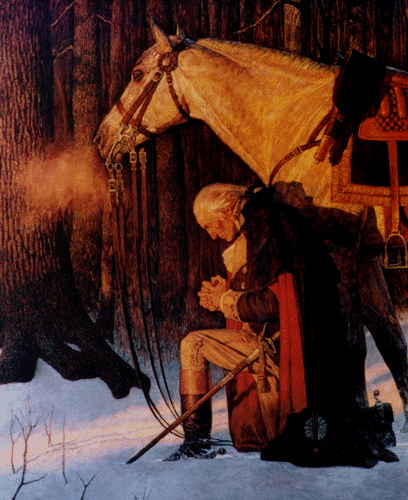

George Washington’s 1789 Thanksgiving Day proclamation

George Washington and Old Nelson pray
George Washington and his horse Old Nelson pray in the snow

To help us be thankful, here is a famous Thanksgiving day proclamation.

Here it is:

PRESIDENTIAL THANKSGIVING PROCLAMATIONS

1789-1815 : George Washington, John Adams, James Madison

THANKSGIVING DAY 1789

BY THE PRESIDENT OF THE UNITED STATES OF AMERICA – A PROCLAMATION

Whereas it is the duty of all Nations to acknowledge the providence of almighty God, to obey his will, to be grateful for his benefits, and humbly to implore his protection and favor – and Whereas both Houses of Congress have by their joint Committee requested me “to recommend to the People of the United States a day of public thanksgiving and prayer to be observed by acknowledging with grateful hearts the many signal favors of Almighty God, especially by affording them an opportunity peaceably to establish a form of government for their safety and happiness.”

Now therefore I do recommend and assign Thursday the 26th day of November next to be devoted by the People of these States to the service of that great and glorious Being, who is the beneficent Author of all the good that was, that is, or that will be – That we may then all unite in rendering unto him our sincere and humble thanks – for his kind care and protection of the People of this country previous to their becoming a Nation – for the signal and manifold mercies, and the favorable interpositions of his providence, which we experienced in the course and conclusion of the late war –for the great degree of tranquillity, union, and plenty, which we have since enjoyed – for the peaceable and rational manner in which we have been enabled to establish constitutions of government for our safety and happiness, and particularly the national One now lately instituted, for the civil and religious liberty with which we are blessed, and the means we have of acquiring and diffusing useful knowledge; and in general for all the great and various favors which he hath been pleased to confer upon us.

And also that we may then unite in most humbly offering our prayers and supplications to the great Lord and Ruler of Nations and beseech him to pardon our national and other transgressions – to enable us all, whether in public or private stations, to perform our several and relative duties properly and punctually – to render our national government a blessing to all the People, by constantly being a government of wise, just, and constitutional laws, discreetly and faithfully executed and obeyed – to protect and guide all Sovereigns and Nations (especially such as have shewn kindness unto us) and to bless them with good government, peace, and concord – To promote the knowledge and practice of true religion and virtue, and the increase of science among them and Us – and generally to grant unto all mankind such a degree of temporal prosperity as he alone knows to be best.

Given under my hand at the City of New York the third day of October in the year of our Lord 1789.

(signed) G. Washington

That’s from George Washington.

Happy Thanksgiving Day!

Study: remaining a virgin longer leads to more satisfying relationships

Boys and girls playing the famous co-operative board game
Boys and girls playing the famous co-operative board game “Pandemic”

OK, so this week I got to be a facilitator between a man and a woman in a relationship. I got to hear a bit about what they thought was appropriate in the area of physical touching. These two had made great decisions, and it protected them both. Anyway, thinking about them caused me to think about the studies I had posted about boundaries in sexual matters a few years back. So I’m going to re-post them to remind everyone not to be in a rush to say yes to premarital sex.

The first article from the UK Daily Mail is about study showing the benefits of abstinence for relationship quality.

Excerpt:

People who lose their virginity later than their teenage years are more likely to enjoy satisfying relationships later in life, according to a new study.

Researchers found that people who didn’t have sex until they turned 20 or even later are more likely to end up in a happy relationship.

[…]Previous research suggests that there may be cause for concern, as timing of sexual development can have significant immediate consequences for adolescents’ physical and mental health.

However, until now little had been done to study long-term outcomes, and how early sexual initiation might affect romantic relationships in adulthood.

Psychological scientist Paige Harden, of the University of Texas in the United States, set about changing this.

She wanted to investigate whether the timing of sexual initiation in adolescence might predict romantic outcomes – such as whether people get married or live with their partners, how many romantic partners they’ve had, and whether they’re satisfied with their relationship – later in adulthood.

Doctor Harden used data from the National Longitudinal Study on Adolescent Health to look at 1,659 same-sex sibling pairs who were followed from around the age of 16 to about the age of 29.

Each sibling was classified as having an ‘early’ (younger than 15), ‘on-time’ (age 15 to 19), or ‘late’ (older than 19) first experience with sexual intercourse.

Those who lost their virginity later on in life were more likely to have a well-paid job.

They found, as expected, later timing of first sexual experience was associated with higher educational attainment and higher household income in adulthood when compared with the early and on-time groups.

People who had a later first sexual experience were also less likely to be married and they had fewer romantic partners in adulthood.

Among the participants who were married or living with a partner, later sexual initiation was linked with significantly lower levels of relationship dissatisfaction in adulthood.

This sounds a lot like the results from the previous studies that were featured in this UK Daily Mail article.

Excerpt:

“Courtship is a time for exploration and decision-making about the relationship, when partners assess compatibility, make commitments and build on emotional and physical intimacy.”

“The rapid entry into sexual relationships may, however, cut short this process, setting the stage for “sliding” rather than “deciding” to enter co-habiting unions.”

“Around a third of the men and women said they’d had sex within the first month of dating, while about 28 per cent waited at least six months, the Journal of Marriage and Family reported.”

“Analysis of the data clearly showed the women who had waited to have sex to be happier. And those who waited at least six months scored more highly in every category measured than those who got intimate within the first month. Even their sex lives were better.”

“The link was weaker for men. However, those who waited to get physically involved had fewer rows.

[…]‘A strong sexual desire may thwart the development of other key ingredients of a healthy relationship such as commitment, mutual understanding or shared values,’ the report said. ‘Good sex is sometimes confused with love; some couples overlook problematic aspects of their relationship that ultimately matter more in the long run.’”

So, it looks like you lose some stability if you push too hard on the premarital sex. Is stability important to you? Well, divorce is a financial disaster for men and women – so that’s one reason to care about stability. If your plan for marriage is to provide a stable environment for your kids, then that’s another good reason to care about stability. If you are getting married in part to advance your cause through effective children, then you have to control yourself now in order to be the person who can give them what they need later. This is not out of your control, this is not unpredictable. There are best practices.

If you keep rushing into things and experiencing painful break-ups, you will naturally stop the behaviors that allow you commit out of self-preservation. You will begin to resent having to care for that other person, except maybe when it makes you feel good. When you invest a lot and break up, you become less willing to invest in that other person. You retreat into your shell. You resent having responsibilities and obligations to that other person. You expect things to work on their own, apart from your efforts to make them work, because that’s how you avoid getting hurt. You try not to invest too much, because you imagine that things will fall apart and you’ll get hurt again. You focus on just feeling good now, so that when the relationship fails, you come out “ahead”. But this is not the way to make a stable marriage.

Marriage requires you to give 100% and regardless of how you feel. That’s what a commitment is – it’s a decision to perform regardless of feelings. To get stability, you want to be comfortable with investing in that other person – taking on responsibilities, satisfying expectations, performing obligations. Both of you have to be comfortable with the selflessness of commitment, and be ruled by your own decisions, instead of your feelings. And your goal here is not to find someone who gives you good feelings right now. Your goal is to find someone who will not hurt you the more that you give of yourself, up to an including marriage. It’s not good feelings that you are looking for, it’s the safety to commit everything you have to this other person, and not get hurt. The real joy of a relationship is not fun and thrills, it’s giving everything you have to another person, and knowing that if you fall, they will catch you.

If you choose candidates carefully, involve wise mentors, and set proper boundaries, you’ll find that relationships are a lot less painful, and that when you really want to commit, then you will be able to commit with your whole heart, and to be content with the commitment. There are plenty of ways to love and serve another person other than sex, as you both get to know each other and size each other up for a life-long commitment. Premarital sex is counterproductive… it’s speaking in a language that is designed for two people who have already made a lifelong commitment to have a common plan and a common purpose. Sex makes sense when you have that commitment, but it undermines communication and objective evaluation if it’s done before that commitment commitment is in place.