

Tag Archives: University

Ideas for higher education reform from a disillusioned professor

We need to reform higher education

A friend of mine who is a full professor sent me this article from the radically leftist site Vox. I was so surprised to find that I agreed with the author – a university professor  – pretty much across the board. See what you think of some of his points about how higher education needs to be reformed, and then I’ll comment at the end.

He complains about the university bureacracy and the office politics, then says this:

I realized not even students were too invested. When my best friend visited my campus to give a talk, he observed one of my lectures. I’ve got many shortcomings as an academic, but lecturing isn’t one of them. I’ve been on TV, radio, podcasts — you name it. By professor standards, which admittedly aren’t that high, I could rock the mic. But while my friend sat there, semi-engrossed in the lecture, he found himself increasingly distracted by the student in front of him.  That student, who like all in-state students was paying $50 per lecture to hear me talk, was watching season one of Breaking Bad. In a class with no attendance grade, where the lectures were at least halfway decent, he was watching Breaking Bad.

Later during that same visit, my friend asked me, in total sincerity, “Why aren’t you doing something meaningful with your life?”

“This is important,” I insisted. But there was no passion behind my words. I was a priest who had lost his faith, performing the sacraments without any sense of their importance.

So why are there so many students who have no interest in university who nevertheless attend in order to get the credential? After all, university is very expensive.

Here is his explanation:

As recently as a year ago, I remained willing to work inside that fractured system of pay-to-play higher education. If students wanted to take out federal loans to buy degrees, who was I to stop them? Let the chips fall where they may; graduate them all and let the invisible hand sort them out.

But that system is unsustainable. Liberal arts programs, and the humanities in particular, have become a place to warehouse students seeking generic bachelor’s degrees not out of any particular interest in the field, but in order to receive raises at work or improve their position in a crowded job market.

Once upon a time, in a postwar America starved for middle managers who could file TPS reports, relying on the BA as an assurance of quality, proof of the ability to follow orders and complete tasks, made perfect sense. But in today’s world of service workers and coders and freelancers struggling to brand themselves, wasting four years sitting in classes like mine makes no economic sense for the country or for the students — particularly when they’re borrowing money to do so.

See, this is not going to make any sense to my readers who have STEM degrees or vocational training. When STEM or vocational training students are in class, we learn, because we expect to have to do the job shortly after. We were not preparing for easy “talking” jobs, we were preparing for “doing” jobs. We were there to learn how to do something for money, not to have fun. We were there to learn how to produce value for customers, not to be indoctrinated by liberal professors holding red marking pens. Many liberal arts students are not there to learn to do a job, they are there to get a credential. In fact, many of the graduates of liberal arts programs these days have to be retrained by their employers.

The author of the Vox article has a solution:

Our federally backed approach to subsidizing higher education through low-interest loans has created perverse incentives with disastrous consequences. This system must be reformed.

When I started out, I believed that government regulation could solve every problem with relatively simple intervention. But after four years of wading though this morass, I’m convinced these solutions should be reevaluated constantly. If they’re not achieving their objectives, or if they’re producing too much waste in the process, they ought to be scrapped. We can start with federal funding for higher education.

The quickest and most painful solution to the crisis would involve greatly reducing the amount of money that students can borrow to attend college. Such reductions could be phased in over a span of years to alleviate their harshness, but the goal would remain the same: to force underperforming private and public universities out of business. For-profit universities — notorious for their lack of anything resembling good academic intention — should be barred altogether from accessing these programs; let them charge only what consumers in a genuinely free market can afford to pay for their questionable services.

Without the carrot of easy access to student loans, enrollments would shrink. Universities would be forced to compete on a cost-per-student basis, and those students still paying to attend college would likely focus their studies on subjects with an immediate return on investment. Lower tuition costs, perhaps dramatically lower at some institutions, would still enable impoverished students eligible for Pell Grant assistance to attend college.  Vocational education programs, which would likely expand in the wake of such a massive adjustment, would offer inexpensive skills training for others. The liberal arts wouldn’t necessarily die out — they’d remain on the Ivy League prix-fixe menu, to be sure, and curious minds of all sorts would continue to seek them out — but they’d no longer serve as a final destination for unenthusiastic credential seekers.

I agree with this idea, in fact I blogged about it before. This is the right solution to the problem. The problem of higher education costing too much will be solved when we stop attaching taxpayer money to students and urging them to attend university. If they want to get a job, then they should be trained to do a job. Only the students who are really interested in liberal arts should be there, and they should have to weigh the costs against the benefits. Maybe we should be taking the student loan decisions out of the hands of the government, and back in the hands of bankers who actually expect the money to be paid back. Or maybe we should give a tax credit to private sector businesses who agree to stake a student through his education, in exchange for working for them for some period after graduation. Anything is better than the mess we have now.

Are young, unmarried women sincere about wanting to be married “some day”?

This comment by Gaza on the Elusive Wapiti blog deserves a post of it’s own. The blog post is not online any more, but the commenter is talking about the video above.

He writes [in full]: (one part redacted)

One thing that Helen seems to miss is how women value and prioritize marriage and what role this plays vis a vis the male corollary. 

The “story” isn’t just about men being “on strike” or even (to Helen’s credit) rationally choosing to delay and/or avoid; it must also include how women treat marriage WRT their own valuation and prioritization and life decisions (NOT merely stated desires). 

There are not swarms of 25 y/o female college-grads looking for a husband with no willing men within sight. There are, however, swarms of 25 y/o/ female college-grads looking to have fun, travel, chase dreams, build careers, and explore their options. 

I’ve “dated” a few of these women; most (and their social circles included) are so focused on the self-indulgence (“experience”) and the status associated with sexual conquest/power that any mention of marriage is usually as a joke (enter the “boyfriends/husbands are boring/stupid/lazy” meme); marriage is merely some distant thing to be acquired at some seemingly distant age. 

Sure, over time (cue: the wall), the distant thing becomes a stated desire, but the transition from stated-desire to behavioral change and actual prioritization often takes years. I meet women well into their 30’s who still can’t alter their behaviors to demonstrate congruence with their stated desires. 

But that is when we start to hear how important marriage is, how men are avoiding commitment, why men should value marriage. All bacon-wrapped in various shaming mechanisms. The women singing the “Man-up and marry me” tune are not the 25 y/o versions; they are too busy singing the “you go girl” showtunes, exactly as prescribed by the Sandberg, lean-in, [binge drinking, continuous alpha male hookups, alpha male cohabitation], [and later, jump off the carousel into a marriage to a beta provider that makes her perpetually feel that she married down compared to the alphas that she used to hookup with while drunk].

So we can plainly see how something is valued based on the prioritization of one’s choices. Most young women value marriage as an idea, as a capstone to her personal journey; an indicator of status and achievement but not as a goal in-of-itself and not as a life decision that supersedes the accumulation of personal experience, the flexing her sexual and relationship power, or the kindling her optionality. 

These women desire to “hang-out” with the most attractive men they can, under any number of relationship approximations while pursuing their personal journeys and then suddenly desire to elevate commitment and marriage as something paramount, right around the same time their ability to define and opt-in/out of those indulgent relationship approximations wanes. Hmm.

After 10+ years of treating men and relationships as consumable commodities, marriage is now so valuable? So sacred that it will magically be more robust in the face of challenges, requiring more giving and less taking than those previous marital approximations, and yet because it is now a “Marriage”, it won’t be treated as merely a vehicle for the pursuit of her apparently perpetually fleeting “happiness”? Convince me.

There is a false premise at work that assumes that it is men who are devaluing marriage. Sure, there is some truth to this, but woman are messaging their own valuation of marriage as well; in real-time, often in very overt means and often at the expense of men who are still clinging to some idealistic view of marriage. 

And likely those are the very men who are willing and able to be husbands at 25. The very same men who will grow to become self-sufficient 35 y/o men feeling their own blossoming optionality, harvesting their own “experiences” with the 25 y/o versions of the suddenly-marriage-minded women, while a decade of observational and experiential evidence of what women truly value buries what remains of their marital idealism.

Tl:dr
I’d consider marriage to a woman who has demonstrated through her choices, prioritization, sacrifice and delayed gratification that marriage is valuable to her and who can articulate how it would be valuable to me. [not holding breath]

What do you think? Is that something that you are seeing more of in the current generation of young, unmarried women? I have to confess, I see a lot of emphasis among Christian women on travel, missions trips and on careers, but not much planning on how to be prepared for marriage. In my experience, there is not much preparation work going on, and marriage is put off later and later. This is despite the fact that a woman’s fertility declines starting at age 27 and is pretty much dead at 35. IVF is very expensive, but has a higher risk of birth defects and and can often lead to too many embryos, some of which will then need to be aborted.

So, it’s like there are two stages to a woman’s life. From age 20-30, she wants to follow her heart. And all her friends, family and the culture urge her to do that. The result is that she makes herself unprepared for marriage by developing habits that are incompatible with marriage, e.g. – promiscuity, debt, selfishness, hedonism, frivolous divorce, abortion, single motherhood, etc. Then from age 30-40, the same friends and family who urged her to follow her heart turn to men and say “man up and marry her”. What is disturbing is when the pious pastors – who had nothing to say to her when she was following her heart and dismissing the Bible’s moral rules – now turn to men and make judgments and demands on them. Everyone views this as the man’s problem to fix. They don’t want to make her unhappy by confronting her with the consequences of her own choices, they just turn to the man and demand that he suck it up and make her life “work out”.

But why would a man who has already fought through all the battles of life by himself want to knit his soul to a woman who hasn’t practiced self-denial, self-control and self-sacrifice in order to prepare herself to love him and raise children with her actions?

It would be nice if there were some wisdom being transferred from older, married women to young, unmarried women, but I don’t see it happening. I get the impression that young, unmarried women think that marriage is “boring” and not the way to “make a difference”, and so in practice, they are trying other things. They want to have adventures. It’s unclear to me how having adventures turns into something that she can offer a man when she wants to get married. Where has the idea that women are men’s helpers gone? Marriage is about both spouses taking responsibility, being comfortable with expectations, and performing obligations regardless of feelings.

Remember, the offer that a woman such as Gaza describes to a man is not the same as the offer of marriage that was made by 20-year-old women in the 1950s.

Marriage no longer means:

  • Being the legally and socially recognized head of the household.
  • An expectation of regular sex.
  • Legal rights to children.
  • Lifetime commitment.
  • That you are guaranteed a chaste bride on your wedding night.

Men liked the original version of marriage without the modern debasements. Should they feel obligated to settle for the new version of marriage which is influenced by radical feminism? I would have to be convinced.

Should Christians be motivated by the fear of missing out (FOMO)?

Theology that hits the spot

Dina was off from her stressful job last week, so we spent some time talking over some articles that we found on the culture. We specifically talked about what is motivating young people, so I wanted to write something about that.

FOMO: Fear Of Missing Out

Here’s a leftist New York Times article explaining where FOMO comes from:

It’s known as FOMO, or “fear of missing out,” and refers to the blend of anxiety, inadequacy and irritation that can flare up while skimming social media like Facebook, Twitter, Foursquare and Instagram. Billions of Twitter messages, status updates and photographs provide thrilling glimpses of the daily lives and activities of friends, “frenemies,” co-workers and peers.

[…]When we scroll through pictures and status updates, the worry that tugs at the corners of our minds is set off by the fear of regret, according to Dan Ariely, author of “Predictably Irrational” and a professor of psychology and behavioral economics at Duke University. He says we become afraid that we’ve made the wrong decision about how to spend our time.

[…]A friend who works in advertising told me that she felt fine about her life — until she opened Facebook. “Then I’m thinking, ‘I am 28, with three roommates, and oh, it looks like you have a precious baby and a mortgage,’ ” she said. “And then I wanna die.”

It’s like they want to run a race to do fun and exotic things with their peers, and not finish last.

Anyway, I want to begin this post with examples of FOMO behavior I have personally encountered.

FOMO Travel

Dina and I read and discussed this article by Alain de Botton in The European – notice the emphasis on travel and having fun, sophisticated experiences:

We’re continually being bombarded with suggestions about what we might do (go jet skiing, study in Colorado, visit the Maldives or see the Pyramids). We’re always hearing of the amazing things friends have done or are going to do: ‘there was this great bar we all went to …’; ‘she’s getting married in a little country church, then we’re having a picnic…’; ‘the sun was glinting on Sydney Harbour…’ There are endless hints of the allure of life in other places: an article about family-friendly restaurants in Brooklyn, a crime novel set in Trieste, the departure board at the airport with its list of places only a plane trip away: Moscow, Bangkok, Addis Ababa… The modern world makes sure we know at all times just how much we’re missing. It is a culture in which intense and painful doses of FOMO (Fear Of Missing Out) are almost inevitable.

What’s interesting is this – how does FOMO travel affect young, unmarried Christians?

Travel through missions work seems to be the FOMO activity of choice for at least a few young, unmarried Christians. One of my best friends who is married to another of my best friends told me about her missions trip to a European country. I asked her why she did it, since it meant lost savings, lost earnings, lost work experience, etc. (She gave up a year of earnings, and she had a great job in engineering). Her answer was that she did it for the adventure. I have a hard time hearing Jesus say that he was going to do something because he was bored and wanted an adventure. Especially when it’s $30,000 in costs, $60,000 of lost income, and lost work experience – per year. This was before the time of the Internet, though, when missionary work actually made sense. I just don’t think it’s worth spending that kind of money for the impact you make. The people I know who went on missionary trips just wanted to feel spiritual, look spiritual, and have a fun “life experience” vacation. One missionary told me that she was desperate to get away from her boring mid-Western roots.

If you really want to share Christ effectively with people in other countries, then you can start a blog and pay the tiny costs for it out of your earnings from your day job – that’s what I do. I get more people from Europe reading my blog than I could contact in a year of missionary work. I Skype with the people who are interested in Christianity from these countries (Scotland, Northern Ireland, England, Canada, etc.), as well. Meanwhile, I keep working my not-exciting job, so my savings increase, and my resume remains gap-less. This is good stewardship of finances, and self-denial prepares your character for the hard work of marriage and parenting. The Bible says that those who do not work should not eat. And Paul says that he built tents so that no one could accuse him of taking on missionary work for financial gain.

You can tell whether a person is sincere in their missionary intentions by looking at how responsible they’ve been in their decision-making. If a person has gone into debt paying for fun, thrilling activities like skydiving, ziplining, surfing, etc., then it’s FOMO travel. We must look past the spiritual smokescreen, and tell young people to grow up.

After all, if defending God’s honor was the missionary’s main goal, then the real battlefield would be the university.

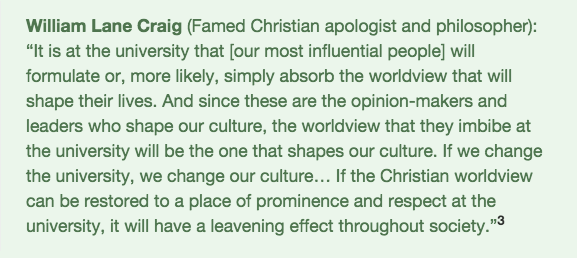
Bill Craig puts it best:

If serving God is your goal, look to the university

There is already a perfectly fine university right next door – no need to fly to Europe to find one! Remember, the university that took your faith away, or maybe the faith of someone you cared about? Yeah, it’s still there in your home town! And it’s still ruining the lives of thousands of young people. It seems to me that it’s better stewardship to stay here and work, then give money to groups like Reasonable Faith. And you can start a blog, teach in church and invite scholars to the local university, too. That costs almost nothing, and it produces better results.

What about Jesus?

Sometimes, it’s a good idea to look beyond the words of the Bible and reflect on the overall message of it at a higher level. When I look in the Bible, I see that Jesus went through a lot of suffering in obedience to God in order to secure the salvation of people who did not even like him. And it’s from this sacrifice on our behalf that his claim on our obedience comes. There are things that I don’t like to do that I do anyway because they work to serve God. Jesus life’s ambition was not to do things that were easy, or that made him happy. Experienced Christians do things that are not fun, because these things are right and because they solve the real problem.