
Tag Archives: Social Issues

If unborn babies don’t have consciousness or don’t feel pain, may we kill them?

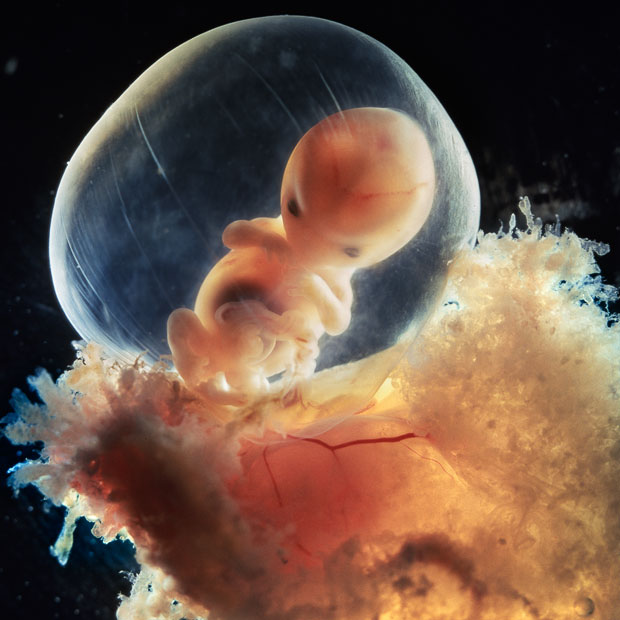
Unborn baby scheming about pro-life apologetics

Was having a conversation by e-mail yesterday with a pro-abortion atheist, and he gave two reasons why he supported abortion in the first and second trimester. First, he said that unborn babies can’t feel pain, so it’s OK to kill them. Second, he said that unborn babies don’t have consciousness, so it’s OK to kill them. I thought it might be useful to link to something that answers both of these objections.

Frank Beckwith is the author of “Defending Life: A Moral and Legal Case Against Abortion Choice“, which was published by Cambridge University Press, a top academic press. But before Cambridge University Press, Beckwith wrote four easy-to-understand essays for the Christian Research Journal. Part IV is the one that has the response to the two questions raised by my atheist friend.

Part I. The Appeal to Pity

Part II. Arguments from Pity, Tolerance, and Ad Hominem

Part III. Is The Unborn Human Less Than Human?

Part IV. When Does a Human Become a Person?

Excerpt:

Some ethicists argue that the unborn becomes fully human sometime after brain development has begun, when it becomes sentient: capable of experiencing sensations such as pain. The reason for choosing sentience as the criterion is that a being that cannot experience anything (i.e., a presentient unborn entity) cannot be harmed. Of course, if this position is correct, then the unborn becomes fully human probably during the second trimester and at least by the third trimester. Therefore, one does not violate anyone’s rights when one aborts a nonsentient unborn entity. [13]

There are several problems with this argument. First, it confuses harm with hurt and the experience of harm with the reality of harm. [14] One can be harmed without experiencing the hurt that sometimes follows from that harm, and which we often mistake for the harm itself. For example, a temporarily comatose person who is suffocated to death “experiences no harm,” but he is nevertheless harmed. Hence, one does not have to experience harm, which is sometimes manifested in hurt, in order to be truly harmed.

Second, if sentience is the criterion of full humanness, then the reversibly comatose, the momentarily unconscious, and the sleeping would all have to be declared nonpersons. Like the presentient unborn, these individuals are all at the moment nonsentient though they have the natural inherent capacity to be sentient. Yet to countenance their executions would be morally reprehensible. Therefore, one cannot countenance the execution of some unborn entities simply because they are not currently sentient.

Someone may reply that while these objections make important points, there is a problem of false analogy in the second objection: the reversibly comatose, the momentarily unconscious, and the sleeping once functioned as sentient beings, though they are now in a temporary state of nonsentience. The presentient unborn, on the other hand, were never sentient. Hence, one is fully human if one was sentient “in the past” and will probably become sentient again in the future, but this cannot be said of the presentient unborn.

There are at least three problems with this response. First, to claim that a person can be sentient, become nonsentient, and then return to sentience is to assume there is some underlying personal unity to this individual that enables us to say that the person who has returned to sentience is the same person who was sentient prior to becoming nonsentient. But this would mean that sentience is not a necessary condition for personhood. (Neither is it a sufficient condition, for that matter, since nonhuman animals are sentient.) Consequently, it does not make sense to say that a person comes into existence when sentience arises, but it does make sense to say that a fully human entity is a person who has the natural inherent capacity to give rise to sentience. A presentient unborn human entity does have this capacity. Therefore, an ordinary unborn human entity is a person, and hence, fully human.

Second, Ray points out that this attempt to exclude many of the unborn from the class of the fully human is “ad hoc and counterintuitive.” He asks us to “consider the treatment of comatose patients. We would not discriminate against one merely for rarely or never having been sentient in the past while another otherwise comparable patient had been sentient….In such cases, potential counts for everything.” [15]

Third, why should sentience “in the past” be the decisive factor in deciding whether an entity is fully human when the presentient human being “is one with a natural, inherent capacity for performing personal acts?” [16] Since we have already seen that one does not have to experience harm in order to be harmed, it seems more consistent with our moral sensibilities to assert that what makes it wrong to kill the reversibly comatose, the sleeping, the momentarily unconscious, and the presentient unborn is that they all possess the natural inherent capacity to perform personal acts. And what makes it morally right to kill plants and to pull the plug on the respirator-dependent brain dead, who were sentient “in the past,” is that their deaths cannot deprive them of their natural inherent capacity to function as persons, since they do not possess such a capacity.

These four essays are a very good introduction to common responses to pro-abortion arguments. I recommend that people get familiar with this, as once you look into it, you will see that the abortion issue can be debated with as much confidence as William Lane Craig defends Christian theism. You will have the same access to scientific evidence and rational arguments on this topic, and so you will have the upper hand. And that’s fun.

The best introductory book on the abortion / right to life issue is “The Case for Life” by pro-life debater Scott Klusendorf. The best comprehensive book is a tie between “The Ethics of Abortion” by Christopher Kaczor, and Frank Beckwith’s “Defending Life: A Moral and Legal Case Against Abortion Choice“.

If unborn babies don’t have consciousness or don’t feel pain, may we kill them?

Unborn baby scheming about pro-life apologetics

Was having a conversation by e-mail yesterday with a pro-abortion atheist, and he gave two reasons why he supported abortion in the first and second trimester. First, he said that unborn babies can’t feel pain, so it’s OK to kill them. Second, he said that unborn babies don’t have consciousness, so it’s OK to kill them. I thought it might be useful to link to something that answers both of these objections.

Frank Beckwith is the author of “Defending Life: A Moral and Legal Case Against Abortion Choice“. He wrote that book for Cambridge University Press, a top academic press. But before Cambridge University Press, Beckwith wrote four easy-to-understand essays for the Christian Research Journal. Part IV is the one that has the response to the two questions raised by my atheist friend.

Part I. The Appeal to Pity

Part II. Arguments from Pity, Tolerance, and Ad Hominem

Part III. Is The Unborn Human Less Than Human?

Part IV. When Does a Human Become a Person?

Excerpt:

Some ethicists argue that the unborn becomes fully human sometime after brain development has begun, when it becomes sentient: capable of experiencing sensations such as pain. The reason for choosing sentience as the criterion is that a being that cannot experience anything (i.e., a presentient unborn entity) cannot be harmed. Of course, if this position is correct, then the unborn becomes fully human probably during the second trimester and at least by the third trimester. Therefore, one does not violate anyone’s rights when one aborts a nonsentient unborn entity. [13]

There are several problems with this argument. First, it confuses harm with hurt and the experience of harm with the reality of harm. [14] One can be harmed without experiencing the hurt that sometimes follows from that harm, and which we often mistake for the harm itself. For example, a temporarily comatose person who is suffocated to death “experiences no harm,” but he is nevertheless harmed. Hence, one does not have to experience harm, which is sometimes manifested in hurt, in order to be truly harmed.

Second, if sentience is the criterion of full humanness, then the reversibly comatose, the momentarily unconscious, and the sleeping would all have to be declared nonpersons. Like the presentient unborn, these individuals are all at the moment nonsentient though they have the natural inherent capacity to be sentient. Yet to countenance their executions would be morally reprehensible. Therefore, one cannot countenance the execution of some unborn entities simply because they are not currently sentient.

Someone may reply that while these objections make important points, there is a problem of false analogy in the second objection: the reversibly comatose, the momentarily unconscious, and the sleeping once functioned as sentient beings, though they are now in a temporary state of nonsentience. The presentient unborn, on the other hand, were never sentient. Hence, one is fully human if one was sentient “in the past” and will probably become sentient again in the future, but this cannot be said of the presentient unborn.

There are at least three problems with this response. First, to claim that a person can be sentient, become nonsentient, and then return to sentience is to assume there is some underlying personal unity to this individual that enables us to say that the person who has returned to sentience is the same person who was sentient prior to becoming nonsentient. But this would mean that sentience is not a necessary condition for personhood. (Neither is it a sufficient condition, for that matter, since nonhuman animals are sentient.) Consequently, it does not make sense to say that a person comes into existence when sentience arises, but it does make sense to say that a fully human entity is a person who has the natural inherent capacity to give rise to sentience. A presentient unborn human entity does have this capacity. Therefore, an ordinary unborn human entity is a person, and hence, fully human.

Second, Ray points out that this attempt to exclude many of the unborn from the class of the fully human is “ad hoc and counterintuitive.” He asks us to “consider the treatment of comatose patients. We would not discriminate against one merely for rarely or never having been sentient in the past while another otherwise comparable patient had been sentient….In such cases, potential counts for everything.” [15]

Third, why should sentience “in the past” be the decisive factor in deciding whether an entity is fully human when the presentient human being “is one with a natural, inherent capacity for performing personal acts?” [16] Since we have already seen that one does not have to experience harm in order to be harmed, it seems more consistent with our moral sensibilities to assert that what makes it wrong to kill the reversibly comatose, the sleeping, the momentarily unconscious, and the presentient unborn is that they all possess the natural inherent capacity to perform personal acts. And what makes it morally right to kill plants and to pull the plug on the respirator-dependent brain dead, who were sentient “in the past,” is that their deaths cannot deprive them of their natural inherent capacity to function as persons, since they do not possess such a capacity.

These four essays are a very good introduction to common responses to pro-abortion arguments. I recommend that people get familiar with this, as once you look into it, you will see that the abortion issue can be debated with as much confidence as William Lane Craig defends Christian theism. You will have the same access to scientific evidence and rational arguments on this topic, and so you will have the upper hand. And that’s fun.

The best introductory book on the abortion / right to life issue is “The Case for Life” by pro-life debater Scott Klusendorf. The best comprehensive book is a tie between “The Ethics of Abortion” by Christopher Kaczor, and Frank Beckwith’s “Defending Life: A Moral and Legal Case Against Abortion Choice“.

The Mysterious Drew lectures on Christianity and the culture war in Defenders

Investigation in progress

Drew taught Dr. William Lane Craig’s Defenders class for two weeks in a row while Dr. Craig was in Australia. He chose to focus on secularism.

Note: Drew has some problems with the microphone for the first 2.5 minutes of part 1. Be patient.

Part 1 deals with how Europe and America became secular in different ways.

Part 1 topics:

  • Secularism: the attempt to take values based on religion (e.g. – Judeo-Christian values) out of the public square
  • Television programs that are targeted to more thoughtful viewers favor secular or liberal worldviews
  • Consider the sexual revolution – a new set of beliefs about sex are being pushed into the culture
  • Sex revolution includes: same-sex marriage, pornography, hookup culture, no-fault divorce
  • The effect of the sexual revolution has been to introduce widespread fatherlessness, which is very bad for children
  • The sexual revolution is being pushed in the popular culture, but also in the school sexual education programs
  • You can see where secularism has led to by looking at Europe, which has largely rejected its Christian roots
  • For example, Germany and Sweden are very aggressive about stamping out homeschooling
  • They do this because they are trying to push a government-approved set of beliefs and meanings onto children
  • How bad could it get? You can look at how Orthodox Judaism was persecuted in Russia after the communist revolution
  • How did Europe become so secular?
  • Wars in Europe between Protestants and Catholics caused people to think that theistic religion was bad
  • Secularists first attacked theism philosophically by trying to replace it with deism – the view that miracles do not occur
  • Secularists then pushed a radical empirism which attempted to reduce religious claims to meaningless irrationality
  • The Christian church responded by retreating from philosophical and theological claims and focusing on moral claims
  • That’s how Europe became secular, but how did America become secular?
  • America became secular because Christianity was transformed from a knowledge tradition to an emotional tradition
  • Pastors started to move away from presenting Christianity as true and instead presented it as emotionally fulfilling
  • Pastors emphasized personal experiences instead of philosophical theology and apologetics
  • European ideas arrived: deism, Darwinism, Bible criticism, etc.
  • Christianity responded to this by abandoning the centers of learning it had founded (universities) into pious isolation
  • As the universities became more secular, they turned out the next generation of influencers, including the media
  • This retreat from intellectual engagement was augmented by a fixation on end-times speculation (e.g. Left Behind)
  • (Drew talks to Jeremy, a philosophy student at Georgia State University, about whether Christianity is respected in his classes)
  • How politicians and the media used the Scopes Monkey Trial to marginalize Christianity as anti-science
  • The perception of Christians in the public square changed – they were viewed as ignorant, irrational and anti-science
  • Instead of causing Christians to work harder at science, they became even more fundamentalist, and less influential
  • Christians today are a tiny minority of influential groups, e.g. – scientists, media, etc.
  • In contrast, secular Jews, who tend to grow up in a culture that values learning, have a much greater influence
  • Even if Christians try to retreat to the country where they can homeschool, there is no hiding from the Internet
  • Which organizations are working against secularism today?
  • Example of what Christians can do: Plantinga’s refutation of the problem of evil
  • Example of what Christians can do: widespread use of ultrasound to move people to the pro-life view
  • Example of what Christians can do: Liberty University’s effort to produce Christians who can work in media
  • A story about William Lane Craig and a secular physicist who had lost her faith

People must have liked what they heard and saw in the first week, because he got a big turnout in the second week.

Part 2 deals with practical tips for engaging in the culture.

Topics in Part 2:

  • The real root cause of opposition to Christianity is from the sexual revolution
  • For example, moral relativism is so popular in the university, but it is almost entirely driven by sexual liberation
  • Evangelism and culture-shaping are not the same thing – each requires a different set of skills
  • Where do people get their information? Public school, news media, late night comedy shows, etc.
  • Two things for every Christian need to do: 1) Get informed, and 2) Get involved
  • First: you do not need to be smarter than average. Dr. Craig is a leading scholar because he studies 9 hours a day
  • Implying that people with influence are “smart” just provides us with an excuse not to try if we are not “smart”
  • Ordinary Christians need to be willing to give up fun more than they need to be naturally “smart”
  • Asks Cody: what about that Christian apologist who hung out mostly with internet atheists and then became one
  • Famous quantum chemist: you’re right, I am not much smarter than most people, I just work a lot harder at it
  • Drew: to get informed, you should follow good Christian blogs like Apologetics 315 and Wintery Knight
  • Drew knows Wintery Knight personally and WK is someone who knows apologetics but he also knows other things
  • WK connects the Christian worldview to lots different things, e.g. = marriage – he can find you the right people and books
  • (Drew holds up “What is Marriage?” book) This is the best book to argue the same-sex marriage issue
  • (Drew hold up “The Case for Life” book) This is the best book to argue the pro-life position
  • Slacktivism: don’t just send people links that you find on the Internet – read the articles and books and then talk about them
  • (Drew holds up the Lee Strobel “Case for” books) These are the best introductory books on basic Christian apologetics
  • Audio books are a great way for people to take in the information, and you can get them for free from the library
  • The Internet is not the best place for arguing about the things you learn – face to face conversations are much better
  • Biola’s apologetics certificate program is an excellent resource, and it’s all audio lectures so you just listen to them
  • You can get free apologetics audio from Apologetics 315 and Phil Fernandes
  • We also need to learn how to how to change the culture and how the other side changes the culture
  • To really make a difference, then a graduate degree might be for you – especially the M.A. in apologetics from Biola
  • The university is also very important – Christianity needs to be represented in the university
  • Influential people like Supreme Court justices come out of the university, which is why we need to be there
  • The Discovery Institute is doing the most to provide a credible rival to naturalistic science
  • They have a budget of $4 million dollars and they are punching way above their weight
  • If every evangelical sent them $20, they’d have a budget of $1.2 billion – what could they do with that?
  • (Drew puts a check for $20 for Discovery Institute in an envelope and seals it, to show how it’s done)
  • The Truth Project, which is put out by Focus on the Family – it’s another excellent training resource
  • When it comes to politics, focus on discussing policy issues, not on pushing particular candidates
  • If every evangelical Christian just pulled their own weight, it would make a big difference
  • It all starts by making the decision to take some leisure time to do things that really work

I could not agree with him more on his selections on the marriage debate and the abortion debate. I have bought at least a half-dozen of each of those for people. And I highly recommend getting the Strobel books on audio, especially the Case for a Creator. Love that book. Listen to it a bunch a times and you will start to talk like Lee Strobel.

I listened to all the Biola University lectures before they even had the certificate program, along with the Stand to Reason Masters Series in Christian Thought and about 60 Veritas Forum leture sets. Those things probably did the most for me to become a capable defender of Christianity.

The point he made about giving money to the Discovery Institute is important. In the last month, I sent out $300 to a Ratio Christi chapter for a lecture they gave, and $500 for a Christian group in Canada that put on an apologetics conference.

I think he’s right when he talks about everyone pulling their own weight. I spend about 2-3 hours a day reading and blogging. I donate a portion of my earnings to Christian scholars who study and/or speak at the university. I support Christian students who are doing degrees in philosophy, science and engineering. In church, I don’t anything yet, but I have a network of friends who do things in church, like organize lectures, debates and apologetics book studies. My current pastor is aware of my abilities, and he’s already asked me to help them with an evangelism program they are starting up.

I got started on apologetics by putting in the time on some of the things he mentioned in part 2 of his talk. The basic things to do are reading introductory books on apologetics, especially the ones on philosophy of religion, historical Jesus and physical sciences. If you can’t read, then at least get hold of lectures from Biola University and listen to those, along with Lee Strobel audio books, Brian Auten interviews, William Lane Craig debates. Just put them in the car and listen, and soon you’ll be sounding just like them.