Tag Archives: Selfishness

Is Christianity false or is it just mean and judgmental?

Have you noticed lately that there is a decided lack of atheists who argue against Christianity on factual grounds? Instead of constructing arguments against Christian theism, what I am seeing more and more of is that people try to say that Christianity makes some group feel bad, and therefore Christianity is not worthy of pursuit and engagement.

Here’s how it works. You have a person who has some sinful habit or other that they don’t want to give up, and they notice that people are judging them and saying that what they are doing is wrong. And they feel bad. And they decide to attack Christianity to make the Christians stop judging them. So how do they do it? Do they argue that the concept of God is logically incoherent? No… Do they argue that some instances of evil and suffering are gratuitous? No… Do they argue that the universe is eternal so that it had no Creator? No…

What do they do?

What they do is pick on some statement by a conservative Christian that makes them feel bad, and then claim that they are victims of meanness. And apparently, making someone feel bad is some sort of disproof of Christian theism. Why is that? It’s because we have decided as a culture that the purpose of religion is to make people feel good about themselves and to be “nice” to other people. And by “nice”, we mean not making other people feel bad about the sinfulness of their behavior. So people are making Christianity irrelevant just by assuming that the purpose of life is happiness, and that any religion that makes people unhappy can be dismissed.

Before, people thought about Christianity as something that you investigated, and that was either true or false. People understood that Christianity made claims about the external world that were either true or false. For example, Christianity claims that the universe had a beginning in the finite past. And the people who disagreed with Christianity would try to produce arguments and evidence that the universe was eternal, as with the steady-state theory or the oscillating model of the universe. And people were willing to change their behavior to match what was true, even when it made them feel less happy. But not any more.

Religion today is not about truth

I think somehow, as a society, we have internalized the following beliefs:

  • God wants me to have happy feelings
  • the purpose of religion is to give me happy feelings
  • God’s moral will for me is that I be “nice” to others
  • being nice to others means accepting whatever they want to do as “good”
  • accepting whatever anyone does makes them like me
  • when people like me, I feel happy, which is what God wants
  • there is no need for me to study God’s existence
  • God exists when I want to be comforted, and doesn’t exist when I want to sin
  • there is no need for me to study God’s character
  • God’s character is pretty much like my character, whatever I want is fine with God
  • there are no moral rules or obligations from God that apply to me
  • religions are all the same, I choose the one that makes me feel happy

So you can see that someone who believes things like this can claim to be a Christian, but would actually attack real Christians who hold to the old view of exclusive factual claims and moral judgments. The real Christians are people who have studied these questions, who know that God exists, and what he is like, and accept the Bible’s moral teachings as authoritative. So you could have a famous pastor who defends the Bible’s prohibition on sex before marriage, and have someone feel bad about being judged, and then a bunch of these “the purpose of life is happiness” people will appear and chastise that pastor for making people feel bad. And many of them will claim to be Christians, and attend church, too.

Now notice that this mob of happy-feelings people are not going argue against the pastor using the Bible, because the Bible is pretty clearly against fornication. What they’ll do instead is they’ll pick out some piece of the Bible that seems unfair, like the slaughter of some group of child-sacrificing pagans, and they’ll rail against that Bible passage in order to discredit the Bible’s authority on moral questions. And then the good conservative pastor is made to feel bad because he has broken those unwritten laws – he made someone feel bad using this evil book.

No factual claims about God’s existence were made. No historical arguments were made. No evidence was presented. The mere fact that the Bible is mean to talk about killing the poor Canaanites is used to prove that the Bible has no moral authority at all, on any issue. “It’s mean” entails that it’s false. And you can have people who read the Bible for devotions, who sing in church, and who lead worship, who think that the Bible is false because it’s mean, and it’s mean because it can be used to judge people and make them feel bad.

An example

Now consider single motherhood, as in this case.

Excerpt:

She tells her children to do as she says and not as she does.

But the words of mother of 14 Joanne Watson – who receives more than £2,000 a month in state handouts – have fallen on deaf ears.

Her 15-year-old daughter Mariah is pregnant, the father has ‘left the scene’, and the youngster is about to start living off benefits.

Mrs Watson, 40, is raising her giant brood alone after parting from her husband John, 46, three years ago, and breaking up with subsequent partner Craig le Sauvage, 35, last year.

Despite this, she has still managed to squirrel away enough cash for a £1,600 breast enhancement and a sunbed. She claims she has always encouraged her daughters to use contraception – but, inevitably, it seems they would rather follow the family tradition.

Mariah’s pregnancy comes after Mrs Watson’s oldest daughter Natasha, 22, got pregnant with her son Branford, now six, when she was 16. Her second eldest daughter Shanice, 19, also got pregnant at 16 with her 22-month-old son Marley.

Mariah says she has no concerns about becoming a teenage mother, as it seems the most natural thing in the world. Initially, she and her child will be supported by the taxpayer.

She is expected to move into a housing complex for single mothers and will receive supplementary benefit and child allowance for her baby.

The youngster, who is due to have a boy, said: ‘I’m not nervous. I’ve been around babies my whole life so I know what to expect and that I can handle it. The father isn’t involved and I don’t want him to be either. I’m really excited and think I will be a great mum.’

Now there are two responses to this from people who profess to be Christians. The first response, my response, is to make a general argument against having sex before marriage, using the latest statistics to show the harm that fatherlessness causes to children, and more evidence besides. My response is not to pick on any one person, but to set moral boundaries, to make moral judgments against the selfishness of parents, and to not celebrate and subsidize anything that will harm innocent children. I don’t want to make anyone person feel bad, I just want to say what the evidence is. However, even a general argument using evidence does make some people feel bad, so I am judged as “mean” for giving my opinion and backing it up with evidence.

But there is another response. This response comes from someone who professes to be a Christian, but they are actually a “God wants me to be happy and to be nice to people so they will like me and then we’ll all be happy” person. They would never dream of judging anyone for anything they do. And they are very angry with me for getting my moral rules out of that horrible Bible, and for using facts and evidence to make people feel bad. They believe in compassion, which is the idea that says that the moral boundaries of the Bible are false, and that we have to celebrate and subsidize any and every variation on the traditional family, regardless of the harm caused, so that the selfish adults don’t feel bad about their destructive choices.

And what do we make of a person who feels that saying “it’s wrong” is mean, because it makes a guilty person feel bad? Well, here is the truth. A person who argues against the Bible based on the happy-feelings model is no friend of God, and no friend of the victims of selfish actions. They may think that they are being a good person by affirming people who make bad decisions, but really it just encourages people to get into trouble.


New study: 1 in 8 divorces is caused by student loan debt

I like to make plans in advance and calculate everything out before I try to do anything. This is the curse of being a software engineer. We’re taught to take a test-first approach to design. So, when I think about marriage, I naturally think about what tests marriage is supposed to pass, and work backwards from there to requirements for each of the spouses.

Here’s some research from CNBC that might help young people to avoid a divorce, if they respect the research in their choices.

Excerpt:

When it comes to student loan debt, “for richer, for poorer” doesn’t quite cut it.

In general, finances are the leading cause of stress in a relationship, according to a study by SunTrust Bank, but student debt takes a particularly hard toll on a marriage.

More than a third of borrowers said college loans and other money factors contributed to their divorce, according to a recent report from Student Loan Hero, a website for managing education debt.

In fact, 13 percent of divorcees blame student loans specifically for ending their relationship, the report found. Student Loan Hero surveyed more than 800 divorced adults in June.

Here is a link to the full study from Student Loan Hero.

I think in general, you can’t just do whatever you want before marrying and jump into it unprepared. Marriage involves specific requirements in order to work, such as being faithful to your spouse, and buying things that you need for the marriage enterprise, like a home, and baby stuff. It doesn’t make any sense to say “I want to get married” and then not prepare for marriage by being careful about preparing for the behaviors marriage that requires of you. Being debt-free is one of those behaviors that marriage requires of you.

So how can we be debt-free, so that the marriage will be stable? Well, one way to be debt-free is to find a way to learn skills that will allow you to get a job without going to college, like being a self-taught software engineer. One of my friends actually did that, and now he’s with a very good software company as a remote worker. But if you’re going to go to college, you can avoid debt by studying something that will get you a high-paying job when you graduate.

This 2017 article from Harvard Business Review is interesting.

It says:

Examining 46,934 resumes shared on Glassdoor by people who graduated between 2010 and 2017, the researchers looked at each person’s college major and their post-college jobs in the five years after graduation. They then estimated the median pay for each of those jobs (also using Glassdoor data) for employees with five years of experience or less. Their key finding: “Many college majors that lead to high-paying roles in tech and engineering are male dominated, while majors that lead to lower-paying roles in social sciences and liberal arts tend to be female dominated, placing men in higher-paying career pathways, on average.”

Here’s the plot, and you can click it to expand it:

Starting salaries by major, broken out by gender
Median salaries by major, broken out by gender – don’t study things at the bottom!

As you can see from the graph, it’s especially important to share the message about choosing a major, salaries and student loan debt with WOMEN, because as the graph shows, they tend to choose the wrong majors, if the goal is to pay off student loans and avoid divorce. Everyone who wants marriage to go smoothly needs to choose majors that are near the top of the graph, like nursing, chemical engineering, computer science, or mechanical engineering. It doesn’t make sense to go to college if you aren’t going to graduate in one of these high-paying fields.

As you might expect from the graph, women hold the majority of student loan debt, according to the Boston Globe, and that’s because women tend to choose majors that don’t result in good-paying jobs. And we already saw how this becomes a risk factor for divorce.

Student loans delay marriage and children

Another interesting piece of data, reported by The Consumerist, is that people with student loans tend to delay marriage, which means the couple has fewer children:

As consumers navigate life’s financial journey, they are faced with major financial milestones, like buying a home. But student loans are also delaying consumers from reaching these goals.

Survey respondents report delaying homeownership (23 percent), buying or leasing a car (23 percent), having children (10 percent) and getting married (9 percent) because of their student loan burdens.

So, it’s not just that there is an increased risk of divorce from student loans, but there’s also fewer children, which means a diminished legacy. I can’t speak for how others would see this, but for myself, I want to pass on my beliefs to as many effective, influential Christian children as I can.

Anyway, I feel obligated to post a relevant Dave Ramsey video, just to remind everyone that stewardship of money is a Christian virtue, and that being forgiven by Jesus for your sins doesn’t automatically make you good with money. It takes planning and stewardship.

This one from 2014: (H/T Robb)


When I was in high school, I was far more interested in becoming an English teacher than I was in becoming a software engineer. It was my Dad who overruled my choice of college major when I was still in high school. He had me take a first-year English course at a local university. When I saw how politicized and useless it was (they were studying all sorts of politically correct postmodern relativist stuff, instead of the Great Works, and they weren’t trying to learn any wisdom from any of it), I chose computer science. I did what was likely to avoid divorce, and likely to support having many children.

Should Christians be motivated by the fear of missing out (FOMO)?

Bible study that hits the spot

My best friend Dina and I recently spent some time talking over some articles that we found on the culture. We specifically talked about what is motivating young people, so I wanted to write something about that.

FOMO: Fear Of Missing Out

Here’s a leftist New York Times article explaining where FOMO comes from:

It’s known as FOMO, or “fear of missing out,” and refers to the blend of anxiety, inadequacy and irritation that can flare up while skimming social media like Facebook, Twitter, Foursquare and Instagram. Billions of Twitter messages, status updates and photographs provide thrilling glimpses of the daily lives and activities of friends, “frenemies,” co-workers and peers.

[…]When we scroll through pictures and status updates, the worry that tugs at the corners of our minds is set off by the fear of regret, according to Dan Ariely, author of “Predictably Irrational” and a professor of psychology and behavioral economics at Duke University. He says we become afraid that we’ve made the wrong decision about how to spend our time.

[…]A friend who works in advertising told me that she felt fine about her life — until she opened Facebook. “Then I’m thinking, ‘I am 28, with three roommates, and oh, it looks like you have a precious baby and a mortgage,’ ” she said. “And then I wanna die.”

It’s like they want to run a race to do fun and exotic things with their peers, and not finish last.

Anyway, I want to begin this post with examples of FOMO behavior I have personally encountered.

FOMO Travel

Dina and I read and discussed this article by Alain de Botton in The European – notice the emphasis on travel and having fun, sophisticated experiences:

We’re continually being bombarded with suggestions about what we might do (go jet skiing, study in Colorado, visit the Maldives or see the Pyramids). We’re always hearing of the amazing things friends have done or are going to do: ‘there was this great bar we all went to …’; ‘she’s getting married in a little country church, then we’re having a picnic…’; ‘the sun was glinting on Sydney Harbour…’ There are endless hints of the allure of life in other places: an article about family-friendly restaurants in Brooklyn, a crime novel set in Trieste, the departure board at the airport with its list of places only a plane trip away: Moscow, Bangkok, Addis Ababa… The modern world makes sure we know at all times just how much we’re missing. It is a culture in which intense and painful doses of FOMO (Fear Of Missing Out) are almost inevitable.

What’s interesting is this – how does FOMO travel affect young, unmarried Christians?

Travel through missions work seems to be the FOMO activity of choice for at least a few young, unmarried Christians. One of my best friends who is married to another of my best friends told me about her missions trip to a European country. I asked her why she did it, since it meant lost savings, lost earnings, lost work experience, etc. (She gave up a year of earnings, and she had a great job in engineering). Her answer was that she did it for the adventure. I have a hard time hearing Jesus say that he was going to do something because he was bored and wanted an adventure. Especially when it’s $30,000 in costs, $60,000 of lost income, and lost work experience – per year. This was before the time of the Internet, though, when missionary work actually made sense. I just don’t think it’s worth spending that kind of money for the impact you make. The people I know who went on missionary trips just wanted to feel spiritual, look spiritual, and have a fun “life experience” vacation. One missionary told me that she was desperate to get away from her boring mid-Western roots.

If you really want to share Christ effectively with people in other countries, then you can start a blog and pay the tiny costs for it out of your earnings from your day job – that’s what I do. I get more people from Europe reading my blog than I could contact in a year of missionary work. I Skype with the people who are interested in Christianity from these countries (Scotland, Northern Ireland, England, Canada, etc.), as well. Meanwhile, I keep working my not-exciting job, so my savings increase, and my resume remains gap-less. This is good stewardship of finances, and self-denial prepares your character for the hard work of marriage and parenting. The Bible says that those who do not work should not eat. And Paul says that he built tents so that no one could accuse him of taking on missionary work for financial gain.

You can tell whether a person is sincere in their missionary intentions by looking at how responsible they’ve been in their decision-making. If a person has gone into debt paying for fun, thrilling activities like skydiving, ziplining, surfing, etc., then it’s FOMO travel. We must look past the spiritual smokescreen, and tell young people to grow up.

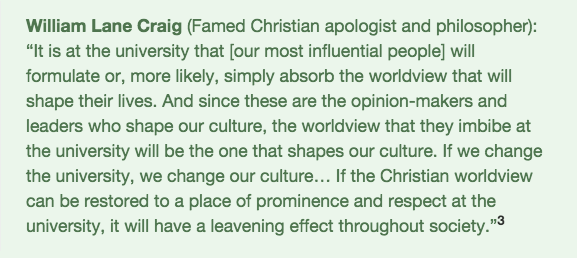
After all, if defending God’s honor was the missionary’s main goal, then the real battlefield would be the university.

Bill Craig puts it best:

If serving God is your goal, look to the university

There is already a perfectly fine university right next door – no need to fly to Europe to find one! Remember, the university that took your faith away, or maybe the faith of someone you cared about? Yeah, it’s still sitting there in your home town! And it’s still ruining the lives of thousands of young people, by peer-pressuring them into secular, liberal views – and behaviors. It seems to me that it’s better stewardship to stay here and work, then give money to groups like Reasonable Faith. And you can start a blog, teach in church and invite scholars to the local university, too. That costs almost nothing, and it produces better results.

What about Jesus?

Sometimes, it’s a good idea to look beyond the words of the Bible and reflect on the overall message of it at a higher level. When I look in the Bible, I see that Jesus went through a lot of suffering in obedience to God in order to secure the salvation of people who did not even like him. And it’s from this sacrifice on our behalf that his claim on our obedience comes. There are things that I don’t like to do that I do anyway because they work to serve God. Jesus life’s ambition was not to do things that were easy, or that made him happy. Experienced Christians do things that are not fun, because these things are right and because they solve the real problem.