Tag Archives: Secularism

Should taxpayer-funded universities allow conservative professors to work?

The Jesus Seminar and their pre-suppositions
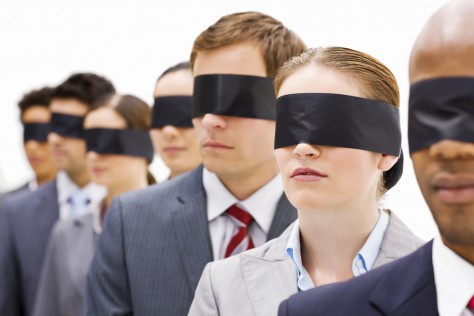
In the country of the blind, the one-eyed man is expelled

I guess everyone knows that conservatives are discriminated against at liberal universities. But I thought this Wall Street Journal article had some interesting insights about how far conservative professors have to go to hide their views from their colleagues on the secular left.

It says:

Everyone knows that academia is predominantly liberal: Only 6.6% of professors in the social sciences are Republicans, according to a 2007 study. But what is life like for the pioneering conservatives who slip through the ivory tower’s gates? We decided to find out by interviewing 153 of them.

Many conservative professors said they felt socially isolated. A political scientist told us that he became a local pariah for defending the Iraq war in his New England college town, which he called “Cuba with bad weather.” One sociologist stated the problem well: “To say a strong conservative political opinion with conviction in an academic gathering is analogous to uttering an obscenity.” A prominent social scientist at a major research university spoke of the strain of concealing his political views from his colleagues—of “lying to people all the time.”

Some even said that bias had complicated their career advancement. A historian of Latin America told us that he suffered professionally after writing a dissertation on “middle-class white guys” when it was fashionable to focus on the “agency of subaltern peoples.” Though he doesn’t think the work branded him as a conservative, it certainly didn’t excite the intellectual interest of his peers.

A similarly retrograde literature professor sought advice from a colleague after struggling to land a tenure-track job. He was told that he had “a nice resume for 1940.”

Let’s put some numbers to these stories, with an article from the Washington Times.

Excerpt:

It’s not every day that left-leaning academics admit that they would discriminate against a minority.

But that was what they did in a peer-reviewed study of political diversity in the field of social psychology, which will be published in the September edition of the journal Perspectives on Psychological Science.

Psychologists Yoel Inbar and Joris Lammers, based at Tilburg University in the Netherlands, surveyed a roughly representative sample of academics and scholars in social psychology and found that “In decisions ranging from paper reviews to hiring, many social and personality psychologists admit that they would discriminate against openly conservative colleagues.”

[…][C]onservatives represent a distinct minority on college and university campuses. A 2007 report by sociologists Neil Gross and Solon Simmons found that 80 percent of psychology professors at elite and non-elite universities are Democrats. Other studies reveal that 5 percent to 7 percent of faculty openly identify as Republicans. By contrast, about 20 percent of the general population are liberal and 40 percent are conservative.

Mr. Inbar and Mr. Lammers found that conservatives fear that revealing their political identity will have negative consequences. This is why New York University-based psychologist Jonathan Haidt, a self-described centrist, has compared the experience of being a conservative graduate student to being a closeted gay student in the 1980s.

In 2011, Mr. Haidt addressed this very issue at a meeting of the Society for Personality and Social Psychology — the same group that Mr. Inbar and Mr. Lammer surveyed. Mr. Haidt’s talk, “The Bright Future of Post-Partisan Social Psychology,” caused a stir. The professor, whose new book “The Righteous Mind” examines the moral roots of our political positions, asked the nearly 1,000 academics and students in the room to raise their hands if they were liberals. Nearly 80 percent of the hands went up. When he asked whether there were any conservatives in the house, just three hands — 0.3 percent — went up.

[…]”Because of the way the confirmation bias works,” Mr. Haidt says, referring to the pervasive psychological tendency to seek only supporting evidence for one’s beliefs, “you need people around who don’t start with the same bias. You need some non-liberals, and ideally some conservatives.”

But that’s not all – those findings are confirmed by other studies of campaign donations by professors:

Professors, administrators and others employed at the eight universities of the Ivy League have given $375,932 to Obama and $60,465 to Romney, according to data compiled by the Center for Responsive Politics, a Washington watchdog group that tracks campaign finance issues.

[…]The president’s academic advantage extends behind the Northeast’s ivied walls and into the Midwest.

At Ohio State University in Columbus, for example, Obama has raised $18,230 from faculty and staff, compared with Romney’s $3,500.

How did this massive imbalance happen? Answer: active discrimination against minority viewpoints. Secular leftists discriminate against conservatives in hiring and employment decisions. This is because liberalism is a false ideology, and the only way to maintain it is to punish anyone who disagrees with it. Allow any sort of open, rational discussion of methodology or evidence undermines the delusion that the elites are trying to maintain.

As Christianity declines in Europe, churches are put up for sale

I have a key that will unlock a puzzling mystery

This sad story is from the Wall Street Journal.

Excerpt:

Two dozen scruffy skateboarders launched perilous jumps in a soaring old church building here on a recent night, watched over by a mosaic likeness of Jesus and a solemn array of stone saints.

This is the Arnhem Skate Hall, an uneasy reincarnation of the Church of St. Joseph, which once rang with the prayers of nearly 1,000 worshipers.

It is one of hundreds of churches, closed or threatened by plunging membership, that pose a question for communities, and even governments, across Western Europe: What to do with once-holy, now-empty buildings that increasingly mark the countryside from Britain to Denmark?

[…]The closing of Europe’s churches reflects the rapid weakening of the faith in Europe, a phenomenon that is painful to both worshipers and others who see religion as a unifying factor in a disparate society.

[…]The Church of England closes about 20 churches a year. Roughly 200 Danish churches have been deemed nonviable or underused. The Roman Catholic Church in Germany has shut about 515 churches in the past decade.

But it is in the Netherlands where the trend appears to be most advanced. The country’s Roman Catholic leaders estimate that two-thirds of their 1,600 churches will be out of commission in a decade, and 700 of Holland’s Protestant churches are expected to close within four years.

[…]As communities struggle to reinvent their old churches, some solutions are less dignified than others. In Holland, one ex-church has become a supermarket, another is a florist, a third is a bookstore and a fourth is a gym. In Arnhem, a fashionable store called Humanoid occupies a church building dating to 1889, with racks of stylish women’s clothing arrayed under stained-glass windows.

In Bristol, England, the former St. Paul’s church has become the Circomedia circus training school. Operators say the high ceilings are perfect for aerial equipment like trapezes.

In Edinburgh, Scotland, a Lutheran church has become a Frankenstein-themed bar, featuring bubbling test tubes, lasers and a life-size Frankenstein’s monster descending from the ceiling at midnight.

Jason MacDonald, a supervisor at the pub, says he has never heard complaints about the reuse. “It’s for one simple reason: There are hundreds and hundreds of old churches and no one to go to them,” Mr. MacDonald said. “If they weren’t repurposed, they would just lie empty.”

Many churches, especially smaller ones, are becoming homes, and that has spawned an entire industry to connect would-be buyers with old churches.

The churches of England and Scotland list available properties online, with descriptions worthy of a realty firm. St. John’s church in Bacup, England, for example, is said to feature “a lofty nave as well as basement rooms with stone-vaulted ceilings,” and can be had for about $160,000.

There are many reasons why Christianity has declined in Europe, but surely the widespread embrace of left-wing economic policies – even by evangelical Christians – is one of the largest.

Here’s a fairly recent paper (PDF) that explains it:

What accounts for cross-national variation in religiosity as measured by church attendance and non-religious rates? Examining answers from both secularization theory and the religious economy perspective, we assert that cross-national variation in religious participation is a function of government welfare spending and provide a theory that links macro-sociological outcomes with individual rationality. Churches historically have provided social welfare. As governments gradually assume many of these welfare functions, individuals with elastic preferences for spiritual goods will reduce their level of participation since the desired welfare goods can be obtained from secular sources. Cross-national data on welfare spending and religious participation show a strong negative relationship between these two variables after controlling for other aspects of modernization.

I have many friends in the UK who classify themselves as evangelical Christians. They almost all embrace moderate to leftist economics, and they complain to me about why the church is in decline, why there is no interest in apologetics, why they can’t find Christian girlfriends, why they can’t get speaking engagements. The answer is, of course, that by majoring only in theology and apologetics, they have crafted the rope that their secular allies in government are using to hang them. Leftism is embraced by European Christians in part because they don’t want to be like those dastardly Americans with their free enterprise system and their rule of law and their private property and their law-abiding gun ownership.

It just goes to show you why Christianity suffers when we focus on piety at the expense of practicality. Too much A. W. Tozer, not enough F.A. Hayek. I doubt my well-meaning UK Christian friends – who are so proud of their laughable NHS health care – even know who F.A. Hayek is. To think that Lady Thatcher ones brandished “The Constitution of Liberty” by F.A. Hayek and declared “this is what we believe!”. But ordinary UK Christians do not believe what she believes, and now they must reap what they sowed with their knee-jerk rejection of the free enterprise system. Ignorance of economics killed Christianity in Europe, and pious, risk-averse Christians were willing participants in the murder.

Darwinian fundamentalists threaten boycott of science journal for paper mentioning “Creator”

The Church of Naturalism
The Church of Naturalism says turn or burn, heretic!

So, there was a peer-reviewed paper that appeared in the PLOS peer-reviewed journal that made reference to a Creator in the abstract. The scientific work of the paper had no problems.

I saved a copy of the post and the comments. Let’s look at some of the comments.

Comments by editors of the journal

Michael Sears:

The article should be retracted and the handling editor should be dismissed. As an Editor for this journal, I am appalled.

Ricard Sol:

I think that pretending to defend a creationist argument (non-science) in a science journal raises serious doubts about the whole enterprise. The paper should be retracted. As a PLOS ONE editor I believe accepting this situation would seriously damage our credibility.

Dante Chialvo:

[…]I am ashamed that the journal staff, the editor responsable for the paper, the reviewers, all ignored this more than obvious red flag resulting on a creationist argument embedded on a scientific paper. I will consider resigning unless exemplary actions are taken by Plos.

Angel Sánchez:

As I have said in a separate post, I will resign as an editor of PLOS ONE if this paper is not retracted immediately. PLOS ONE is a scientific journal and I don’t want to have anything to do, not even my name related to a journal tha publishes about superstition and supernatural entities. I will stop editing and I will stop submitting, and I’ll recommend everybody never to submit again to PLOS ONE. I hope we don’t have to go there.

So, you can see that science – as the naturalists conduct it – is not really the search for truth, no holds barred. It’s the attempt to explain nature without reference to a Creator and Designer. Whatever the experiments show must conform to a philosophical assumption (a religion), called naturalism. And the religion of naturalism determines what can and cannot be accepted as science. You can see the same principle at work in the denial of the Big Bang cosmology despite evidence such as the cosmic microwave background radiation, the light element abundances, and the redshifting of light from distant galaxies. Science has shown we live in a created universe that began about 13.7 billion years ago, but here we have atheists in denial of science sitting in positions of power deriding the Creator who has been revealed by experimental science. That’s the power of the naturalistic dogma. And it turns out that the most powerful argument for Darwinian evolution is this: “believe it, or I’ll have you fired, and ruin your career”. This is how Darwinism propagates from old to young – through coercion, and not through real science.

Other comments

Zach Throckmorton:

As others have noted, utilization of an intelligent design creationism framework for explaining human anatomy is not acceptable for a scientific journal.

Jorge Soberon:

I find the use of religious language in a scietific paper totally unacceptable. I will be watching this paper closely, and distributing it to colleagues. If PLOS ONE does not do something about it, like asking the authors to retratct the paper, or at the very least publishing an explanation, I will stop reviewing papers for PLOS ONE. I do hope the editors of PLOS ONE realize what a huge mistake was to accept publication of a paper with this wording. It says a lot about the care with which a paper is edited.

Adam Hartstone-Rose:

This article proves that there is something SERIOUSLY wrong with the journal. If the paper isn’t retracted, my students, collaborators and I will have no choice but to refrain from submitting to this once respectable journal. I’m embarrassed for you and embarrassed that some of my proudest papers are in your journal.

[…]This requires a ballistic reaction, not a considered “looking into” the problem!

Enrico Petretto:

This is outrageous. If PLOS ONE does not do something about it, i.e., ask the authors to retract the paper, and in any case, if the paper isn’t retracted, my students, collaborators and I will have no choice but to refrain from considering (i..e, reading, reviewing and citing) papers published in PLOS ONE.

Luigi Maiorano:

Quote totally!! outrageous is the minimum! I published 3 of my papers in PlosOne, but I will never do it again. I’m actually telling all my students and colleagues to boycott the journal and never consider it again!

Jean-Michel Heraud:

I have no knowledge to judge this article…

[…]I would recommend to the editor of the journal to exclude definitely the two reviewers that have accepted this manuscript.

Oliver Rauhut:

As noted by many comments below, this is not a matter of inappropriate wording! This rather seems to be a (successfull) attempt to place an intelligent design argument in a (so far) respected scientific journal. Thus, the only solution is the immediate retraction of this paper! Unless this step has been done, my workgroup and me will refrain from publishing further papers in PLoS!

Harry Noyes:

Changing Creator to Nature will not solve the problem since it still implies a fundamental misunderstanding of evolution. That is there is no design process, no outcome is foreseen. Anything that works better tends to have a selective advantage but that is not a product of design it is a product of selection working on random events. The paper clearly needs a substantive rewrite quite apart from the concerns raised about the significance of the results raised by other comments.

Carl Schmidt:

A more important issue is the review process that allowed such nonsense as “Creator” to appear in a journal purportedly devoted to science.

The article has now been retracted.

Evolution News comments:

This would seem to bear out a remark by Chinese paleontologist J.Y. Chen, recounted in Darwin’s Doubt, “In China we can criticize Darwin, but not the government; in America, you can criticize the government, but not Darwin.”

So what’s really behind all this fascism?

Consider this quote from famous population geneticist (and Darwinian fundamentalist) Richard Lewontin. And note that he equates science with his chosen religion of naturalism, he doesn’t accept science in the traditional sense of the word, where there is no metaphysical baggage.

He says:

Our willingness to accept scientific [i.e. – naturalistic] claims that are against common sense is the key to an understanding of the real struggle between science [i.e. – naturalism] and the supernatural. We take the side of science [i.e. – naturalism] in spite of the patent absurdity of some of its constructs, in spite of its failure to fulfill many of its extravagant promises of health and life, in spite of the tolerance of the scientific [i.e. – naturalistic] community for unsubstantiated just-so stories, because we have a prior commitment, a commitment to materialism. It is not that the methods and institutions of science [i.e. – naturalism] somehow compel us to accept a material explanation of the phenomenal world, but, on the contrary, that we are forced by our a priori adherence to material causes to create an apparatus of investigation and a set of concepts that produce material explanations, no matter how counter-intuitive, no matter how mystifying to the uninitiated. Moreover, that materialism is absolute, for we cannot allow a Divine Foot in the door.

“Billions and Billions of Demons” by Richard Lewtontin. (Link)

“A priori” means before seeing the facts, before seeing the evidence.

And what is behind the choice of naturalism as the preferred religion? Consider this quote from atheist philosopher Thomas Nagel.

He says this:

“In speaking of the fear of religion, I don’t mean to refer to the entirely reasonable hostility toward certain established religions and religious institutions, in virtue of their objectionable moral doctrines, social policies, and political influence. Nor am I referring to the association of many religious beliefs with superstition and the acceptance of evident empirical falsehoods. I am talking about something much deeper–namely, the fear of religion itself. I speak from experience, being strongly subject to this fear myself: I want atheism to be true and am made uneasy by the fact that some of the most intelligent and well-informed people I know are religious believers.

I want atheism to be true and am made uneasy by the fact that some of the most intelligent and well-informed people I know are religious believers. It isn’t just that I don’t believe in God and, naturally, hope that I’m right in my belief. It’s that I hope there is no God! I don’t want there to be a God; I don’t want the universe to be like that.”

(”The Last Word” by Thomas Nagel, Oxford University Press: 1997)

The days of Isaac Newton are long gone, and another Newton will not emerge while the Naturalistic Church is in power. And it’s a taxpayer-funded church, too. Think about that next time you vote for bigger or smaller government.

Positive arguments for theism