
Tag Archives: Praise

Why would God want us to praise him?

From Amy K. Hall, staff apologist at Stand to Reason. (H/T The Poached Egg)

Excerpt:

I was recently asked why God would want us to praise and worship Him. This is a question I hear every so often since we immediately assume that a person who demands praise is a pompous big-head. I think there are many Christians out there who secretly wonder about this—afraid to ask the question (lest they be thought unspiritual), but bothered all the same.

God is completely self-sufficient and doesn’t need our praise and worship. However, He does deserve it. Would you agree that it is right and good to praise someone who is worthy of praise? We instinctively know this and praise people for all sorts of achievements. We praise the people we love and admire, and it’s not right or good for us to withhold praise from them.

We all understand the concept of praise being due certain people. Imagine that you crafted an incredibly beautiful sculpture and won a prestigious award for your creation; but when the time came for the award ceremony, they gave the prize for your sculpture to the wrong artist! That would not be just, right, or good. In the same way, God—as the only being perfect in goodness, justice, love, etc.—is worthy of our praise. We do, in fact, owe Him that praise. He wants us to praise Him because it is right and good for us to do so. Since God wants us to do right and good things, of course he wants us to praise and worship Him.

Beyond the praise being right and good (and because of its being right and good), worshiping God also brings us joy and enhances our relationship with Him. We see this in human relationships as well—think of a man with his wife. Doesn’t it bring him great joy to praise her?

I think it it’s interesting to note that very often, non-theists try to explain things like the creation of the universe and the fine-tuning of the universe and the origin of life as being the result of blind forces. That is the opposite of praise – that is speculating about nature to avoid giving credit to nature’s Creator and Designer. They are trying to escape the obligation to worship by attributing the great miracles of God to no one, so they can be accountable to no one. This is not the kind of thought life that God looks kindly on.

One important result of studying the world, including science, is to be able to understand what God has done in the world and to give him appropriate recognition for it. It is part of being in a relationship with him that we know him and respond appropriately to his real character. The refusal to acknowledge God is one of the symptoms of rebellion against him.

Matthew 10:32-33:

 32 “Whoever acknowledges me before others, I will also acknowledge before my Father in heaven.

33 But whoever disowns me before others, I will disown before my Father in heaven.

And this also appears in Luke 12:8-10:

8 “And I tell you, everyone who acknowledges me before men, the Son of Man also will acknowledge before the angels of God,

9 but the one who denies me before men will be denied before the angels of God.

10 And everyone who speaks a word against the Son of Man will be forgiven, but the one who blasphemes against the Holy Spirit will not be forgiven.

This passage is an early passage from Q, because it’s shared by Matthew and Luke, and Q is a source for those two early gospels. To get on the right side of this verse, it’s important to study what God has done, so you can give him the praise that he has earned. He wants to be acknowledged, and we want to hold up our end of the relationship and give him that acknowledgement. He did the deeds, and that means he should get the recognition for it.

One more thing I want to say about this. I see a lot of people singing songs about God in church, expressing praise for things they have no reason to believe that God has done. I think a good way to have authentic praise for God is to tone down the singing in groups and the emotional highs and the pretty buildings for a while, and focus on apologetics. Focus on learning the real stuff that God has actually done that we can know about – by studying science and history. In fact, it really scares me when I see young people singing and raising their hands and closing their eyes at church when I know good and well they have no intellectual grounding for these activities – it makes me feel like I am in some cult or something, surrounded by self-serving, fun-seeking weirdos.

You know that brings up an interesting question. What do you suppose would happen if I gathered together all the pastors and singing church people into a room and told them that we were going to do a scientific study of what God has done in nature, and a historical study of what God has done in history? My guess is that they would attack me, drive me out of the church, and go back to singing songs in groups with big musical bands and colorful lights in the ceiling. I think we need to guard against making Christianity about feelings and experiences and group gatherings, and make it more about knowledge. What has God really done that we can know about?

Let’s lay down a base of knowledge about God from nature and history, and then once we know he is real and he is good, we can talk about theology, and praising him for all of that. We don’t want what we do in church to be in anyway comparable to what non-Christians do in night clubs and concerts – gathering in groups and dancing around ecstatically. Blech! Christianity is about truth, not feelings.
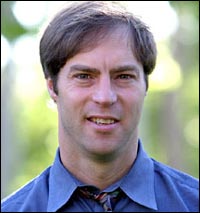
Stephen C. Meyer explains why rational systems of morality require God

Dr. Stephen C. Meyer

About the speaker:

Stephen C. Meyer is director of the Discovery Institute’s Center for Science and Culture (CSC) and a founder both of the intelligent design movement and of the CSC, intelligent design’s primary intellectual and scientific headquarters. Dr. Meyer is a Cambridge University-trained philosopher of science, the author of peer-reviewed publications in technical, scientific, philosophical and other books and journals. His signal contribution to ID theory is given most fully in Signature in the Cell: DNA and the Evidence for Intelligent Design, published by HarperOne in June 2009.

[…]Graduating from Whitworth College in Spokane, Washington, in 1981 with a degree in physics and earth science, he later became a geophysicist with Atlantic Richfield Company (ARCO) in Dallas, Texas. From 1981 to 1985, he worked for ARCO in digital signal processing and seismic survey interpretation. As a Rotary International Scholar, he received his training in the history and philosophy of science at Cambridge University, earning a PhD in 1991. His thesis offered a methodological interpretation of origin-of-life research.

[…]Prior to the publication of Signature in the Cell, the piece of writing for which Meyer was best known was an August 2004 review essay in the Smithsonian Institution-affiliated peer-reviewed biology journal Proceedings of the Biological Society of Washington. The article laid out the evidential case for intelligent design, that certain features of living organisms–such as the miniature machines and complex circuits within cells–are better explained by an unspecified designing intelligence than by an undirected natural process like random mutation and natural selection.

[…]Meyer’s many other publications include a contribution to, and the editing of, the peer-reviewed volume Darwinism, Design and Public Education (Michigan State University Press, 2004) and the innovative textbook Explore Evolution (Hill House Publishers, 2007).

Meyer has been widely featured in media appearance on CNN, MSNBC, NBC, ABC, CBS, Fox News, PBS, and the BBC. In 2008, he appeared with Ben Stein in Expelled: No Intelligence Allowed.  He’s also featured prominently in two other science documentaries, Icons of Evolution and Unlocking The Mystery of Life.

Part 1 of 4: (15 minutes)

Part 2 of 4: (15 minutes)

Part 3 of 4: (15 minutes)

Part 4 of 4: (15 minutes)

It starts out simple, and then gets more complex.

Paul Copan challenges Richard Dawkins on determinism and rationality

This is from Parchment & Pen. There is an MP3 file linked in the post. (H/T Apologetics 315)

Excerpt:

Last week, Richard Dawkins spoke here in Ft. Lauderdale at Nova Southeastern University on “The Fact of Evolution.” The following week, I spoke on “The Fact of God”—also delivered at Nova Southeastern.

[…]I asked Dawkins how he could claim that the naturalist id rationally superior to the theist since, according to his book River Out of Eden, all of us are dancing to the music of our DNA. Our beliefs are the product of non-rational, deterministic physical forces beyond our control—whether we’re theists or naturalists. In fact, if the naturalist is right, it’s only by accident—not because he’s more intellectually virtuous than the theist. That is, the naturalist has accidental true belief (which is not knowledge) rather than warranted true belief (which is knowledge).

Dawkins gave the odd reply that it’s kind of like Republicans and Democrats—with each group thinking they’re right and the other group wrong. But on what grounds could either side think they are more rational than the other? Dawkins then added that he supposed that whatever view “works” the correct one to hold. But here’s the problem: what “works” is logically distinct from “true” or “matching up with reality”—since we may hold to a lot of false beliefs that help us survive and reproduce, even if they are false. Indeed, naturalistic evolution is interested in survival and reproduction—the “four F’s” (fighting, feeding, fleeing, and reproducing). Truth, the naturalist philosopher Patricia Churchland argues, is secondary to these pursuits According to another such naturalist, the late Richard Rorty, truth is “utterly unDarwinian.”

[…]…how can Dawkins condemn “religious” people who fly planes into buildings since they are just dancing to their DNA—just like the naturalist is? They’re just doing what nature has programed them to do. We can further ask: Why isn’t Dawkins denouncing atrocities done in the name of atheism—like those of Stalin, Pol Pot, or Mao Tse-tung? Dawkins gives the impression that it’s only people of “religion” who carry out horrendous evils. Of course, if Dawkins is right, these mass murderers could not justly be condemned since they too were wired by nature to act as they did.

Paul then excerpts a segment from an interview with Dawkins:

Dawkins:….What I do know is that what it feels like to me, and I think to all of us, we don’t feel determined. We feel like blaming people for what they do or giving people the credit for what they do. We feel like admiring people for what they do. None of us ever actually as a matter of fact says, “Oh well he couldn’t help doing it, he was determined by his molecules.” Maybe we should… I sometimes… Um… You probably remember many of you would have seen Fawlty Towers. The episode where Basil where his car won’t start and he gives it fair warning, counts up to three, and then gets out of the car and picks up a tree branch and thrashes it within an edge of his life. Maybe that’s what we all ought to… Maybe the way we laugh at Basil Fawlty, we ought to laugh in the same way at people who blame humans. I mean when we punish people for doing the most horrible murders, maybe the attitude we should take is “Oh they were just determined by their molecules.” It’s stupid to punish them. What we should do is say “This unit has a faulty motherboard which needs to be replaced.” I can’t bring myself to do that. I actually do respond in an emotional way and I blame people, I give people credit, or I might be more charitable and say this individual who has committed murders or child abuse of whatever it is was really abused in his own childhood. ….

Manzari: But do you personally see that as an inconsistency in your views?

Dawkins: I sort of do. Yes. But it is an inconsistency that we sort of have to live with otherwise life would be intolerable. But it has nothing to do with my views on religion it is an entirely separate issue.

There’s a fuller explanation in the post – I just pulled out some parts to give you the idea.

This is something Christians need to get used to. Atheism should not smuggle in Christian beliefs. Atheism has to stand and fall on materialism, determinism, life ending at the grave, and moral subjectivism. There is no free will on atheism. There are no moral values or moral obligations on atheism. There is no rationality on atheism. There is no meaning in life on atheism. There is no purpose to life on atheism. There is no accountability for sin on atheism. There is no self-sacrificial love on atheism. There is no reward for virtue and self-sacrifice on atheism. It is a worldview