I am a man who admires passionate women, and she really impresses me. She makes social issues seem as interesting as national security and counter-terrrorism. Not only does she know what she is talking about, but she is soooooo passionate about it.
This lecture makes me think of books by Theodore Dalrymple. Are all my readers aware of Theodore Dalrymple? Here’s a free book (his first) online – chapter by chapter. If you need something GRRRREAT to read on Friday night, this will knock your socks off. Just read a little, and you won’t be able to put it down.
The number of Americans living below the poverty line rose to a record 46 million last year, the government said on Tuesday, underscoring the challenges facing President Barack Obama and Congress as they try to tackle high unemployment and a moribund economy.
The Census Bureau’s annual report on income, poverty and health insurance coverage said the national poverty rate climbed for a third consecutive year to 15.1 percent in 2010 as the economy struggled to recover from the recession that began in December 2007 and ended in June 2009.
That marked a 0.8 percent increase from 2009, when there were 43.6 million Americans living in poverty.
The number of poor Americans in 2010 was the largest in the 52 years that the Census Bureau has been publishing poverty estimates, the report said, while the poverty rate was the highest since 1993.
The specter of economic deterioration also afflicted working Americans who saw their median income decline 2.3 percent to an annual $49,445.
Since the low point in the labor market downturn in February 2010, nonfarm payrolls have increased by 1.9 million, showing that without stronger growth, it will take years to recoup about 8.7 million jobs lost as a result of the recession that began in December 2007 and ended in June 2009.
The jobless rate rose to 9.6 percent in 2010 from 9.3 percent in 2009. Long-term unemployment, the percent of those without a job for 27 weeks or longer, increased to 43 percent from 31 percent, according to the Washington-based Economic Policy Institute.
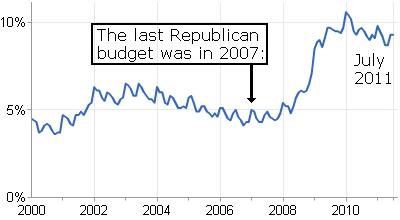
This is the third consecutive annual increase in the poverty rate. Keep in mind that the Democrats took over Congress in January of 2007 and their first budget was in 2008, the beginning of the recession. But at least we had turtle tunnels to nowhere.
What about Obama’s new 447-billion stimulus? Will it create jobs?
Let’s see, using this article from the Competitive Enterprise Institute.
Excerpt:
Tom Porcelli, an RBC Capital Markets analyst, told The Wall Street Journal that he expected it to have “little” effect on hiring. “Mr. Porcelli was skeptical that the short-term employer tax breaks would prompt job growth. ‘I don’t think that you’re at the stage where small businesses are incentivized to hire,’ because demand is still so low, he said. ‘These companies are basically still trying to hunker down and hope that they’re around in the next year.’” “Larry Schaffert, owner of Schaffert Construction, said Obama is ‘totally clueless of what it takes to run a business.’”
Business leaders do not think Obama’s plan would succeed in getting America’s economy growing, nor do they think it would get “unemployed people back to work”: “Business executives say it will take more than tax credits proposed by President Barack Obama to convince them to expand their payrolls to help get thousands of unemployed people back to work. Instead, they’d prefer an easing of the regulatory environment and an overhauling of the business tax structure, which would lead to lower operating costs.”
Employers cited in The New York Times said Obama’s jobs plan would not result in their hiring any additional employees: “David Catalano, who helped found Modea, a digital advertising company in Blacksburg, Va., said that he was wary of the president’s pledge to ask the ‘wealthiest Americans and biggest corporations to pay their fair share.’ His company was organized as an S Corporation, in which profits are passed through to shareholders, so it would face higher taxes under the president’s proposal, he said. He added: ‘My partner and I have reinvested 100 percent of the profits that our agency has made over the last five years back into the company. If the government takes a bigger share of that from me, it directly impedes my ability to grow the agency.”
[…]People should take Obama’s claims about “job creation” with a grain of salt. His earlier claims about creating jobs turned out to be false. The Obama administration said that if the $800 billion stimulus package passed, unemployment would not go above 8 percent, but it actually skyrocketed to 10.3 percent less than a year later. The “green jobs” the Obama Administration promised to create in the stimulus package are largely non-existent. Indeed, the stimulus package’s green-jobs provisions ended up inadvertently outsourcing American jobs to China. As the Associated Press notes, Obama is also not leveling with the American public when he minimizes the budget-busting nature of his so-called “American Jobs Act.” That lack of fiscal honesty is nothing new for Obama, who falsely promised a “net spending cut” in 2008, only to immediately propose massive budget increases once he was elected, including proposed budgets that would add $4.8 trillion to the national debt.
This is from Hans Bader, so I removed all his links – he likes to put lots of links to lots of facts, because he’s a lawyer. You have to click on his post to get all the links.
I don’t think numbers like those will help the Democrats. I am watching the election results come in for Anthony Weiner’s seat right now and the Democrat has lost in BROOKLYN and QUEEN’S. Can you believe that? New York is Republican. I wonder if M.C. Spinster is still a Democrat.
Nash speaks from 0:06 to0:45. Then he takes questions.
His two favorite economists are… WALTER WILLIAMS and THOMAS SOWELL! Just like me!
Christianity isn’t something you do in church to have happy feelings, or to get along with your parents and friends. It’s a worldview. And the whole point of it is that is is true, and helps us to make sense of the world because it is true.
By the way, he even talks about how Jesus uses hyperbole to get people’s attention in the question and answer time. I blogged about that a while back because one of our Christian commenters told me that Jesus never uses hyperbole. (She is a Calvinist, so… you know… ). F.A. Hayek also comes up in the Q&A time. Hayek is my third favorite economist. I think all Christians should have favorite economists. I think we should think about how Christianity relates to every area, from science to history to philosophy to ethics to marriage and family. And to politics and economics, as with this lecture!
We should all have favorite scholars, just like non-Christians have favorite musicians and movie stars. Ron Nash is one of my favorite philosophers.
Who is Ron Nash?
I learned about economics by listening to all the lectures in this course taught by Dr. Nash. He presents a view of economics that is consistent with the laws of logic and the Bible. And this course is comprehensive. I’ve moved on from Dr. Nash’s course to read F. A. Hayek and Thomas Sowell, and then Walter Williams. And I found that Dr. Nash’s course was excellent preparation for these more advanced books.
Nash taught theology and philosophy for four decades at three schools. He was chairman of the department of philosophy and religion and director of graduate studies in humanities at Western Kentucky University, where he was on faculty from 1964-91. He was a professor at Reformed Theological Seminary from 1991-2002 and at Southern Baptist Theological Seminary from 1998-2005.
Nash wrote more than 35 books on philosophy, theology and apologetics, including “Faith & Reason: Searching for a Rational Faith,” “Life’s Ultimate Questions” and “Is Jesus the Only Savior?” Nash received his Ph.D. from Syracuse University; his master’s degree from Brown University; and his undergraduate degree from Barrington College.

 WINTERY KNIGHT