
Tag Archives: Peer-Reviewed

Peer-reviewed paper in medical journal challenges Darwinian evolution

Casey Luskin explains over at Evolution News.

Summary: (links removed)

A new article by Dr. Joseph Kuhn of the Department of Surgery at Baylor University Medical Center, appearing in the peer-reviewed journal Baylor University Medical Center Proceedings, poses a number of challenges to both chemical and biological evolution. Titled “Dissecting Darwinism,” the paper begins by recounting some of the arguments raised during the Texas State Board of Education debate that challenged chemical and biological evolution. Those challenges include:

1. Limitations of the chemical origin of life data to explain the origin of DNA
2. Limitations of mutation and natural selection theories to address the irreducible complexity of the cell
3. Limitations of transitional species data to account for the multitude of changes involved in the transition.

(Joseph A. Kuhn, “Dissecting Darwinism,” Baylor University Medical Center Proceedings, Vol. 25(1): 41-47 (2012).)

It’s a good little introduction to where the action is on the origins debate but regular readers will have read it all before.

But there was one thing I found interesting.

The naturalistic response to this paper:  (links removed)

The journal also published a rebuttal to Dr. Kuhn by Charles Stewart Roberts, a cardiovascular surgeon in Virginia. Dr. Roberts’s rebuttal simply asserted, as if it were a truth that required no scientific backing, that all biological features could be produced by evolution:

The notion of “irreducible complexity” in a cell, as an argument against evolution, is beyond my present understanding. Knowing that life has existed on planet earth for billions of years, however, I suspect that there has been time enough for evolution, no matter how complex, with reducibility.

I was having a debate with an atheist on Facebook and this guy did nothing but duck and dodge by citations of peer-reviewed evidence, like the paper from December 2011 on the oxygen in the early Earth’s atmosphere, which destroys naturalistic origin of life scenarios. My favorite of his speculations was when he responded to the Big Bang cosmology by saying “one can easily envision a scenario in which the universe has existed eternally”. Or something like that. Atheists – always easily envisioning things that are falsified by the available experimental evidence.

Casey comments on Roberts’ “rebuttal”: (links removed)

We’ve addressed this sort of unsophisticated and poorly articulated argument in defense of defending Darwinian evolution many times. You can’t just vaguely appeal to vast and unending amounts of time (and other probabilistic resources) and assume that Darwinian evolution can produce anything “no matter how complex.” Rather, you have to demonstrate that sufficient probabilistic resources exist to produce the feature.

Rather than making assumptions, proponents of intelligent design ask what the Darwinian mechanism can, or cannot, do. For example, a 2010 peer-reviewed research paper by pro-ID scientist Doug Axe modeled a population of evolving bacteria, and found that there are severe limits on the ability of Darwinian evolution to produce multi-mutation features. (A multi-mutation feature is one that requires multiple mutations to be present before there is any advantage given to the organism.)

Axe’s research makes assumptions very generously favoring Darwinian evolution. He assumed the existence of a huge population of asexually reproducing bacteria that could replicate quickly — perhaps nearly 3 times per day — over the course of billions of years. But he found that complex adaptations requiring more than six neutral mutations would exhaust the probabilistic resources available over the entire history of the earth.

[…]Axe’s work suggests that we cannot assume, as Roberts does, that sufficient probabilistic resources exist to produce all the features we see in life, “no matter how complex.” Indeed, follow-up research by Axe and Ann Gauger suggests that many features might require more mutations before conferring an advantage than could arise in the history of the earth. Their 2011 study attempted to convert one protein into another, closely related protein — the kind of transformation that evolutionists claim happened easily in the history of life. Through mutational analysis, they found that a minimum of seven independent mutations — and probably many more — would be necessary to convert the protein and its function into that of its allegedly close relative.

Evolutionary theory certainly can explain some things. It works up to a point. But there is only so much time available, so much material to react, and so many reactions per second. Hand-waving is not going to prove the neo-Darwinian hypothesis. It’s going to take published experimental results. Like the results of Doug Axe and Ann Gauger.

Oh by the way, there’s another peer-reviewed article confirming the inability of naturalistic mechanisms to create first life discussed on Evolution News. (David L. Abel, “Is Life Unique?,” Life, Vol. 2:106-134 (2012)). I can’t blog on all of them!
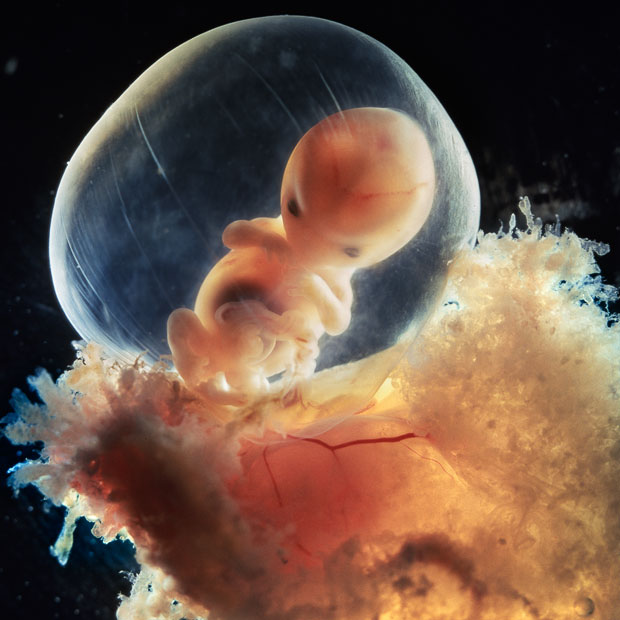
New study finds that choice to abort nearly doubles the risk of mental illness

Unborn baby scheming about prestigious research papers
Unborn baby scheming about a new research paper

Here is the study published in the British Journal of Psychiatry. (H/T Mary)

Abstract:

Background Given the methodological limitations of recently published qualitative reviews of abortion and mental health, a quantitative synthesis was deemed necessary to represent more accurately the published literature and to provide clarity to clinicians.

Aims To measure the association between abortion and indicators of adverse mental health, with subgroup effects calculated based on comparison groups (no abortion, unintended pregnancy delivered, pregnancy delivered) and particular outcomes. A secondary objective was to calculate population-attributable risk (PAR) statistics for each outcome.

Method After the application of methodologically based selection criteria and extraction rules to minimise bias, the sample comprised 22 studies, 36 measures of effect and 877 181 participants (163 831 experienced an abortion). Random effects pooled odds ratios were computed using adjusted odds ratios from the original studies and PAR statistics were derived from the pooled odds ratios.

Results Women who had undergone an abortion experienced an 81% increased risk of mental health problems, and nearly 10% of the incidence of mental health problems was shown to be attributable to abortion. The strongest subgroup estimates of increased risk occurred when abortion was compared with term pregnancy and when the outcomes pertained to substance use and suicidal behaviour.

Conclusions This review offers the largest quantitative estimate of mental health risks associated with abortion available in the world literature. Calling into question the conclusions from traditional reviews, the results revealed a moderate to highly increased risk of mental health problems after abortion. Consistent with the tenets of evidence-based medicine, this information should inform the delivery of abortion services.

Life News has more about the study.

Excerpt:

A new study published in the British Journal of Psychiatry by leading American researcher Dr. Priscilla Coleman of Bowling Green State University finds women who have an abortion face almost double the risk of mental health problems as women who have their baby.

Coleman’s study is based on an analysis of 22 separate studies which, in total, examine the pregnancy experiences of 877,000 women, with 163,831 women having an abortion. The study also indicated abortion accounts for one in ten of every adverse mental health issue women face as a whole.

“Results indicate quite consistently that abortion is associated with moderate to highly increased risks of psychological problems subsequent to the procedure,” the study says. “Overall, the results revealed that women who had undergone an abortion experienced an 81 percent increased risk of mental health problems, and nearly 10 percent of the incidence of mental health problems were shown to be directly attributable to abortion.”

The peer-reviewed study indicated abortion was linked with a 34 percent chance of anxiety disorders, and 37 percent higher possibility of depression, a more than double risk of alcohol abuse (110 percent), a three times greater risk of marijuana use (220 percent), and 155 percent greater risk of trying to commit suicide.

When compared to unintended pregnancy delivered women had a 55% increased risk of experiencing any mental health problem.

[…]“The paper is being published in a very prestigious journal, the British Journal of Psychiatry, which is considered one of the top psychiatry journals in the world. This means the paper has been extensively scrutinized by well-respected scientists and the results of studies are trusted by practitioners throughout the world,” Coleman said.

I was always told when debating the abortion issue not to talk about the effects on women, because the studies conflict. Some women have positive reactions after an abortion (relief) and some have negative reactions (guilt). This paper tips the balance in favor of the view that abortion is harmful to women. It confirms other recent studies that showed that abortion does have a negative impact on women’s mental health.

Abortion and breast cancer

Recent studies have also confirmed that there is a link between abortion and breast cancer.

Consider this article in the UK Daily Mail.

Excerpt:

An abortion can triple a woman’s risk of developing breast cancer in later life, researchers say. A team of scientists made the claim while carrying out research into how breastfeeding can protect women from developing the killer disease. While concluding that breastfeeding offered significant protection from cancer, they also noted that the highest reported risk factor in developing the disease was abortion. Other factors included the onset of the menopause and smoking. The findings, published in the journal Cancer Epidemiology, are the latest research to show a link between abortion and breast cancer. The research was carried out by scientists at the University of Colombo in Sri Lanka. It is the fourth epidemiological study to report such a link in the past 14 months, with research in China, Turkey and the U.S. showing similar conclusions.

[…]There has been an 80 per cent increase in the rate of breast cancer since 1971, when in the wake of the Abortion Act, the number of abortions rose from 18,000 to nearly 200,000 a year.

Earlier this year, Dr Louise Brinton, a senior researcher with the U.S. National Cancer Institute who did not accept the link, reversed her position to say she was now convinced abortion increased the risk of breast cancer by about 40 per cent.

Note that there were only 300 people in the new study, so it is a small study. But it confirms the Turkey study that I blogged on before, and the China study that I blogged about before, and the American study that I blogged about before.

, , , , , , , , , , , , , , , , , , , , , , , , , , ,

New study finds that teens who lose their virginity are more likely to divorce

The UK Daily Mail reports on a new study that shows that women who lose their virginity as teenagers are more likely to divorce. (H/T Dina, Mysterious C)

Excerpt:

Women who lost their virginity as young teenagers are more likely to divorce – especially if it was unwanted, according to new research.

The University of Iowa study shows that 31 per cent of women who had sex for the first time as teens divorced within five years, and 47 per cent within 10 years.

Among women who delayed sex until adulthood, 15 per cent divorced at five years, compared to 27 per cent at 10 years.

The findings were published in the April issue of the Journal of Marriage and Family.

Author Anthony Paik, associate professor of sociology in the university’s College of Liberal Arts and Sciences, examined the responses of 3,793 married and divorced women to the 2002 National Survey of Family Growth.

The study showed, however, that if a young woman made the choice to lose her virginity as a teenager, there was no direct link to a marital split later in life.

If the sexual act took place before the age of 16 women were shown more likely to divorce, even if it was wanted.

Thirty-one percent of women who lost their virginity during adolescence had premarital sex with multiple partners, compared to 24 per cent of those who waited.

Twenty-nine percent experienced premarital conceptions, versus 15 percent who waited.

One in four women who had sex as a teen had a baby before they were married, compared to only one in ten who waited until adulthood.

Only one per cent of women surveyed said they chose to have sex at age 13 or younger, compared to five per cent at age 14 or 15, and 10 per cent at age 16 or 17.

Forty two per cent reported that their first sexual intercourse before age 18 that was not completely wanted.

Fifty eight per cent of the group waited until age 18 or older to have sex. Of those, 22 per cent said it was unwanted, compared to 21 per cent who said it was wanted.

Researchers concluded sex itself may not increase the probability of divorce, while factors such as a higher number of sexual partners, pregnancy, or out-of-wedlock birth increased the risk for some.

This dovetails nicely with the previous studies that Mysterious C sent me that showed that, for men and women, the more sexual partners you have before marriage, the more unstable your marriage will be. See the related posts for more. If you’re still a virgin, like me, (and I’m in my mid-thirties now, and I’m saving my first kiss for my engagement), then there is nothing wrong with you. If you want a stable marriage, then you don’t have sex before you’re married. There are tons of virgins out there, and there is a huge difference in the quality of romantic relationships when both parties exercise self-control with physical touching.

Related posts