
Tag Archives: Marriage

Ryan T. Anderson lectures on marriage and why it matters

Marriage and family
Marriage and family

Here’s the lecture:

About the speaker:

Ryan T. Anderson researches and writes about marriage and religious liberty as the William E. Simon Fellow at The Heritage Foundation. He also focuses on justice and moral principles in economic thought, health care and education, and has expertise in bioethics and natural law theory.

Anderson, who joined the leading Washington think tank’s DeVos Center for Religion and Civil Society in 2012, also is the editor of Public Discourse, the online journal of the Witherspoon Institute of Princeton, N.J.

Anderson’s recent work at Heritage focuses on the constitutional questions surrounding same-sex “marriage.” He is the co-author with Princeton’s Robert P. George and Sherif Girgis of the acclaimed book “What Is Marriage? Man and Woman: A Defense” (Encounter Books, December 2012).

The lecture starts at 7:20 in. The lecture ends at 49:35. There are 32 minutes of Q&A.

Introduction:

  • When talking about marriage in public, we should talk about philosophy, sociology and public policy
  • Gay marriage proponents need to be pressed to define what marriage is, on their view
  • Every definition of marriage is going to include some relationships, and exclude others
  • It’s meaningless to portray one side as nice and the other mean
  • Typically, marriage redefiners view marriage as a more intense emotional relationship
  • Marriage redefiners should be challenged in three ways:
  • 1) Does the redefined version of marriage have a public policy reason to prefer only two people?
  • 2) Does the redefined version of marriage have a reason to prefer permanence?
  • 3) Does the redefined version of marriage have a reason to prefer sexual exclusivity?
  • Also, if marriage is just about romance, then why is the state getting involved in recognizing it?
  • The talk: 1) What marriage is, 2) Why marriage matters, 3) What are the consequences of redefining marriage?

What marriage is:

  • Marriage unites spouses – hearts, minds and bodies
  • Marriage unites spouses to perform a good: creating a human being and raising that human being
  • Marriage is a commitment: permanent and exclusive
  • Male and female natures are distinct and complementary

The public purpose of marriage:

  • to attach men and women to each other
  • to attach mothers and fathers to their children
  • there is no such thing as parenting, there is only mothering and fathering
  • the evidence shows that children benefit from mothering and fathering
  • boys who grow up without fathers are more likely to commit crimes
  • girls who grow up without fathers are more likely to have sex earlier
  • Children benefit from having a mother and a father
  • can’t say that fathers are essential for children if we support gay marriage, which makes fathers optional
  • without marriage: child poverty increases, crime increases, social mobility decreases, welfare spending increases
  • when government encourages marriage, then government has less do to – stays smaller, spends less
  • if we promote marriage as an idea, we are not excluding gay relationships or even partner benefits
  • finally, gay marriage has shown itself to be hostile to religious liberty

Consequences redefining marriage:

  • it undermines the norm in public like that kids deserve a mom and a dad – moms and dads are interchangeable
  • it changes the institution of marriage away from the needs of children, and towards the needs of adults
  • it undermines the norm of permanence
  • we learned what happens when marriage is redefined before: with no-fault divorce
  • no-fault divorce: after this became law, divorce rates doubled – the law changed society
  • gay marriage would teach society that mothers and fathers are optional when raising children
  • if marriage is what people with intense feelings do, then how can you rationally limit marriage to only two people?
  • if marriage is what people with intense feelings do, then if other people cause intense feelings, there’s no fidelity
  • if marriage is what people with intense feelings do, then if the feelings go away, there is no permanence
  • the public policy consequences to undermining the norms of exclusivity and permanence = fatherless children and fragmented families
  • a final consequences is the decline and elimination of religious liberty – e.g. – adoption agencies closing, businesses being sued

We’re doing very well on abortion, but we need to get better at knowing how to discuss marriage. If you’re looking for something short to read, click here. If you want to read a long paper that his book is based on.

The downside of the soul mate / fairy tale view of relationships


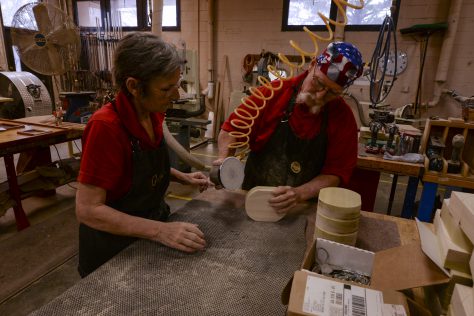
Husband and wife doing some woodworking together

(Image: Husband and wife doing some woodworking together)

Astonishing article from the leftist Huffington Post, of all places. (links removed)

Excerpt:

As millennial women, we were groomed for a white knight fantasy. From childhood favorites such as Snow White to adult rom-com staples such as How to Lose a Guy in Ten Days or Sleepless in Seattle, the media perpetuates a romantic storyline in which compatibility and lasting romance is something effortless, built on chance, sustained by good looks, fun dates and electric sexual chemistry. These story lines shape our expectations for romantic happiness. It is not enough to find someone with whom we are mostly compatible, who would make a good parent, with whom we could learn and grow wrinkly; now, we expect a perfect fit and an easy, instantaneous “connection.” In short, we want a soul mate. But it is this desire for a soul mate that is actually the undoing of our happy ending.

A “soul mate” is defined as one who is ideally suited to us, perfectly completes us, one with whom the relationship feels easy and natural. With them, a relationship is just “meant to be”… A survey of young adults conducted by the National Marriage Project found that while 84% of young adults report finding a marriage partner “very important,” a full 94% of young adults say they would like to marry a soul mate, and 73% of people ages 18 – 29 believe that there is a soul mate out there for them.

Wow. That doesn’t sound like a good approach to me. My approach has always been to pick the girl who was most willing to learn new things. And then to explain to her my vision for marriage and see if I could get her to work independently on that plan before I married her. I don’t favor this soul mate approach at all.

Does the “soul mate” approach work?

We heard that those who get married later and possess a college degree have fewer divorces and more stable marriages. So we spend our twenties trying to find ourselves through travel, accumulating degrees and building a career. Marriage will be the capstone of our achievements, and nothing less than tying the knot with a soul mate will suffice. But the tragic irony is that soul mate thinking makes us increasingly likely to divorce. A study of 1,400 married men and women shows that people who hold soul mate orientations are 150% more likely to end up divorced than those who do not.

The widespread cultural belief in “soul mate ideology” undermines our chances at happiness because it makes us passive receivers of idyllic romantic expectations. Further, it fosters self-centeredness; one rarely longs to be a soul mate for someone else, which would require effort. For this reason, believing in soul mates is one of the most dis-empowering belief systems we can adopt. As millennials, we pride ourselves on actively pursuing the life we want to live, rather than simply accepting whatever hand we are dealt. We are innovative, passionate, proactive and not afraid to take risks. Yet, there is a disconnect when it comes to our desire for lasting love. Though there are prospects around us, we forgo taking the concrete steps needed to build happy compatible relationships because we do not “feel a spark.” We are passively waiting on the sidelines for love to “happen,” and then wonder why it is so difficult.

I’ve always felt that the soul mate approach was like the evil villain in opposition to my noble plan-based approach. My approach is to pick a woman who wants to learn and work hard. Explain your marriage plan to her, and how your marriage plan serves God. My marriage plan accomplishes four goals, for example. 1) Influence the university with apologetics, 2) influence the church with apologetics, 3) provide a model of a good marriage to people in the community, including co-workers, college students and neighbors, and 4) raise effective, influential children who will have an impact for God. Now if you are a Christian woman raised in a church that affirms the soul mate / fairy tale view of marriage with this “God has a wonderful plan for your life” stuff, then a specific, non-emotional plan from a man is the last thing you want to hear about.

Their solution is for people to work at compatibility:

Compatibility is something co-created through intentionality and conscious choice. It involves mutual sacrifice, effort and commitment for the sake of the other’s benefit. A recent study found that of the couples who demonstrate above average daily generosity, 50% of them report being “very happy” in marriage; among the low generosity scores, only 14% can say the same. As studies indicate, selflessness is required to create mutual compatibility. It is not instantaneous, nor does it usually begin with true love’s kiss.

We both know from experience that there are some you naturally connect with and others you do not. This is not a call towards forced attraction or companionship. But, our romantic futures should not be placed in the hands of blind chance. It is time we roll up our sleeves and shift our expectations from unattainable perfection to realistic romance, one that accounts for imperfection. We must understand that work in a relationship is a necessary key to success, rather than an indication of imminent failure. We will be letting go of a tired plot line that sets us up for disappointment and embracing an active role in our own unique story.

How refreshing to know that we do not have to be perfect to be lovable, and that our romantic success is not solely dependent on finding the “right” fit, but instead built through cultivating daily moments of generosity, sacrifice and conscious coupling.

So in my case, I am looking for a woman who listens to the plan, develops the skills for the plan and then independently engages in activities to achieve the goals of the plan. In the past, I have had women listen to the plan carefully, including my motivations and experiences that caused me to choose this plan. And they have been willing to read books, listen to lectures, watch debates, to gain the skills needed to make a difference. And they have even engaged independently with activities like public speaking, teaching classes, and so forth. But none of the women who had done that accepted the soul mate / fairy tale view of marriage. They all wanted to hear a good plan, learn useful skills and then get to work. Big difference.

Christian feminist says that husbands who provide don’t deserve respect

In previous posts, I’ve described how I tried to keep the male provider role in mind when deciding how hard to study, what to major in, what jobs to choose, and how much to save. I wanted to earn the respect of my future wife, and have leverage to lead the family according to a (known) plan that would produce results for God. But not everyone sees self-sacrificial decisions that produce results as worthy of respect.

Here is a comment from a Christian feminist:

Based on this, and other things you’ve said, I… would frankly consider you ineligible for marriage. I have read some of your blog and it seems to me that you trust in your own earning power, your own planning ability, and haven’t even considered that it’s God who gives you the health and strength to carry out these things. Also, if you’re planning to retire at 50 with this net wealth, then you’re not giving enough money away. I don’t want to marry a dead beat guy who can’t provide. But I don’t want to marry an arrogant guy who thinks he can provide better than God either.

I think what she’s saying here, is that despite the husband’s abilities as a provider, wives are not obligated to respect their husbands. Why not? Because the husband’s preparation and planning to be the main provider was all a gift from God. The husband didn’t sacrifice anything or make good decisions in order to become a good provider. God did that. So, the wife should just give God the respect, not her husband.

Is her view consistent with Ephesians 5:22-24, 33?

22 Wives, submit yourselves to your own husbands as you do to the Lord.

23 For the husband is the head of the wife as Christ is the head of the church, his body, of which he is the Savior.

24 Now as the church submits to Christ, so also wives should submit to their husbands in everything.

33 However, each one of you also must love his wife as he loves himself, and the wife must respect her husband.

What her view really means, in practice, is that the wife only has to “respect” her husband when she feels like it. And when is that? When he makes her feel happy. By doing what she tells him to do.

And, since provider ability was all God’s doing, the husband didn’t really make good decisions about education, work experience, and finances. God made all those good decisions. The husband doesn’t actually know how to make good decisions, and so he shouldn’t be making the decisions for the family.

In practice, only the wife knows what God has decided for her (and the family). God speaks to her directly, through her feelings. So really, she should just explain to her husband what God is telling her through her feelings, and the husband should submit to her decision-making.

United Methodist women clergy declare support for abortion
United Methodist clergy declare their support for abortion

What does the Bible teach about women and marriage?

Consider Genesis 3:16:

16 To the woman he said,

“I will make your pains in childbearing very severe;
    with painful labor you will give birth to children.
Your desire will be for your husband,
    and he will rule over you.”

Is the woman’s her desire for her husband a romantic or sexual desire? It is not.

Famous evangelical theologian Dr. Wayne Grudem explains in his book “Biblical Foundations for Manhood and Womanhood”:

The word translated “desire” is an unusual Hebrew word, teshûqåh. What is the meaning of this word? In this context and in this construction, it probably implies an aggressive desire, perhaps a desire to conquer or rule over, or else an urge or impulse to oppose her husband, an impulse to act “against” him. This sense is seen in the only other occurrence of teshûqåh in all the books of Moses (Genesis, Exodus, Leviticus, Numbers, Deuteronomy), and the only other occurrence of teshûqåh plus the preposition ’el in the whole Bible. That occurrence of the word is in the very next chapter of Genesis, in 4:7. God says to Cain, “Sin is crouching at the door, and its desire is for you, but you must master it” ( NASB ). Here the sense is very clear. God pictures sin as a wild animal waiting outside Cain’s door, waiting to attack him, even to pounce on him and overpower him. In that sense, sin’s “desire” or “instinctive urge” is “against” him. 20

The striking thing about that sentence is what a remarkable parallel it is with Genesis 3:16. In the Hebrew text, six words are the same and are found in the same order in both verses. It is almost as if this other usage is put here by the author so that we would know how to understand the meaning of the term in Genesis 3:16. The expression in 4:7 has the sense, “desire, urge, impulse against” (or perhaps “desire to conquer, desire to rule over”). And that sense fits very well in Genesis 3:16 also. 21

(Quotation found on Dalrock’s blog)

How Christian feminists interpret the Bible

I urge you to listen to a presentation by Dr. Wayne Grudem at a meeting of the Evangelical Theological Society (ETS). He evaluates the claims of a Christian feminist named Catherine Kroeger.

Bottom line: not every church-attending woman who paints herself as a “spiritual” Christian (with words) takes the Bible seriously as an authority (in her actions).

Men: make sure you evaluate wife-candidates thoroughly, and make sure that they demonstrate the ability to do what the Bible says, especially when it goes against their feelings and desires. Never believe words about the future. Evaluate actions in the past. Your marriage must achieve something for God, and that means you must choose someone with proven character and ability, to help you execute your plan. That is why we evaluate women before proposing. Remember, after you marry her, you will be morally obligated to love her as Christ loved the church. Make sure you pick someone who is easy to love all the way.