Tag Archives: Marriage

Lori Alexander is right: serious Christian men prefer debt-free virgins without tattoos

Marriage stability vs sexual partners,(Teachman et al. JAMF, August 2010)

Christian writer Lori Alexander recently wrote a blog post (H/T Lindsay) urging Christian women to do 3 things:

  1. be a virgin before marriage
  2. be debt-free before marriage
  3. don’t get any tattoos

She also urged women to be cautious about college, because it often gets them into debt. I disagree with her a little here. I always urge young women to earn a STEM degree in college, then work a few years to pay off their loans (if any) before marrying. This is because women, like men, need to have the experience of doing something hard that they don’t “feel” like doing, in order to grow. STEM degrees teach young people that the world doesn’t revolve around them, and that their feelings don’t matter when trying to solve a problem in the real world. It’s a very useful way for women and men to break themselves out of the desire for free and easy happiness that is so common in our time.

Lori’s article drew enormous opposition from both secular and Christian sources. So far, the only people defending her are men’s rights sites, like Dalrock (Christian) and Spawny (non-Christian). Every other “Christian” blog or news site that I read disagreed her article, and argued that premarital sex was no big deal, that having debt was no big deal, and that having tattoos was no big deal.

Let’s take a look at her three points, then I’ll explain why her article is largely correct, and why she is correct about what she asserts about the criteria that godly men have for women.
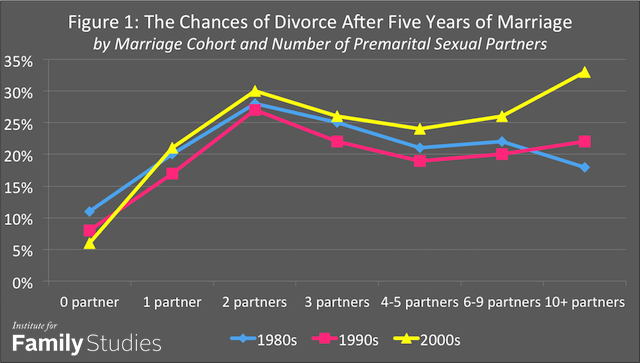
Even one non-husband premarital sex partner raises risk of divorce

Virginity

Regarding her first point, virginity is commanded by the Bible, it’s in line with peer-reviewed studies on marriage quality and stability. The reason that people find this difficult is that they want the freedom to give in to sexual desires without feeling shame. They want to believe that there is no permanent effect. It doesn’t help that parents and pastors are terrified of telling young people, and young women in particular, that promiscuity harms marital stability. Right now, the culture is drowning in feminism. Feminism tells women that the traditional male roles of provider, protector, and spiritual leader are “sexist”. The “best” men are good-looking pro-abortion bad boys. If a Christian woman is not able to think through the meaning of sex with respect to marriage enough to control herself, it seriously harms the stability of her future marriage.

Starting and Mid-Career salaries by profession (click for larger image)

Debt-free

Regarding her second point, almost everything a serious Christian man might plan to do for Christ with his marriage is impacted by finances. From education, to marriage timing, to number of children, to home ownership, early investment, to the success of children. to age of retirement. Less money means fewer choices, and less ability to counter challenges. Think of how important money for legal defense is to Christian-owned businesses who are being persecuted, for example. The reason that many people find the Bible’s teaching on stewardship difficult is that they don’t want to exercise self-control with money if they don’t feel like it. They want to waste money seeking fun and thrills, and then act like their poverty could not be avoided. Being debt-free is an indicator of practical wisdom and self-control in a woman.

Hugh Hewitt's "In, But Not Of", Chapter 9: Tattoos, Don't
Chapter 9 of Hugh Hewitt’s “In, But Not Of: A Guide to Christian Ambition”

Tattoos

Tattoos are a problem for serious Christian men for several reasons. First, they cost money and for no gain, and can even cause you losses in your career. Second, most people get them because of low self-esteem or vanity or to look rebellious or to look dangerous. None of these motivations should be acted upon by someone with a robust Christian worldview. The money could be better used on charity, or investments, etc. Women show what their priorities really are by how they spend their money and time. Show me a woman’s bookshelf, and I’ll tell you how seriously she has thought about what it means to be a Christian in all areas of life. Instead of showing me your tattoos to demonstrate your “spirituality”, show me your apologetics books, to demonstrate your intellectual engagement. And tell me how you used that information to engage in conversations with educated non-Christians to answer their challenges to your faith. That way I’ll know that you use your money to train do hard things in order to have an influence for Christ in serious, practical, effective ways. A woman who can defend her faith and discuss Christianity with non-Christians is demonstrating her ability to raise Christian children in a secular society.

A family praying and reading the Bible

The goal of marriage is to serve God

Today, young people have been taught to follow their hearts, and to deny that there is any authority or practical wisdom that should govern their decisions. They always imagine themselves to be exempt from moral rules, statistics, cause and effect, etc. They think they know better than everyone else – even though they do almost no research on their own. Every adviser who tells them to study computer science instead of creative writing is wrong. Their same-age friends know more about what causes divorces than peer-reviewed research papers. And money should be spent on skydiving and zip-lining, regardless of what financial experts like Dave Ramsey might say.

A woman who has made many mistakes cannot fix those mistakes with words. Rationalizations, evasions, and blame-shifting do not work to show that there has been real repentance. The man can only assess whether grace has caused any real re-prioritization of goals by evaluating her outward actions over a long period of time. Furthermore, if a woman who has made mistakes attacks those who correct her from Bible’s teachings on chastity, stewardship, etc., then it’s a sign that there is no real repentance.

Choosing a wife wisely doesn’t mean that Christian men treat OTHER Christian women poorly. Christian men love all the Christian women. We care for them and support them. But when a man chooses a wife, he is choosing someone who will have more influence on his ability to serve God than anyone else. In my case, the goals for my marriage involve making a difference with apologetics in the church, having many children who will receive the educations and careers they need to have an influence, influencing government to promote Christian-friendly policies, charitable giving, mentoring young Christians, modeling a good marriage to others, and having a home that can serve to host discussions about issues that matter. These things are not free – they take careful planning and execution to achieve.

Lori’s advice is  intended for men who are serious about making their marriage produce a return for God. Men who are chaste themselves. Men who accept the Bible as an authority. Men who earned STEM degrees, instead of easy nonsense degrees that don’t lead to good careers. Men who earn 6-figure salaries, who buy houses for cash, and who are on track have a 7-figure net worth by age 50. Men who made good decisions cannot risk marrying someone who hasn’t prepared for marriage. The wrong woman in the home could ruin the man’s effort to produce a marriage that gives glory to God.

Not every man intends to achieve something for God with his marriage, but those who do need to choose a woman who has demonstrated ability at doing the job. For example, if the job requires marital fidelity, then chastity is a good indicator that the woman has the necessary self-control. If the job requires frugality, and practicality, then being debt-free, having a STEM degree, and having some private sector work experience are good indicators that she’s qualified for the role. Nothing valuable in life is ever been achieved by being lazy, wild and irresponsible. Serious Christian men look for wives who have applied themselves to difficult tasks that they didn’t feel like doing, who achieved success by remaining committed to the plan, in spite of their unhappy feelings and unmet desires.

We have a problem in the church such that we aren’t serious about teaching young people to develop marriage-ready character and to make serious plans for marriage. We are teaching them to follow their hearts, and that their feelings and desires are clues about God’s will for their happiness. We are teaching them to be uncomfortable with responsibilities, expectations and obligations to others. We are teaching them not to do their own research. We are teaching them not to make practical, wise plans. We are teaching them to ATTACK those who try to get them to be serious about doing what is likely to work. This approach is not working.

My own criteria for a wife are more demanding than Lori’s. My advice there is only for serious Christian men who want their marriage to serve God.

Why don’t men go to church anymore? The decline of male church attendance

Church sucks, that's why men are bored there
Church sucks, that’s why men are bored there

I most recently spent half a year at a PCA church, and then another half a year at a Southern Baptist church. I attended Sunday services as well as Wednesday night Bible study. I am now looking for a new church. For now, I just look around for a sermon I like and listen to that. In this post, I’ll explain why I think men don’t like church.

There are three areas where churches fail to attract men:

    1. Apologetics
    2. Feminism, sex and marriage
    3. Policy and current events

Apologetics

The PCA church discouraged me from becoming a member of the church because they said that conversion to Christianity due to reason and evidence was contrary to their teachings, and a “red flag”. Their words. I didn’t try to fight them on it, because they are Reformed Presbyterian, and this is their actual view. Their approach to apologetics was “pre-suppositional”, which is to say, they try to convince people to become Christians by asking them to assume that the Bible is infallible, without any argumentation or evidence. Naturally, this doesn’t work, so they aren’t trained to answer any serious questions from non-Christians. (1 Pet 3:15-16)

The Reformed Baptist SBC church is led by people like Russell Moore and Al Mohler, who take the “magic words” approach to evangelism. I.e. – they think that people become Christians just by speaking Bible verses out of context to them. So, when the atheist asks “do you have any evidence for God’s existence?” or “do you have any evidence for Jesus’ resurrection?”, their response is to quote Bible verses to the atheist, which have nothing to do with those topics. Christianity has lost so much influence in the culture under their approach, which is not even Biblical. (Mat 12:38–41)

These approaches to evangelism are not used in any other area of human endeavor. No one replies to questions about auto mechanics, or software engineering, or gardening, or cooking, by spouting Bible verses. In literally every other area of human endeavor, the laws of logic and supporting evidence are seen as assets when making claims to know something about the world to someone who disagrees with you.

Feminism, Sex and Marriage

First wave feminism simply asked for women to be given the same liberty and opportunity as men. That was good. But later versions of destroyed all distinctions between men and women. By destroying femininity, feminism directed women away from the traditional life plan of marriage, children and home-making.

Feminism changed how women voted. Today, about 75% of young, unmarried women vote for policies like taxpayer-funded birth control, taxpayer-funded abortion, no-fault divorce, affirmative action for women in schools and in the workplace, taxpayer-funded daycare, public schools, single-mother welfare, social security, etc. These policies and programs raised tax rates, and grew government, making it easier for women to have children without having to choose a marriage-ready man she wasn’t attracted to. Instead, she could choose men she was attracted to, and just use government programs as a substitute provider if it didn’t “work out”. Thanks to feminism, we have a 42% out-of-wedlock birth rate, and it’s rising. Few female college graduates are debt-free. About 5% of women emerge from college as virgins.

Under feminism, the traditional male roles and virtues were deemed “sexist”. Women were shamed for choosing early marriage, large families, and stable men who were good at being husbands and fathers. Instead, women today chose men based on appearance. They spend their 20s and early 30s giving men who will not commit to them premarital sex. The men who are getting sex thrown at them have no interest in Judeo-Christian values, chastity, fidelity, commitment or raising children. Women mistake the men’s willingness to have sex and cohabitate as signs that they are close to marriage. But in fact, chasing the hot bad boys just eats up the chastity, youth and beauty that could have made them interesting to the marriage-minded men they scorned. Later on, they realize that they’ve wasted their 20s on bad boys, but by then they are not attractive for marriage.

What has the response been to feminism from pastors and churches? They accept the anti-male, anti-marriage policies, that came out of feminism. They accept the promiscuity, and the marriage-delaying that came from feminism. Today, pastors just try to bully the men who were passed over to marry the women who had previously rejected them, despite the higher risk of divorce caused by the women’s past behavior.

Policy and current events

Most pastors are anti-intellectual, and they believe that this is a virtue, since they are focused narrowly on what the Bible explicitly says. Because of this, they aren’t able to understand which laws and policies allow Christianity and Christian families to flourish. I agree that what the Bible speaks about is of the highest importance. But we need to understand how to achieve the goals that the Bible states, as well as how to counter the forces that threaten the achievement of those goals.

For example, Christianity thrives when marriage thrives. Christianity is passed on from parents to children. Anything that threatens marriage, or interferes with parental authority, weakens the influence of Christianity. So, policies like higher taxes, no-fault divorce, SOGI laws, all harm the Christian family, while policies like lower taxes, protections for Christian businesses, protection for Christian schools (statements of faith, moral codes), etc. are all good for Christian families. But most pastors never talk about policies or laws, because they don’t think about how to defend the Christian worldview, how to educate Christian children, how to promote marriage, how promote Christian moral values in the public square. Even protecting the right to life of unborn children is ignored.

As the churches lose relevance, it becomes tempting for pastors to accept what the secular left promotes as good and true and beautiful. The big one is pastors pushing for redistribution of wealth by the secular government as a solution to “poverty”, even though the Bible only sanctions voluntary charity. This diminishes the cultural relevance of the church and elevates the secular government. SBC leaders like Russell Moore champion amnesty for refugees and unskilled illegal immigrants, not realizing how it will harm Christian institutions and values down the road to import large numbers of people who will eventually vote for policies like higher taxes, bigger government, etc.

Frank Turek lectures on the case against same-sex marriage

About the speaker Frank Turek:

Dr. Frank Turek is a dynamic speaker and award-winning author or coauthor of four books: Stealing from God:  Why Atheists Need God to make their Case, I Don’t Have Enough Faith to be an Atheist, Correct, Not Politically Correct and Legislating Morality. As the President of CrossExamined.org, Frank presents powerful and entertaining evidence for Christianity at churches, high schools and at secular college campuses that often begin hostile to his message. He has also debated several prominent atheists including Christopher Hitchens and David Silverman, president of American Atheists.

Frank hosts an hour-long TV program each week called I Don’t Have Enough Faith to Be an Atheist that is broadcast Wednesday nights on DirecTV Channel 378 (the NRB Network). His radio program called CrossExamined with Frank Turek airs on 122 stations every Saturday morning at 10 a.m. eastern and is available continuously on the free CrossExamined App.

A former aviator in the US Navy, Frank has a master’s degree from the George Washington University and a doctorate from Southern Evangelical Seminary.  He and his wife, Stephanie, are blessed with three grown sons.

Frank Turek is one of my favorite speakers, and I admire him for being willing to take a public stand on controversial issues like gay marriage. He’s actually had to pay a price for that in his professional life, and I blogged about that before.

Here’s the lecture on gay marriage, featuring Christian apologist Frank Turek.

Outline:

Outline of Frank Turek's lecture on same sex marriage
Outline of Frank Turek’s lecture on same sex marriage

Introduction:

  • how to present your case against marriage safely
  • Christians are required to go beyond tolerance
  • loving another person can mean opposing the person when they want to do something wrong, even if they hate you
  • what did Jesus say about marriage? (see Matt 19:4-6)
  • what did Jesus say about sexual morality? (Matt 15, Matt 19)

Summary:

  • the same-sex marriage debate is about whether to compel people who disagree with the gay lifestyle to validate and normalize it
  • P1: the government has an interest in marriage because it perpetuates and stabilizes society – this is the purpose of marriage
  • P2-4: government can take 3 kinds of stances towards behaviors: promote, permit or prohibit
  • government promotes behaviors when it has an interest in them
  • same-sex relationships should be permitted, but not promoted
  • Q1: if same-sex marriage had serious negative consequences, would you reconsider their position?
  • Q2: are heterosexual relationships the same as homosexual relationships?
  • Q3: what would society be like if everyone married according to the natural marriage definition: one woman, one man, for life?
  • Q4: what would society be like if everyone married according to the same-sex marriage definition: man/man and woman/woman?
  • Should Christians care about law and politics? or should they just preach the gospel?
  • They should care because people often get their cues about what is moral and immoral based on what is legal and illegal
  • Many of the social problems we see today can be traced back to problems with marriage and family
  • Children do much better when they have a relationship with their mother and their father
  • Same-sex marriage necessarily destroys the relationship between a child and its mother or its father
  • When a country embraces same-sex marriage, it reinforces the idea that marriage is not about making and raising children
  • same-sex marriage shifts the focus away from the needs of the children to the feelings of desires of the selfish adults
  • does homosexuality impose any health and mental health risks?
  • what has the impact of legalizing same-sex marriage been in Massachusetts to individuals, schools, businesses and charities?
  • how same-sex marriage poses a threat to religious liberty
  • how should you respond to the view that homosexuality is genetic?

And at the very end, he shows this short video, which is only 5 minutes and explains the logic of opposing the redefinition of marriage:

My biggest concern is religious liberty, and we are seeing how same-sex marriage has proven to be incompatible with religious liberty. But I also care about children… I want them to have mothers and fathers who put their needs first. Marriage is about a commitment – it is the subjugation of feelings and desires to responsibilities and obligations. It is a promise. A promise to commit to love your spouse and children regardless of feelings and desires. It requires more self-denial, self-control and self-sacrifice. Not less.