Tag Archives: Marriage

Can we raise declining marriage rates by telling men to “man up”?

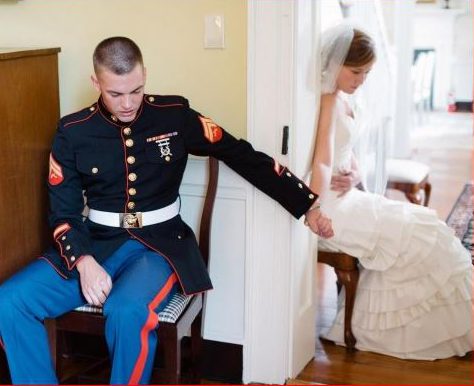
Marine prays with his wife on their wedding day

The latest Prager University video features pro-marriage scholar Brad Wilcox:

I watched this video, and, as a card-carrying member of the Christian men’s rights movement, I was concerned that nothing was said about how radical feminism has weakened the attractiveness of marriage to men. I mean specifically things like women carrying debt, having liberal political views, being unchaste and even promiscuous, initiating the majority of divorces (70%), withholding sex if they do marry, and denying men child visitation if they divorce, single mother welfare making men superfluous, big government replacing men as providers, etc. The consequences of divorce for men are catastrophic, and I don’t just mean financially, but emotionally as well.

I contacted Wilcox to ask him why he did not recognize how radical feminism undermines the value of marriage to men, and he pointed me to this article he wrote in the leftist Washington Post.

He writes:

These days, 20something marriage has gotten a reputation for being a bad idea. That’s partly because parents, peers, and the popular culture encourage young adults to treat their twenties as a decade for exploration and getting one’s ducks in a row, not for settling down. In the immortal words of Jay-Z, “Thirty’s the new twenty.”

Indeed, the median age-at-first marriage has climbed to nearly 30 for today’s young adults, up from about 22 in 1970. Of course, there’s an upside to that. As my coauthors and I report in  Knot Yet: the Benefits and Costs of Delayed Marriage in America, women who put off marriage and starting a family earn markedly more money than their peers who marry earlier.

And here he sort of takes on my concerns about chastity, delayed marriage, and fertility:

First, you are more likely to marry someone who shares your basic values and life experiences, and less likely to marry someone with a complicated romantic or family history.  Those who marry in their twenties, for instance, are more likely to marry someone who isn’t previously married and shares their level of educational attainment as well as their religious faith. Marrying at this stage in your life also allows couples to experience early adulthood together. In the words of Elizabeth Gilbert, a 31-year-old woman who married in her mid-twenties, “My husband and I got to grow up together—not apart. We learned sacrifice, selflessness, compromise, and became better people for it.”

Women who marry in their 20s generally have an easier time getting pregnant, and having more than one child, than their peers who wait to marry in their thirties.  You’ll also be around to enjoy the grandchildren for longer.

You’re less likely to lose the best possible mate for fear of getting started too young on the adventure that is married life. One single, thirtysomething woman struggling to find a good partner put it this way to psychologist Meg Jay, the author of The Defining Decade: Why Your Twenties Matter and How to Make the Most of Them Now, and whose TED Talk on twentysomethings has garnered 6.9 million views: “The best boyfriend I ever had was in my mid-twenties. I just didn’t think I was supposed to be [married] with someone then.” And as psychotherapist Lori Gottlieb explains in her book, Marry Him, there’s a higher likelihood of finding a true peer and more appealing partner-for-life in one’s twenties, before those most appealing potential mates marry somebody else by their thirties.

I cannot fault Wilcox or Prager for being ignorant of the social changes that have undermined the value proposition of marriage for men, and that have also undermined men’s ability to fulfill their roles. Far from being a man-blamer, Prager is a warrior against radical feminism, and just today Wilcox tweeted a study showing the boys benefit from single-sex education – a position I favor myself. But I do want to head off the common “men need to man up” objection made by those who deny that the real problem is radical feminism.

Contrary to the “be a man / man up” crowd, my objections to marriage don’t come from a desire to be lazy about education, career and finance. Rest assured that I have a BS and MS in STEM, and nearly two decades of STEM work experience (internships, summer jobs, full-time employment). I do make six figures, like the person Wilcox discussed in the video, and I have the savings you would expect with a gapless STEM resume. So, complaining about “man up” isn’t going to work on me, and probably not on most men who have concerns about marriage.

Radical feminism causes women to delay marriage in order to have fun, travel and ride the carousel of promiscuity in their 20s. Women have been told that they will have more fun by delaying marriage and staying single in their 20s. Church leaders, friends and family should be discussing and demonstrating the value of marriage to women, and showing them how the lasting contentment of marriage is better than the temporary fun of drinking, sex, travel and career. Marriage is a better platform for lasting joy and for quality relationships. It’s up to the woman’s friends and family to make the case for marriage as more fun and fulfilling than the alternatives offered by radical feminism. Her friends and family need to be countering the feminist message that is everywhere in the culture: marriage is boring, children are a burden, and that husbands are needy and demanding fools. And women need to be told how spending a decade being selfish in their 20s undermines their suitability for marriage.

A woman’s friends and family should train her not to view the moral and spiritual leadership of a man as threatening and dangerous, just because it disagrees with her feelings and desires. Instead of recoiling in horror when a well-educated, successful, wealthy man tells a woman with a history of poor decision-making to get a full-time job, pay off her debts, and start investing, her friends and family ought to welcome it. A good man’s practical advice should not be seen as stifling a woman’s freedom to “follow her heart”. And her friends and family certainly should not celebrate when she chooses a penniless, unemployed, empty-resume man who never questions her reckless decisions. Women should be encouraged to choose men who have demonstrated ability as protectors, providers and moral and spiritual leaders, even if she would rather have a doormat who lets her be wild, selfish and irresponsible. Doormats are not intimidating, but they are also not decisive about marriage. When a man wants to marry a woman, he is very interested in encouraging her to be practical and responsible. This is a good thing.

Lesbian relationships are the most unstable and shortest-lived relationships. This suggests that there is a tendency in women to reject commitment when it goes against their feelings and self-interest. Women’s emotions can make them unstable, and less capable of commitment. Friends and family need to recognize that tendency, and help women to learn practicality, responsibility and unselfishness at a young age, so that they are capable of making commitments.Men look for women who have demonstrated that they are able to complete things that they start. We know that women initiate 70% of divorces, and mostly because of feelings of unhappiness. Finish a tough STEM degree, work a tough job for a few years, pay off debts, pay off a car loan, etc. Men look for women who can make and keep commitments through good times and bad times, even when it goes against their self-interest.

A good basic book to read on this issue is Helen Smith’s “Men On Strike“.

Here’s a short video about her book:

A longer interview from News Max:

And an even longer interview with a homeschooling man:

Some men are ignorant of how radical feminism makes women less suitable for marriage while simultaneously making school and work more difficult to boys and men. It is these men who need to “man up” and “be a man” by challenging women to reject radical feminism and embrace early marriage to strong men who lead. If you’re not willing to fight the radical feminism that causes the underlying problems, then you can’t complain when men wisely reject marriage to women who aren’t ready to be wives and mothers.

Should Christians be motivated by the fear of missing out (FOMO)?

Bible study that hits the spot

My best friend Dina and I recently spent some time talking over some articles that we found on the culture. We specifically talked about what is motivating young people, so I wanted to write something about that.

FOMO: Fear Of Missing Out

Here’s a leftist New York Times article explaining where FOMO comes from:

It’s known as FOMO, or “fear of missing out,” and refers to the blend of anxiety, inadequacy and irritation that can flare up while skimming social media like Facebook, Twitter, Foursquare and Instagram. Billions of Twitter messages, status updates and photographs provide thrilling glimpses of the daily lives and activities of friends, “frenemies,” co-workers and peers.

[…]When we scroll through pictures and status updates, the worry that tugs at the corners of our minds is set off by the fear of regret, according to Dan Ariely, author of “Predictably Irrational” and a professor of psychology and behavioral economics at Duke University. He says we become afraid that we’ve made the wrong decision about how to spend our time.

[…]A friend who works in advertising told me that she felt fine about her life — until she opened Facebook. “Then I’m thinking, ‘I am 28, with three roommates, and oh, it looks like you have a precious baby and a mortgage,’ ” she said. “And then I wanna die.”

It’s like they want to run a race to do fun and exotic things with their peers, and not finish last.

Anyway, I want to begin this post with examples of FOMO behavior I have personally encountered.

FOMO Travel

Dina and I read and discussed this article by Alain de Botton in The European – notice the emphasis on travel and having fun, sophisticated experiences:

We’re continually being bombarded with suggestions about what we might do (go jet skiing, study in Colorado, visit the Maldives or see the Pyramids). We’re always hearing of the amazing things friends have done or are going to do: ‘there was this great bar we all went to …’; ‘she’s getting married in a little country church, then we’re having a picnic…’; ‘the sun was glinting on Sydney Harbour…’ There are endless hints of the allure of life in other places: an article about family-friendly restaurants in Brooklyn, a crime novel set in Trieste, the departure board at the airport with its list of places only a plane trip away: Moscow, Bangkok, Addis Ababa… The modern world makes sure we know at all times just how much we’re missing. It is a culture in which intense and painful doses of FOMO (Fear Of Missing Out) are almost inevitable.

What’s interesting is this – how does FOMO travel affect young, unmarried Christians?

Travel through missions work seems to be the FOMO activity of choice for at least a few young, unmarried Christians. One of my best friends who is married to another of my best friends told me about her missions trip to a European country. I asked her why she did it, since it meant lost savings, lost earnings, lost work experience, etc. (She gave up a year of earnings, and she had a great job in engineering). Her answer was that she did it for the adventure. I have a hard time hearing Jesus say that he was going to do something because he was bored and wanted an adventure. Especially when it’s $30,000 in costs, $60,000 of lost income, and lost work experience – per year. This was before the time of the Internet, though, when missionary work actually made sense. I just don’t think it’s worth spending that kind of money for the impact you make. The people I know who went on missionary trips just wanted to feel spiritual, look spiritual, and have a fun “life experience” vacation. One missionary told me that she was desperate to get away from her boring mid-Western roots.

If you really want to share Christ effectively with people in other countries, then you can start a blog and pay the tiny costs for it out of your earnings from your day job – that’s what I do. I get more people from Europe reading my blog than I could contact in a year of missionary work. I Skype with the people who are interested in Christianity from these countries (Scotland, Northern Ireland, England, Canada, etc.), as well. Meanwhile, I keep working my not-exciting job, so my savings increase, and my resume remains gap-less. This is good stewardship of finances, and self-denial prepares your character for the hard work of marriage and parenting. The Bible says that those who do not work should not eat. And Paul says that he built tents so that no one could accuse him of taking on missionary work for financial gain.

You can tell whether a person is sincere in their missionary intentions by looking at how responsible they’ve been in their decision-making. If a person has gone into debt paying for fun, thrilling activities like skydiving, ziplining, surfing, etc., then it’s FOMO travel. We must look past the spiritual smokescreen, and tell young people to grow up.

After all, if defending God’s honor was the missionary’s main goal, then the real battlefield would be the university.

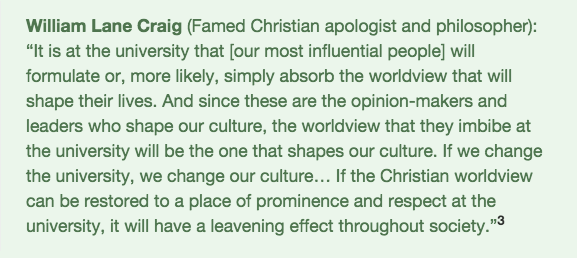
Bill Craig puts it best:

If serving God is your goal, look to the university

There is already a perfectly fine university right next door – no need to fly to Europe to find one! Remember, the university that took your faith away, or maybe the faith of someone you cared about? Yeah, it’s still sitting there in your home town! And it’s still ruining the lives of thousands of young people, by peer-pressuring them into secular, liberal views – and behaviors. It seems to me that it’s better stewardship to stay here and work, then give money to groups like Reasonable Faith. And you can start a blog, teach in church and invite scholars to the local university, too. That costs almost nothing, and it produces better results.

What about Jesus?

Sometimes, it’s a good idea to look beyond the words of the Bible and reflect on the overall message of it at a higher level. When I look in the Bible, I see that Jesus went through a lot of suffering in obedience to God in order to secure the salvation of people who did not even like him. And it’s from this sacrifice on our behalf that his claim on our obedience comes. There are things that I don’t like to do that I do anyway because they work to serve God. Jesus life’s ambition was not to do things that were easy, or that made him happy. Experienced Christians do things that are not fun, because these things are right and because they solve the real problem.

A lesson about men for marriage-minded women from the movie “High Noon”

Marine prays with his wife on their wedding day

One of my favorite movies for explaining the differences between men and women is “High Noon” (1952).

Here’s the summary from IMDB:

Former marshal Will Kane (Gary Cooper) is preparing to leave the small town of Hadleyville, New Mexico, with his new bride, Amy (Grace Kelly), when he learns that local criminal Frank Miller has been set free and is coming to seek revenge on the marshal who turned him in. When he starts recruiting deputies to fight Miller, Kane is discouraged to find that the people of Hadleyville turn cowardly when the time comes for a showdown, and he must face Miller and his cronies alone.

The main theme of the film concerns Amy’s decision to break her wedding vows the very day that she makes them. She tells her new husband that he must bow to her will, and give up his male role as protector. When he explains his reasons for standing his ground to her practically (Miller will hunt them down) and morally (he has a duty protect the town), she dismisses both. She tells him that if he doesn’t run away from Miller and his gang with her, that she will get on the train and leave town by herself.

The intro of film shows the member’s of Miller’s gang assembling, and the words of the song explain the central conflict between husband and wife:

Here’s the part of the lyrics we care about:

The noonday train will bring Frank Miller.
If I’m a man I must be brave
And I must face that deadly killer
Or lie a coward, a craven coward,
Or lie a coward in my grave.

O to be torn ‘twixt love and duty!
S’posin’ I lose my fair-haired beauty!
Look at that big hand move along
Nearin’ high noon.

He made a vow while in State’s Prison,
Vow’d it would be my life or his’n
I’m not afraid of death, but O,
What will I do if you leave me?

Do not forsake me O my darlin’
You made that promise when we wed.
Do not forsake me O my darlin’
Although you’re grievin’, I can’t be leavin’
Until I shoot Frank Miller dead.

What’s interesting is that his new wife Amy apparently does not understand the meaning of wedding vows or the natural roles of good men as protectors of the weak, and fighters against evil. Although she vowed to stick by him and help him, the minute anything threatening appears that makes her feel unhappy, she abandons her vows and abandons her man. Let’s break down her mistakes now, using actual conversations from the movie.

First, she doesn’t understand or respect the man she married as a man:

Kane: [while riding out of town] It’s no good. I’ve got to go back, Amy.

Amy: Why?

Kane: This is crazy. I haven’t even got any guns.

Amy: Then let’s go on. Hurry.

Kane: No, that’s what I’ve been thinkin’. They’re making me run. I’ve never run from anybody before.

Amy: I don’t understand any of this.

Kane: [after looking at his vest watch] Well, I haven’t got time to tell ya.

Amy: Then don’t go back, Will.

Kane: I’ve got to. That’s the whole thing. [He turns the buggy around and rides back into town]

Her feelings and her desires for the world to be a happy place for her are so strong that they cloud her judgment.

Second, she doesn’t understand the threat posed by evil men:

More:

Kane: I sent a man up five years ago for murder. He was supposed to hang. But up North, they commuted it to life and now he’s free. I don’t know how. Anyway, it looks like he’s coming back.

Amy: I still don’t understand.

Kane: He was always wild and kind of crazy. He’ll probably make trouble.

Amy: But that’s no concern of yours, not anymore.

Kane: I’m the one who sent him up.

Amy: Well, that was part of your job. That’s finished now. They’ve got a new marshal.

Kane: He won’t be here until tomorrow. Seems to me I’ve got to stay. Anyway, I’m the same man with or without this. [He pins his badge on his vest]

Amy: Oh, that isn’t so.

Kane: I expect he’ll come lookin’ for me. Three of his old bunch are waiting at the depot.

Amy: That’s exactly why we ought to go.

Kane: They’ll just come after us, four of ’em, and we’d be all alone on the prairie.

Amy: We’ve got an hour.

Kane: What’s an hour?…What’s a hundred miles? We’d never be able to keep that store, Amy. They’d come after us and we’d have to run again, as long as we live.

Amy: No we wouldn’t, not if they didn’t know where to find us. Oh Will! Will, I’m begging you, please let’s go.

Kane: I can’t.

Amy: Don’t try to be a hero. You don’t have to be a hero, not for me.

Kane: I’m not trying to be a hero. If you think I like this, you’re crazy.

Instead of recognizing how her feelings are deceiving her about the threat and trusting her husband, she tries to force him to accept her mistaken view of reality by threatening to abandon him.

One of Kane’s ex-girlfriends has a talk with Amy, which helps her to understand who Kane is, and what is expected of her:

Amy: That man downstairs, the clerk, he said things about you and Will. I’ve been trying to understand why he wouldn’t go with me, and now all I can think of is that it’s got to be because of you…Let him go, he still has a chance. Let him go.

Helen: He isn’t staying for me. I haven’t spoken to him for a year – until today. I am leaving on the same train you are…What kind of woman are you? How can you leave him like this? Does the sound of guns frighten you that much?

Amy: I’ve heard guns. My father and my brother were killed by guns. They were on the right side but that didn’t help them any when the shooting started. My brother was nineteen. I watched him die. That’s when I became a Quaker. I don’t care who’s right or who’s wrong. There’s got to be some better way for people to live. Will knows how I feel about it.

Helen: I hate this town. I always hated it – to be a Mexican woman in a town like this.

Amy: I understand.

Helen: You do? That’s good. I don’t understand you. No matter what you say. If Kane was my man, I’d never leave him like this. I’d get a gun. I’d fight.

Amy: Why don’t you?

Helen: He is not my man. He’s yours.

Helen understands the need for a wife to stand by her man. But Amy’s response to evil is to shut her eyes and focus on feeling good and being happy. Notice that her “better way” is unspecified – it’s just a feeling she has that pacificism and no-violence will somehow “work” to stop evil. But in reality, pacifism is not a “better way” of dealing with evil – it does not work. Her pacifist response not only does not make evil go away, it actually encourages more evil. Weakness emboldens evildoers, and laying down your arms provokes them to do more evil. Will Kane knows this, but she won’t listen to him.

You can watch the final gunfight here, as well as Amy’s final decision:

So, this is why I really recommend this movie as a discussion-starter when you like a girl and are thinking of marrying her. It clarifies the essential problem with many young women today not being ready for marriage. To be fair, most women come around to respect their husbands and his different roles after they get married. However, the risk of divorce is so dangerous that it makes sense to bring it up for discussion before the marriage happens. Marriage is supposed to be an engine to serve God, and the success of that enterprise cannot be left to chance. You can’t just rely on the fact that she says the words of the vow, you have to check to see if she has a habit of keeping her promises when it goes against her own self-interest.

Ask yourself: Who are you, as a man? And does your woman accept that you have obligations to stand up to evil and do good ? Will she support you in your battle against evil, or will the marriage just be about her feelings and desires? I would especially beware of women who think that God is speaking to them through their feelings and desires. Look at her friends: are they practical and successful? Or are they irresponsible, unaccountable and reckless? Look at her father: does he have a plan for her, and does he lead her to be practical, frugal and hard-working? If you are not going to get an ally and a supporter in a wife, then you will not be able to serve God well, as a married man. Think about it.