Tag Archives: Hedonism

To protect children, we need to tell women to choose conservative, traditional men

Women need to learn to choose a man who is prepared to be a father and husband
Women need to learn to choose men who are prepared to be a father and husband

Yesterday, I blogged about the hook-up culture, and how many young women were freely choosing to participate in it.  In their own words, the young, unmarried women explained how they wanted to have fun and get “acceptance” from men who were good-looking by having sex with them within minutes of meeting them. I argued that we needed to tell young, unmarried women not to be seeking fun and thrills, and that we need to oppose radical feminism and selfishness in the culture.

Well, a woman who had an irresponsible mom read that post and left a comment telling her story.

Here is the first comment from Mysterious M. in full:

I was born to a woman who fits a very similar description to what you describe here in your post, WK, so perhaps it would be apropos for me to share my experience being raised by her.

My mom was brought up in a Christian home but allowed herself to be influenced by the feminist movement of the 60s and 70s after she left home. She spent one year in college, got a job, got married and then divorced within a few years (no kids). She met my dad in a bar after her divorce. She celebrated her divorce by going out drinking, btw. My dad was married at the time they met and had been previously married, as well, and had a slew of kids scattered across the country. His current wife was also pregnant. My half sister was born 3 weeks before me, in the same hospital.

Once she found out she was pregnant, she realized that I’d be better off without him around and told him to leave, which he did without any argument, unsurprisingly. I asked her once what she saw in him and she said, “Well, he was funny.” So she slept with him. No matter that he had a wife, ex-wives, kids, etc. Those things aren’t important when you’re out looking for a good time for yourself.

I was a teenager before I knew who my dad was and how I came into being. After I was born she did start to attend church and put me in Christian school and attempted to raise me in a Christian home. However, she never once told me that she thought she’d done anything wrong or that she was sorry for the pain that her decisions caused me. I went through years of anguish, depression, an eating disorder that almost killed me and other behavioral problems clearly stemming from the feelings of abandonment I experienced and her continuously irresponsible behavior, but never once did it appear to cross her mind that she might be responsible for any of this.

Although my mom appeared from the outside to have changed her ways, in hindsight I see that the reckless independence she acquired from her years away from family and church never really left. They switched from outwardly rebellious behavior, like dating married men, to more private bad habits to fulfill her desire for fun and excitement, like internet gambling and reckless spending on credit cards (to the tune of 70K at last count). I think these were also attempts to distract and comfort herself when she was lonely. When she got older, she resented that she didn’t have a husband to take care of her and enjoy a simple life with, but never seemed to put it together that her choices pretty much precluded her from that opportunity.

Although she’s faithfully attended church since my childhood and read her Bible, etc, I have never, ever once heard her admit that she sinned by doing any of these things, or that they were bad decisions that caused unnecessary hurt and harm to her child or herself. If anything, she still seems to think that it’s kind of funny or cute that she, an otherwise quiet, reserved, seemingly respectable woman, has a torrid past that resulted in an affair with a married man and a child to commemorate the event. I almost sense she’s proud of it, to this day, and that makes me very sad and scared for her.

She’s dying now and her mind is going. She says she’s ready to meet the Lord, and I can only hope that between herself and Him, she’s made things right, although I’ve seen very little fruit speaking to that possibility. She talks the talk, but seeing her walk up close and in person, I’m left with more questions than answers about whether she really ever submitted to Christ. It just doesn’t show to me, and I probably know her better than anyone else. She’s left an enormous mess financially for my husband and I to cope with and she can no longer distract herself with spending sprees, so the bitterness caused by her life decisions have finally caught up with her and there’s no avoiding them now.

I guess from my perspective, when I see young woman who claim to be Christian but are living the most important aspects of their lives out in the way the rest of the world says is acceptable, it makes me very confused about what they really believe. I purposely waited for sex until marriage, chose a man with good morals and a good job and did everything in power to stay as far away from the hook-up culture as possible. I know the pain that comes from such foolish living. I can’t fathom why any Christian woman would engage in such foolish and selfish behavior as the ones I see doing this very thing today. They do not know what it means to know, serve and love Christ. They are too busy loving and serving themselves to see what a dangerous path they are traveling.

There are a couple more comments now.

Here’s an excerpt from one:

My mom was raised in a loving home with Christian parents and grew up very involved in church. My grandmother ran the Sunday school program for years. My other aunts and uncles led decent, moral, Christian lives. My mom wanted to do something more exciting. She was rebellious, plain and simple. She thought it was funny. If she had been raised in a situation that was equally as bad as the one she created, I could feel more sympathy. But she was raised differently than what she chose. I don’t understand it but I watched my own Christian friends do the same thing as a teen and young adult. It’s so perplexing to me. They’re raised in a stable Christian household and then choose the most unstable and reckless men because of the feelings those men inspired. I was the product of those feelings and knew from a young age I’d rather stay single and chaste the rest of my life than end up repeating the choices that my parents made.

And an excerpt from a later one:

I know it’s popular to say that any time someone makes bad choices, it’s because they are hurting and are acting out. But once you reach adulthood and have a child, you forfeit your right to make excuses for your behavior. You either change or you risk damaging the children you’ve been entrusted with.

Regarding WK’s comment about condoning her recklessness, I will say this. To my mom, any relationship that involved conflict was disposable. I know that other Christians tried to confront her, and she rejected them. She cut them out, no holds barred. If you didn’t agree, you were not a part of her circle. For those who were close, she was very adept at keeping secrets. Even I didn’t know the breadth of the destructiveness of certain aspects of her life until recently, I was her closest confidant. People who are desperate to keep secrets are typically fairly adept at doing so, at least for a while. Eventually it catches up, but often it’s far too late to do any real remediation. At that point it’s just a matter of salvaging what you can and trying to cope with the rest as best as possible.

[…]Bottom line: excuses or not, bad decisions create bad consequences and are generally pretty avoidable if you’re willing to be humble and submit to Christ, regardless of the circumstances. Helping people identify excuses does not help them avoid these consequences. Only by pointing out the truth, no matter the friction it might cause, can we help people on a bad path see the error of their ways and offer them any real hope.

That is a situation (text in bold) that I have experienced myself.

Utilitarianism and the Moral Life by J. P. Moreland

I found this essay on After All, but it looks like their site is not working well, so I’m just going to steal it and post it here, in case it disappears completely. This is one of my favorite short essays on utilitarianism, and it’s a wonder that the thing can’t stay up somewhere. Well, it will have a home here now. I’d be surprised to see anyone else be this awesome in a measly 1000 words as Dr. Moreland is below.

—-

Utilitarianism and the Moral Life

What Is Utilitarianism?

Utilitarianism (also called consequentialism) is a moral theory developed and refined in the modern world by Jeremy Bentham (1748-1832) and John Stuart Mill (1806-1873). It can be defined as follows:

An action or moral rule is right if and only if it maximizes the amount of nonmoral good produced in the consequences that result from doing that act or following that rule compared with other acts or rules open to the agent.

By focusing on three features of utilitarianism, we can clarify this definition.

(1) Utilitarian theories of value.

What is a nonmoral good? Utilitarians deny that there are any moral actions or rules that are intrinsically right or wrong. But they do believe in objective values that are nonmoral.

Hedonistic utilitarians say that the only intrinsic good is pleasure and the avoidance of pain. Quantitative hedonists (Bentham) say that the amount of pleasure and pain is the only thing that matters in deciding between two courses of action, I should do the one that produces the greatest amount of pleasure and the least amount of pain (measured by factors like the duration and intensity of the pleasure). Qualitative hedonists (Mill) say that pleasure is the only intrinsic good, but the type of pleasure is what is important, not the amount. They would rank pleasures that come from reading, art, and friendship as more valuable than those that come from, say, a full stomach.

Pluralistic utilitarians
say there are a number of things that have intrinsic, nonmoral value: pleasure, friendship, health, knowledge, freedom, peace, security, and so forth. For pluralists, it is not just the pleasure that comes from friendship that has value but also friendship itself.

Currently, the most popular utilitarian view of value is subjective preference utilitarianism. This position says it is presumptuous and impossible to specify things that have intrinsic nonmoral worth. So, they claim, intrinsic value ought to be defined as that which each individual subjectively desires or wants, provided these do not harm others. Unfortunately, this view collapses into moral relativism.

(2) Utilitarians and maximizing utility.

Utilitarians use the term utility to stand for whatever good they are seeking to produce as consequences of a moral action (e.g., “pleasure” for the hedonist, “satisfaction of subjective preference” for others). They see morality in a means-to-ends way. The sole value of a moral action or rule is the utility of its consequences. Moral action should maximize utility. This can be interpreted in different ways, but many utilitarians embrace the following: the correct moral action or rule is the one that produces the greatest amount of utility for the greatest number of people.

(3) Two forms of utilitarianism: act utilitarianism and rule utilitarianism.

According to act utilitarianism, an act is right if and only if no other act available maximizes utility more than the act in question. Here, each new moral situation is evaluated on its own, and moral rules like “don’t steal” or “don’t break promises” are secondary The moral agent must weigh available alternatives and choose the one that produces the best consequences. Rule utilitarianism says that correct moral actions are done in keeping with correct moral rules, However, no moral rule is intrinsically right or wrong. Rather, a correct moral rule is one that would maximize utility if most people followed it as opposed to following an alternative rule. Here, alternative rules (e.g., “don’t lie” vs. “don’t lie unless doing so would enhance friendship”) are compared for their consequences, not specific actions.

What Is Wrong with Utilitarianism?

Several objections show the inadequacy of utilitarianism as a normative moral theory.

First, utilitarianism can be used to justify actions that are clearly immoral. Consider the case of a severely deformed fetus. The child is certain to live a brief, albeit painless life. He or she will make no contribution to society. Society, however, will bear great expense. Doctors and other caregivers will invest time, emotion, and effort in adding mere hours to the baby’s life. The parents will know and love the child only long enough to be heartbroken at the inevitable loss. An abortion negates all those “utility” losses. There is no positive utility lost. Many of the same costs are involved in the care of the terminally ill elderly. They too may suffer no pain, but they may offer no benefit to society. In balancing positives and negatives, and excluding from the equation the objective sacredness of all human life, we arrive at morally repugnant decisions. Here deontological and virtue ethics steer us clear of what is easier to what is right.

Second, in a similar way, utilitarianism denies the existence of supererogatory acts. These are acts of moral heroism that are not morally obligatory but are still praiseworthy. Examples would be giving 75 percent of your income to the poor or throwing yourself on a bomb to save a stranger. Consider the bomb example. You have two choices — throwing yourself on the bomb or not doing so. Each choice would have consequences and, according to utilitarianism, you are morally obligated to do one or the other depending on which option maximized utility. Thus, there is no room for acts that go beyond the call of morality.

Third, utilitarianism has an inadequate view of human rights and human dignity. If enslaving a minority of people, say by a lottery, would produce the greatest good for the greatest number, or if conceiving children only to harvest their parts would do the same, then these could he justified in a utilitarian scheme. But enslavement and abortion violate individual rights and treat people as a means to an end, not as creatures with intrinsic dignity as human beings. If acts of abortion, active euthanasia, physician-assisted suicide, and so forth maximize utility, then they are morally obligatory for the utilitarian. But any moral system that makes abortion and suicide morally obligatory is surely flawed.

Finally, utilitarianism has an inadequate view of motives and character. We should praise good motives and seek good character because such motives and character are intrinsically valuable. But utilitarianism implies that the only reason we should praise good motives instead of bad ones, or seek good character instead of bad character, is because such acts would maximize utility. But this has the cart before the horse. We should praise good motives and blame bad ones because they are good or bad, not because such acts of praising and blaming produce good consequences.

In sum, it should be clear that utilitarianism is an inadequate moral theory. Unfortunately, ours is a pragmatic culture and utilitarianism is on the rise. But for those of us who follow Christ, a combination of virtue and deontological ethics is a more adequate view of common sense morality found in natural law and of the moral vision contained in the Bible.

Should Christians be motivated by the fear of missing out (FOMO)?

Theology that hits the spot

Dina was off from her stressful job last week, so we spent some time talking over some articles that we found on the culture. We specifically talked about what is motivating young people, so I wanted to write something about that.

FOMO: Fear Of Missing Out

Here’s a leftist New York Times article explaining where FOMO comes from:

It’s known as FOMO, or “fear of missing out,” and refers to the blend of anxiety, inadequacy and irritation that can flare up while skimming social media like Facebook, Twitter, Foursquare and Instagram. Billions of Twitter messages, status updates and photographs provide thrilling glimpses of the daily lives and activities of friends, “frenemies,” co-workers and peers.

[…]When we scroll through pictures and status updates, the worry that tugs at the corners of our minds is set off by the fear of regret, according to Dan Ariely, author of “Predictably Irrational” and a professor of psychology and behavioral economics at Duke University. He says we become afraid that we’ve made the wrong decision about how to spend our time.

[…]A friend who works in advertising told me that she felt fine about her life — until she opened Facebook. “Then I’m thinking, ‘I am 28, with three roommates, and oh, it looks like you have a precious baby and a mortgage,’ ” she said. “And then I wanna die.”

It’s like they want to run a race to do fun and exotic things with their peers, and not finish last.

Anyway, I want to begin this post with examples of FOMO behavior I have personally encountered.

FOMO Travel

Dina and I read and discussed this article by Alain de Botton in The European – notice the emphasis on travel and having fun, sophisticated experiences:

We’re continually being bombarded with suggestions about what we might do (go jet skiing, study in Colorado, visit the Maldives or see the Pyramids). We’re always hearing of the amazing things friends have done or are going to do: ‘there was this great bar we all went to …’; ‘she’s getting married in a little country church, then we’re having a picnic…’; ‘the sun was glinting on Sydney Harbour…’ There are endless hints of the allure of life in other places: an article about family-friendly restaurants in Brooklyn, a crime novel set in Trieste, the departure board at the airport with its list of places only a plane trip away: Moscow, Bangkok, Addis Ababa… The modern world makes sure we know at all times just how much we’re missing. It is a culture in which intense and painful doses of FOMO (Fear Of Missing Out) are almost inevitable.

What’s interesting is this – how does FOMO travel affect young, unmarried Christians?

Travel through missions work seems to be the FOMO activity of choice for at least a few young, unmarried Christians. One of my best friends who is married to another of my best friends told me about her missions trip to a European country. I asked her why she did it, since it meant lost savings, lost earnings, lost work experience, etc. (She gave up a year of earnings, and she had a great job in engineering). Her answer was that she did it for the adventure. I have a hard time hearing Jesus say that he was going to do something because he was bored and wanted an adventure. Especially when it’s $30,000 in costs, $60,000 of lost income, and lost work experience – per year. This was before the time of the Internet, though, when missionary work actually made sense. I just don’t think it’s worth spending that kind of money for the impact you make. The people I know who went on missionary trips just wanted to feel spiritual, look spiritual, and have a fun “life experience” vacation. One missionary told me that she was desperate to get away from her boring mid-Western roots.

If you really want to share Christ effectively with people in other countries, then you can start a blog and pay the tiny costs for it out of your earnings from your day job – that’s what I do. I get more people from Europe reading my blog than I could contact in a year of missionary work. I Skype with the people who are interested in Christianity from these countries (Scotland, Northern Ireland, England, Canada, etc.), as well. Meanwhile, I keep working my not-exciting job, so my savings increase, and my resume remains gap-less. This is good stewardship of finances, and self-denial prepares your character for the hard work of marriage and parenting. The Bible says that those who do not work should not eat. And Paul says that he built tents so that no one could accuse him of taking on missionary work for financial gain.

You can tell whether a person is sincere in their missionary intentions by looking at how responsible they’ve been in their decision-making. If a person has gone into debt paying for fun, thrilling activities like skydiving, ziplining, surfing, etc., then it’s FOMO travel. We must look past the spiritual smokescreen, and tell young people to grow up.

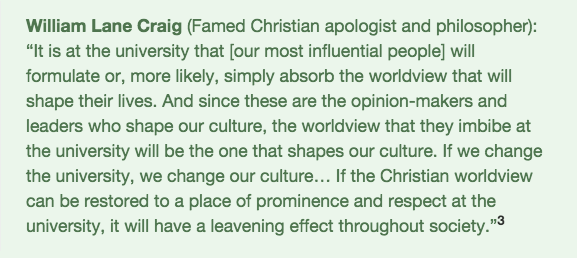
After all, if defending God’s honor was the missionary’s main goal, then the real battlefield would be the university.

Bill Craig puts it best:

If serving God is your goal, look to the university

There is already a perfectly fine university right next door – no need to fly to Europe to find one! Remember, the university that took your faith away, or maybe the faith of someone you cared about? Yeah, it’s still there in your home town! And it’s still ruining the lives of thousands of young people. It seems to me that it’s better stewardship to stay here and work, then give money to groups like Reasonable Faith. And you can start a blog, teach in church and invite scholars to the local university, too. That costs almost nothing, and it produces better results.

What about Jesus?

Sometimes, it’s a good idea to look beyond the words of the Bible and reflect on the overall message of it at a higher level. When I look in the Bible, I see that Jesus went through a lot of suffering in obedience to God in order to secure the salvation of people who did not even like him. And it’s from this sacrifice on our behalf that his claim on our obedience comes. There are things that I don’t like to do that I do anyway because they work to serve God. Jesus life’s ambition was not to do things that were easy, or that made him happy. Experienced Christians do things that are not fun, because these things are right and because they solve the real problem.