Scott Klusendorf, President of the Life Training Institute
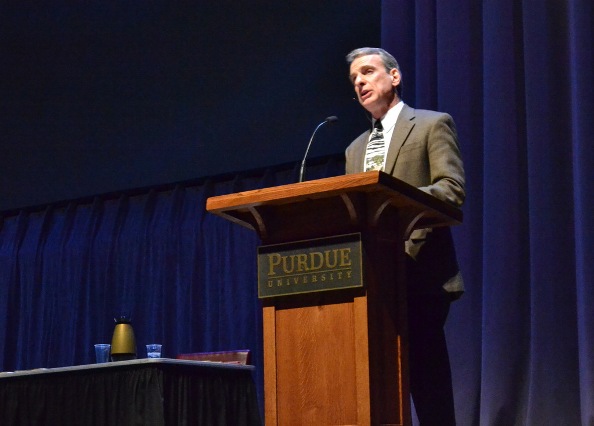
Here’s the video, featuring one of my favorite pro-life speakers Scott Klusendorf. Scott is the founder and President of the Life Training Institute. LTI’s mission is to make a rigorous, rational defense for pro-life positions with respect to a variety of ethical issues.
Three topics:
right to life of the unborn
reproductive technologies
end of life questions
40 minutes of guided discussion, 20 minutes of Q&A. This video was apparently recorded in the summer of 2016.
Abortion:
the 1-minute case for the pro-life position (excellent)
dealing with those who dismiss the pro-life case as religious
how and when do people win arguments?
how does one get better at discussing moral issues?
who are some of the best books to get informed about life issues?
what are some of the best books from the other side?
what is the SLED test? do pro-abortion scholars accept it?
if abortion were illegal, who should be punished and how much?
is it inflammatory and dangerous to say that abortion is killing?
Assisted reproductive technologies:
how should we speak to people considering ARTs?
what is the underlying issue in ART discussions?
should pro-lifers be opposed to all use of ARTs?
what should pro-lifers think about surrogacy?
which books provide an introduction to ART ethics?
End of life issues:
what is the central issue in end of life discussions?
should treatment always be continued or are there situations where treatment can be withdrawn?
Final issues:
if a student wants to take courses in bioethics, where should they go to take courses or do a degree?
what is the policy situation for pro-lifers in terms of legislation and SCOTUS decision-making?
what are some policies that pro-lifers can support as incremental measures that move the issue in the right direction?
I liked this discussion. I tried to listen as someone new to the issue and he did a good job of not assuming any prior knowledge of the debate. My favorite part was his survey of books and arguments on the other side, and what they say. I don’t think that most people realize what the implications of the pro-abortion worldview really are for things like infanticide, and so on. The discussion about who should be punished for abortion and how much was new to me – and that actually came up during the last election, during the GOP primary. Personally, I would let the woman get off, and just prosecute the doctor.
It’s very very good to listen to crystal clear thinking on these controversial issues from someone who has encountered the other side in their writings, and in public debates with them. Not to mention having to interact with people making decisions in these areas.
THE CRAIG-NIELSEN DEBATE: GOD, MORALITY, AND EVIL
William Lane Craig and Kai Nielsen
with annotations by William Lane Craig
February 1991, University of Western Ontario
Best part:
Finally, he raises the issue of immortality and says, “Death doesn’t undermine moral values. In fact, things that we value become all the more precious.” Well, in one sense he’s right. It’s the absenceofGod that undermines the objectivity of moral values, not death. But let’s suppose that there are objective moral values. What would be undermined by the lack of immortality? I think two things.
First, I think there would be no reason to adopt the moral point of view. Since you’re going to die, everyone ends up the same. It doesn’t make any difference whether you live as a Hitler or a Mother Teresa. There is no relationship between your moral living and your ultimate fate. And so in that sense, death undermines the reason for adopting the moral point of view rather that just being an egoist and living for self.
Second, there’s no basis for self-sacrifice on this point of view. Why should an atheist, who knows everything is going to end in death, do things that are morally right that go against self-interest? For example, a few years ago there was a terrible mid-winter air disaster in Washington, DC, as a plane crashed into a bridge spanning the Potomac River, spilling its passengers into the icy waters. And as the helicopters came to rescue these people, attention focused on one man who again and again passed by the rope ladder rather than be pulled to safety himself. Seven times he did this, and when they came again, he was gone. The whole nation turned its eyes to this man in respect and admiration for the noble act of self-sacrifice that he did. And yet on the atheistic view, that man wasn’t noble. He did the stupidest thing possible. He should have gone for the rope ladder first, pushed others away, if necessary, in order to survive! But to give up all the brief existence he will ever have for others he didn’t even know? Why? It seems to me, then, that it’s not simply the absence of God that undermines objective moral values, but ethical living is also undermined by the atheistic point of view because you then have no reason to adopt the moral point of view and you have no basis for acts of self-sacrifice.
By contrast, on the Christian view, where you have both God and immortality, you have the necessary presuppositions for the affirmation of objective moral values and for consistent living of the ethical life.
And another of my favorites, the Craig-Taylor debate on the ontological grounding of morality.
Summary:
Is The Basis Of Morality Natural Or Supernatural?
Richard Taylor and William Lane Craig
October 1993, Union College, Schenectady, New York
Sample Craig:
(2) I argued that moral accountability also exists under the supernaturalist view, and Professor Taylor didn’t deny the point.
(II) What about my critique, then, of naturalism? I said that naturalism doesn’t provide a sound foundation for morality, and here I made two points:
(1) On the naturalist view, objective right and wrong do not exist. Again, Professor Taylor doesn’t deny this point; he just says, “Well, to say that they’re conventional doesn’t mean they’re contemptible.” Well, granted; but it does mean they’re arbitrary, they’re non–objective. There’s no more difference between moral right and wrong than driving on the right–hand side of the road versus the left–hand side of the road. It’s simply a societal convention. And the modern evolutionist thinks these conventions are just based in socio–biological evolution. According to Michael Ruse, a professor of the philosophy of science,
The position of the modern evolutionist…is that humans have an awareness of morality…because such an awareness is of biological worth. Morality is a biological adaptation, no less than are hands and feet and teeth…. Considered as a rationally justifiable set of claims about an objective something, [ethics] is illusory. I appreciate that when somebody says, ‘Love thy neighbor as thyself,’ they think they are referring above and beyond themselves…. Nevertheless…such reference is truly without foundation. Morality is just an aid to survival and reproduction and…any deeper meaning is illusory….{26}
This is essentially the same view as Professor Taylor’s. Moral values are simply rooted in socio–biological evolution, that have passed down as certain taboos and certain commands, but they have no objective validity in terms of their moral rightness or wrongness. Professor Taylor says, “But I have a high regard for people who are truly moral and decent.” I don’t deny that. Of course he does! But the point is that in his ethics, in his philosophy, he has no basis for that affirmation. What I bring is not a new set of values—I think we pretty much hold those in common—but I’m offering a secure foundation for those values that we all want to hold dear.
You see, on Professor Taylor’s view, there really isn’t any objective morality. I think every one of us here tonight would agree that it’s wrong to kill babies and that the holocaust was morally wrong. But in his book Professor Taylor says, “The infanticide practiced by the Greeks of antiquity did not violate their customs. If we say it was nevertheless wrong, we are only saying that it is forbidden by our ethical and legal rules. And the abominations practiced by the Nazis…are forbidden by our rules, and not, obviously, by theirs.”{27} I submit that that is simply a patently false view of moral values and that naturalism, therefore, can’t provide any objective basis for right and wrong.
A Classic Debate on the Existence of God
Dr. William Lane Craig & Dr. Michael Tooley
November 1994, University of Colorado at Boulder
Sample Craig:
(2) Christian doctrines increase the probability of the coexistence of God and the evils in the world. Let me just mention a couple of these.
(i) On the Christian view, the purpose of life is not happiness as such in this life. Rather it is the knowledge of God—which will ultimately produce true and everlasting happiness. What that means is that many evils occur in this life which might be utterly pointless with respect to producing human happiness. But they might not be pointless with respect to producing the knowledge of God. Dr. Tooley assumes when he talks about changes that would make this world a better place, that the purpose of life is basically to be happy in this life. And I certainly admit that you could make changes that might appear to make this life a better place, make it happier. But that’s not God’s purpose. So if you understand that the purpose of life is not happiness as such, I think that you can see that the existence of evil doesn’t necessarily cast any improbability upon God’s existence.
(ii) It’s also the Christian view that God’s purpose spills over into eternal life. In the afterlife God will bestow a glory and happiness upon us that is incomparable to what we’ve suffered here on earth. And the longer we spend in eternity with Him, the more the sufferings in this life shrink by comparison to an infinitesimal instant. Dr. Tooley admits in his article that it is possible that immortality could justify such evils. But, he says, it’s “very unlikely” that there is life after death. Well, I have two comments. First, I’d like him to prove that it’s unlikely that there is life after death.{26} Second, I suggest that the resurrection of Jesus gives us grounds for hoping in life after death, and I’ve attempted to justify that historically. So given these Christian doctrines, I think you can see that the existence of God and evil is not so improbable after all.
[…]
(4) Finally, I think that there is actually an argument for God from evil. It would go like this:
(i) If God does not exist, objective moral values do not exist. If there is no God, moral values are either socio-biological by-products or just expressions of personal preference.
(ii) Evil exists. That’s the premise of the atheist. There is real evil in the world.
(iii) Therefore, objective values do exist. Some things are really wrong.
(iv) Therefore, God exists.
Thus the presence of evil in the world actually demonstrates God’s existence because in the absence of God, there wouldn’t be any distinction objectively between good and evil, between right and wrong. So although evil in one sense calls into question God’s existence, in a much deeper sense, I think, it actually requires God’s existence.
So in the light of these four responses, I think that the argument from evil, as difficult and emotionally pressing as it might be, in the end doesn’t constitute a good argument against the existence of God. So I think the four arguments given against the existence of God by Dr. Tooley are inconclusive. You’ve still got my six arguments for God’s existence, and therefore I still think that on balance the evidence favors theism as the more rational worldview.
There are more debate transcripts on Craig’s Reasonable Faith web site.
Dr. Graham Oppy, the moderator, is a well-known atheist philosopher. He let Dr. Krauss speak for 21 minutes and 40 seconds, which is why my summary of Krauss is so long.
The video:
Summary
After careful consideration, I decided not to be snarky at all in this summary. What you read below is what happened. There may be some small mistakes, but I will fix those if people tell me about them. I also included some quotes and timestamps for the more striking things that Dr. Krauss said.
The debate itself starts at 4:50 with Dr. Craig’s opening speech. He does use slides to show the structure of his arguments.
Dr. Craig’s opening speech. (4:50)
The kalam cosmological argument:
God is the best explanation of the origin of the universe
The Borde Guth Vilenkin theorem supports the absolute beginning of the universe
Even if our universe is part of a multiverse, the multiverse itself would have to have an absolute beginning
Speculative cosmologies try to challenge the Big Bang theory, but none of them – even if true – can establish that the past is eternal
Only two types of things could explain the origin of spece, time, matter and energy – either abstract objects or minds
Abstract objects do not cause effects, but minds do cause effects (we do it ourselves)
A mind is the best explanation for the origin of the universe
The unreasonable effectiveness of mathematics:
The underlying structure of nature is mathematical – mathematics is applicable to nature
Mathematical objects can either be abstract objects or useful fiction
Either way, there is no reason to expect that nature should be linked to abstract objects or fictions
But a divine mind that wants humans to understand nature is a better explanation for what we see
The cosmic fine-tuning for the existence of intelligent life
There are two kinds of finely-tuned initial conditions: 1) cosmological constants and 2) quantities
These constants and quantities have to be set within a narrow range in order to permit intelligent life
There are three explanations for this observation: law, chance or design
Law is rejected because they are put in at the beginning or matter – they don’t emerge from matter
Chance must be rejected, because they odds are just too long unless you appeal to a world-ensemble
We do not observe what the world ensemble hypothesis predicts that we should observe
Design is the best explanation for finely-tuned constants and quantities
The existence of objective moral values and duties
Our experience of morality (values and duties) is that it is objectively real and incumbent on us
When someone goes into a classroom and shoots at innocent children, that is objectively wrong
On naturalism, moral values and moral duties do not exist – they are conventional and variable by time and place
The best explanation for the existence of objective moral values and duties is that God exists
The historicity of the resurrection of Jesus
There are three widely-accepted facts that are best explained by the resurrection hypothesis
1) the empty tomb, 2) the post-mortem appearances, 3) the early church’s belief in the resurrection
Naturalistic attempts to explain these 3 boilerplate facts fail
The best explanation of the 3 minimal facts is that God raised Jesus from the dead
The immediate experience of God
Belief in God is a “properly basic” belief – rational even without arguments because of experience of God
Seems to be saying that logical arguments can prove false things “it’s nonsense”
Dr. Craig distorted a podcast that some group made on pain receptors
Dr. Craig’s faith is so strong that it causes him to distort what this group said
Discussion: (44:35)
I will not be summarizing everything that was said, just a few main points.
The segment from 52:18 to 57:12 about the Vilenkin e-mail on the BVG theorem is a must-see. Krauss is standing up and gesticulating while Craig is calmly trying to quote a paper by Vilenkin that shows that Krauss is misrepresenting Vilenkin. Krauss constantly interrupts him. After a while, when Craig exposes him as having misrepresented Vilenkin and gets him to admit that all current eternal models of the universe are probably wrong, he quietens down and can’t even look at Craig in the face.
Cosmological argument:
Craig: The e-mail says any universe that is expanding, on average, requires a beginning
Craig: There are two models – Aguirre & Gratton and Carroll & Chen – where there is a period of contraction before the expansion
Craig: The two models are the ones cited in the e-mail that Dr. Krauss showed
Craig: In the very paper by Vilenkin that I cited, he says that both of those models don’t work
Krauss: (agitated and interrupting) Vilenkin said that they have to make an assumption about entropy that they have no rationale for
(as Craig starts to talk Krauss makes an exaggerated, disrespectful gesture and sits down in a huff)
Craig: Yes, an unwarranted assumption means that they don’t have EVIDENCE for their theories being correct
Krauss: (agitated and interrupting) “All the evidence suggests that the universe had a beginning but WE DON’T KNOW!!!!!!!” (raising his voice)
Craig: I’m not saying that we know that the universe had a beginning with certainty
Craig: I am saying that the beginning of the universe is more probably true than false based on the evidence we have
Craig: And you agree with me about that – you think the universe had a beginning
Krauss: (agitated and interrupting) (Unintelligible)
Moderator: One at a time
Craig: In your Vilenkin e-mail slide, at the end of the paragraph where the two models are mentioned that Vilenkin specifically shows…
(I am guessing that Craig is going to ask why so much of what Vilenkin wrote has been cut out of the e-mail that Krauss showed)
Krauss: (agitated and interrupting) Because it was technical…
Moderator: Lawrence! Hang on a sec!
Craig: He specifically shows that these models are not past eternal, and that they require a beginning just like the others…
Krauss: (agitated and interrupting) We can do the math if you want
Craig: Now wait. I couldn’t help notice that there on your slide there was a series of ellipsis points indicating missing text…
Krauss: (agitated and interrupting) “Yeah, because it was technical!”
Craig: “I wonder what you deleted from the original letter”
Krauss: (agitated and interrupting) “I just told you!”
Craig: “Now wait. Could it have been something like this: (reads a quote from Vilenkin) ‘You can evade the theorem by postulating that the universe was contracting prior to some time. This sounds as if there is nothing wrong with having contraction prior to expansion. But the problem is that a contracting universe is highly unstable. Small perturbations would cause it to develop all sorts of messy singularities, so it would never make it to the expanding phase.’
Craig: “That’s Vilenkin.”
Krauss: “In this paper, that’s absolutely right”
Krauss: But it’s ok for theories to assume things that we know are wrong – they are still good theories – it’s unknown
(Craig turns away and looks through his papers)
Craig: “Isn’t it true that the only viable quantum gravity models on order today involve a beginning – have a finite past?”
Krauss: “No”
Craig: “Well, can you give us one then”
Krauss: (talks about a variety of possible eternal models) “In my experience in science, all of them are probably wrong”
Krauss: “You know most theories are wrong, which is why, you know, it’s hard”
Craig: “Right”
I noticed that a huge number of atheist web sites are taking the Vilenkin quote that Krauss used out of context, like this one and this one. There are probably a lot more of them like that, which I think is interesting. That’s why we have these debates, I guess. To set the record straight about who accuses people of being dishonest, and who is actually dishonest.
Fine-tuning:
Krauss tried to argue that he had explained the fine-tuning with the Higgs particle, but Dr. Craig said that only applied to the cosmological constant, not all the other examples of fine-tuning. Krauss said that it wasn’t impressive that this universe permitted life and that “It would have been much more surprising if we evolved in a universe in which we couldn’t live”. Krauss argued the fine-tuning was only for “Life like us”. But Dr. Craig explained that the fine-tuning is what allows us to have the basics of any kind of life, like slow-burning stars, chemical diversity, etc. – things that are required for basic minimal life functions in any living system. Craig said that he was working with the current physical laws of this universe (F = ma, etc.) and that he was looking at what changed if we changed those even slightly. Krauss tried to say that if he changed things like the mass of particles then the strength of forces would change. (But the forces aren’t laws!) Krauss argued that the cosmological constant would be even better for life if it was zero, and Craig said that the life permitting range did include zero, but that the range of life-permitting values was narrow.
Jesus’ existence:
Craig reponded to the mystery religions charge, the charge that the evidence for the minimal facts is too late/too weak, the charge that grief visions explained the evidence better, and Hume’s argument against miracles. Craig brought up the early creed from 1 Cor 15:3-7 and explained to Krauss that it was 5 years after the events, and that Jewish standards of oral transmission were strong enough to ensure that the creed was reliable, and most of the eyewitnesses would still have been alive.
Audience Q and A: (1:21:09)
The first topic is the grounding of morality. Krauss agrees that there is no objective morality and no objective moral oughts. He also said that that standards of behavior are arbitrary, and that they change over time and they are adopted for promoting social order. Dr. Craig pressed the point that science itself would collapse without ethical values. It assumes them, but cannot ground them.
The next topic was free will. Krauss is a determinist. Craig asked him how he could reconcile moral responsibility with determinism.
The next topic was the effectiveness of mathematics. Krauss didn’t have an explanation for it and didn’t think it needed one. Then they got into whether the Genesis has been verified by science and whether it is meant to be taken literally.
The next topic was whether philosophy makes any progress. Craig gave the example of verificationism being rejected as too narrow, and self-refuting. Krauss: “I’m going to come to the defense of philosophy for the first time”. Craig: “That’s amazing!” Krauss said that science provides new knowledge. Craig said there were some things that could be known apart from science.



 WINTERY KNIGHT