
I hate the Atlantic Monthly, but this article on the decline of men is quite scary.
Excerpt:
Once you open your eyes to this possibility, the evidence is all around you. It can be found, most immediately, in the wreckage of the Great Recession, in which three-quarters of the 8 million jobs lost were lost by men. The worst-hit industries were overwhelmingly male and deeply identified with macho: construction, manufacturing, high finance. Some of these jobs will come back, but the overall pattern of dislocation is neither temporary nor random. The recession merely revealed—and accelerated—a profound economic shift that has been going on for at least 30 years, and in some respects even longer.
Earlier this year, for the first time in American history, the balance of the workforce tipped toward women, who now hold a majority of the nation’s jobs. The working class, which has long defined our notions of masculinity, is slowly turning into a matriarchy, with men increasingly absent from the home and women making all the decisions. Women dominate today’s colleges and professional schools—for every two men who will receive a B.A. this year, three women will do the same. Of the 15 job categories projected to grow the most in the next decade in the U.S., all but two are occupied primarily by women.
And then this helpful anecdote:
The role reversal that’s under way between American men and women shows up most obviously and painfully in the working class. In recent years, male support groups have sprung up throughout the Rust Belt and in other places where the postindustrial economy has turned traditional family roles upside down. Some groups help men cope with unemployment, and others help them reconnect with their alienated families. Mustafaa El-Scari, a teacher and social worker, leads some of these groups in Kansas City. El-Scari has studied the sociology of men and boys set adrift, and he considers it his special gift to get them to open up and reflect on their new condition. The day I visited one of his classes, earlier this year, he was facing a particularly resistant crowd.
None of the 30 or so men sitting in a classroom at a downtown Kansas City school have come for voluntary adult enrichment. Having failed to pay their child support, they were given the choice by a judge to go to jail or attend a weekly class on fathering, which to them seemed the better deal.
[…]Like them, [El-Scari] explains, he grew up watching Bill Cosby living behind his metaphorical “white picket fence”—one man, one woman, and a bunch of happy kids. “Well, that check bounced a long time ago,” he says. “Let’s see,” he continues, reading from a worksheet. What are the four kinds of paternal authority? Moral, emotional, social, and physical. “But you ain’t none of those in that house. All you are is a paycheck, and now you ain’t even that. And if you try to exercise your authority, she’ll call 911. How does that make you feel? You’re supposed to be the authority, and she says, ‘Get out of the house, b*tch.’ She’s calling you ‘b*tch’!”
The men are black and white, their ages ranging from about 20 to 40. A couple look like they might have spent a night or two on the streets, but the rest look like they work, or used to. Now they have put down their sodas, and El-Scari has their attention, so he gets a little more philosophical. “Who’s doing what?” he asks them. “What is our role? Everyone’s telling us we’re supposed to be the head of a nuclear family, so you feel like you got robbed. It’s toxic, and poisonous, and it’s setting us up for failure.” He writes on the board: $85,000. “This is her salary.” Then: $12,000. “This is your salary. Who’s the damn man? Who’s the man now?” A murmur rises. “That’s right. She’s the man.”
The article has some errors, such as the discussion of the so-called wage gap, but it has many good points.
Stuart Schneiderman reflects on the article and hits upon what I think are the real problems with the decline of men.
Excerpt:
If boys do less well in school than girls, and if they are seriously under-represented in higher education, then perhaps the reason lies in the way schools have undertaken to boost the self-esteem of girls at the expense of boys. This unfortunate tendency was provoked by Carol Gilligan’s book In a Different Voice.
For a picture of how this plays itself in the schoolroom we turn to another article by Hanna Rosin. In this week’s New York Magazine Rosin shows how one form of what I and Mark Perry would call social engineering works: “For at least a decade, a subtle shift has been happening in the educational system that seems to be working against boys, who tend to be later verbal bloomers. New initiatives have emphasized more literacy skills in preschool, long before boys are ready. And early standardized testing– now the norm– sets up boys to see themselves as academic failures.” Link here.
If boys are being conditioned to see themselves as academic failures and if the curricula tend to overemphasize subjects at which they are less adept, it should not be surprising to see them underrepresented in colleges and universities. Not because of any natural progression but because policies have been established to diminish them.
Ask yourself this. Is this outbreak of anger toward women just a speed bump on the road to feminist utopia, or is it the natural consequence of poorly conceived social engineering? Is it payback for the educational system’s systematic bias against boys?
Are we really surprised that young men who are brought up without fathers in the new feminist dystopia are drawn to gangs and crime. We have seen exactly the same thing happen in the American inner cities over the past few decades. Single-parent families, headed by women, do not produce a cohort of healthy young males.
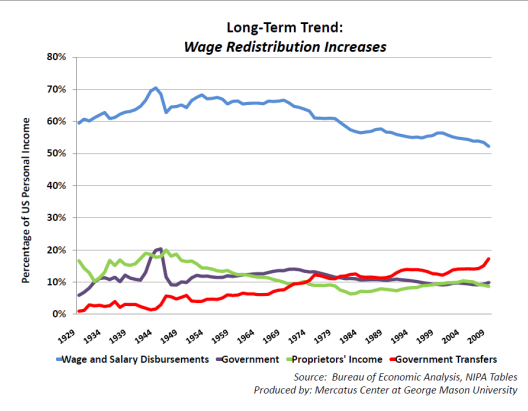
So the first problem is that the education which is devoid of male teachers and administrators. Boys also do much worse in co-educational classes, than in single-sex. And the second problem is that welfare payments for single mothers promote fatherlessness, which hurts boys more. Stuart might also have mentioned no-fault divorce laws and unfair family courts – feminist-supported policies which both increase fatherlessness.
How did this situation become law? I think that somehow, a large enough majority of women have been so influenced by feminism, (which is inherently anti-male), that they were willing to enact laws to discriminate against men in order to punish them. The feminists were more than happy to supply the fake statistics to help women to form the anti-male views required to justify the laws.

 WINTERY KNIGHT