
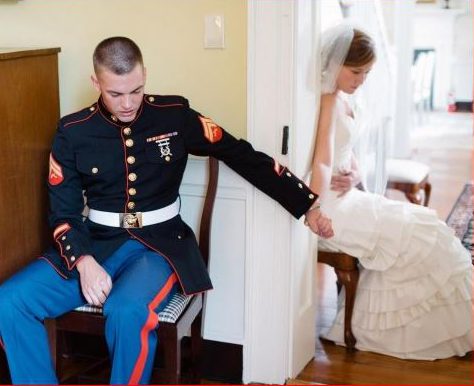
The latest Prager University video features pro-marriage scholar Brad Wilcox:
I watched this video, and, as a card-carrying member of the Christian men’s rights movement, I was concerned that nothing was said about how radical feminism has weakened the attractiveness of marriage to men. I mean specifically things like women carrying debt, having liberal political views, being unchaste and even promiscuous, initiating the majority of divorces (70%), withholding sex if they do marry, and denying men child visitation if they divorce, single mother welfare making men superfluous, big government replacing men as providers, etc. The consequences of divorce for men are catastrophic, and I don’t just mean financially, but emotionally as well.
I contacted Wilcox to ask him why he did not recognize how radical feminism undermines the value of marriage to men, and he pointed me to this article he wrote in the leftist Washington Post.
He writes:
These days, 20something marriage has gotten a reputation for being a bad idea. That’s partly because parents, peers, and the popular culture encourage young adults to treat their twenties as a decade for exploration and getting one’s ducks in a row, not for settling down. In the immortal words of Jay-Z, “Thirty’s the new twenty.”
Indeed, the median age-at-first marriage has climbed to nearly 30 for today’s young adults, up from about 22 in 1970. Of course, there’s an upside to that. As my coauthors and I report in Knot Yet: the Benefits and Costs of Delayed Marriage in America, women who put off marriage and starting a family earn markedly more money than their peers who marry earlier.
And here he sort of takes on my concerns about chastity, delayed marriage, and fertility:
First, you are more likely to marry someone who shares your basic values and life experiences, and less likely to marry someone with a complicated romantic or family history. Those who marry in their twenties, for instance, are more likely to marry someone who isn’t previously married and shares their level of educational attainment as well as their religious faith. Marrying at this stage in your life also allows couples to experience early adulthood together. In the words of Elizabeth Gilbert, a 31-year-old woman who married in her mid-twenties, “My husband and I got to grow up together—not apart. We learned sacrifice, selflessness, compromise, and became better people for it.”
Women who marry in their 20s generally have an easier time getting pregnant, and having more than one child, than their peers who wait to marry in their thirties. You’ll also be around to enjoy the grandchildren for longer.
You’re less likely to lose the best possible mate for fear of getting started too young on the adventure that is married life. One single, thirtysomething woman struggling to find a good partner put it this way to psychologist Meg Jay, the author of The Defining Decade: Why Your Twenties Matter and How to Make the Most of Them Now, and whose TED Talk on twentysomethings has garnered 6.9 million views: “The best boyfriend I ever had was in my mid-twenties. I just didn’t think I was supposed to be [married] with someone then.” And as psychotherapist Lori Gottlieb explains in her book, Marry Him, there’s a higher likelihood of finding a true peer and more appealing partner-for-life in one’s twenties, before those most appealing potential mates marry somebody else by their thirties.
I cannot fault Wilcox or Prager for being ignorant of the social changes that have undermined the value proposition of marriage for men, and that have also undermined men’s ability to fulfill their roles. Far from being a man-blamer, Prager is a warrior against radical feminism, and just today Wilcox tweeted a study showing the boys benefit from single-sex education – a position I favor myself. But I do want to head off the common “men need to man up” objection made by those who deny that the real problem is radical feminism.
Contrary to the “be a man / man up” crowd, my objections to marriage don’t come from a desire to be lazy about education, career and finance. Rest assured that I have a BS and MS in STEM, and nearly two decades of STEM work experience (internships, summer jobs, full-time employment). I do make six figures, like the person Wilcox discussed in the video, and I have the savings you would expect with a gapless STEM resume. So, complaining about “man up” isn’t going to work on me, and probably not on most men who have concerns about marriage.
Radical feminism causes women to delay marriage in order to have fun, travel and ride the carousel of promiscuity in their 20s. Women have been told that they will have more fun by delaying marriage and staying single in their 20s. Church leaders, friends and family should be discussing and demonstrating the value of marriage to women, and showing them how the lasting contentment of marriage is better than the temporary fun of drinking, sex, travel and career. Marriage is a better platform for lasting joy and for quality relationships. It’s up to the woman’s friends and family to make the case for marriage as more fun and fulfilling than the alternatives offered by radical feminism. Her friends and family need to be countering the feminist message that is everywhere in the culture: marriage is boring, children are a burden, and that husbands are needy and demanding fools. And women need to be told how spending a decade being selfish in their 20s undermines their suitability for marriage.
A woman’s friends and family should train her not to view the moral and spiritual leadership of a man as threatening and dangerous, just because it disagrees with her feelings and desires. Instead of recoiling in horror when a well-educated, successful, wealthy man tells a woman with a history of poor decision-making to get a full-time job, pay off her debts, and start investing, her friends and family ought to welcome it. A good man’s practical advice should not be seen as stifling a woman’s freedom to “follow her heart”. And her friends and family certainly should not celebrate when she chooses a penniless, unemployed, empty-resume man who never questions her reckless decisions. Women should be encouraged to choose men who have demonstrated ability as protectors, providers and moral and spiritual leaders, even if she would rather have a doormat who lets her be wild, selfish and irresponsible. Doormats are not intimidating, but they are also not decisive about marriage. When a man wants to marry a woman, he is very interested in encouraging her to be practical and responsible. This is a good thing.
Lesbian relationships are the most unstable and shortest-lived relationships. This suggests that there is a tendency in women to reject commitment when it goes against their feelings and self-interest. Women’s emotions can make them unstable, and less capable of commitment. Friends and family need to recognize that tendency, and help women to learn practicality, responsibility and unselfishness at a young age, so that they are capable of making commitments.Men look for women who have demonstrated that they are able to complete things that they start. We know that women initiate 70% of divorces, and mostly because of feelings of unhappiness. Finish a tough STEM degree, work a tough job for a few years, pay off debts, pay off a car loan, etc. Men look for women who can make and keep commitments through good times and bad times, even when it goes against their self-interest.
A good basic book to read on this issue is Helen Smith’s “Men On Strike“.
Here’s a short video about her book:
A longer interview from News Max:
And an even longer interview with a homeschooling man:
Some men are ignorant of how radical feminism makes women less suitable for marriage while simultaneously making school and work more difficult to boys and men. It is these men who need to “man up” and “be a man” by challenging women to reject radical feminism and embrace early marriage to strong men who lead. If you’re not willing to fight the radical feminism that causes the underlying problems, then you can’t complain when men wisely reject marriage to women who aren’t ready to be wives and mothers.
 WINTERY KNIGHT