
Britain is a country that is absolutely dominated by radical feminists. And it affects everything from their collectivist views on economic policy, to their pro-criminal views in the justice system, to their open-borders views on immigration, their preference for government-run healthcare, their hatred of self-defense, and so on. So, I wouldn’t expect to see an article about the plight of boys in a feminist society published in a British newspaper.
Nevertheless, here is an article from the UK Telegraph that explains how the public schools are handling the problem of underperforming boys.
It says:
Britain’s education system is failing to tackle the “astonishing” underperformance of boys as feminists have made the topic “taboo”, the former head of the university admissions service has warned.
Mary Curnock Cook, who was chief executive of Ucas until last year, said the fact that boys are falling behind in education is a national scandal – yet it is such an “unfashionable” topic to discuss that it has become “normalised”.
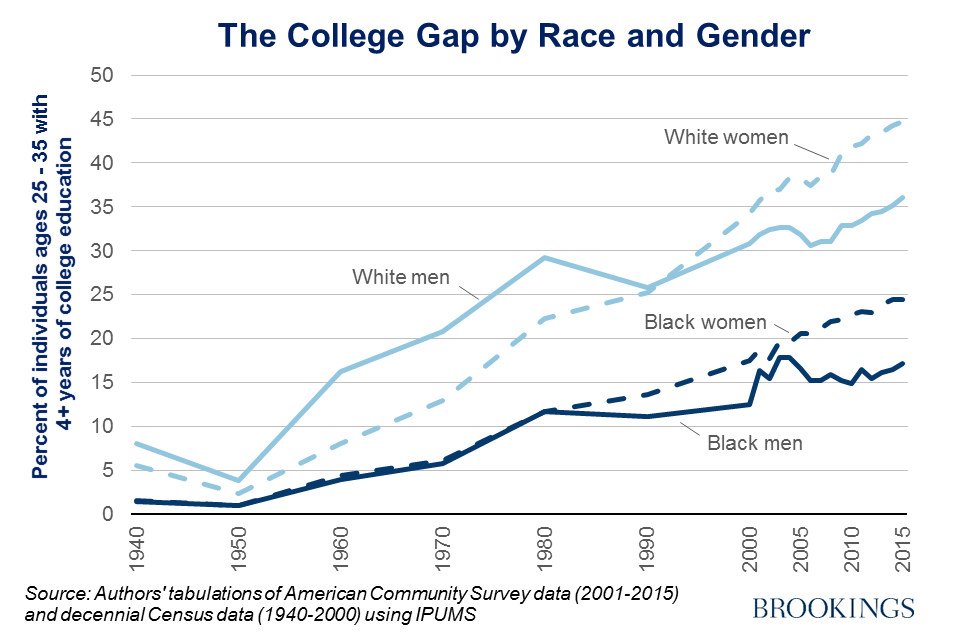
Girls outperform boys in all aspects of education, from primary school to GCSEs and A-level results. Last year, 57 per cent of women went to university compared to 43 per cent of men, a gap that has widened significantly over the last decade.
[…]Ms Curnock Cook said that the debate about gender equality tends to be dominated by issues such as the gender pay gap and the glass ceiling.
“But those are work issues, not education issues,” she said. “Quite often initiatives to support men do meet derision from feminists.”
When attempts are made to address men’s issues, they are ridiculed and are met with the “wrath” of feminist and gender equality groups, she said.
Last month the only university in the UK with a men’s officer scrapped the role after the candidate withdrew due to “harassment”.
But, it’s happening in America as well.
An article from 2013 appeared in the far-left The Atlantic. It explains how the school system punishes boys and favors girls – from kindergarten to the workplace, where women receive affirmative action preferences.
Excerpt:
Boys in all ethnic groups and social classes are far less likely than their sisters to feel connected to school, to earn good grades, or to have high academic aspirations. A recent working paper from the National Bureau of Economic Research documents a remarkable trend among high-achieving students: In the 1980s, nearly the same number of top male and female high school students said they planned to pursue a postgraduate degree (13 percent of boys and 15 percent of girls). By the 2000s, 27 percent of girls expressed that ambition, compared with 16 percent of boys. During the same period, the gap between girls and boys earning mostly A’s nearly doubled—from three to five percentage points.
This gap in education engagement has dire economic consequences for boys. A 2011 Brookings Institution report quantifies the economic decline of the median male: For men ages 25 to 64 with no high school diploma, median annual earnings have declined 66 percent since 1969; for men with only a high school diploma, wages declined by 47 percent. Millions of male workers, say the Brookings authors, have been “unhitched from the engine of growth.” The College Board delivered this disturbing message in a 2011 report about Hispanic and African-American boys and young adults: “Nearly half of young men of color age 15 to 24 who graduate from high school will end up unemployed, incarcerated or dead.” Working-class white boys are faring only slightly better. When economist Andrew Sum and his colleagues at the Center for Labor Market Studies at Northeastern University examined gender disparities in the Boston Public Schools, they found that for the class of 2007, among blacks and Hispanics, there were 186 females for every 100 males attending a four-year college or university. For white students: 153 females to every 100 males.
Just like in the UK, American feminists oppose doing anything to help boys:
In the U.S., a powerful network of women’s groups works ceaselessly to protect and promote what it sees as female interest. But there is no counterpart working for boys—they are on their own.
Previously, I blogged about a study showing that female teachers grade boys lower than girls.
It’s important for parents to understand that the problem of boys underperforming in school and work is not caused by boys. It’s not with video games, it’s not with sports, or anything else that anti-male people might blame. The problem with boys not learning and boys not working is caused by an education system dominated by anti-male feminists who systematically discriminate against boys, making it harder for them to learn the skills they need to find work.
The problem isn’t going to be fixed by airhead feminist pastors and other male “leaders” telling boys to “man up”. The problem is going to be fixed when parents realize that radical feminism is hostile to boys, and that institutions that are dominated by radical feminism are damaging to boys. I have a Jewish friend named Ari who homeschools all his children. He spends a lot of time and effort on this. He told me that sending boys to public schools is child abuse. I used to laugh at him when he said that. What a funny exaggeration, I thought. Now I’m not so sure he was joking.


 WINTERY KNIGHT