Tag Archives: Book Review

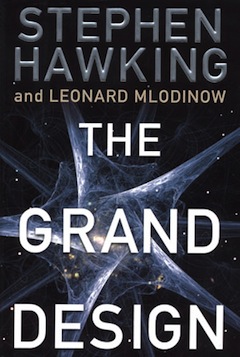
Book review of Stephen Hawking’s “The Grand Design” by Edgar Andrews

First, who is Edgar Andrews?

Professor Edgar H. Andrews (BSc, PhD, DSc, FInstP, FIMMM, CEng, CPhys.) is Emeritus Professor of Materials at the University of London and an international expert on the science of large molecules. In 1967 he set up the Department of Materials at Queen Mary College, University of London, and served both as its Head and later as Dean of Engineering. He has published well over 100 scientific research papers and books, together with two Bible Commentaries and various works on science and religion and on theology. His book From Nothing to Nature has been translated into ten languages.

Edgar Andrews was an international consultant to the Dow Chemical Company (USA) for over thirty years and to the 3M Company (USA) for twenty years. He was a non-executive director of Denbyware PLC throughout the 1970s and for five years a member of the Scientific Advisory Board of Neste Oy, the national oil company of Finland.

And now an excerpt from the book review: (H/T Apologetics 315)

Hawking and Mlodinow declare: ‘According to M-theory, ours is not the only universe. Instead, M-theory predicts that a great many universes were created out of nothing. Their creation does not require the intervention of some supernatural being or god. Rather, these multiple universes arise naturally from physical law. They are a prediction of science’ (p.9).

So what is this magical M-theory? The authors are rather coy about it. ‘M-theory’, they say, ‘Is not a theory in the usual sense. It is a whole family of different theories, each of which is a good description of observations only in some range of physical situations’ (p.8). Theoretical physicist Lee Smolin is more explicit: ‘… we still do not know what M-theory is, or whether there is any theory deserving of the name’ (The trouble with physics, Allen Lane, 2007, p.146).

The fact is that M-theory is an untestable mathematical construction which many scientists believe has no bearing on physical reality. But that doesn’t deter our authors because they don’t believe in ‘objective reality’ anyway. What we think is ‘real’, they say, is simply a model assembled in our brains from raw data input by our senses. But, confusingly, the authors then claim that the best models are those that reflect the way things really do happen in the real world — appealing to the very objective reality they say does not exist! Confused? Me too.

But it gets worse. They claim that M-theory (whatever it might be) predicts not one universe but a multiverse — a vast collection of universes which cannot be observed or known to us in any way. On their own criterion, this makes M-theory a very bad model indeed. So it’s hardly a useful replacement for God.

Here’s a better book to read if you want to understand how belief in God relates to experimental science.

My Dad just finished reading his book “Who Made God?” and called me up to tell me how much he liked the book. My Dad is not a scientist, yet he read the whole thing and learned a lot about science. This is the book for people who haven’t read a thing about science and religion. It’s easy to understand because he explains the same thing over and other giving more and more detail. Even a child can understand the first explanation, and then he keeps layering on details until he gets up to the state-of-the-art.

Remember Brian Auten of Apologetics 315 picked this book as his favorite of 2010. You can’t go wrong!

My Dad is now reading my copy of “Is God Just a Human Invention?” by Jonathan Morrow and Sean McDowell. I’m working on “Is God a Moral Monster?” by Paul Copan. I like books where difficult questions are asked and then careful answers are given. Then when people ask me the same questions, I can answer them using what I’ve learned – and often phrase the question even more clearly and forcefully than they did when they asked me.

WORLD magazine’s book of the year is “The Battle”

The article from WORLD magazine is here. (H/T Muddling Towards Maturity)

The book is called “The Battle: How the Fight Between Free Enterprise and Big Government Will Shape America’s Future”.

Excerpt:

The Battle then goes beyond money to note that, “The main issue in the new American culture struggle between free enterprise and statism is not material riches—it is human flourishing.” Brooks notes that “the 30 percent coalition charges the majority with money-grubbing selfishness” but is itself “fundamentally materialistic.” Leftists “believe that it should make no difference whether income comes from redistribution and government edict or from enterprise and excellence as judged by the free market. This is an ideology driven by raw materialism.”

Brooks emphasizes the differences in worldview: “In contrast, the 70 percent majority maintains a worldview that is primarily nonmaterialistic. It understands money as just a proxy measure of true prosperity and personal fulfillment. It emphasizes creativity, meaning, optimism, and control in one’s own life and seeks to escape from under the heavy hand of the state. . . . When we reduce the idea of work to nothing more than a means of economic support, we strip it of its transcendental meaning in our lives.” Brooks argues that productive work is crucial to happiness: “Americans prefer to find meaning in their jobs rather than through their after-work pursuits.”

[…]That leads to a political plank for the present: Since the 30 percenters “have concealed the central pillar of their ideology—income equality—under a misleading definition of fairness,” the rest of us should “expose this fact and reclaim the language of fairness for the free enterprise system.” It’s vital to make distinctions: “Legal equality, political equality, religious equality—almost all Americans would agree that these values are vital to our nation. But equality of income? That’s a fundamentally different kind of equality.” We want fair trials but not a right to be declared innocent. We want all people to have the right to vote but not “the right to see their chosen candidate elected to office.”

Brooks notes that the 30 percent coalition’s use of the word “fairness” is duplicitous: “It implies that equality of outcome is a core American principle, when in fact what Americans believe in is equality of opportunity and the potential to earn success.” He is right to insist that the 70 percent coalition cannot cede to the minority the fairness issue and merely argue for free enterprise on the basis of economic efficiency: “Fairness should not be a 30 percent trump card but rather their Achilles’ heel. Equality of income is not fair.” A fair system rewards hard work and excellent performance, and gives people on the bottom a chance to rise not by bringing down the top but by striving for excellence.

I heard Arthur Brooks being interviewed about the book on Dennis Prager’s show. And I read a chapter by Brooks in that “Indivisible” booklet put out by the Heritage Foundation. So he is a recognized conservative.

Muddling linked to some must-read and must-listen interviews that I will be looking at tonight (Monday). If they are good, I’ll link to them for Tuesday.

What book should you suggest for a book study in your church?

The two books you should pick to learn apologetics are “On Guard” by William Lane Craig and “Tactics” by Greg Koukl.

Recently, Bill did a podcast introducing “On Guard”.

The MP3 file is here. (19 minutes)

Topics:

  • the book is much easier to read than “Reasonable Faith”
  • explains what apologetics is and why it matters to Christians
  • explains why atheism makes life meaningless and irrational
  • the inadequacy of personal experiences for persuading others
  • describes four arguments in favor of Christianity
  • responds to common objections to the four arguments

The book also:

  • responds to the problems of evil and suffering
  • explains Jesus’ own divine self-understanding
  • outlines a historical case for the resurrection of Jesus
  • explains why it’s possible for Christianity to be exclusively true

There is a study guide for On Guard.

And you can read the first chapter for free.

Book reviews