First, take a look at this video of Michele Bachmann discussing her little debate with Democrat Arlen Specter, and keep a count of the things that she does that strike you as admirable.
What do we learn from this video?
My biggest problem in trying to get along with SOME women is the fact that I feel enormous pressure to only say things that women agree with. They only want to hear compliments, never criticisms. But I don’t like that – I want the freedom to be myself and to say whatever I want.
In a recent post that I was talking about William Lane Craig’s advice on how to have a happy marriage. He recommended that couples learn how to argue properly. And I think in that video we learn several tips on how to argue properly.
Here are some questions to ask about this video:
Does Michele feel offended or victimized during the debate?
Does Michele lose her temper during the debate?
Does Michele make gender an issue during the debate?
Does Michele focus more on arguments/evidence or feelings/motives?
Does Michele accept apologies and try to move on?
For me, a fun thing to do with a woman is to get into a good argument without having to censor myself. This happened to me recently where I was getting into some very long debates with a woman I really liked and the more I was able to be myself and have her not censor me, the more I just wanted to grab her and hug her. It became a really powerful feeling that I had a LOT of trouble resisting.
I distinctly remember at one point we were having a real scrap and I was pleading with her every hour to see whether she was feeling OK with the degree of sustained disagreement that we were engaging in, and I’ll never ever forget what she said. She said that she was fine, but that she was willing to stop if I needed a break. We had been debating a bunch of things for about three hours. (a typical date)
The experience of being myself and being accepted is so different than what I hear other men saying about women that it really makes me sad. It turns out that men lie a lot to women in relationships – telling them what they want to hear and hiding their real views in order to get sex. I just think this is demeaning to women and men. A much better idea is to argue it out with her and treat her as an equal.
And that doesn’t mean that there is no place for feelings. I remember one day this woman tried to clobber me on some obscure point of theology and she took a very adversarial tack. And I was surprised that I just felt wounded and attacked, so I asked her to adjust her approach, and she did. So I do think that there is a time for talking about feelings, but not to use them as an argument.
I think that when a person is hurt (male or female), the thing to do is to get the other person a gift, and have them sit down with the gift and then you explain to them that you love them and that something they said or did hurt you and explain how it made you feel. But I don’t think that hurt feelings should be used as a substitute for an argument in a debate. Debates should be about truth, not who “wins”.
So the main point I am trying to make is that the way that a woman approaches debates can actually be a powerful way of getting a man to really like her. The experience of being able to be yourself with a woman and to express your views in a heated discussion without getting attacked or censored by her is exciting and addictive. It makes a man like a woman because he feels that she understands him.
This lecture is Dr. Craig’s appeal to the church to use their minds as a way to serve Christ. This is a very passionate and accessible lecture designed to motivate people to take the life of the mind more seriously. His focus is on getting Christians to focus on learning arguments and evidence, so that when they discuss these topics they can appeal to logic and objective reality (science and history) to confirm their views. He is concerned that unless we get good at this, that people will not regard Christianity as a “live option” when choosing their worldview.
I’ve heard this lecture delivered in person at Wheaton College one year when he spoke in the chapel to all the students. It was very moving. But this version is twice as good. This time he’s really letting loose.
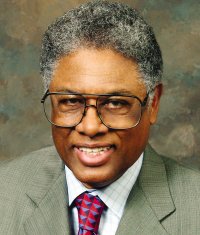
Thomas Sowell
Thomas Sowell
This one features my favorite living economist, Thomas Sowell. (H/T ECM)
Thomas Sowell’s new book is about intellectuals, those who deal primary with words and ideas, not arguments and evidence. These intellectuals have the goal of reforming society based on the ideas that they learn in classrooms. (Sowell is not talking about engineers, medical doctors, accountants, etc. – people who actually have hands-on knowledge in advanced areas)
Sowell is concerned with people who are specialized in one narrow area such as linguistics, and then make pronouncements on public policy or economics without knowing anything about those areas. He argues that intellectuals have a low opinion of people who don’t go to the best schools, but instead focus on practical things. This conviction that other people are stupid makes them want to seize control and force their vision onto the world. The vision of the intellectuals includes metaphysical and moral beliefs.
In addition to what Sowell says in the video, I would expect that these intellectuals also disdain the morality and theology of Christians, whom they see as non-intellectuals, because they never hear reasons why people believe in Christianity and Christian morality in their Ivy-league classrooms. This absence of a defense is what causes them to be so aggressive about trying to marginalize what they view as unfounded beliefs and antiquated moral rules. Maybe they would not be so aggressively secular and collectivist if we were all as prepared to give a defense as William Lane Craig is?
More economists
If you like what you see in these videos, you might want to consider reading one of my favorite papers by economist Robert Nozick entitled “Why do Intellectuals Oppose Capitalism?” He uses a similar definition of intellectuals as being “wordsmiths”, rather than engineers, entrepreneurs, and doctors. My other favorite living economists are Walter Williams (#2) and Jennifer Roback Morse (#3).


 WINTERY KNIGHT