Tag Archives: Amino Acid

Can naturalism account for the origin of the 20 amino acids in living systems?

The origin of life

There are two problems related to the origin of the first living cell, on atheism:

  1. The problem of getting the building blocks needed to create life – i.e. the amino acids
  2. The problem of creating the functional sequences of amino acids and proteins that can support the minimal operations of a simple living cell

Normally, I concede the first problem and grant the atheist all the building blocks he needs. This is because step 2 is impossible. There is no way, on atheism, to form the sequences of amino acids that will fold up into proteins, and then to form the sequences of proteins that can be used to form everything else in the cell, including the DNA itself. But that’s tomorrow’s topic.

Today, let’s take a look at the problems with step 1.

The problem of getting the building blocks of life

Now you may have heard that some scientists managed to spark some gasses to generate most of the 20 amino acids found in living systems. These experiments are called the “Miller-Urey” experiments.

The IDEA center has a nice summary of origin-of-life research that explains a few of the main problems with step 1.

Miler and Urey used the wrong gasses:

Miller’s experiment requires a reducing methane and ammonia atmosphere,11, 12 however geochemical evidence says the atmosphere was hydrogen, water, and carbon dioxide (non-reducing).15, 16 The only amino acid produced in a such an atmosphere is glycine (and only when the hydrogen content is unreasonably high), and could not form the necessary building blocks of life.11

Miller and Urey didn’t account for UV of molecular instability:

Not only would UV radiation destroy any molecules that were made, but their own short lifespans would also greatly limit their numbers. For example, at 100ºC (boiling point of water), the half lives of the nucleic acids Adenine and Guanine are 1 year, uracil is 12 years, and cytozine is 19 days20 (nucleic acids and other important proteins such as chlorophyll and hemoglobin have never been synthesized in origin-of-life type experiments19).

Miller and Urey didn’t account for molecular oxygen:

We all have know ozone in the upper atmosphere protects life from harmful UV radiation. However, ozone is composed of oxygen which is the very gas that Stanley Miller-type experiments avoided, for it prevents the synthesis of organic molecules like the ones obtained from the experiments! Pre-biotic synthesis is in a “damned if you do, damned if you don’t” scenario. The chemistry does not work if there is oxygen because the atmosphere would be non-reducing, but if there is no UV-light-blocking oxygen (i.e. ozone – O3) in the atmosphere, the amino acids would be quickly destroyed by extremely high amounts of UV light (which would have been 100 times stronger than today on the early earth).20, 21, 22 This radiation could destroy methane within a few tens of years,23 and atmospheric ammonia within 30,000 years.15

And there were three other problems too:

At best the processes would likely create a dilute “thin soup,”24 destroyed by meteorite impacts every 10 million years.20, 25 This severely limits the time available to create pre-biotic chemicals and allow for the OOL.

Chemically speaking, life uses only “left-handed” (“L”) amino acids and “right-handed” (“R)” genetic molecules. This is called “chirality,” and any account of the origin of life must somehow explain the origin of chirality. Nearly all chemical reactions produce “racemic” mixtures–mixtures with products that are 50% L and 50% R.

Two more problems are not mentioned in the article. A non-peptide bond anywhere in the chain will ruin the chain. You need around 200 amino acids to make a protein. If any of the bonds is not a peptide bond, the chain will not work in a living system. Additionally, the article does not mention the need for the experimenter to intervene in order to prevent interfering cross-reactions that would prevent the amino acids from forming.

Usually when you hear the origin of life debated, they sort of skirt about the problem of where the amino acids come from, but there is no reason not to make that an issue. The naturalist has to explain how the first living cell could come about naturalistically.

Further study

One of my favorite resources on the origin of life is this interview from the University of California with former atheist and origin of life researcher Dean Kenyon. Kenyon, a professor of Biology at San Francisco State University, wrote the textbook on “chemical evolution”, which is the view that chemicals can arrange themselves in order to create the first living cell, without intervention.

This interview from the University of California with another origin of life researcher, Charles Thaxton, is also one of my favorites.

You’ll need Quicktime to see the videos, or buy the videos from ARN. (Kenyon, Thaxton) I have both of them – they rock!
Intelligent design theorist Stephen C. Meyer debates evolutionist Keith Fox

From Justin Brierley’s “Unbelievable” podcast.

Details:

Stephen Meyer is a leading proponent of Intelligent Design who directs the Centre for Science and Culture at the Discovery Institute in Seattle. His most recent book “Signature in the Cell” claims to show that the DNA code is the product of intelligent mind, not naturalistic processes. Keith Fox is Professor of Biochemistry at Southampton University. He chairs the UK Christians in Science network but disagrees strongly with ID. They debate how life could have originated and whether design is allowed as an explanation in science.

The MP3 file is here.

Summary: (stuff in italics is my snarky paraphrase)

Meyer:

  • background and how he got interested in intelligent design
  • his research focus is on the origin of life – the first replicator
  • summarizes the history of origin of life studies
  • authored the book “Signature in the Cell”
  • the DNA enigma: where did the information in DNA come from?
  • naturalistic explanations of the DNA information have failed
  • but intelligent agents are known to be able to produce information
  • the best explanation of the information in DNA is that an intelligent agent authored it
  • Meyer’s book was named by atheist philosopher of science Thomas Nagel as a Times Literary Supplement Book of the Year in 2010
  • why is design so controversial? Many people think that Darwin explained why nature appears design
  • the Darwinian view is that nature can create the appearance of design using mutation and selection
  • however, Darwinian mechanisms cannot explain the origin of the first living cell, it assumes replication, and the origin of life is about where the first replicator comes from

Fox:

  • Meyer’s argument is not about the evolution of life after the first cell
  • Meyer’s case for design is about the origin of life
  • naturalists do not know a naturalistic explanation for the origin of life
  • there are a number of naturalistic hypotheses for the origin of life, like the RNA-first hypothesis
  • maybe in a few years one of them will turn out to be correct
  • what intelligent design is arguing from a gap in our current naturalistic knowledge to infer that God intervened in nature

Meyer:

  • that’s not what intelligent design is at all
  • the approach ID theorists use is the inference to best explanation
  • you evaluate all explanations, non-intelligent causes and intelligent causes
  • you prefer the best possible explanation
  • we know that minds are capable of producing information just like the information we find in DNA

Fox:

  • living cells replicate, so they have the ability to introduce mutations as they replicate and then some of those mutations can be selected
  • so maybe the process of replicating that living cells do created the first living cell
  • maybe the first living cell created itself, X brought X into being, self-creation, what’s irrational about that?

Meyer:

  • the issue is the origin of life – where did the first living cell come from?
  • you cannot appeal to the operations that a living cell can perform to explain the origin of the first living cell
  • there was no first living cell operating before the first living cell
  • there was no replication, mutation or selection before the first living cell
  • in fact, in my book I show that there is no known naturalistic mechanism that is able to produce the information needed for the first living cell
  • nothing can create itself, that is self-contradictory
Fox:
  • Well, you are just saying that because something is complex that God did it
Meyer:
  • Sadly, no. What I actually said needed to be explained was the information, not complexity
  • And we know from software engineering that the process of adding information to code is performed by programmers
  • in the absence of any adequate naturalistic explanation for information, we are justified in taking the explanation that we are familiar with – namely, intelligent agency – based on our uniform, universal experience of what causes information
Fox:
  • well, maybe we can appeal to the mutation and selection in existing living cells to explain the origin of the first living cell
  • maybe there were living cells before the first living cell, and then these other living cells created the first living cell
Meyer:
  • we can’t keep invoking mutation and selection when those processes are not operating prior to the origin of the first living cell
Fox:
  • well maybe some bare-bones self-replication molecule was a precursor to the first living cell
Meyer:
  • even to generate very limited replicator would require a large amount of information
  • the argument I am making is – where does the evolution come from?
Fox:
  • well, maybe we will think of an explanation for information that is naturalistic in 20 years
  • we’ve thought of explanations to things that were NOT information before
  • so maybe we will be able to think of something to explain information based on our ability to explain NOT information before

Moderator: Change topics: the Dover decision

Meyer:

  • the Discovery Institute opposed the policy that causes the trial
  • the wording of the statute was poor
  • the judge was completely wrong in his decision
  • young earth creationists used the phrase “intelligent design” to cover their agenda
  • intelligent design is an inference using the normal methods of science
Fox:
  • intelligent design is a science stopper because it stops looking for a naturalistic explanation
  • everything in nature must have a naturalistic explanation
  • everything has to be explained using matter and time and chance
  • it just has to be that way!!!!
Meyer:
  • well, what luck would you have explaining an effect like Mt. Rushmore?
  • can you explain that using matter,time and chance?
  • Mt. Rushmore was the product of intelligence, not wind and erosion
  • similarly, there is information in the cell, and we know that intelligence causes information
Fox:
  • So you are saying that we don’t understand and therefore an intelligence is necessary?

Meyer:

  • no I am saying we DO understand and we are making an inference based on that understanding
  • you are the one who is insisting on a material explanation because you pre-suppose materialism
  • we know that minds have causal powers, and we can infer mind as an explanation from information
Fox:
  • well nature is a seamless chain of material causes and effects
Meyer:
  • agents can act without violating the laws of nature
  • even humans can act as intelligent agents to create information in books, and they don’t violate the laws of nature
  • intelligent causes are real, and they explain effects in nature
Fox:
  • you’re trying to impose on science something to do with meaning and purpose
Meyer:
  • no that’s not what we’re doing, we’re inferring from from the fact that we ourselves are known causes of information to the fact that an intelligence cause is the best explanation for information in the cell
Fox:
  • but I am a materialist, I need a materialist explanation
Meyer:
  • mind IS an answer to the how question
  • we infer to mind in many other scientific disciplines, like cryptography, archaeology, etc.
  • a materialist might accuse an archaeologist of engaging in a “scribe-of-the-gaps” argument, but the best explanation of an artifact with information is a scribe
  • we are inferring that mind is the cause from the nature of the effect: information
Moderator: is it appropriate to call DNA “information”

Fox:

  • well DNA is just a molecular polymer, any reference to information is just by analogy
Meyer:
  • DNA is a molecular polymer, but it also exhibits the property of specified complexity
  • the arrangement of bases, which function as machine instructions in a software program, for performings task in the cell
  • we have observed that the property of specified complexity always comes from an intelligence
Fox:
  • well, maybe there are other sequences that would work, so maybe it’s really not uncommon to develop functioning sequences by chance alone, without an intelligence
Meyer:
  • you can measure how precise the functional specificity is in DNA and proteins

Moderator: is Shannon information the same as functional information

Meyer:

  • Shannon information refers to the sequences of digits or symbols that do not necessarily have any function, i.e. – a four character string QSZX has as much Shannon information as WORD. However, only the latter is functional against the pattern of the English language. There are arrangements of DNA bases and amino acids that have the same number of symbols/characters as a functional sequence would have, but they have no biological function – they do not exhibit specified complexity
Fox:
  • Well, maybe there are lots and lots of sequences of DNA and proteins so that it is fairly easy to get a functional one by chance

Meyer:

  • DNA sequences that are functional are extremely rare, protein sequences are even more rare
  • this is not my opinion, this is what the research shows – functional protein sequences are rare
Fox:
  • well maybe there are other functional sequences that are occur before the first functional sequence that are precursors to the first functional sequence
  • maybe there are billions of years of replication, mutation and selection before the first replication, mutation and selection

Meyer:

  • you can’t get to the first selectable functional sequence by appealing to precursor selectable functional sequences – there are no selectable functional sequences before the FIRST one
  • you have to get the first selectable functional sequence by chance alone, because there is nothing to mutate or select before the first replicator
  • the chance hypothesis has been rejected because the minimal amount of information for the simplest replicator is too high to get by chance alone, given the resources, including time, that are available

Moderator: Keith are you confident that naturalism will be able to substantiate these naturalism-of-the-gap speculations that you offer in response to Meyer’s actual science that we have today? 

Fox:

  • well, it is hard to know for sure because it was just a fluke event
  • but there’s nothing irrational or unscientific or miraculous about it – the fluke would have a material explanation
  • there is nothing that we can detect that would implicate God, my speculations about a fluke which I cannot observe or measure or test would all be compatible with an atheistic worldview that omits God as a causal entity

Meyer:

  • where are those material processes that could account for this fluke then?
  • the whole point of this argument is that the information in DNA transcends the material components in the sequence
  • it’s the arrangement of the material parts/letters/characters/symbols/instructions that needs to be explained
Fox:
  • Well, I just have a different philosophy of science that rules out intelligent causation a priori

Meyer:

  • Yes, that’s the difference between us – you pre-suppose that all explanations of natural phenomena must exclude intelligent causes

There is a bit more where Meyer talks about how parts of the cell are implementations of various design patterns (Gang of Four design patterns) that are used by software architects who design software.

You may also be interested in Keith Fox’s previous debate with Michael Behe. I think Fox did better in this one than in that one, so I didn’t make fun of him as much. Find more posts on Stephen C. Meyer by me here.

Video interview of Charles Thaxton on the origin of life

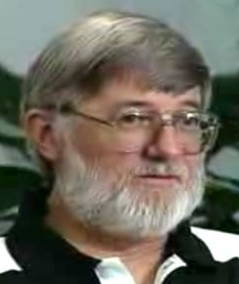
Charles Thaxton
Charles Thaxton

When I was a younger man, just starting full-time work with a hot Internet start-up in the big city, my biggest interest was in the origin of life. I liked to listen to debates about it (e.g. – Walter Bradley versus Robert Shapiro, etc.) and lectures and interviews. Two of my favorite interviews are from the University of California series on Origins, featuring Charles Thaxton and Dean Kenyon.

I found the one with Charles Thaxton in miniature form on Youtube.

About Charles Thaxton:

Charles Thaxton received his Ph.D. in physical chemistry from Iowa State University. He completed two post-doctoral programs, one in history of science at Harvard University and the second in the molecular biology laboratories of Brandeis University.

He has specialized in the origin of life and in science’s relationship with Christianity through history.

He is co-author of The Mystery of Life’s Origin and also The Soul of Science. He is Academic Editor of the high school biology book Of Pandas and People. He has contributed significant chapters to the books God and Culture and The Creation Hypothesis.

He has published technical articles in Journal of Inorganic Chemistry, Journal of Scientific Instruments, and Journal of Cell Biology.

He has lectured widely in American universities including Princeton University, Yale University, University of Michigan, University of Delaware, Rice University, Texas Universtiy, Johns Hopkins University, Vanderbilt University, and Harvard Law School.

He has lectured outside the country at the Korean Advanced Institute of Science, the Russian Academy of Science, and in various universities in Mongolia, Romania, Poland, Hungary, and the former Czechoslovakia.

He has held appointments at Slovak Technical University in Bratislava, Czechoslovakia, the Biomathematical Institute in Craiova, Romania, and at Charles University in Prague, where he was a Templeton scholar in the department of natural sciences.

He is a member of American Chemical Society, American Association for the Advancement of Science, and Fellow of American Institute of Chemistry, American Scientific Affiliation, and Discovery Institute.

He and his wife Carole homeschooled two sons, both of whom are college graduates. He is a survivor of two bouts of cancer, which left him with one leg and one lung. He and his wife reside near Atlanta, Georgia, where they teach homeschooled teens at Konos Academy. He also is writing two books, punctuated by speaking stints.

Here’s the lecture I liked so much featuring Charles Thaxton:

And here are the questions:

1. How did you first get interested in the origin of life?
2. How did you come to write The Mystery of Life’s Origin with Walter Bradley and Roger Olsen?
3. Was there an advantage to having the three of you collaborate on the project?
4. What is the primary argument of your book, The Mystery of Life’s Origin?
5. Have scientists come close to developing a plausible naturalistic explanation to the origin of life or do you still consider the origin of life to be a mystery?
6. Do you see a particular irony in the timing of Stanley Miller’s experiments and the discovery of DNA by Watson and Crick?
7. How does the emergence of modern genetics tie in with the Darwinian scenario of life going from simple to complex?
8. What are the major problems with origin of life simulation experiments?
9. Isn’t it rather impressive that amino acids were produced in the Miller experiments?
10. How close is the development of amino acids to the threshold of life?
11. What are the steps involved in producing proteins from amino acids?
12. Why are amino acids isolated during this process?
13. How can the investigator affect the outcome of a simulation experiment?
14. How did you evaluate the different chemical evolution experiments?
15. Are the initial conditions in the simulation experiments plausible?
16. What did the earth’s early atmosphere contain?
17. Will the simulation experiments work with this atmosphere?
18. There seems to be an underlying assumption that the origin of life resulted without any intelligent input whatsoever yet the simulation experiments appear to rely upon intelligent guidance. Could you comment on this irony?
19. Are there any natural processes that would have filtered out destructive ultraviolet light?
20. What additional steps beyond creating amino acids would be required to develop life?
21. What is so difficult about making proteins or nucleic acids?
22. In addition to the energy problem in protein synthesis isn’t there a sequencing problem?
23. Are DNA sequences analogous to a written language?
24. Has Hubert Yockey made similar claims?
25. In The Mystery of Life’s Origin you refer to order, randomness, and specified complexity. Could you give us an overview of these concepts?
26. What do you think the presence of specified complexity in a living system indicates about its origin?
27. In inferring the necessity of intelligence to produce life haven’t you ventured from the realm of science to religion?
28. Could you summarize the reasons why you believe intelligence was involved in the origin of life?
29. What are the major objections to your current point of view?
30. How was The Mystery of Life’s Origin received by the scientific community?
31. What was Dean Kenyon’s response to your critiques of his book, Biochemical Predestination?
32. What was Dean Kenyon’s response to The Mystery of Life’s Origin?
33. Were you a bit apprehensive about meeting Kenyon after writing a book which was quite critical of his views in Biochemical Predestination?
34. Are self-organizational theories plausible?
35. Would you comment on the work done by Prigogine and Eigen?
36. What is your assessment of RNA scenarios?
37. What other problems do you see with an RNA world?

This is an argument you never hear in William Lane Craig debates, but it’s worth knowing well.

Related posts