What do you need in order to have a planet that supports complex life? First, you need liquid water at the surface of the planet. But there is only a narrow range of temperatures that can support liquid water. It turns out that the size of the star that your planet orbits around has a lot to do with whether you get liquid water or not. A heavy, metal-rich star allows you to have a habitable planet far enough from the star so the planet can support liquid water on the planet’s surface while still being able to spin on its axis. The zone where a planet can have liquid water at the surface is called the circumstellar habitable zone (CHZ). A metal-rich star like our Sun is very massive, which moves the habitable zone out further away from the star. If our star were smaller, we would have to orbit much closer to the star in order to have liquid water at the surface. Unfortunately, if you go too close to the star, then your planet becomes tidally locked, like the moon is tidally locked to Earth. Tidally locked planets are inhospitable to life.
Circumstellar Habitable Zone
Here, watch a clip from The Privileged Planet: (Clip 4 of 12, full playlist here)
But there’s more.
The Galactic Habitable Zone (GHZ)
So, where do you get the heavy elements you need for your heavy metal-rich star?
You have to get the heavy elements for your star from supernova explosions – explosions that occur when certain types of stars die. That’s where heavy elements come from. But you can’t be TOO CLOSE to the dying stars, because you will get hit by nasty radiation and explosions. So to get the heavy elements from the dying stars, your solar system needs to be in the galactic habitable zone (GHZ) – the zone where you can pickup the heavy elements you need but not get hit by radiation and explosions. The GHZ lies between the spiral arms of a spiral galaxy. Not only do you have to be in between the arms of the spiral galaxy, but you also cannot be too close to the center of the galaxy. The center of the galaxy is too dense and you will get hit with massive radiation that will break down your life chemistry. But you also can’t be too far from the center, because you won’t get enough heavy elements because there are fewer dying stars the further out you go. You need to be in between the spiral arms, a medium distance from the center of the galaxy.
Like this:
Galactic Habitable Zone and Solar Habitable Zone
Here, watch a clip from The Privileged Planet: (Clip 10 of 12, full playlist here)
The GHZ is based on a discovery made by astronomer Guillermo Gonzalez, which made the front cover of Scientific American in 2001. That’s right, the cover of Scientific American. I actually stole the image above of the GHZ and CHZ (aka solar habitable zone) from his Scientific American article (linked above).
These are just a few of the things you need in order to get a planet that supports life.
Here are a few of the more well-known ones:
a solar system with a single massive Sun than can serve as a long-lived, stable source of energy
a terrestrial planet (non-gaseous)
the planet must be the right distance from the sun in order to preserve liquid water at the surface – if it’s too close, the water is burnt off in a runaway greenhouse effect, if it’s too far, the water is permanently frozen in a runaway glaciation
the solar system must be placed at the right place in the galaxy – not too near dangerous radiation, but close enough to other stars to be able to absorb heavy elements after neighboring stars die
a moon of sufficient mass to stabilize the tilt of the planet’s rotation
plate tectonics
an oxygen-rich atmosphere
a sweeper planet to deflect comets, etc.
planetary neighbors must have non-eccentric orbits
By the way, you can watch a lecture with Guillermo Gonzalez explaining his ideas further. This lecture was delivered at UC Davis in 2007. That link has a link to the playlist of the lecture, a bio of the speaker, and a summary of all the topics he discussed in the lecture. An excellent place to learn the requirements for a suitable habitat for life.
PAUL KRUGMAN, NEW YORK TIMES: Think about World War II, right? That was actually negative social product spending, and yet it brought us out.
I mean, probably because you want to put these things together, if we say, “Look, we could use some inflation.” Ken and I are both saying that, which is, of course, anathema to a lot of people in Washington but is, in fact, what fhe basic logic says.
It’s very hard to get inflation in a depressed economy. But if you had a program of government spending plus an expansionary policy by the Fed, you could get that. So, if you think about using all of these things together, you could accomplish, you know, a great deal.
If we discovered that, you know, space aliens were planning to attack and we needed a massive buildup to counter the space alien threat and really inflation and budget deficits took secondary place to that, this slump would be over in 18 months. And then if we discovered, oops, we made a mistake, there aren’t any aliens, we’d be better –
ROGOFF: And we need Orson Welles, is what you’re saying.
KRUGMAN: No, there was a “Twilight Zone” episode like this in which scientists fake an alien threat in order to achieve world peace. Well, this time, we don’t need it, we need it in order to get some fiscal stimulus.
It’s important to note that Paul Krugman’s plan is actually better than Obama’s plan, because Obama doesn’t have a plan.
The Newsbusters piece explains what’s wrong with stimulating the economy with an alien invasion, as seen on the Twilight Zone TV show.
Excerpt:
But more importantly, let’s look at the numbers involved to really get a sense of what Krugman advocated here.
The money unsuccessfully thrown at the Depression prior to World War II was staggering. From 1929 to 1939, government spending tripled from $3 billion a year to $9 billion.
And yet unemployment at the end of 1939 was still 17.2 percent.
Not a very good advertisement for Keynesian economics, is it?
Now imagine that kind of “stimulus” today. That would mean the current $3.8 trillion budget would have to rise to $11.4 trillion which would generate about $9 trillion of debt a year.
What do you think would happen to our credit rating and our dollar then? Wouldn’t be pretty, would it?
Yet that didn’t work in the ’30s – a fact that most liberals other than Krugman still contest – so the Nobel laureate is advocating that we spend like we’re being attacked by space aliens in order to get to the level of outlays during World War II.
Total federal spending in 1940 was $9.5 billion. By 1945, this had risen almost tenfold to $93 billion.
Such an increase in today’s budget would create a deficit greater than $30 trillion per year making our dollar and our Treasuries totally worthless.
[…]Consider too that the lasting stimulative quality of even the World War II spending is up for debate.
The National Bureau of Economic lists a recession that began in February 1945 that lasted until October of that year. This recession happened despite the federal government spending almost tens times as much as it had only five years prior and 30 times more than in 1929.
Once again, not a very good advertisement for Keynesian economics.
But let’s take this a step further, for NBER’s recession numbers might be too conservative. According to the Bureau of Economic Analysis, the Gross Domestic Product shrank by 1.1 percent in 1945, a staggering 10.9 percent in 1946, and 0.9 percent in 1947.
Again, this was after the largest explosion in federal spending in our nation’s history, and this is what Krugman is advocating we repeat.
So what is stimulus spending? Stimulus spending is when you take money OUT of the hands of people who create jobs, and put it into the hand of people who the government thinks deserves that money more. Let’s see who the government thinks deserves the money more than employers.
CBS News reports:
ABC News reports:
And this one features a real economist:
Obama promised that if we let him redirect $864 billion dollars from taxpayers to other people he chose, then that would make unemployment stay below 8%. So did all that “stimulus” keep unemployment below 8%?
The stimulus was worse than doing NOTHING AT ALL
(Click for larger image)
Let’s learn some economics and find out why that happened.
Economics in One Lesson
Perhaps it is time to review Henry Hazlitt’s book on basic economics “Economics in One Lesson”. Let’s look in chapter 4, which is entitled “Public Works Mean Taxes”.
Excerpt from that chapter:
Therefore, for every public job created by the bridge project a private job has been destroyed somewhere else. We can see the men employed on the bridge. We can watch them at work. The employment argument of the government spenders becomes vivid, and probably for most people convincing. But there are other things that we do not see, because, alas, they have never been permitted to come into existence. They are the jobs destroyed by the $10 million taken from the taxpayers. All that has happened, at best, is that there has been a diversion of jobs because of the project. More bridge builders; fewer automobile workers, television technicians, clothing workers, farmers.
And consider Chapter 5 as well, entitled “Taxes Discourage Production”.
In our modern world there is never the same percentage of income tax levied on everybody. The great burden of income taxes is imposed on a minor percentage of the nation’s income; and these income taxes have to be supplemented by taxes of other kinds. These taxes inevitably affect the actions and incentives of those from whom they are taken. When a corporation loses a hundred cents of every dollar it loses, and is permitted to keep only fifty-two cents of every dollar it gains, and when it cannot adequately offset its years of losses against its years of gains, its policies are affected. It does not expand its operations, or it expands only those attended with a minimum of risk. People who recognize this situation are deterred from starting new enterprises. Thus old employers do not give more employment, or not as much more as they might have; and others decide not to become employers at all. Improved machinery and better-equipped factories come into existence much more slowly than they otherwise would. The result in the long run is that consumers are prevented from getting better and cheaper products to the extent that they otherwise would, and that real wages are held down, compared with what they might have been.
There is a similar effect when personal incomes are taxed 50, 60 or 70 percent. People begin to ask themselves why they should work six, eight or nine months of the entire year for the government, and only six, four or three months for themselves and their families. If they lose the whole dollar when they lose, but can keep only a fraction of it when they win, they decide that it is foolish to take risks with their capital. In addition, the capital available for risk-taking itself shrinks enormously. It is being taxed away before it can be accumulated. In brief, capital to provide new private jobs is first prevented from coming into existence, and the part that does come into existence is then discouraged from starting new enterprises. The government spenders create the very problem of unemployment that they profess to solve.
And the results we see today are consistent with the predictions of basic economic theory.
George W. Bush cut taxes in his first term and created 1 million NEW JOBS. On the other hand, Obama transfered BILLIONS from the private sector to the public sector, where government waste is rampant. Government spending is a job killer. Obama might be a nice man, but he is just wrong on economics and business. What we should have done is elected someone who doesn’t repeat the mistakes made in other countries, like in Japan where massive government spending failed to stimulate the economy. We just need to look at where the ideas of Paul Krugman, Fareed Zakaria and Barack Obama have been tried – like in Spain and Greece – and see whether all of this government spending led to economic prosperity and a low unemployment rate. I know that it makes them feel good to think that they are responsible for punishing those who work, and rewarding those who don’t work. But maybe we should look at the results of their policies and decide that we just can’t afford to sacrifice the entire economy to make three people feel good about themselves. As far as I can tell, Keynesian economics has never created jobs whenever it’s been tried – although it does make the liberal elite feel superior to job creators. It works to do that.
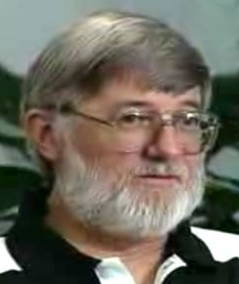
When I was a younger man, just starting full-time work with a hot Internet start-up in the big city, my biggest interest was in the origin of life. I liked to listen to debates about it (e.g. – Walter Bradley versus Robert Shapiro, etc.) and lectures and interviews. Two of my favorite interviews are from the University of California series on Origins, featuring Charles Thaxton and Dean Kenyon.
I found the one with Charles Thaxton in miniature form on Youtube.
Charles Thaxton received his Ph.D. in physical chemistry from Iowa State University. He completed two post-doctoral programs, one in history of science at Harvard University and the second in the molecular biology laboratories of Brandeis University.
He has specialized in the origin of life and in science’s relationship with Christianity through history.
He is co-author of The Mystery of Life’s Origin and also The Soul of Science. He is Academic Editor of the high school biology book Of Pandas and People. He has contributed significant chapters to the books God and Culture and The Creation Hypothesis.
He has published technical articles in Journal of Inorganic Chemistry, Journal of Scientific Instruments, and Journal of Cell Biology.
He has lectured widely in American universities including Princeton University, Yale University, University of Michigan, University of Delaware, Rice University, Texas Universtiy, Johns Hopkins University, Vanderbilt University, and Harvard Law School.
He has lectured outside the country at the Korean Advanced Institute of Science, the Russian Academy of Science, and in various universities in Mongolia, Romania, Poland, Hungary, and the former Czechoslovakia.
He has held appointments at Slovak Technical University in Bratislava, Czechoslovakia, the Biomathematical Institute in Craiova, Romania, and at Charles University in Prague, where he was a Templeton scholar in the department of natural sciences.
He is a member of American Chemical Society, American Association for the Advancement of Science, and Fellow of American Institute of Chemistry, American Scientific Affiliation, and Discovery Institute.
He and his wife Carole homeschooled two sons, both of whom are college graduates. He is a survivor of two bouts of cancer, which left him with one leg and one lung. He and his wife reside near Atlanta, Georgia, where they teach homeschooled teens at Konos Academy. He also is writing two books, punctuated by speaking stints.
Here’s the lecture I liked so much featuring Charles Thaxton:
And here are the questions:
1. How did you first get interested in the origin of life?
2. How did you come to write The Mystery of Life’s Origin with Walter Bradley and Roger Olsen?
3. Was there an advantage to having the three of you collaborate on the project?
4. What is the primary argument of your book, The Mystery of Life’s Origin?
5. Have scientists come close to developing a plausible naturalistic explanation to the origin of life or do you still consider the origin of life to be a mystery?
6. Do you see a particular irony in the timing of Stanley Miller’s experiments and the discovery of DNA by Watson and Crick?
7. How does the emergence of modern genetics tie in with the Darwinian scenario of life going from simple to complex?
8. What are the major problems with origin of life simulation experiments?
9. Isn’t it rather impressive that amino acids were produced in the Miller experiments?
10. How close is the development of amino acids to the threshold of life?
11. What are the steps involved in producing proteins from amino acids?
12. Why are amino acids isolated during this process?
13. How can the investigator affect the outcome of a simulation experiment?
14. How did you evaluate the different chemical evolution experiments?
15. Are the initial conditions in the simulation experiments plausible?
16. What did the earth’s early atmosphere contain?
17. Will the simulation experiments work with this atmosphere?
18. There seems to be an underlying assumption that the origin of life resulted without any intelligent input whatsoever yet the simulation experiments appear to rely upon intelligent guidance. Could you comment on this irony?
19. Are there any natural processes that would have filtered out destructive ultraviolet light?
20. What additional steps beyond creating amino acids would be required to develop life?
21. What is so difficult about making proteins or nucleic acids?
22. In addition to the energy problem in protein synthesis isn’t there a sequencing problem?
23. Are DNA sequences analogous to a written language?
24. Has Hubert Yockey made similar claims?
25. In The Mystery of Life’s Origin you refer to order, randomness, and specified complexity. Could you give us an overview of these concepts?
26. What do you think the presence of specified complexity in a living system indicates about its origin?
27. In inferring the necessity of intelligence to produce life haven’t you ventured from the realm of science to religion?
28. Could you summarize the reasons why you believe intelligence was involved in the origin of life?
29. What are the major objections to your current point of view?
30. How was The Mystery of Life’s Origin received by the scientific community?
31. What was Dean Kenyon’s response to your critiques of his book, Biochemical Predestination?
32. What was Dean Kenyon’s response to The Mystery of Life’s Origin?
33. Were you a bit apprehensive about meeting Kenyon after writing a book which was quite critical of his views in Biochemical Predestination?
34. Are self-organizational theories plausible?
35. Would you comment on the work done by Prigogine and Eigen?
36. What is your assessment of RNA scenarios?
37. What other problems do you see with an RNA world?
This is an argument you never hear in William Lane Craig debates, but it’s worth knowing well.


 WINTERY KNIGHT