
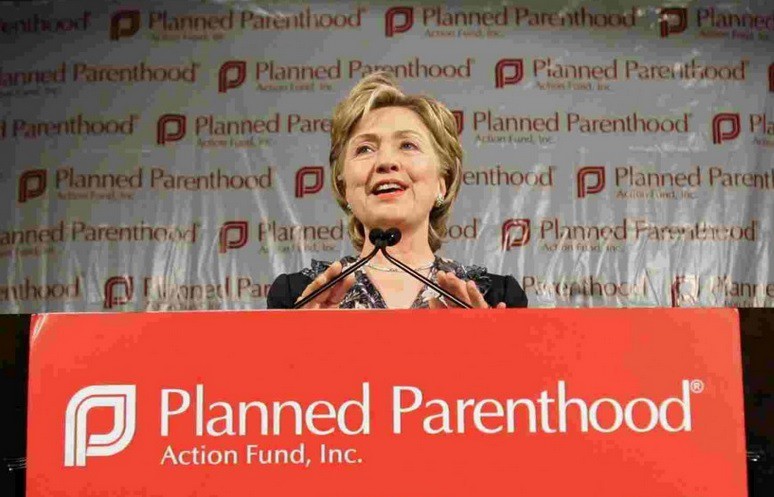
Life Site News explains the myth and the reality.
Excerpt:
The day before hundreds of pro-life activists prepared to flood Planned Parenthood’s offices with requests to schedule a mammogram, the organization issued a statement admitting that they do not offer the cancer screening procedure at any of their facilities.
The calls were placed today as part of “Call Planned Parenthood to Schedule Your Imaginary Mammogram Day” – an event organized by pro-life activists in response to President Obama’s statement during the presidential debate Tuesday that the abortion organization offers mammograms.
“There are millions of women all across the country, who rely on Planned Parenthood for, not just contraceptive care, they rely on it for mammograms, for cervical cancer screenings,” the president had said, repeating a claim he had made earlier this summer in an interview with Glamour magazine.
But Obama isn’t the only one.
The notion that Planned Parenthood offers mammograms is one of the most enduring myths about the abortion giant. The claim is regularly trotted out by pro-abortion politicians eager to defend taxpayer funding for Planned Parenthood, but wary of invoking its controversial status as the country’s leading provider of abortions.
Not only does Planned Parenthood not provide mammograms, but the abortions they perform have been linked to the epidemic of breast cancer that is afflicting women today.
What about the claim that only 3% of what Planned Parenthood does is doing abortions?
Practically every defender of the organization, fighting to preserve its federal funding, reverts to the 3 percent figure. How could you possibly, they ask, defund a group that devotes itself overwhelmingly to uncontroversial procedures and services for women?
[…]The 3 percent factoid is crafted to obscure the reality of Planned Parenthood’s business. The group performs about 330,000 abortions a year, or roughly 30 percent of all the abortions in the country. By its own accounting in its 2013–2014 annual report, it provides about as many abortions as Pap tests (380,000). The group does more breast exams and provides more breast-care services (490,000), but not by that much.
The 3 percent figure is derived by counting abortion as just another service like much less consequential services. So abortion is considered a service no different than a pregnancy test (1.1 million), even though a box with two pregnancy tests can be procured from the local drugstore for less than $10.
By Planned Parenthood’s math, a woman who gets an abortion but also a pregnancy test, an STD test, and some contraceptives has received four services, and only 25 percent of them are abortion. This is a little like performing an abortion and giving a woman an aspirin, and saying only half of what you do is abortion.
Such cracked reasoning could be used to obscure the purpose of any organization. The sponsors of the New York City Marathon could count each small cup of water they hand out (some 2 million cups, compared with 45,000 runners) and say they are mainly in the hydration business. Or Major League Baseball teams could say that they sell about 20 million hot dogs and play 2,430 games in a season, so baseball is only .012 percent of what they do.
Supporters of Planned Parenthood want to use its health services as leverage to preserve its abortions, as if you can’t get one without the other. Of course, this is nonsense. The Centers for Disease Control and Prevention provides free or low-cost breast- and cervical-cancer screenings — without aborting babies. State health departments provide free cancer screenings — without aborting babies. Community health centers provide a range of medical services — without aborting babies.
I think it’s a good idea to be able to respond to Planned Parenthood’s rhetoric. These are the people who kill babies, and we have to be able to respond to their false claims. When a majority of people learn the truth about the baby killing business, it will stop.
Related posts
- Fifth video: Planned Parenthood selling intact 20-week baby cadavers for profit
- Democrats defeat Republican bill to defund Planned Parenthood
- Planned Parenthood president visited White House 39 times since 2009
- Federal judge blocks release of future sting videos of Planned Parenthood
- Planned Parenthood executive admits abortion victim is a baby in fourth video
- Third video of Planned Parenthood doctors discussing organ harvesting
- Obama administration refuses FOIA requests about Planned Parenthood
- Obama administration will investigate whistleblowers who filmed Planned Parenthood
- Planned Parenthood senior executive in second video: “I want a Lamborghini”
- Republicans in Congress will investigate Planned Parenthood’s organ harvesting
- ABC, CBS, CNN, and MSNBC all ignore Planned Parenthood organ harvesting story
- Governor Bobby Jindal announces investigation of Planned Parenthood
- What does Hillary Clinton think of Planned Parenthood selling unborn baby parts?
- House Republicans attempting to end some of the taxpayer-funding for Planned Parenthood
- With government subsidies, Planned Parenthood did 327,653 abortions in 2013
- Planned Parenthood, an abortion business, is in California schools teaching sex education
- Arizona Planned Parenthood clinic failed to report rapist
- Planned Parenthood must pay $1.4 million in Medicaid fraud settlement
- Barack Obama to largest abortion provider Planned Parenthood: God Bless You
- Video: Planned Parenthood defends infanticide / post-birth abortion
- Abortion provider Planned Parenthood receives record amount of taxpayer funding
- Abortion profiteers Planned Parenthood spending $12 million to re-elect Obama
- Planned Parenthood issues statement admitting that they do not offer mammograms
- 24-year old woman dies during abortion at Planned Parenthood clinic

 WINTERY KNIGHT