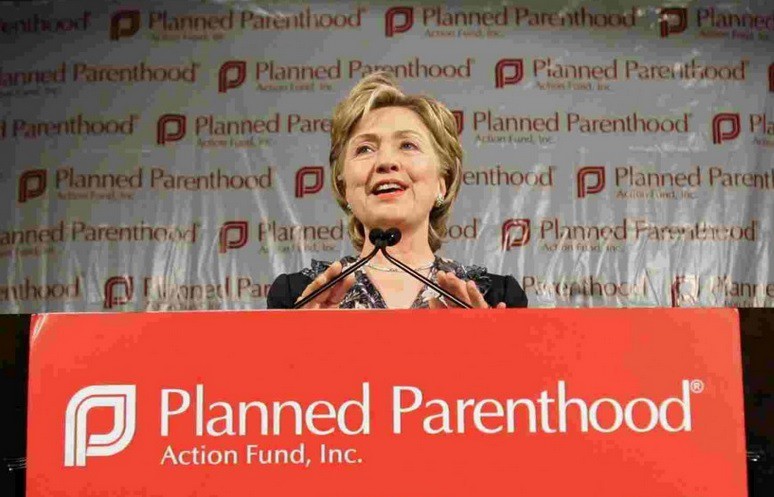
Pope meets with Fidel Castro, focuses on global warming

Barack Obama shakes hands with Pope Francis

The Pope came to America and he had a lot to say about economics and politics. In fact, he endorsed Barack Obama’s plan to slow down our economy, so that Russia and China can catch up to us.

The Daily Signal explains:

But experts at a Heritage Foundation event Monday painted a bleak picture of its adverse impact on the poor, warning that the shift away from natural energy sources would lead to skyrocketing electricity costs that will have “devastating” impacts on low-income families.

Mario Lopez, president of the Hispanic Leadership Fund, cited a report from the National Black Chamber of Commerce that found that by 2030, the plan will increase electricity costs for consumers by $565 billion annually.

“This makes it one of the costliest regulations in American history,” he said.

That cost, Lopez continued, will hit families directly through increased prices on nearly everything ranging from luxury items to everyday necessities like clothing and toothpaste.

“When you reduce the annual income of the individual by hundreds of dollars, then you are going to have an impact, and especially a disproportionate impact on poor people,” he said.

The regulation will also directly hit businesses, forcing owners to cut costs through layoffs and reduced hiring, Lopez said. The Black Chamber of Commerce report found that these predicted job losses would disparately hit minority communities.

By 2035, African-Americans are expected to lose nearly 7 million jobs because of the regulation, while Hispanics will lose over 12 million. The result is a projected 25-percent increase in total poverty.

“These are real people we’re talking about,” Lopez said. “The EPA and the Obama administration sometimes forget that, unfortunately.”

That response made me think of this clip of Marco Rubio from the CNN debate:

If you want to find out here “green energy” initiatives take a country, look no further than Germany. The electricity bills for consumers and businesses have been skyrocketing, damaging their entire economy. Oh well, it’s not like they were facing any kind of demographic crisis or anything.

Anyway, back to the Pope. Apparently, he didn’t have anything to say to Obama about abortion. The headline at The Federalist is “Pope Francis Visits White House South Lawn, Says Nothing About Abortion”. I didn’t see anything about him defending marriage either.

FrontPage magazine talks about how the Pope met with Fidel Castro, a brutal atheistic communist dictator, but declined to meet with Cuban pro-democracy dissidents.

Excerpt:

In 1960, Cuban bishops declared that “Catholicism and Communism respond to two totally different concepts of man and the world which it will never be possible to conciliate.” Pope Francis however contends that Communism is really Christianity. “The Communists have stolen our flag,” he said.

The Cuban bishops condemned Communism as “a system which brutally denies the most fundamental rights of the human being.” Pope Francis’ criticisms of the Castro regime were limited to oblique references, a plea for religious freedom for Catholics and general criticisms that could apply to Cuba or any one of a number of other places. He failed to even reiterate his old criticisms of the regime.

Cuban dissidents were kept from meeting Pope Francis and even the “passing greeting” that had been planned was shut down when the Communist authorities detained political dissidents. When the protesters risked their freedom to get near him, they were arrested without receiving any acknowledgement from the pope. The Castros got their meetings and their publicity.

The oppressed, whom Pope Francis claimed to speak for during his visit and during his international travels, were left out in the cold. They were treated to another oblique reference, as Pope Francis expressed his desire to “embrace especially all those who for various reasons I will not be able to meet.”

“It simply doesn’t appear to us to be right or just that the pope doesn’t have a little time to meet with those Cubans who are defending human rights,” the head of the country’s largest dissident organization said.

Pope Francis spoke of Obama’s deal with Castro as a “process of normalizing relations between two peoples following years of estrangement.” But he knows quite well that it’s nothing of the kind. The Cuban people are not estranged from the Cuban refugees in America by a lack of diplomatic relations, but by the brutal suppression of political and religious freedom by the Castro regime.

The Obama deal doesn’t bring the “two peoples” together; it puts money in the pockets of a regime that Pope Francis had once called corrupt and authoritarian. It allows American leftists to tour Cuba for the trade in underage prostitutes that it has become notorious for. This isn’t reconciliation. It’s exploitation.

[…]If Pope Francis really wished to speak for the oppressed, there are eleven million of them in Cuba. They are not oppressed by capitalism or by global warming. They are oppressed by that fear, the paralyzing anguish that it brings and the apathy that comes with it. They needed weapons against that fear.

The pope’s visit gave the Castros what they wanted, but failed to give the Cuban people what they needed.

Conservative radio show host Mark Levin asks why the Pope chose to talk about global warming instead of the plight of Christians being raped and murdered for their faith by ISIS.

I’m a Protestant evangelical Christian, and Bible-based. I’m pro-life, pro-marriage and I defend religious liberty and conscience rights. I’m not Roman Catholic.

Health premiums up $4,865 since Obama promised to lower them $2,500

Should we pick a candidate based on our emotional response to his confidence?

Barack Obama had a lot of confident words and personal charisma during his campaign speeches in 2008. Many young people want to believe that their positive emotional reaction to confident words will somehow make plans “work out”. But can you really compel the universe to give you goodies just by having positive feelings? Does your emotional response to handsome looks and confident words mean that somehow the universe will give you what you desire?

I want to use this article from Investors Business Daily to illustrate the importance of not picking a President based on confident words and personal charisma.

It says:

Employer-based health insurance premiums climbed 4.2% this year for family plans, according to an annual Kaiser Family Foundation report. That’s up from 3% the year before.

Since 2008, average family premiums have climbed a total of $4,865.

The White House cheered the news, saying it was a sign of continued slow growth in premium costs.

[…]”We will start,” Obama said back in 2008, “by reducing premiums by as much as $2,500 per family.”

That $2,500 figure was Obama’s mantra on health care. You can watch the video if you don’t believe it.

And Obama wasn’t talking about government subsidized insurance or expanding Medicaid or anything like that. He specifically focused on employer provided health care.

For “people who already have insurance, and the employers who are providing it,” he said at one campaign event, “we will work to lower your premiums by up to $2,500 per family.”

Let’s watch the video. I want everyone to see how confident a clown can sound when he lies about being able to solve problems that he knows nothing about.

He had no record of achievement in this area. None, Zero, Zip. And the same goes for his claims about keeping your doctor, keeping your health care plan, and so on.

But America voted to elect him. There were a lot of voters who did not want to think too hard about economics in 2008, and again in 2012. They did not want to have to put in any work to study the achievements of the candidate in the area of health care policy, to see if he had actually done anything to reduce health care premiums. They had a problem: health care costs are too high. A charismatic clown stepped forward and made their fears go away with confident talk. They made a decision to believe him. They wanted to believe that serious problems could be solved by the words of a charismatic clown, so that they would then be saved from having to evaluate the records of the candidates, to see which of them had put in place policies that had solved similar problems in their past. That’s too much work for the American voter. Better to just pick the one who seems to be able to solve the problem based on surface qualities, like confident words that produce emotional reactions. The universe will adjust because we have a positive attitude.

This is an attitude that no practical engineer like me could take. It’s a recipe for disaster. Nothing important in life – from designing e-commerce web sites, to developing cures to sickness, to constructing jet fighters – is conducted in such a stupid, emotional way.

Now, I’m pretty angry that two of my candidates, Rick Perry and Scott Walker, are out of the 2016 election. And why? Because an unqualified leftist clown is ruining the process with brash, insulting confident talk. Again, we are dealing with a clown who has no record of actual problem-solving in the areas where the American people need problems solved.

This article from Investors Business Daily explains:

Which of these two sounds like someone on an ego trip, someone content to let the Middle East go up in flames and, like Barack Obama, someone overconfident in his own abilities to persuade others? And which sounds like he would practice the sober, principled foreign policy of Ronald Reagan as president?

Yet it is the latter, Scott Walker, who was just forced to drop out of the race, the reality TV star front-runner having sucked so much air out of the room that it was becoming impossible to survive. He laudably called it his patriotic duty to depart, thus consolidating the opposition to Trump.

Walker is one of the most successful governors in the country, having brought unemployment down from over 8% to about 4.5%, and turning Big Labor’s targeting him for destruction into three successive electoral victories in a blue state.

A week ago a governor with a longer record of accomplishment, in a state Americans are flocking to for its vibrant jobs-rich economy, was also forced to drop out. In doing so, Rick Perry of Texas made a statement affirming his rock-ribbed commitment to free-market principles, traditional values and a strong America on the world stage.

Perry and Walker are both leaders of substance. Eight years of the inexperienced, self-obsessed Obama had many Republicans concerned about 2016 looking to the governors’ mansions for someone with a proven track record of actually solving crises and reversing misguided big-government policies. These two may have been the most accomplished figures in the nation in that regard. How is it that they are early dropouts?

Political journalists are having a ball dissecting the ins and outs of fundraising and styles of campaign managing to explain Walker and Perry’s exit. But there is no ignoring the 800-pound loudmouth in the room.

In Donald Trump, the left’s caricature of conservatism — the bombast, the misogyny, the hype-above-substance — is defeating the real thing.

I do hiring interviews in my company. I always make sure to ask questions to test the claims on the candidate’s resume. It’s not hard to find out whether a person knows how to do what they claim to know how to do. Many of the people who show up for interviews try to finesse their way through engineering questions with confident talk, and emotional appeals. We don’t hire them. Why is it so hard for the American people to understand what is at stake here?

John C. Sanford’s genetic entropy hypothesis

Apologetics and the progress of science

JoeCoder sent me a recent peer-reviewed paper by John C. Sanford, so I’ve been trying to find something written by him at a layman’s level so I could understand what he is talking about. (I am just a software engineer, not an expert in genetics). His CV is posted at the Cornell University web page.

I found this 20-minute video of an interview with him, in which he explains his thesis:

The most important part of that video is Sanford’s assertion that natural selection cannot remove deleterious mutations from a population faster than they arrive.

And I also found a review of a book that he wrote that explains his ideas at the layman level.

It says:

Dr. John Sanford is a plant geneticist and inventor who conducted research at Cornell University for more than 25 years. He is best known for significant contributions to the field of transgenic crops, including the invention of the biolistic process (“gene gun”).

[…]Sanford argues that, based upon modern scientific evidence and the calculations of population geneticists (who are almost exclusively evolutionists), mutations are occurring at an alarmingly high rate in our genome and that the vast majority of all mutations are either harmful or “nearly-neutral” (meaning a loss for the organism or having no discernible fitness gain). Importantly, Sanford also establishes the extreme rarity of any type of beneficial mutations in comparison with harmful or “nearly-neutral” mutations. Indeed, “beneficial” mutations are so exceedingly rare as to not contribute in any meaningful way. [NOTE: “Beneficial” mutations do not necessarily result from a gain in information, but instead, these changes predominantly involve a net loss of function to the organism, which is also not helpful to [Darwinism]; see Behe, 2010, pp. 419-445.] Sanford concludes that the frequency and generally harmful or neutral nature of mutations prevents them from being useful to any scheme of random evolution.

[…]In the next section of the book, Sanford examines natural selection and asks whether “nature” can “select” in favor of the exceedingly rare “beneficial” mutations and against the deleterious mutations. The concept of natural selection is generally that the organisms that are best adapted to their environment will survive and reproduce, while the less fit will not. Sanford points out that this may be the case with some organisms, but more commonly, selection involves chance and luck. But could this process select against harmful mutations and allow less harmful or even beneficial mutations to thrive? According to Sanford, there are significant challenges to this notion.

Stanford is a co-author of an academic book on these issues that has Dembski and Behe as co-authors.

Now, I do have to post something more complicated about this, which you can skip – it’s an abstract of a paper he co-authored from that book:

Most deleterious mutations have very slight effects on total fitness, and it has become clear that below a certain fitness effect threshold, such low-impact mutations fail to respond to natural selection. The existence of such a selection threshold suggests that many low-impact deleterious mutations should accumulate continuously, resulting in relentless erosion of genetic information. In this paper, we use numerical simulation to examine this problem of selection threshold.

The objective of this research was to investigate the effect of various biological factors individually and jointly on mutation accumulation in a model human population. For this purpose, we used a recently-developed, biologically-realistic numerical simulation program, Mendel’s Accountant. This program introduces new mutations into the population every generation and tracks each mutation through the processes of recombination, gamete formation, mating, and transmission to the new offspring. This method tracks which individuals survive to reproduce after selection, and records the transmission of each surviving mutation every generation. This allows a detailed mechanistic accounting of each mutation that enters and leaves the population over the course of many generations. We term this type of analysis genetic accounting.

Across all reasonable parameters settings, we observed that high impact mutations were selected away with very high efficiency, while very low impact mutations accumulated just as if there was no selection operating. There was always a large transitional zone, wherein mutations with intermediate fitness effects accumulated continuously, but at a lower rate than would occur in the absence of selection. To characterize the accumulation of mutations of different fitness effect we developed a new statistic, selection threshold (STd), which is an empirically determined value for a given population. A population’s selection threshold is defined as that fitness effect wherein deleterious mutations are accumulating at exactly half the rate expected in the absence of selection. This threshold is mid-way between entirely selectable, and entirely unselectable, mutation effects.

Our investigations reveal that under a very wide range of parameter values, selection thresholds for deleterious mutations are surprisingly high. Our analyses of the selection threshold problem indicate that given even modest levels of noise affecting either the genotype-phenotype relationship or the genotypic fitness-survival-reproduction relationship, accumulation of low-impact mutations continually degrades fitness, and this degradation is far more serious than has been previously acknowledged. Simulations based on recently published values for mutation rate and effect-distribution in humans show a steady decline in fitness that is not even halted by extremely intense selection pressure (12 offspring per female, 10 selectively removed). Indeed, we find that under most realistic circumstances, the large majority of harmful mutations are essentially unaffected by natural selection and continue to accumulate unhindered. This finding has major theoretical implications and raises the question, “What mechanism can preserve the many low-impact nucleotide positions that constitute most of the information within a genome?”

If you think all this is interesting, there is a much longer lecture here, which I have not watched. JoeCoder has watched it and he endorses it.

Now I have been told by JoeCoder that there are many critical responses to his hypothesis, most of which have to do with whether natural selection can overcome the difficulty he is laying out. But since this is not my area of expertise, there is not much I can say to adjudicate here, I won’t be able to respond to these. I hope that I will have time to come back to this and read about it at some point. I do have an e-book of the that collection of papers book I linked to above.

Positive arguments for Christian theism