Category Archives: Podcasts

Jim Wallace explains and defends the doctrine of Hell

J Warner Wallace
J Warner Wallace

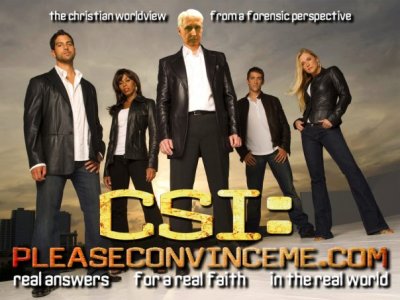
I stole this image from Wallace’s Facebook page. Without asking. He is a cold case detective. So, I could get arrested. If I suddenly stop blogging, then would one of you please bail me out of jail?

Anyhoo, five podcasts on Hell from Please Convince Me.

I just listened to the first one and I really, really think you need to listen to this. He doesn’t talk like a pastor. Wallace is a tough guy. And when he talks about Hell and judgment, it is just awesome. I spent Sunday listen to those two people-pleasing cowards Rob Bell and Brian Maclaren on the Unbelievable show and my ears metaphorically bled – that’s how annoying those apostates are to listen to. I wish I had listened to Wallace instead. It’s straight talk. No evasions. No whining. No answering questions with questions. No vague insinuations that truth should be decided by feelings and the need to be liked by others.

Number 1:

In the wake of Rob Bell’s new book, “Love Wins,” many people are beginning to question the nature and existence of Hell and how exactly God decides who must go there. For many, the idea that our temporal, finite sin on earth should deserve an eternal punishment of infinite torment in hell is ridiculously inequitable. Why would God torture infinitely those who have only sinned finitely? Jim addresses this objection and answers listener email.

The MP3 file is here.

Number 2:

A loving God would never create a place like Hell, would He? Any God that would send people to a place of punishment and torment is unloving by definition, right? In this podcast, Jim responds to these foundational objections to the existence of Hell. In addition, Jim comments on the Harris / Craig debate and answers listener email related to hearing God’s voice.

The MP3 file is here.

Number 3:

In this podcast, Jim answers the objection that God would send people like Gandhi to Hell (simply because they are not Christians) alongside people like Hitler (who have committed unspeakable atrocities). How can a reasonable and just God be the source of such inequitable punishment? Also Jim answers listener email related to the power of prayer, the importance of evidential apologetics and the grounding for objective morality.

The MP3 file is here.

Number 4:

Isn’t it unfair for God to penalize people who are otherwise good, just because they haven’t heard about Jesus? A good God would not send good people to Hell. Jim responds to this objection and answers listener email related to the Craig/Harris debate, pre-existing mythologies that are similar to Jesus, and the difficult, exclusive nature of “election”.

The MP3 file is here.

Number 5:

If God is all-loving, why doesn’t he “reform” people rather than simply “punish” them in Hell? Skeptics sometimes argue that a God who simply punishes his children in Hell is a sadistic and vengeful God, unworthy of our worship. Jim responds to this objection and answers listener email related to the nature of “election”, the evidence for “annihilationism”, and a political quote related to same sex marriage.

The MP3 file is here.

There could be more coming in this series, but these are so good I though I would link to them right away. I’ll keep an eye out for new ones.

Related posts

Tim McGrew explains how undesigned coincidences affect textual reliability

Tim McGrew
Tim McGrew

UPDATE: This post has been linked by Denyse O’Leary at the famous ID blog Uncommon Descent! Denyse’s blog is the Post-Darwinist.

I found this lecture from philosopher Tim McGrew at MandM. Tim teaches at Western Michigan University.

The MP3 file is here.

Tim’s wife Lydia explains the concept of undesigned coincidences on her blog:

Undesigned coincidences in the Gospels … is an argument that was well-known in the nineteenth century but has, for no really clear reason, simply been forgotten as time has gone on. It is a cumulative case argument that the Gospels reflect, to an important extent, independent knowledge of actual events. Please note that this argument is quite independent of one’s preferred answer to the synoptic question. That is to say, even if, e.g., Mark was the first Gospel and others had access to Mark and show signs of literary dependence on Mark, the argument from undesigned coincidences provides evidence for independent knowledge of real events among the Gospel writers. There are many more of such coincidences beyond those given in the talk.

Basically, this argument finds cases where the same story is in two sources, but where some important detail is left out of one account so that something about the story seems out of place. But the other source has the missing detail that unlocks the mystery. This makes the sources appear to be independent, especially as more of these coincidences pile up. If this happens a lot, it argues for independent sources, which means that the story is multiply attested, which it is it less likely to have been made up.

My favorite example was the Philip example from John 6.

Lydia explains that example here:

As I was listening to Tim’s examples, I was struck by all the reasons there might be for a real eyewitness not to fill out the explanation for a detail. Think for example how tedious it is to listen to someone who goes back to explain every little detail he mentions in a story.

[…]Similarly, as John is telling the story about the feeding of the five thousand, it would be quite natural for him to say that Jesus asked Philip where they could buy bread if he were really an eyewitness–that is, because he remembered that Jesus did ask Philip. (Tim talks about why it was Philip in the interview.) But John himself might have had to stop and think for a moment if someone had asked him, “Why did Jesus ask Philip rather than any of the other disciples?” Presumably when John told the story, he wasn’t particularly thinking about some special reason for Jesus to select Philip for the question. But if someone were forging the story as fiction, he would have a reason for choosing to use a given disciple as a character at that point in his fictional narrative, and therefore he would be unlikely to choose that character without making the reason clearer to his readers.

All sorts of such things can happen when one is telling a true story, especially a story one has witnessed. One gets caught up in what one actually remembers and drops in incidental references to small facts, which facts are to some extent selected randomly by the memory as one brings the scene back to memory. This is typical of real memoirs but not of elaborate forgeries.

Lydia is also a philosopher, and her Ph.D is from Vanderbilt University. She’s put together a nice list of resources on historical apologetics. She is a homeschooling mom – I LOVE THAT!!!

Jennifer Roback Morse lectures on marriage at Stanford University

Dr. Jennifer Roback Morse

Stanford University is one of the top 5 universities in the United States.

Details:

Dr J gave this talk at Stanford University’s Anscombe Society on the reasons for marriage, and the ways in which it shapes society and the next generation. After Dr J’s talk at Stanford University, she took questions and answers from the students in attendance.  They had quite the lively discussion…  Please be advised–some of these questions may be overly explicit for very young listeners.

The files:

Here’s her biography:

Jennifer Roback Morse, Ph.D. is the founder and President of the Ruth Institute, president of the Ruth Institute a project of the National Organization for Marriage to promote life-long married love to college students by creating an intellectual and social climate favorable to marriage.

She is also the Senior Research Fellow in Economics at the Acton Institute for the Study of Religion and Liberty.

She is the author of Smart Sex: Finding Life-long Love in a Hook-up World, (2005) and Love and Economics: Why the Laissez-Faire Family Doesn’t Work (2001), recently reissued in paperback, as Love and Economics: It Takes a Family to Raise a Village.

Dr. Morse served as a Research Fellow for Stanford University’s Hoover Institution from 1997-2005. She received her Ph.D. in economics from the University of Rochester in 1980 and spent a postdoctoral year at the University of Chicago during 1979-80. She taught economics at Yale University and George Mason University for 15 years. She was John M. Olin visiting scholar at the Cornell Law School in fall 1993. She is a regular contributor to the National Review Online, National Catholic Register, Town Hall, MercatorNet and To the Source.

Dr. Morse’s scholarly articles have appeared in the Journal of Political Economy, Economic Inquiry, the Journal of Economic History, Publius: the Journal of Federalism, the University of Chicago Law Review, and the Harvard Journal of Law and Public Policy, Social Philosophy and Policy, The Independent Review, and The Notre Dame Journal of Law Ethics and Public Policy.

[…]Her public policy articles have appeared in Forbes, Policy Review,The American Enterprise, Fortune, Reason, the Wall Street Journal, Vital Speeches, and Religion and Liberty.

She currently lives in San Diego, CA. She and her husband are the parents of a birth child, an adopted child. From March 2003 to August 2006, Dr. Morse and her husband were foster parents for San Diego County. During that time, they cared for a total of eight foster children.

Her talent is to apply the economic way of thinking to social issues like marriage, family and parenting.