At the time of writing, I’ve already voted a straight Republican ticket in my state. My state senator is not up for re-election this year, but my state representative is, and so is my federal representative. I was concerned that maybe after the 2020 elections, it might not be worth it to vote. But a recent article from The Federalist notes that Republicans have been busy making sure my vote will count.
Here’s what happened in the 2020 elections:
The 2020 election was a massive wake-up call for many Americans on the right. In the months leading up to it, Democrats forced through changes to hundreds of laws and processes governing how elections are conducted.
The rule-change scheme was run by Marc Elias, a Democrat election attorney who also ran his party’s Russia collusion hoax, which falsely claimed Donald Trump stole the 2016 election by colluding with Russia. Sometimes Democrats’ 2020 changes were instituted legally. Frequently, though, they were effected by other means, such as getting a friendly state or local official to change the rules unilaterally.
The 2020 election plan… sought to flood the zone with tens of millions of unsupervised mail-in ballots, historically understood to be riper for fraud and other election irregularities than supervised, in-person voting. The plan also involved the private takeover of government election offices to run Democrat-focused get-out-the-vote operations. Mark Zuckerberg, one of the world’s wealthiest and most powerful men, financed the project, doling out $419 million to two left-wing groups that focused grants and assistance to government offices in the Democrat areas of swing states.
This radical change… included the widespread practice of placing ballot drop boxes predominantly in Democrat areas of the country, mailing out unsolicited mail-in ballots or applications for mail-in ballots, using well-funded teams of ballot harvesters both inside and outside of government, lowering and changing the standards for mail-in ballot acceptance, and fixing or “curing” ballots that were improperly filled out.
[…]Big Tech and the media ran coordinated disinformation campaigns to benefit Democrats by suppressing news that hurt the party. Big Tech also deplatformed effective conservative voices and media outlets, suppressed fundraising emails from Republicans, and elevated certain information to help Democrats.
This was the challenge facing Republicans in 2020. And here’s what they did in the last 2 years after the 2020 elections:
The Republican National Committee, other party entities, and dozens of public interest election nonprofit groups built over the last two years a multimillion-dollar election integrity infrastructure that passed laws improving voter ID and other election security measures, defended those laws from legal attacks by Democrats, and sued states and localities that failed to follow the law. They also recruited, educated, trained, and placed tens of thousands of new election observers and other workers throughout the long midterm voting season.
[…][B]ans on so-called Zuckbucks, the private takeover of government election offices, were passed and signed into law in Alabama, Arizona, Arkansas, Florida, Georgia, Idaho, Indiana, Iowa, Kansas, Kentucky, Mississippi, Missouri, Nebraska, North Dakota, Ohio, Oklahoma, South Carolina, South Dakota, Tennessee, Texas, Utah, Virginia, and West Virginia.
Pennsylvania is still a problem, because the Democrat governor vetoed legislation passed by Republicans to improve election integrity. Georgia was a problem last election, but look – they’ve improved:
Georgia passed much-needed reforms related to voter ID, mail-in voting, and drop boxes, in addition to the Zuckbucks ban. The result has been record-breaking early, in-person voter turnout, across demographics, surpassing 2 million voters this week.
Meanwhile, the Foundation for Government Accountability worked with states to make policy changes to clean voter rolls, ban ballot trafficking, secure ballot custody, roll back Covid waivers, enact penalties for election lawbreakers, require chains of custody, secure drop boxes, pre-process absentee ballots, improve absentee voter ID, and dozens of other types of reforms.
Florida has been working steadily to improve its election system since the disastrous 2000 election. Last year, that meant banning Zuckbucks. This year, those changes included “requiring voter rolls to be annually reviewed and updated, strengthening ID requirements, establishing the Office of Election Crimes and Security to investigate election law violations, and increasing penalties for violations of election laws.”
Incidentally, the Center for Renewing America filed a complaint with the IRS over the tax break that Zuckerberg and his wife Priscilla Chan received for their 2020 election meddling.
It’s probably a good idea for conservatives to just get off Facebook. Definitely do not pay Zuck for advertisements.
The Republicans passed legislation, but they also took the Democrats to court:
The RNC got involved in 73 election integrity cases in 20 states for the midterms, with plans to expand. They won a lawsuit against Michigan Secretary of State Jocelyn Benson for restricting the rights of poll challengers; got Maricopa County, Arizona, to share key data about its partisan breakdown of poll workers; won an open records lawsuit against Mercer County, New Jersey, for refusing to share election administration data; won a lawsuit against the North Carolina State Board of Elections for restricting the rights of poll watchers; and reached a favorable settlement against Clark County, Nevada, in which the county agreed to share information about its partisan breakdown of poll workers on a rolling basis.
The Republicans also trained thousands of election day poll watchers:
The RNC hired 17 in-state election integrity directors and 37 state-based election integrity counsels in key states. They conducted more than 5,000 election integrity trainings, recruited more than 70,000 poll watchers and workers, and worked with more than 110,000 unique volunteers nationwide. They set up an issue reporting system and distributed copies of Poll Watcher Principles for states. If voters encounter election issues, they can file a report, and attorneys will be dispatched to resolve the issues. Sites were set up in Arizona, California, Florida, Georgia, Iowa, Maine, Michigan, Minnesota, Nevada, New Hampshire, New Jersey, North Carolina, Ohio, Pennsylvania, Texas, Virginia, and Wisconsin.
Congressional Republicans also got in on the action. Rep. Rodney Davis, the top Republican on the House Administration Committee, notified all 50 states that he would be deploying dozens of specially trained election observers to protect the integrity of the ballot box.
[…]The Election Integrity Network, which started with a podcast on election integrity issues hosted by longtime election lawyer Cleta Mitchell, grew into state summits, which then built out into coalitions in states, attracting people to weekly meetings. The network has trained 76,000 poll workers.
So, there’s every reason to think that your vote will count on Tuesday. I voted. You should go vote, too. We need to get gas prices lowered, rein in inflation, and make sure that the pandemic fascists are investigated. Plenty of reasons to vote Republican.
By the way, if you’re looking for a good book on what happened in the 2020 elections, Mollie Hemingway’s “Rigged” is a great choice.
MY NOTES ON THE DEBATE: (WC = William Lane Craig, CH = Christopher Hitchens)
WC opening speech:
Introduction:
WC makes two contentions:
– there are no good arguments for atheism
– there are good arguments for theism
These topics are IRRELEVANT tonight:
– social impact of christianity
– morality of Old Testament passages
– biblical inerrancy
– the debate is whether god (a creator and designer of the universe) exists
1. cosmological argument
– an actually infinite number of past events is impossible
– number of past events must be finite
– therefore universe has a beginning
– the beginning of the universe is confirmed by science – universe began to exist from nothing
– space, time, matter, energy began at the big bang
– the creation of the universe requires a cause
– the cause is uncaused, timeless, spaceless, powerful
– the cause must be beyond space and time, because it created space and time
– the cause is not physical, because it created all matter and energy
– but there are only two kinds of non-physical cause: abstract objects or minds
– abstract objects don’t cause effects
– therefore must be mind
2. teleological argument
– fine-tuned constants and ratios
– constants not determined by laws of nature
– also, there are arbitrary quantities
– constants and quantities are in narrow range of life-permitting values
– an example: if the weak force were different by 1 in 10 to the 100, then no life
– there are 3 explanations: physical law or chance or design
– not due to law: because constants and quantities are independent of the laws
– not due to chance: the odds are too high for chance
– therefore, due to design
– the atheist response is the world ensemble (multiverse)
– but world ensemble has unobservable universes, no evidence that they exist
– and world ensemble contradicts scientific observations we have today
3. moral argument
– objective moral values are values that exist regardless of what humans think
– objective values are not personal preferences
– objective values are not evolved standards that cultures have depending on time and place
– objective moral values and duties exist
– objective moral values and duties require a moral lawgiver
4. argument from resurrection miracle
– resurrection implies miracle
– miracle implies God
– 3 minimal facts pass the historical tests (early attestation, eyewitness testimony, multiple attestation, etc.)
– minimal fact 1: empty tomb
– minimal fact 2: appearances
– minimal fact 3: early belief in the resurrection
– jewish theology prohibits a dying messiah – messiah is not supposed to die
– jewish theology has a general resurrection of everybody, there is not supposed to be a resurrection of one person
– jewish theology certainly does not predict a single resurrection of the messiah after he dies
– therefore, the belief in the resurrection is unlikely to have been invented
– disciples were willing to die for that belief in the resurrection
– naturalistic explanations don’t work for the 3 minimal facts
5. properly basic belief in god
– religious experience is properly basic
– it’s just like the belief in the external world, grounded in experience
– in the absence of defeaters, those experiences are valid
Conclusion: What CH must do:
– destroy all 5 of WC’s arguments
– erect his own case in its place
CH opening speech:
1. evolution disproves biological design argument
– evolution disproves paley’s argument for a watchmaker
2. god wouldn’t have done it that way
– god wouldn’t have waited that long before the incarnation
– mass extinction and death before Jesus
– god wouldn’t have allowed humans to have almost gone extinct a while back in africa
– why insist that this wasteful and incompetent history of life is for us, that’s a bad design
– the universe is so vast, why would god need so much space, that’s a bad design
– there is too much destruction in the universe, like exploding stars – that’s a bad design
– the heat death of the universe is a bad design
– too many of the other planets don’t support life, that’s a bad design
– the sun is going to become a red giant and incinerate us, that’s a bad design
3. hitchens’ burden of proof
– there is no good reason that supports the existence of god
– all arguments for god can be explained without god
– atheists can’t prove there is no god
– but they can prove there is no good argument for god
4. craig’s scientific arguments don’t go far enough, they only prove deism, not theism
– the scientific arguments don’t prove prayer works
– the scientific arguments don’t prove specific moral teachings of christianity
5. if the laws of physics are so great then miracles shouldn’t be allowed
– good laws and miracles seem to be in contradiction
6. extraordinary claims need extraordinary evidence
– none of craig’s evidence was extraordinary
7. science can change, so craig can’t use the progress of science
– it’s too early for craig to use the big bang and fine-tuning
– the big bang and fine-tuning evidences are too new
– they could be overturned by the progress of science
8. craig wrote in his book that the internal conviction of god’s existence should trump contradicting evidence
– but then he isn’t forming his view based on evidence
– he refuses to let evidence disprove his view
– but then how can atheists be to blame if they don’t believe
– so evidence is not really relevant to accepting theism
9. the progress of science has disproved religion
– christianity taught that earth was center of the universe
– but then cosmology disproved that
Response to the big bang and fine-tuning arguments:
– was there pre-existing material?
– who designed the designer?
WC first rebuttal:
Reiterates his 2 basic contentions
CH agrees that there is no good argument for atheism
– then all you’ve got is agnosticism
– because CH did not claim to know there is no God
– and he gave no arguments that there is no God
CH’s evolution argument
– irrelevant to christianity
– Genesis 1 allows for evolution to have occurred
– christianity is not committed to young earth creationism
– the origin of biological diversity is not central to christianity
– st. augustine in 300 AD said days can be long, special potencies unfold over time
– also there are scientific reasons to doubt evolution
– cites barrow and tipler, and they say:
– each of 10 steps in evolution is very improbable
– chances are so low, it would be a miracle if evolution occurred
CH’s argument that god is wasteful
– efficiency is only important to people with limited time or limited resources
– therefore god doesn’t need to be efficient
CH’s argument that god waits too long to send Jesus
– population was not that high before jesus
– jesus appears just before the exponential explosion of population
– conditions were stable – roman empire, peace, literacy, law, etc.
CH’s argument that Craig’s scientific arguments only prove deism, not theism
– deism a type of theism, so those scientific arguments work
– all that deism denies is miraculous intervention
CH’s argument that Craig has a burden of proof
– theism doesn’t need to be proven with certainty
– must only prove best explanation of the evidence
CH’s citation of Craig’s book saying that evidence should not overrule experience
– there is a difference between knowing and showing christianity is true
– knowing is by religious experience which is a properly basic belief
– showing is done through evidence, and there the evidence does matter
CH’s rebuttal to the big bang
– there was no pre-existent material
– space and time and matter came into being at the big bang
– the cause must be non-physical and eternal
– cause of universe outside of time means = cause of universe did not begin to exist
– this is the state of science today
CH’s rebuttal to the fine tuning
– CH says scientists are uncertain about the fine-tuning
– craig cites martin rees, an atheist, astronomer royal, to substantiate the fine tuning
– the fine-tuning is necessary for minimal requirements for life of any kind
– the progress of science is not going to dethrone the fine-tuning
CH’s argument about heat death of the universe
– duration of design is irrelevant to whether something was designed
– cars are designed, yet they break down
– design need not be optimal to be designed
– ch is saying why create if we all eventually go extinct
– but life doesn’t end in the grave on christianity
CH’s rebuttal to the moral argument
– CH says no obj moral values
– but CH uses them to argue against god and christians
– but CH has no foundation for a standard that applies to God and Christians
CH’s rebuttal to the resurrection argument
– empty tomb and appearances are virtually certain
– these are minimal facts, well evidenced using standard historical criteria
– best explanation of these minimal facts is the resurrection
CH’s rebuttal to religious experience
– prop basic belief is rational in the absence of defeaters
– so long as craig has no psychological deficiency, experience is admissible
CH first rebuttal:
it’s not agnosticism
– if there are no good arguments for theism
– then there is no reason for belief in god
– that is atheism
– everything can be explained without god
god wouldn’t have done it that way
– homo sapiens is 100K years old
– for 98K years, they had no communication from God
– lots of people died in childbirth
– disease and volcanos are a mystery to them
– life expectancy is very low
– they die terrible deaths
– their teeth are badly designed
– their genitalia are badly designed
– why solve the problem of sin by allowing a man to be tortured to death
– that’s a stupid, cruel, bumbling plan
lots of people haven’t even heard of jesus
– many of them die without knowing about him
– they cannot be held responsible if they do not know about jesus
the early success of christianity doesn’t prove christianity is true
– because then it applies to mormonism and islam, they’re growing fast
objective morality
– belief in a supreme dictator doesn’t improve moral behavior
– i can do moral actions that you can do
– i can repeat moral positions that you can say
religious people are immoral
– genital mutilation
– suicide bombing
moral behavior doesn’t need god
– we need to act moral for social cohesion
– it evolved for our survival
– that’s why people act morally
– it’s degrading to humans, and servile, to require god for morality
free will
– i believe in free will
– i don’t know why, because i can’t ground free will on atheism
– a bossy god seems to reduce free will because then we are accountable to god
WC cross-examination of CH:
WC why call yourself an atheist when you have no reasons?
CH because absence of belief is atheism
WC but agnosticism, atheism, verificationism all don’t hold that belief, which are you?
CH i think god does not exist
WC ok give me an argument for the claim you just made to know god does not exist
CH i have no argument, but i don’t believe in god because it depresses me to think he might be real
WC would you agree that absence of evidence is not evidence of absence?
CH no i don’t agree
WC moral argument: it’s not epistemology it’s the ontology – have you got a foundation for moral values and duties?
CH i do not, it’s just evolution, an evolved standard based on social cohesion
CH cross-examination of WC:
CH you said that the historical reports of jesus doing exorcisms are generally accepted – do you believe in devils?
WC i commit to nothing, what I am saying there historical concensus on the reports that jesus did exorcisms
CH what about the devils going into the pigs, do you believe that?
WC yes i do, but the main point i’m making is that the historical reports show that jesus acted with divine authority
CH do you believe in the virgin birth?
WC yes, but that’s not historically provable using the minimal facts methods, and i did not use the virgin birth in my arguments tonight, because it doesn’t pass the historical tests to be a minimal fact
CH do you believe that all the graves opened and dead people all came out?
WC not sure if the author intended that part as apocalyptic imagery or as literal, i have no opinion on it, have not studied it
CH do exorcisms prove son of god?
WC no, i am only saying that the historical reports show that jesus exercised authority and put himself in the place of god
CH are any religions false? name one that’s false
WC islam
CH so some religions are wicked right?
WC yes
CH if a baby were born in saudi arabia would it be better if it were an atheist or a muslim?
WC i have no opinion on that
CH are any christian denominations wrong?
WC calvinism is wrong about some things, but they are still christians, i could be wrong about some things, i do the best i can studying theology so i’m not wrong
WC second rebuttal
Response to CH arguments:
no reasons for atheism
– no reasons to believe that god does not exist
– ch withholds belief in god
why wait so long before contacting humans with jesus
– population matters, not time – jesus waited until there was about to be a population explosion
– there is natural revelation (Romans 1) for those who lived before christ
what about those who never heard
– (Acts 17:22-31) god chooses the time and place of each person who is born to optimize their opportunity to know him based on how they will respond to evidence (this is called middle knowledge)
– those who haven’t heard will be judged based on general revelation
WC re-assess the state of his five arguments:
cosmological argument
– heat death of the universe won’t happen on christianity
moral argument
– if no objective moral standard, can’t judge other cultures as wrong
– no transcendent objective standard to be able to judge slavery as wrong
name an action argument
– e.g. – tithing
– the greatest command – love the lord your god your god with everything you’ve got
– atheists can’t do that, and that is the biggest commandment to follow
moral obligations
– there are no objective moral obligations for anyone on atheism
– on atheism, you feel obligated because of genetics and social pressure
– on atheism, we’re animals, and animals don’t have moral obligations
resurrection
– the belief in resurrection of 1 man, the messiah is totally unexpected on judaism
– they would not have made this up, it was unexpected
religious experience
– experience is valid in the absence of defeaters
CH second rebuttal:
faith and reason
– Tertullian says faith is better when it’s against reason
it’s easy to start a rumor with faith-based people
– mother teresa: to be canonized she needs to have done a miracle
– so there was a faked miracle report
– but everybody believes the fake miracle report!
– this proves that religious rumors are easy to start
– the resurrection could have started as a similar rumor by people wanting to believe it
name an action
– tithing is a religious action, i don’t have to do that
moral argument
– i can be as moral as you can without god
– i can say that other cultures are wrong, there i just said it
– without god, people would still be good, so god isn’t needed
religious people did bad things in history
– this church did a bad thing here
– that church did a bad thing there
– therfore god doesn’t exist
religion is the outcome of man’s struggle with natural phenomenon
– that is why there are so many religions
WC concluding speech
no arguments for atheism presented
What CH has said during the debate:
– god bad, mother teresa bad, religion bad
atheism is a worldview
– it claims to know the truth
– therefore it is exclusive of other views
what does theism explain
– theism explains a broad range of experiences
– origin of universe, CH has dropped the point
– fine-tuning, CH has dropped the point
– moral, CH says that humans are no different from animals – but an evolved standard is illusory, there are no actual moral values and standards, it’s just a genetic predisposition to act in a certain way – that’s not prescriptive morality
– resurrection, CH has dropped the point
– experience, craig tells his testimony and urges the audience to give it a shot
CH concluding speech
HITCHENS YIELDS HIS ENTIRE CONCLUDING SPEECH!
A question & answer Period followed end of the formal debate
Further study
Check out my analysis of the 11 arguments Hitchens made in his opening speech in his debate with Frank Turek.
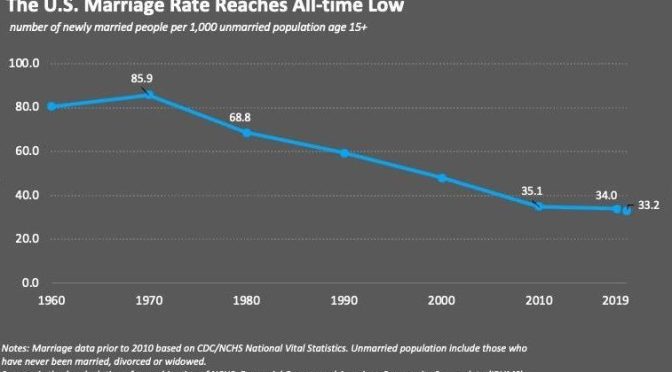
Should a man marry a woman who doesn’t respect his decision-making ability? To me, if a woman doesn’t think that the man is good at making decisions, then she should just steer clear of him. Strangely enough, many women do marry men who they don’t respect at all as leaders. Let’s look at four cases where this happened, then draw some conclusions.
Saying no to a toddler’s demands for a McDonald’s meal got a father branded an inept parent, he says in a lawsuit claiming a psychologist urged a judge to curtail his parental visits over the dinner debacle.
David E. Schorr says psychologist Marilyn Schiller pronounced him incapable of caring for his nearly 5-year-old son after he offered a choice — dinner anywhere but McDonald’s, or no dinner at all — and let the boy choose the latter. He then took his irate son home to the boy’s mother’s house early from their Oct 30 dinner date, according to a defamation suit Schorr filed Tuesday.
[…]”Normally not a very strict father who rarely refuses his child McDonald’s,” Schorr put his foot down Oct. 30 “because his son had been eating too much junk food,” the suit said. Schorr himself didn’t immediately return a call Friday.
He quickly regretted his stance when his son threw a tantrum, but he felt that giving in would reward bad behavior, so he offered the elsewhere-or-nowhere “final offer,” as his court papers put it.
“The child, stubborn as a mule, chose the ‘no dinner’ option,” the suit says. And the father promptly carted the boy back to Bari Schorr’s building, still trying to entice the child into changing his mind as they waited in the lobby for her to get home from work, according to the suit.
Schiller told a judge the fast food flap “raises concerns about the viability” of the father’s weekend visits with his son and asked a judge to eliminate or limit them, his lawsuit says.
The NY Post reports that the brat’s mother immediately took him to McDonald’s.
Excerpt:
Adding insult to injury, he said: “My wife immediately took him to McDonalds.”
[…]But the son apparently tattled on his dad and his wife flipped out and called the shrink, according to the suit.
Schorr claims that Dr. Schiller only interviewed the child and his mother and never asked for his side of the story before telling the court she was gravely concerned about Schorr’s parenting.
Bari Yunis Schorr sued her husband for a divorce in 2011, just four years after they married in a lavish ceremony at the St. Regis Hotel in Manhattan.
Now does this situation happen a lot? I mean a situation where a mother goes to the feminist authorities (psychologists/social workers/lawyers/teachers/judges) in order to overrule the father’s parenting authority?
Another case from Canada
Here is a story from Canada that provides another examples of mothers, female lawyers, female judges, etc. overriding a father’s leadership of his home.
Excerpt:
A Gatineau father lost an appeal Monday after a lower court ruled last June that he had issued a too severe punishment against his 12-year-old daughter.
The case involves a divorced man who says that in 2008 he caught the girl, over whom he had custody, surfing websites he had forbidden and posting “inappropriate pictures of herself” online. The girl’s father told her as a consequence that she would not be allowed to go on her class’ graduation trip to Quebec City, even though her mother had already given permission for her to do so.
The girl then contacted a legal-aid lawyer who was involved in the parents’ custody battle, who convinced the court to order that the girl be allowed to go on the trip with her class. The father appealed the decision on principle, although his daughter went on the trip in the meantime.
The appeals court reportedly warned in its ruling that the case should not be seen as an open invitation for children to take legal action against their parents when grounded.
So, what the daughter, wife, prosecuting attorney and judge (all feminists?) are all telling this Dad that he can donate sperm, pay bills, and pay taxes to welfare spending, but that he cannot lead his own children. He cannot have any moral authority to guide the child into becoming a man. That job is for child care workers, single mothers and public school teachers. Men need to butt out of parenting – except they can pay for all these experts through taxes, of course.
Recently, I blogged about a case in Canada where a father was overruled by female teachers, principals, lawyers, and judges, because he opposed the transgendering of his child (which was supported by the mother).
And there was also a case in California, where the mother of a child also wanted to transgender the child. The father collected together all the evidence showing that this would not be a good idea in the long run, but a female judge overruled him. Not only did he lose custody of the child, but he was banned from contacting the child, too.
Questions:
Does anyone care what men want from marriage and parenting, or should we just be ordered around like little boys?
Do we really think that state coercion is going to make men be more involved with their marriages and children?
I think that marriage should allow men to express themselves as fathers, just as much as women can express themselves as mothers. Parenting should be an equally shared responsibility, and the father should have at least as much parental authority as the mother.
Compassion vs standards
Here is a pretty good article by Jewish scholar Dennis Prager that argues against compassion and for moral standards. He tells a story of a team losing a baseball game 24-7, when the scoreboard is reset to 0-0 DURING THE GAME. He then asks what beliefs would motivate this action.
As is happening throughout America, compassion trumped all other values.
Truth was the first value compassion trashed. In the name of compassion, the adults in charge decided to lie. The score was not 0-0; it was 24-7.
Wisdom was the second value compassion obliterated. It is unwise to the point of imbecilic to believe that the losing boys were in any way helped by changing the score. On the contrary, they learned lessons that will hamper their ability to mature.
He lists the lessons that the winning and losing boys learned from this compassionate act, and how they will act in the future. Then he continues his list.
Building character was the third value trumped by compassion. People build character far more through handling defeat than through winning. The human being grows up only when forced to deal with disappointment. We remain children until the day we take full responsibility for our lives.
…The fourth value that compassion denied here was fairness. It is remarkable how often compassion-based liberals speak of “fairness” in formulating social policy given how unfair so many of their policies are. It was entirely unfair to the winning team to have their score expunged, all their work denied. But for the compassion-first crowd, the winning team is like “the rich” who earn “too much” and should therefore be penalized with a higher tax rate; the winning team scored “too many” runs to be allowed to keep them all.
What the “compassion” crowd mean by compassion is “don’t judge”. “Don’t judge” is their highest morality. Male leadership isn’t just worthless, it’s dangerous. Men are only good for spending money, and for being sperm donors. It would be best if they didn’t talk at all.
Compassion undermines moral standards, but also standards of rationality. The former is under attack from moral relativism, and the latter is under attach from postmodernism. These ideologies are dangerous, and they are at the root of a lot of the problems we’re seeing with children today. When men cannot correct moral relativism and postmodernism in their homes, then the children make terrible decisions, and often get into big trouble later on.
Advice for men
When men are getting into relationships with women, they should consider whether the woman is choosing them because they are good at leading, especially on moral and spiritual issues. If she is not choosing you because she likes how you lead, then run for the hills. You do not want to invest in a relationship that is going to be adjudicated in the courts by feminist lawyers and feminist judges. If you like to lead, pick a woman who likes how you lead. A woman who thinks that moral relativism is false, and postmodern relativism is also false.