
All posts by Wintery Knight

https://winteryknight.com/

Two UK pre-teens suspended from school for asking to be exempted from LGBT indoctrination

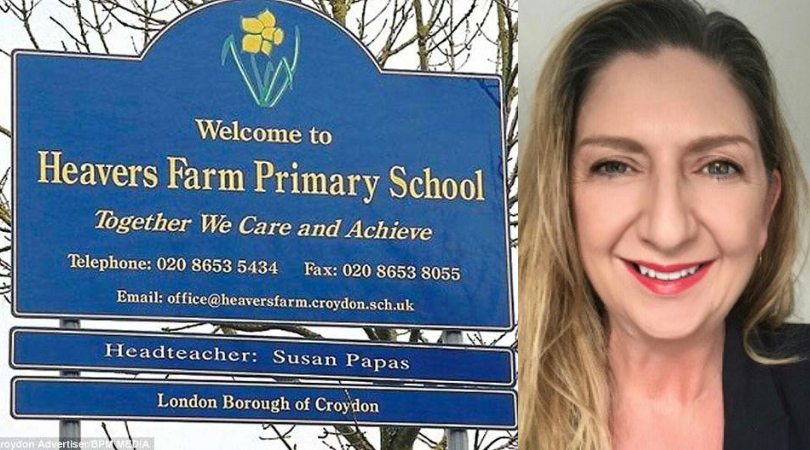
Susan Papas, Headteacher at Heavers Farmer Primary School

A long time ago, non-Christians would respond to moral judgments  by saying “don’t force your morality on me”. At the time, you might have thought that secular leftists thought that it was wrong to force morality on other people, and they wanted to force that rule on those who judged them. But we now know that secular leftists LOVE to force THEIR morality on other people who disagree with them.

Here’s what happened:

On June 20, Farrell, sitting next to his friend Kaysey in class, asked his year 5 class teacher, “Sir, please may I not take part in this lesson?” when the teacher handed out LGBT material for colouring. The teacher refused permission saying that the LGBT lesson was part of the curriculum.

After class, the form teacher is said to have accused Farrell of using “homophobic language” for allegedly saying, “LGBT sucks and LGBT’s dumb,” which the child denies.

Farrell, who was sitting with female pupil Kasey says he is a Christian and told a “visitor teacher” he did not “accept LGBT” because of his religion.

The teacher asked the two children, “Do you want them to die?” “We said no,” Farrell replied. If, however, they went back to their countries, they would be punished for being gay, Farrell told the teacher.

The teacher asked Farrell where he was from. Farrell said he was of “African Jamaican” heritage, and because there “everybody is Christian and Catholic, so they don’t accept LGBT.”

The head of the school, Susan Papas, suspended the two children from school for five days for asking not to take part in the LGBT indoctrination.

But she did more than that:

Later, Ms Papas shouted at the two children in front of the class, according to Kaysey. “How dare you? You are a disappointment to the school,” Papas told the two children outside the classroom.

Papas then put the children in different rooms and asked Kasey [sic]: “How dare you say that you want to kill LGBT people?” Kasey replied: “I didn’t say kill.” Papas then shouted at her and said, “Yes, you did, and don’t lie.”

Kaysey, a pentecostal Christian, says she was kept in detention for five hours from 10am to 3pm.

So, if you say to a secular leftist “I disagree”, what they hear is a threat of violence. They feel that disagreeing with them makes you an evil person, and they are entitled to use force to stop you from being evil. There is no “agree to disagree” with a secular leftist.

Life Site News reports:

Kaysey’s and Farrell’s version of the story, which differs widely from what their teacher and the head of their school alleged, has been corroborated by their classmates.

Elsewhere:

Kaysey also noted that Papas’ daughter, School Manager and Deputy Safeguarding Officer Attie Copeman-Papas, is a lesbian, and that Assistant Headteacher Robert Askey is gay.

[…]This isn’t the first time Papas’ militant promotion of the LGBT agenda has roused the ire of parents at the school, which educates 750 pupils in a highly multicultural and multi-religious borough of London.

In June 2018, parents threatened to protest at a Gay Pride parade organized by the school on its playground.

Papas had invited parents to watch the “Proud to Be Me!” parade and join in celebrating “the rainbow of things that make them and their family special.”

Alas, there is no space in that rainbow for anyone who disagrees with Susan Papas.

So, the first thing to note is that this school is a “community school”, which is the UK way of saying “public school”. This is a government-run school. Government schools do not compete in a free market. They are funded by mandatory taxes. Parents are taxed, and then they access to the schools that the government provides to them. It’s a monopoly. They get paid regardless of how they perform.

So, if you want to be able to buy the education for your children that fits your values, then you should vote for lower taxes and less government, so that money for education stayed in your hands. When the parents keep the money they earn, then they can choose how the children are educated. When the government taxes your money, then Susan Papas decides what your children will believe.

Unfortunately, even the majority of Christians now believe that the secular leftists in government make better decisions about moral issues than Christian parents do. That’s why so many of us vote for higher taxes, and more government spending.

Who should feed the children? Who should treat illnesses? Who should care for refugees and illegal immigrants? Who should give money to the poor? Who should care for the environment? Who should teach people about sex  and abortion? Many Christians today say government should do all these things. Young Christians don’t care about preventing government from trampling on Christian values. The priorities of young Christians are whatever the secular left says they are: refugees, illegal immigrants, global warming, free government education, gay rights, government-run health care.

When you vote for higher taxes and bigger government, you’re voting to let Susan Papas decide what your children will believe. You’re voting to let her to punish your children if they don’t believe what Susan Papas believes. We can do better.

Robin Collins and atheist Peter Millican discuss the fine-tuning of the universe for life

British Spitfire and German Messerschmitt Me 109 locked in a dogfight

You might remember Peter Millican from the debate he had with William Lane Craig. I ranked that debate as one of the 3 best I have ever seen, along with the first Craig  vs Dacey debate and the second Craig vs Sinnott-Armstrong debate.

Details:

Science has revealed that the fundamental constants and forces of the cosmos appear to be exquisitely fine-tuned to allow a universe in which life can develop. Is God the best explanation of the incredibly improbable odds of the universe we live in being a life-permitting one?

Robin Collins is a Christian philosopher and a leading advocate of the argument for God from cosmic design. Peter Millican is an atheist philosopher at Oxford University. They debate the issues.

From ‘Unbelievable?’ on ‘Premier Christian Radio’, Saturday 19th March 2016.

The debate:

As usual when the atheist is an expert, there is no snark or paraphrasing in the summary.

Summary

Brierley: What is the fine-tuning argument?

Collins: the fine-tuning is structure of the universe is extremely precisely set to allow the existing of conscious, embodied agents who are capable of moral behavior. There are 3 kinds of fine-tuning: 1) the laws of nature (mathematical formulas), 2) the constants of physics (numbers that are plugged into the equations), 3) the initial conditions of the universe. The fine-tuning exists not just because there are lots of possibilities, but there is something special about the actual state of affairs that we see. Every set of laws, parameters and initial conditions is equally improbable, but the vast majority of permutations do not permit life. The possible explanations: theism or the multiverse.

Brierley: How improbable are the numbers?

Collins: Once case is the cosmological constant (dark energy density), with is 1 part in (10 raised to 120th power). If larger, the universe expands too rapidly for galaxies and stars to form after the Big Bang. If smaller, the universe collapses in on itself before life could form. Another case is the initial distribution of mass energy to give us the low entropy we have that is necessary for life. The fine-tuning there is 1 part in (10 raised to the 10th power raised to the 123rd power).

Brierley: What do you think of the argument?

Millican: The argument is worth taking very seriously. I am a fan of the argument. The other arguments for God’s existence such as the ontological and cosmological arguments are very weak. But the fine-tuning argument has the right structure to deliver the conclusion that theists want. And it is different from the traditional design argument tended to focus on biological nature, which is not a strong argument. But the fine-tuning argument is strong because it precedes any sort of biological evolution. Although the design is present at the beginning of the universe, it is not visible until much later. The argument points to at least deism, and possibly theism. The argument is not based on ignorance, it is rooted in “the latest results from the frontiers of science” (his phrase).

Brierley: Is this the best argument from natural theology?

Collins: The cosmological argument makes theism viable intuitively, but there are some things that are puzzling, like the concept of the necessary being. But the fine-tuning argument is decisive.

Brierley: What’s are some objections to the fine-tuning argument?

Millican: The argument is based on recent physics, so we should be cautious because we maybe we will discover a natural explanation.

Brierley: Respond to that.

Collins: The cosmological constant has been around since 1980. But the direction that physics is moving in is that there are more constants and quantities being discovered that need to be fine-tuned, not less. Even if you had a grand unified theory, that would have to be have the fine-tuning pushed into it.

(BREAK)

Millican: Since we have no experience of other laws and values from other universes, we don’t know whether these values can be other than they are. Psychologically, humans are prone to seeing purpose and patterns where there is none, so maybe that’s happening here.

Brierley: Respond to that.

Collins: It is possible to determine probabilities on a single universe case, for example using multiple ways of calculating Avogadro’s number all converging on the same number makes it more probable.

Millican: Yes, I willing to accept that these constants can take on other values, (“principle of indifference”). But maybe this principle be applied if the improbability were pushed up into the theory?

Collins: Even if you had a grand theory, selecting the grand theory from others would retain the improbability.

Brierley: What about the multiverse?

Millican: What if there are many, many different universes, and we happen to be in the one that is finely-tuned, then we should not be surprised to observe fine-tuning. Maybe a multiverse theory will be discovered in the future that would allow us to have these many universes with randomized constants and quantities. “I do think that it is a little bit of a promissary note”. I don’t think physics is pointing to this right now.

Brierley: Respond to that.

Collins: I agree it’s a promissary note. This is the strongest objection to the fine-tuning argument. But there are objections to the multiverse: 1) the fine-tuning is kicked back up to the multiverse generator has to be set just right to produce universes with different constants, 2) the multiverse is more likely to produce a small universe with Boltzmann brains that pop into existence and then out again, rather than a universe that contains conscious, embodied intelligent agents. I am working on a third response now that would show that the same constants that allow complex, embodied life ALSO allow the universe to be discoverable. This would negate the observer-selection effect required by the multiverse objection.

Brierley: Respond to that.

Millican: I don’t see why the multiverse generator has to be fine-tuned, since we don’t know what the multiverse generator is. I’m not impressed by the Boltzmann brains, but won’t discuss. We should be cautious about inferring design because maybe this is a case where we are seeing purpose and design where there is none.

Brierley: Can you negate the discoverability of the universe by saying that it might be psychological?

Collins: These things are not psychological. The selected value for the cosmic microwave background radiation is fine-tuned for life and for discoverability. It’s not merely a discoverability selection effect, it’s optimal for discoverability. If baryon-photon value were much smaller, we would have known that it was not optimal. So that judgment cannot be explained by

Millican: That’s a very interesting new twist.

Brierley: Give us your best objection.

Millican: I have two. 1) Even if you admit to the fine-tuning, this doesn’t show a being who is omnipotent and omnisicient. What the fine-tuning shows is that the designer is doing the best it can given the constraints from nature. If I were God, I would not have made the universe so big, and I wouldn’t have made it last 14 billion years, just to make one small area that supports life. An all-powerful God would have made the universe much smaller, and much younger. 2) The fine-tuning allows life to exist in other solar systems in other galaxies. What does this alien life elsewhere mean for traditional Christian theology? The existence of other alien civilizations argues against the truth of any one religion.

Brierley: Respond to those.

Collins: First objection: with a finite Creator, you run into the problem of having to push the design of that creature up one level, so you don’t really solve the fine-tuning problem. An unlimited being (non-material, not composed of parts) does not require fine-tuning. The fine-tuning is more compatible with theism than atheism. Second objection: I actually do think that it is likely that are other universes, and life in other galaxies and stars, and the doctrine of the Incarnation is easily adaptable to that, because God can take on multiple natures to appear to different alien civilizations.

Other resources (from WK)

If you liked this discussion, be sure and check out a full length lecture by Robin Collins on the fine-tuning, and a shorter lecture on his very latest work. And also this the Common Sense Atheism podcast, featuring cosmologist Luke Barnes, who answers about a dozen objections to the fine-tuning argument.

What are undesigned coincidences, and how are they used in apologetics?

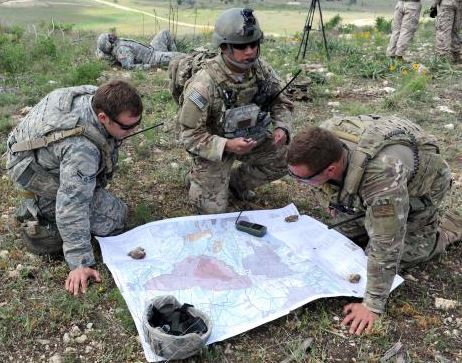
Air Force TACPs confirm target locations with their map

When you’re reading the Bible, you may find passages in one book that are mysterious on their own, but then they make sense if you add missing details from a parallel account from a different source inside or even outside the Bible. I think these “undesigned coincidences” are helpful for answering the question of that skeptics often ask: “is the Bible history or myth?” Let’s see some examples.

So, there are two kinds of undersigned coincidences. In the “internal” kind, the clearing up is done by another source in the same book. In the external kind, the clearing up is done by a source outside the same book.

Here’s an article from Apologetics UK with some internal examples:

In John 6:1-7, we are told:

Some time after this, Jesus crossed to the far shore of the Sea of Galilee (that is, the Sea of Tiberias), and a great crowd of people followed him because they saw the signs he had performed by healing the sick. Then Jesus went up on a mountainside and sat down with his disciples. The Jewish Passover Festival was near.When Jesus looked up and saw a great crowd coming toward him, he said to Philip, “Where shall we buy bread for these people to eat?” He asked this only to test him, for he already had in mind what he was going to do.Philip answered him, “It would take more than half a year’s wages to buy enough bread for each one to have a bite!”

Now, Philip is a fairly minor character in the New Testament. And one might, naturally, be inclined to wonder why Jesus hasn’t turned to someone a little higher in the pecking order (such as Peter or John). A partial clue is provided in John 1:44: “Philip, like Andrew and Peter, was from the town of Bethsaida.” Likewise, John 12:21 refers to “Philip, who was from Bethsaida in Galilee”

And what is so significant about Philip being from the town of Bethsaida? We don’t learn this until we read the parallel account in Luke’s gospel (9:10-17). At the opening of the account (verses 10-11) we are told, “When the apostles returned, they reported to Jesus what they had done. Then he took them with him and they withdrew by themselves to a town called Bethsaida, but the crowds learned about it and followed him. He welcomed them and spoke to them about the kingdom of God, and healed those who needed healing.”

And so, we are informed by Luke that the event was actually taking place in Bethsaida — the town from which Philip was from! Jesus thus turns to Philip, whom, he believed, would be familiar with the area. Notice too that Luke does not tell us that Jesus turned to Philip.

But it gets even more interesting still. In Matthew 11, Jesus denounces the unrepentant cities, saying, “Woe to you, Chorazin! Woe to you, Bethsaida! For if the miracles that were performed in you had been performed in Tyre and Sidon, they would have repented long ago in sackcloth and ashes.” The reader is left wondering what miracles were performed in these cities. We are not told in Matthew’s gospel. It is only in light of Luke’s account of the feeding of the five thousand (chapter 9), in which we are told of the event’s occurrence in Bethsaida, that this statement begins to make sense!

This one is pretty clever:

In Matthew 2 6:67-68, we read, “Then they spat in His face and beat Him; and others struck Him with the palms of their hands, saying, “Prophesy to us, Christ! Who is the one who struck You?”” This raises the natural question, why are they asking “Who hit you?” It is not until we read the parallel account in Luke’s gospel (22:64) that we learn that they had blindfolded him, thereby making sense of their taunts “Who hit you?”

Another one:

In Luke 23:1-4, w e read,
Then the whole assembly rose and led him off to Pilate. And they began to accuse him, saying, “We have found this man subverting our nation. He opposes payment of taxes to Caesar and claims to be Messiah, a king.”

So Pilate asked Jesus, “Are you the king of the Jews?”

“You have said so,” Jesus replied.

Then Pilate announced to the chief priests and the crowd, “I find no basis for a charge against this man.”
On the surface, this seems to be a rather strange declaration to make. Jesus has just declared Himself to be a King, and has been charged with subverting the nation and opposing paying taxes to Caesar. Why has Pilate found no basis for a charge against him?

The answer lies in the parallel account in John’s gospel (18:33-38):

Pilate then went back inside the palace, summoned Jesus and asked him, “Are you the king of the Jews?”

“Is that your own idea,” Jesus asked, “or did others talk to you about me?”
“Am I a Jew?” Pilate replied. “Your own people and chief priests handed you over to me. What is it you have done?”

Jesus said, “My kingdom is not of this world. If it were, my servants would fight to prevent my arrest by the Jewish leaders. But now my kingdom is from another place.”

“You are a king, then!” said Pilate.

Jesus answered, “You say that I am a king. In fact, the reason I was born and came into the world is to testify to the truth. Everyone on the side of truth listens to me.”

“What is truth?” retorted Pilate. With this he went out again to the Jews gathered there and said, “I find no basis for a charge against him.

It is only when you read John’s account that you learn that Jesus had told Pilate that “My kingdom is not of this world. If it were, my servants would fight to prevent my arrest by the Jewish leaders. But now my kingdom is from another place.”

And the same article has some external undesigned coincidences:

In Matthew 2:22, we are told:

But when [Joseph] heard that Archelaus was reigning in Judea in place of his father Herod, he was afraid to go there. Then after being waned by God in an dream, he left for the regions of Galilee…

Josephus’ Antiquities 17.3.1 tells us that the domain of Herod the Great was divided among his sons, with Archelaus having authority in Judea but not in Galilee, which was governed by his younger brother, Herod Antipas.

We also know that Archelaus had acquired quite a bloody reputation (e.g. Antiquities 17.13.1-2 and 17.9.3). The latter of these references describes how Archelaus slaughtered 3,000 Jews at Passover. Thus, Joseph decides not to return to Judea and, instead, goes further north to the regions of Galilee, governed by Herod Antipas.

And another one:

In Matthew 2:22, Archeleaus is reigning as king in Judea; in Matthew 27:2, Pilate is governor of Judea; in Acts 12:1, Herod is king of Judea; and in Acts 23:33, Felix is governor of Judea. This becomes extremely confusing.

But here’s the thing: Josephus attests to the accuracy of every one of these titles. Herod the Great was made King of Judea by Mark Anthony. Archelaus was deposed in the year 6 A.D., after only a ten-year reign, and a series of procurators ruled over Judea (of whom Pilate was fifth). The Herod of Acts 12 is Agrippa I. He was made king by Claudius Caesar. After his death, Judea was, once again, placed under the government of procurators (one of them being Felix).

And another one:

When Luke tells us of the riot in Ephesus, he reports that the city clerk tells the crowd that “There are proconsuls”. A proconsul is a Roman authority to whom a complaint may be taken. Normally, there was only one proconsul. Just at that particular time, however, there seems to have been two as a result of the assassination of Silanus (the previous proconsul) by poisoning in the Fall of AD 54, by the two imperial stewards at the urging of Nero’s mother. This event is independently documented by Tacitus in his Annals (13.1). Indeed, Luke’s accuracy has allowed historians to date the event which Luke narrates with incredible precision since we know when Silanus was poisoned.

If you think that these are clever, then share this post, and encourage your non-Christian friends and family to consider one of the many reasons why so many scholars have considered the New Testament books to be so reliable.

I wish that Christian parents and pastors were more thoughtful about how they present the Bible to young people. Instead of just saying “the Bible says” and praising blind faith acceptance of the Bible, why don’t we think a little harder, and look for some confirmation of the Bible from historical methods like undesigned coincidences, and from non-Biblical authors, and from archaeology, etc.? Surely adding more evidence for taking the Bible seriously is the right approach, if the goal is to be persuasive? It’s not like we’re see good results from the current “blind faith” approach to raising Christian children, right?