All posts by Wintery Knight

https://winteryknight.com/

New study: the majority (69%) of divorces are initiated by women

Is it OK to tell women they are wrong?
Is this “I’ll do what I want” attitude compatible with life-long married love?

This new report from Live Science gives us some numbers about who initiates divorces most frequently.

It says:

Women are more likely than men to initiate divorce in the United States, but they are no more likely than men to initiate breakups in a dating relationship, a new study finds.

“The breakups of nonmarital heterosexual relationships in the U.S. are quite gender-neutral and fairly egalitarian,” study author Michael Rosenfeld, an associate professor of sociology at Stanford University, said in a statement. “This was a surprise because the only prior research that had been done on who wanted the breakup was research on marital divorces.”

Previous research had found that women are more likely to initiate divorce, at least in the United States, Europe and Australia. In the new study, Rosenfeld compared divorces to nonmarital breakups, in an effort to understand the driving forces behind each type of breakup.

To investigate, he looked at data from the 2009 to 2015 waves of How Couples Meet and Stay Together, a nationally representative survey spearheaded by Rosenfeld and his colleagues. The new study includes 2,262 adults, ages 19 to 64, who reported having opposite-sex partners in 2009. By 2015, 371 of the participants had broken up or gotten divorced.

Women initiated 69 percent of the 92 divorces, Rosenfeld found. But there was no statistically significant difference between women and men when it came to nonmarital breakups, regardless of whether they were living together, he said.

The Ruth Institute reports on a few studies:

Female unions seem to have the highest divorce rates, followed by male unions, followed by opposite sex unions.

“For Sweden, the divorce risk for partnerships of men is 50% higher than the risk for heterosexual marriages, and that the divorce risk for female partnerships is nearly double that for men.”

“For Norway, divorce risks are 77% higher in lesbian partnerships than in those of gay men.”  (The Norwegian data did not include a comparison with opposite sex couples.)

In California, the data is collected a little differently. The study looks at couples who describe themselves as partners, whether same sex or opposite sex. The study asks the question, how likely is it that these couples live in the same household five years later. Male couples were only 30% as likely, while female couples were less that 25% as likely, as heterosexual married couples, to be residing in the same household for five years.

It really seems as if there is something about women in particular that causes them to be unable to keep to commitments in their actions, despite what they might say with their words.

So I am seeing a couple of problems in young, unmarried women that might explain this.

Feminism is bad

First, there is the feminism. Feminism was the driving force behind no-fault divorce. Today, young unmarried women are being taught to view marriage as stifling to their freedom. So if they do get married, they are often resolved that marriage should not affect their freedom in any way. That is just not the way marriage works, though – both spouses need to be equally ready to have their freedom infringed upon by things that HAVE TO GET DONE. Lots of things that have to get done will not be fun, thrilling or amusing – and that’s why it’s good to be prepared to do them before you marry.

My friend Dina says that she only knows one happily married couple from among her friends. The most frequent case she sees is wife is working in order to pay for big house, two cars, etc. and wife is denying husband sex, which makes him disengage from the marriage. A working wife tends to not be as responsive to the needs of husband and kids as a non-working wife, probably in part due to work stress. There is an epidemic of sex-withholding by women, and it causes men to disengage from marriage because they feel unloved. Although women tend to rebel against the idea that the man’s bad behavior is their fault, and that there is a “contractual” nature to marriage, that is how marriage works. You cannot stay married, women, by just doing whatever you feel like, and NOT doing whatever you DON’T feel like. Men will disengage when their needs are not supplied, and that’s no fault of theirs. It’s your fault. Denying relationship obligations causes men to underperform.

Feminism is often linked closely to “independence”. There is a lot of confusion over what the word independence means among young, unmarried women. A man uses that word to mean “lack of financial dependence on parents, the state, etc. because of good decisions in education, career and finances”. But a woman means “not having to care about the needs of a man and the leadership of a man, or the needs of children while still getting what I want from men and children”. That attitude is not compatible with life-long married love.

Emotions are bad

Second, emotions. In my experience, young, unmarried women are less likely to have reasoned out their own life plan in a practical step-by-step manner. Instead, they tend to do whatever makes them feel good moment-by-moment without any realistic plan. One Christian woman was recently telling me how attracted she was to an atheist moral relativist who had been promiscuous from the age of 15. She explained that her emotions were kindled by his GQ looks, 6-pack abs, mysterious European accent, seductive manner and witty conversations. Although she is apparently a Christian, she doesn’t take Christianity seriously in her decisions about relationships and marriage.

Peer-approval and culture play a large part in determining what women think is attractive in a man, as well as their life goals, and women are driven by these cultural standards more than men who focus on honoring their commitments regardless of their emotions. In my experience, women struggle to make their day-to-day actions match their socially-acceptable goal of getting married “some day”. Marriage is for “some day” for today’s busy women, but fun and thrills is for today. “Live in the moment”, they often tell me. If you try to talk to them about roles and responsibilities in a marriage, they will withdraw and rebel. But marriage is about each spouse doing his or her job, and feeling content about what the couple is building together. You can’t make life-long married love from emotional craziness and pursuing fun and thrills with seductive promiscuous moral relativist atheists.

How to pick a woman who won’t divorce you

Young men, I advise you to choose wives who have had to do things that they did not feel like doing. That can involve things like getting a STEM degree, getting a job in STEM, moving out of her parents’ house, getting a “boring” job that helps her pay off her debts, keeping commitments when she doesn’t feel like it, and caring for other people and even animals.

Basically, the more the woman has ground down any narcissism and hedonism she may have, by having to do nasty calculus and horrid lab work, the better. The more accustomed she is to constraints, responsibilities, expectations and obligations, the less likely it is that she’ll divorce you for unhappiness. And all of this goes for men, as well. STEM degree, STEM job, save money, serve others, give to charity.

Marriage is not the time for people to be carried away by their emotions. It’s an enterprise, and it works when both people are rational, practical, hard-working and self-controlled.

Stephen C. Meyer debates intelligent design with two scientists on NPR

British Spitfire and German Messerschmitt Me 109 locked in a dogfight

Evolution News reported on a 27-minute debate featuring Dr. Stephen C. Meyer – probably the best proponent of intelligent design there is.

Description:

We often say that Darwinists are reluctant to debate advocates of intelligent design, but here are two who deserve a tip of the hat. Keith Pannell is a chemist at the University of Texas at El Paso who hosts a program, Science Studio, on the NPR station there. He invited Stephen Meyer on to talk about the science of ID, pegged to the Dover anniversary.

Clearly Pannell is an ID critic so he gets kudos for being willing to have a civil and informative conversation. Perhaps feeling insecure about facing the author of Darwin’s Doubt by himself, Dr. Pannell invited a biologist colleague, Ricardo Bernal, to serve as “co-host.”

So it was two against one, but no worries. Meyer is, as always, superb, and the discussion sounds like it was an education for the two Texas scientists. Listen and enjoy.

I took a back-up of the MP3 file here.

Summary:

  • How did Dr. Meyer get interested in science?
  • What is intelligent design? (origin of life, fine-tuning)
  • What is creationism? (young Earth, different epistemology)
  • Who does Dr. Meyer think the intelligent designer is?
  • Finding the best explanation from multiple competing hypotheses
  • Critic: aren’t you arguing for a designer from ignorance, then?
  • The importance of naturalists acknowledging what they do and do not know about the origin of life
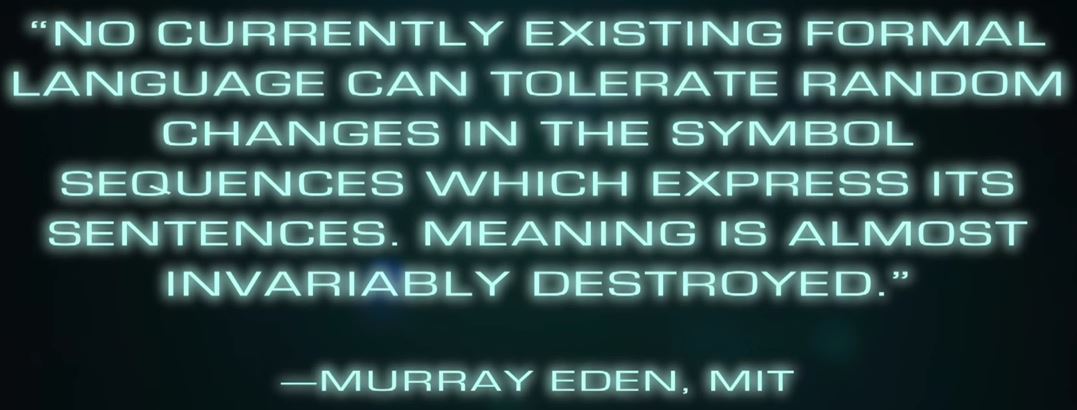
  • We do have experience with intelligent causation, whenever we sequence symbols to have meaning and purpose, e.g. – writing
  • Critic: information in DNA is not digital information, is it?
  • Information in the cell follows a 4-character alphabet
  • the sequences are composed of many parts / symbols
  • the sequences themselves are specified to have function
  • Critic: the complexity just emerges from change over time
  • the origin of the first life is immune to explanation of change over time, because there is no replication – this is the first replicator
  • Critic: but isn’t it just ignorance about the origin of life?
  • what we do is look at a number of competing hypothesis and what they are capable of, and see whether each cause is capable of generating the effects we observe in nature
  • Critic: where is the experimental verification of your theory?
  • well, in the appendices of Signature of the Cell, we predicted that the non-coding regions of DNA (junk DNA) would be found to have function, and that was later proven out
  • the Darwinists said that non-coding regions of the DNA was junk, but that’s not what has been proven experimentally
  • Critic: where was this prediction written up, who wrote it?
  • intelligent design theorists predicted it: Dembski, Kenyon, Mims, Sternberg
  • Critic: but we used the scientific method to disprove the Darwinian predictions, you don’t like the scientific method
  • intelligent design proponents love science, and the scientific method, and they do work in labs to confirm their hypotheses, (WK:for example, the probability of generating a protein by chance)
  • Critic: what about the Dover court case that you lost?
  • the Discovery Institute objected to actions taken by the Dover school board
  • Critic: what about the molecular machines, how are they related to intelligent design?
  • even in the simplest living organisms, there are tiny machines that are tightly integrated, and cannot be built up in a stepwise fashion
  • Critic: I’ve worked with the ATP-synthase and other molecular machines, but “you can kind of begin to tease how some of these molecular machines have come about” – pieces have multiple functions, and they are co-opted into larger systems
  • the problem with the co-option argument breaks down when you look at the specific details of different machines
  • for example – the type III secretory system cannot be an precursor to the bacterial flagellum, it is younger, not older than the bacterial flagellum
  • Critic: what would it take for your view to be falsified?
  • demonstrable undirected processes that are capable of creating functional information in DNA, or processes that can build up an irreducibly complex molecular machine within the time available with a decent probability

If you like this debate, check out Stephen C. Meyer’s two books: “Signature in the Cell” and “Darwin’s Doubt”. They are now out as audio books, too.

Information Enigma: 21-minute video explains intelligent design

Can random mutation and natural selection create new functional information?

The video is here:

I have read and listened and watched a lot of material on intelligent design, but I have never seen so much value packed into such a short lecture. I really hope you’ll watch this and that it’s helpful to you.

Summary:

  • the big question when discussing the origin of life: where did the information in living systems come from?
  • Until 530 million years ago, the oceans were largely devoid of life
  • In a 10 million year period, many new forms of animal life emerged
  • New biological forms of life require new information
  • the discovery of DNA shows that living systems work because cells have information that allows them to build the components of molecular machines: cell types, proteins, etc.
  • can random mutation and natural selection create new functional information?
  • normally, random mutations tend to degrade the functionality of information, e.g. – randomly changing symbols in an applications code does not usually introduce useful new functions, it usually renders what is there non-functional
  • the majority of possible sequences will NOT have functions, so random mutations will more likely give you non-functional code, rather than functional code
  • example: a bicycle lock  with 4 numbers has many possible sequences for the 4 numbers, and only one of them has unlock functionality, the rest have no functionality
  • if you have lots of time, then you might be able to guess the combination, but if the lock as has 10 billion numbers, and only one combination that unlocks, you can spend your whole life trying to unlock it and won’t succeed
  • how likely is it to arrive at a functional protein or gene by chance? Is it more like the 4-dial lock (can be done with lots of time) or the 10 billion dial lock (amount of time required exceeds the time available)?
  • the probability is LOW because there is only one sequence of numbers that has unlock function
  • consider a short protein of 150 amino acids has 10 to the 195th power possible sequences
  • if many of these sequences of amino acides had biological function, then it might be easier to get to one by random mutation and selection than it is with a lock that only unlocks for ONE sequence
  • how many of the possible sequences have biological function?
  • Thanks to research done by Douglas Axe, we now know that the number of functional amino acid sequences for even a short protein is incredibly small…
  • Axe found that the odds of getting a functional sequence of amino acids that will fold and have biological function is 1 in 10 to the 77th power
  • Is that number too improbable to reach by chance? well, there are 10 to 65th atoms in the entire Milky Way galaxy… so yes, this is a very improbable outcome
  • can random genetic mutations search through all the sequences in order to find the one in 10 to the 77th power one that has biological function? It depends on how much guessers we have and how many guesses we get in the time available
  • even with the entire 3.5 billion year history of life on Earth, only about 10 to the 40th organisms have ever lived, which far smaller fraction of the 10 to the 77th total sequences
  • even with a very fast mutation rate, you would not be able to reach a functional protein even with all that time, and even with all those organisms

I was once having a discussion with a woman about the research that Axe did at the Cambridge University lab. He published four articles in the Journal of Molecular Biology. I held out one of the papers to her and showed her the numbers. She said over and over “I hate the Discovery Institute! I hate the Discovery Institute!” Well, yeah, but you can’t make the Journal of Molecular Biology go away with hating the Discovery Institute. JMB is peer-reviewed, and this was experimental evidence – not a theory, not a hypothesis.

We have been blessed by the Creator and Designer of the universe in this time and place with overwhelming evidence – an abundance of riches. For those who have an open mind, this is what you’ve been waiting for to make your decision. For the naturalists who struggle so mightily to block out the progress of experimental science, they’ll need to shout louder and shut their eyes tighter and push harder to block their ears. Maybe if they keep screaming “Star Trek” and “Star Wars” over and over to themselves, they will be able to ignore the real science a little longer.