Tag Archives: William Lane Craig

Jeff Hester debates William Lane Craig on the topic “Is Belief in God Rational in a Scientific Age?”

This is an accurate protrayal of what went down in this debate

I was very excited to see a recent debate by Christian philosopher William Lane Craig against atheist astronomer Jeff Hester. When I summarize a debate, I do a fair, objective summary if the atheist is intelligent and informed, as with Peter Millican, Walter Sinnott-Armstrong or Austin Dacey. But the following summary is rated VS for Very Snarky, and you’ll soon see why.

The debate itself starts at 29 minutes:

The audio is very poor.

Dr. Craig’s opening speech

Dr. Craig went first, and he presented 4 arguments, as well as the ontological argument which I won’t summarize or discuss. He later added another argument for theism from the existence of the universe that does not require an origin of the universe.

A1. Counter-examples

Theists who are elite scientists cannot be “irrational”, for example: Allan Sandage, Gustav Tammann, George Ellis, Don Page, Christopher Isham

A2. Kalam cosmological argument

  1. Whatever begins to exist requires a cause.
  2. The universe began to exist.
  3. Therefore, the universe requires a cause.

A3. Fine-tuning of the universe to permit complex intelligent life

  1. The fine-tuning of the universe is due either to physical necessity, chance or design.
  2. It is not due to physical necessity or chance.
  3. Therefore it is due to design.

A4. Moral argument

  1. If God does not exist, objective moral values and duties do not exist.
  2. Objective moral values and duties do exist.
  3. Therefore, God exists.

Dr. Hester’s opening speech

Dr. Hester went second and presented two arguments which both committed the genetic fallacy, a logical fallacy that makes the arguments have no force.

Hester starts his opening speech by asserting that Albert Einstein was irrational, because he denied quantum mechanics.

Hester explains that he became an atheist at 15. This would have been before the evidence for the origin of the universe became widespread, before we had very many examples of fine-tuning, before the discovery that the origin of life problem is a problem of the origin of complex, specifed information, etc. What kind of reasons can a 15-year-old child have for becoming an atheist? It’s hard to say, but I would suspect that they were psychological. Children often desire autonomy from moral authorities. They want to be free to pursue pleasure. They don’t want to be thought of as superstitious and morally straight by their non-religious peers.

Later on in the debate, Hester volunteers that he hated his father because his father professed to be a Christian, but he was focused on his career and making money. In the absence of any arguments for atheism, it’s reasonable to speculate that Hester became an atheist for psychological reasons. And as we’ll see, just like the typical 15-year-old child, he has no rational basis for atheism. What’s astonishing is how he continues to hold to the atheism of his teens when it has been falsified over and over by scientific discoveries in the years since.

Dr. Craig’s deductive arguments do  have premises that reach a conclusion through the laws of logic. On the contrary, he just asserts that God exists as his conclusion, and then says that this assertion is the best explanation of a gap in our scientific knowledge. Some of the gaps in our scientific knowledge he uses in his arguments are: 1) he doesn’t understand why the Sun moves through the sky, so God exists, 2) he doesn’t understand why the wind blows, so God exists.

What counts as “rational” are things that have not been disproved. The progress of science has shown that the universe did not need a casuse in order to begin to exist, and also there is no cosmic fine-tuning.

A1. The success of evolution in the software industry proves that there is no God

All hardware and software is developed using genetic algorithms that exactly match Darwinian processes. All the major computer companies like Google, Microsoft, Amazon, Apple, etc. are just generating products using mutation and selection to evolve products over long periods of time. If you look over a typical software engineering degree, it’s all about Darwinian evolution, and nothing about design patterns, object-oriented design, etc.

This widespread use of evolution in the software industry undermines all of the arguments for God’s existence. Evolution caused the origin of the universe. Evolution explains why the universe is fine-tuned for life. Evolution, which requires replication already be in place in order to work, explains the origin of the first self-replicating organism.

A2. Theist’s view of the world is just a result of peer pressure from their tribes

All of Dr. Craig’s logical arguments supported by scientific evidence don’t matter, because he got them from a primitive tribe of Christians that existed 2000 years ago. Everyone gets their view of origins, morality, meaning in life, death, etc. from their tribes. Except me, I’m getting my beliefs from reason and evidence because I’m a smart atheist. I don’t have an atheist tribe in the university that would sanction me if I disagreed with nonsense like homosexuality is 100% genetic, transgenderism, man-made catastrophic global warming, fully naturalistic evolution, aliens seeded the Earth with life, infanticide is moral, socialism works, overpopulation will cause mass starvation, nuclear winter, etc. Also, my argument isn’t the genetic fallacy at all, because smart atheists don’t commit elementary logical fallacies that even a first-year philosophy student would know.

A3. Our brains evolved so our rational faculties are unreliable, so God does not exist

The logical reasoning that Dr. Craig uses to argue for theism are all nonsense, because human minds just have an illusion of consciousness, an illusion of rationality, and an illusion of free will. Everything Dr. Craig says is just deluded nonsense caused by chemicals in his brain. He has cognitive biases the undermine all his logical arguments and scientific evidence. He just invented an imaginary friend with super powers. Except me, I’m a smart atheist, so I actually have real consciousness, real reasoning powers, and no cognitive biases. Also, my argument isn’t the genetic fallacy at all, because my arguments would not get an F in a first-year philosophy course.

Discussion

I’m not going to summarize everything in the discussion, or the question and answer time. I’m just going to list out some of the more interesting points.

Dr. Craig asks him how it is that he has managed to escape these biases from tribalism, projection, etc. He talks about how brave and noble atheist rebels are. The moderator asks him the same question. He repeats how brave and noble atheist rebels are.

Dr. Hester is asked whether he affirms a causeless beginning of the universe or an eternal universe. He replies he states that the universe came into being without a cause, because causality doesn’t apply to the beignning of the universe. He also asserts with explanation that Borde, Guth and Vilenkin have undermined the kalam cosmological argument, mentioning a web site.

Dr. Craig replied to this phantom argument after the debate on Facebook:

Speaking of which, although I haven’t had time to consult the website mentioned by Dr. Hester concerning Guth and Vilenkin on the kalam cosmological argument, I know the work of these two gentlemen well enough to predict what one will find there. Since neither one is yet a theist (so much, by the way, for the dreaded confirmation bias!), they have to reject at least one of the premises of the kalam cosmological argument.

Guth wants to deny premiss (2) The universe began to exist–for which Vilenkin has rebuked him. Guth would avoid the implications of their theorem by holding our hope for the Carroll-Chen model, which denies the single condition of the BGV theorem. This gambit is, however, unsuccessful, since the Carroll-Chen model does so only by positing a reversal of the arrow of time at some point in the finite past. This is not only highly non-physical, but fails to avert the universe’s beginning, since that time-reversed, mirror universe is no sense in our past. The model really postulates two different universes with a common beginning.

So Vilenkin is forced to deny premiss (1) Whatever begins to exists has a cause. He says that if the positive energy associated with matter exactly counterbalances the negative energy associated with gravity, then the net sum of the energy is zero, and so the conservation of energy is not violated if the universe pops into being from nothing! But this is like saying that if your assets exactly balance your debts, then your net worth is zero, and so there does not need to be a cause of your financial situation! As Christopher Isham points out, there still needs to be “ontic seeding” in order to create the positive and negative energy in the first place, even if on balance their sum is zero.

Dr. Hester is asked how he explains the evidence for fine-tuning. He literally says that “Life is fine-tuned for the Universe”, i.e. – that evolution will create living beings regardless of the laws of physics, constants, etc. For example, he thinks that in a universe with a weaker stong force, which would have only hyrogen atoms, evolution would still evolve life. And in a universe that recollapses in a hot fireball, and never forms stars or planets, evolution would produce life. Physicist Luke Barnes, who was commenting on the YouTube chat for the video, said this:

“Life is fine-tuned for the Universe” – complete ignorance of the field. Read a book.

Hester tries to cite Jeremy England to try to argue for life appearing regardless of what the laws of physics are. Barnes comments:

Jeremy England’s work supports no such claim.

Hester appealed to the multiverse, which faces numerous theoretical and observational difficulties. For example, the multiverse models have to have some mechanism to spawn different universes, but these mechanisms themselves require fine-tuning, as Robin Collins argues. And the multiverse is falsified observationally by the Boltzmann brains problem. It was so ironic that Hester claimed to be so committed to testing theories. The mutliverse theory cannot be tested experimentally, and must be accepted on faith.

Dr. Hester is asked how he grounds morality on atheism. He says there are no objective moral values and duties. He instead lists off a bunch of Christian beliefs which he thinks are objectively wrong. Even his statements about these moral issues are misinformed. For example, he asserts that homosexuality is causally determined by biology, but this is contradicted by identical twin studies that have a rate of 20-40% where both twins are gay.

Dr. Hester is asked about free will, which is required in order to make moral choices. He denies the existence of free will, which undermines his earlier statements about morality. Morality is only possible if humans can make free choices to act in accordance with a moral standard. So, he claims that Christians are immoral, then he claims that they have no freedom to act other than they do.

Dr. Hester also volunteered that his father believed in the prosperity gospel, and tithed in order to be rewarded with money by God. Dr. Craig immediately says “no wonder you’re in rebellion against Christianity”. Indeed.

Dr. Hester is asked about his view that human beings are unable to unable to perceive the world objectively. How is he able to perceive the world objectively, when all of the rest of us are unable to? His response is that he is just smarter than everyone else because his ideas have never been falsified by testing.

Scoring the debate

Dr. Craig’s 5 arguments went unrefuted. Hester’s argument about genetic algorithms was ludicrous to anyone who understands software engineering. His arguments about tribalism and unreliable mental faculties were self-refuting, and committed the genetic fallcy. At several points, Hester denied mainstream science in favor of untested and untestable speculations. It was the worst defeat of atheism I have ever witnessed. He was uninformed and arrogant. He didn’t know what he was talking about, and he tried to resort to speculative, mystical bullshit to cover up his failure to meet Dr. Craig’s challenge.
William Lane Craig’s secret weapon is his amazing wife Jan

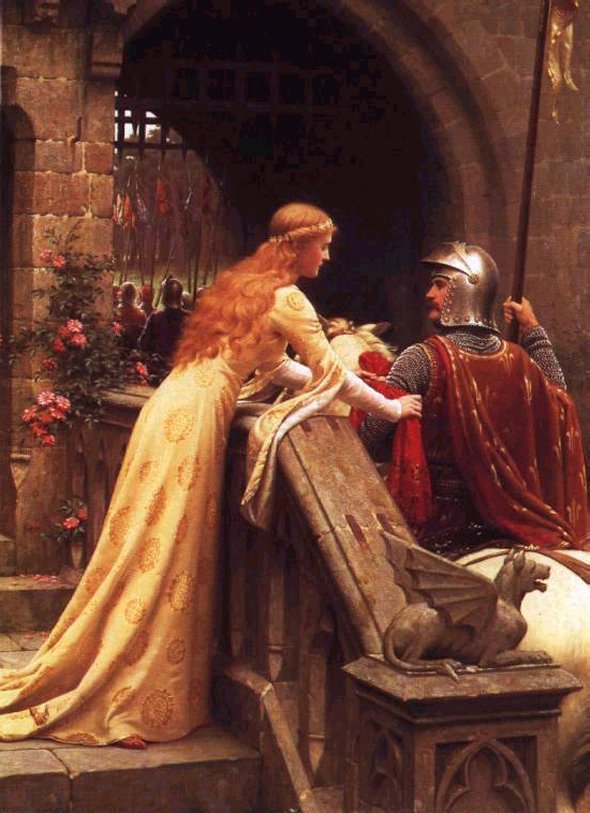
My favorite painting: "Godspeed" by Edmund Blair Leighton, 1900
My favorite painting: “Godspeed” by Edmund Blair Leighton, 1900

I’m re-posting this classic post because it was mentioned in the latest episode of the Reasonable Faith podcast.

I want to draw your attention to a talk on “Vision in Life” given by Dr. William Lane Craig. Dr. Craig is the ablest defender of the Christian faith operating today. He has done formal academic debates with all of the best known atheists on major university campuses in front of thousands of university students.

It turns out that he owes a lot of his success to his amazing wife Jan.

The MP3 file is here. (32 minutes)

This talk was Dr. Craig’s chapel address to Biola University students.

About 11 minutes into the talk, Bill describes what happened after he finished his Bachelor’s degree at Wheaton:

And so I joined the staff of Campus Crusade for Christ for 2 years, and was assigned to Northern Illinois University. And that was where I met my wife Jan. She was a graduate of the University of North Dakota where she had come to faith in Christ. And she had a similar vision for her life of evangelism and discipleship.

And as we worked at NIU together, she with gals and I with the guys, leading students to Christ and discipling them to walk with the Lord, we fell in love. And we decided that we would be more effective if we joined forces and became a team.

So their reason for getting together was because they thought that they would be more effective in evangelism and discipleship if they worked as a team.

It is at this point in the talk where Bill begins to explain just how Jan molded him into the lean, mean debating machine that travels the world striking terror into the hearts of atheists.

Bill’s first story about Jan occurs early after their marriage while he is working on his first Masters degree at Trinity:

And it was also at that time that I began to see what an invaluable asset the Lord had given me in Jan. I remember I came home from classes one day, and found her at the kitchen table with all the catalogs and schedules and papers spread out in front of her and she said, “look! I’ve figured out how you can get two Masters degrees at the same time that it would normally take to get one! All you have to do is take overloads every semester, go to all full-time summer school and do all these other things, and you can do two MAs in the time it takes to do one!”

And I thought, whoa! Are you sure you really want to make the commitment it takes to do this kind of thing? And she said, “Yeah! Go for it!” And it was then I began to see that God had given me a very special woman who was my supporter – my cheerleader – and who really believed in me. And as long as she believed in me, that gave me the confidence to dream bigger dreams, and to take on challenges that I had never thought of before.

In an article on his web site, he talks about how Jan encouraged him to do his first Ph.D:

As graduation from Trinity neared, Jan and I were sitting one evening at the supper table in our little campus apartment, talking about what to do after graduation. Neither of us had any clear leading or inclination of what we should do next.

So Jan said to me, “Well, if money were no object, what would you really like to do next?”

I replied, “If money were no object, what I’d really like to do is go to England and do a doctorate under John Hick.”

“Who’s he?” she asked.

“Oh, he’s this famous British philosopher who’s written extensively on arguments for the existence of God,” I explained. “If I could study with him, I could develop a cosmological argument for God’s existence.”

But it hardly seemed a realistic idea.

The next evening at supper Jan handed me a slip of paper with John Hick’s address on it. “I went to the library today and found out that he’s at the University of Birmingham in England,” she said. “Why don’t you write him a letter and ask him if you can do a doctoral thesis under him on the cosmological argument?”

What a woman! So I did, and to our amazement and delight Professor Hick wrote back saying he’d be very pleased to supervise my doctoral work on that subject. So it was an open door!

And in the same article, he explains how Jan encouraged him to get his second Ph.D:

As Jan and I neared the completion of my doctoral studies in Birmingham, our future path was again unclear to us. I had sent out a number of applications for teaching positions in philosophy at American universities but had received no bites. We didn’t know what to do.

I remember it like yesterday. We were sitting at the supper table in our little house outside Birmingham, and Jan suddenly said to me, “Well, if money were no object, what would you really like to do next?”

I laughed because I remembered how the Lord had used her question to guide us in the past. I had no trouble answering the question. “If money were no object, what I’d really like to do is go to Germany and study under Wolfhart Pannenberg.”

“Who’s he?”

“Oh, he’s this famous German theologian who’s defended the resurrection of Christ historically,” I explained. “If I could study with him, I could develop a historical apologetic for the resurrection of Jesus.”

Our conversation drifted to other subjects, but Jan later told me that my remark had just lit a fire under her. The next day while I was at the university, she slipped away to the library and began to research grants-in-aid for study at German universities. Most of the leads proved to be defunct or otherwise inapplicable to our situation. But there were two grants she found that were possibilities. You can imagine how surprised I was when she sprung them on me!

Both of these Ph.D experiences are also described in the talk. And the talk concludes as follows:

I am so thankful to be married to a woman who is tremendously resourceful, tremendously talented and energetic, who could have pursued an independent career in any number of areas, but instead, she has chose to wed her aspirations to mine, and to make it her goal to make me the most effective person I can be, for Christ. And she has been like my right arm in ministry over these many years. And it is a tremendous privilege to be a team with a person like that.

And you young men, I would encourage you, if you marry, to find a gal who shares your vision, not some independent vision, but who is interested in aligning herself with you, and pursuing together a common vision and goal that will draw you [together], so that you will avoid the growing separateness that so often creeps into marriages.

And now you know the rest of Bill’s story. The person you marry will have an enormous influence on the impact you will have for Christ and his Kingdom. It is up to you to decide whether that influence is going to be positive or negative, by deciding if you will marry, and if you do marry, by deciding whom you will marry.

You may also be interested in this talk given by William Lane Craig, entitled “Healthy Relationships” (National Faculty Leadership Conf. 2008) (audio here) In that talk, he offers advice to Christians who want to have a marriage that is consistent with their Christian faith.

William Lane Craig debates atheist Lawrence Krauss: Does God Exist?

British Spitfire and German Messerschmitt Me 109 locked in a dogfight

Here is the video from the third debate from Dr. William Lane Craig’s speaking tour in Australia.

Format:

  • William Lane Craig (15 min)
  • Lawrence Krauss (15 min, but was actually 21:40)
  • Moderated discussion
  • Question and answer

Dr. Graham Oppy, the moderator, is a well-known atheist philosopher. He let Dr. Krauss speak for 21 minutes and 40 seconds, which is why my summary of Krauss is so long.

The video:

Summary

After careful consideration, I decided not to be snarky at all in this summary. What you read below is what happened. There may be some small mistakes, but I will fix those if people tell me about them. I also included some quotes and timestamps for the more striking things that Dr. Krauss said.

The debate itself starts at 4:50 with Dr. Craig’s opening speech. He does use slides to show the structure of his arguments.

Dr. Craig’s opening speech. (4:50)

  1. The kalam cosmological argument:
    • God is the best explanation of the origin of the universe
    • The Borde Guth Vilenkin theorem supports the absolute beginning of the universe
    • Even if our universe is part of a multiverse, the multiverse itself would have to have an absolute beginning
    • Speculative cosmologies try to challenge the Big Bang theory, but none of them – even if true – can establish that the past is eternal
    • Only two types of things could explain the origin of spece, time, matter and energy – either abstract objects or minds
    • Abstract objects do not cause effects, but minds do cause effects (we do it ourselves)
    • A mind is the best explanation for the origin of the universe
  2. The unreasonable effectiveness of mathematics:
    • The underlying structure of nature is mathematical – mathematics is applicable to nature
    • Mathematical objects can either be abstract objects or useful fiction
    • Either way, there is no reason to expect that nature should be linked to abstract objects or fictions
    • But a divine mind that wants humans to understand nature is a better explanation for what we see
  3. The cosmic fine-tuning for the existence of intelligent life
    • There are two kinds of finely-tuned initial conditions: 1) cosmological constants and 2) quantities
    • These constants and quantities have to be set within a narrow range in order to permit intelligent life
    • There are three explanations for this observation: law, chance or design
    • Law is rejected because they are put in at the beginning or matter – they don’t emerge from matter
    • Chance must be rejected, because they odds are just too long unless you appeal to a world-ensemble
    • We do not observe what the world ensemble hypothesis predicts that we should observe
    • Design is the best explanation for finely-tuned constants and quantities
  4. The existence of objective moral values and duties
    • Our experience of morality (values and duties) is that it is objectively real and incumbent on us
    • When someone goes into a classroom and shoots at innocent children, that is objectively wrong
    • On naturalism, moral values and moral duties do not exist – they are conventional and variable by time and place
    • The best explanation for the existence of objective moral values and duties is that God exists
  5. The historicity of the resurrection of Jesus
    • There are three widely-accepted facts that are best explained by the resurrection hypothesis
    • 1) the empty tomb, 2) the post-mortem appearances, 3) the early church’s belief in the resurrection
    • Naturalistic attempts to explain these 3 boilerplate facts fail
    • The best explanation of the 3 minimal facts is that God raised Jesus from the dead
  6. The immediate experience of God
    • Belief in God is a “properly basic” belief – rational even without arguments because of experience of God

Dr. Krauss’ opening speech. (21:12)

Slides: (1234567891011121314)

  1. Religious pluralism I
    • There have been lots of different gods created by people through history
    • We’ve gotten rid of all of them by understanding how the universe works by doing science
    • Religion is just stories, and the stories are inconsistent with how the universe works
  2. Progress of naturalistic science I
    • Newtonian physics refutes the idea that angels push planets around
    • Darwinian evolution refutes design arguments, including the one that Dr. Craig presented (24:10)
    • Biochemistry hasn’t explained how life originated, but we will have the solution soon
    • Physics shows us that matter can be created and destroyed without need a God
    • Physics shows us that universes can be created and destroyed “no problem”
  3. Religious pluralism II
    • Since we have been able to disprove all the gods we’ve invented, why hang on to the last one
    • It’s unlikely that the God that Dr. Craig presented exists, because we disproved all the others he didn’t present
  4. Hiddenness of God
    • There is a complete lack of evidence for the other 999 gods, so how likely is it that the God Dr. Craig presented exists
  5. Religious pluralism III
    • There are inconsistencies between various religions, so therefore there can be no religion that is right
  6. Progress of naturalistic science II
    • Peasants had a very low level of knowledge about the world and they believed in God
    • But our level of knowledge has increased over time, so we shouldn’t believe in God now
    • Peasants thought that the Earth orbited the Sun, but this is now known to be false
    • The Scriptures said that the Earth orbited the Sun, but now we know that’s false from science
  7. Christianity plagiarizes from other religions I
    • There is nothing new or special about Jesus
    • He’s just as unpleasant as all the other gods
    • Everything particular to Jesus occurs in other religions
  8. Catholics are inconsistent about what they believe
    • I’ll bet most Catholics don’t really believe in transubstantiation
    • I’ll bet most Catholics don’t really believe in the virgin birth
  9. The resurrection is copied from many other religions
    • Dionysus, Osiris, etc.
  10. There is no evidence for the resurrection
    • The stories about Jesus were written “decades or hundreds of years after the fact”
    • The stories are inconsistent with each other
    • Dr. Craig tells me that historical Jesus scholars all accept that the resurrection happened
    • That’s like saying that all alien abductions experts agree that alien abductions happened
    • It’s unreasonable to think that the resurrection happened because no one saw it happen
    • I accept that people reported on appearances, but hallucination theory can explain that
  11. The timeline for the creation and incarnation are all wrong
    • The creation, planet formation, hominids, incarnation, etc. all take place in the wrong times
    • If God knew what he was doing, he would done everything at better times to be more efficient
  12. David Hume’s argument against miracles is sound
    • Extraordinary claims require extraordinary evidence – nothing wrong with this argument
    • Miracles are really just coincidences
    • Catholic apparitions at Lourdes disprove the historical argument that Dr. Craig made for the resurrection
  13. God is petty and jealous
    • God shouldn’t demand that we trust him, esteem him and consider his character when we make decisions
    • The atoning death of Jesus for the sins of the world also makes no sense
  14. Belief is based on geography
    • What you believe is clearly correlated with where you are born
    • There is even an Islamic clone of Dr. Craig who “uses the exact same arguments” that he does to prove Islam
    • Belief in God is decreasing in the Internet-accessible world
  15. Science can develop morals without God
    • Reason is able to guide our actions to be moral
    • Morality evolves over time, so there is no objective morality
    • Catholicism teaches things that are immoral
    • Some things are prohibited by biological revulsion, such as incest
    • But if a brother and sister have sex using condoms “is that morally wrong? I can’t say it is frankly” (37:24)
  16. Dr. Craig is irrational
    • “I came here convinced based on my past interactions and his writing that Dr. Craig was a dishonest Charlatan”
    • “Any argument that validates God is reasonable to him”
    • “And any argument against it is not only unreasonable but wrong and worth distorting”
    • “Because it must be wrong – he’s decided the answer in advance”
  17. Dr. Craig is immoral
    • Dr. Craig thinks it is OK for God to command that Canaanite children are killed
    • “So in fact if they were Canaanite children in that schoolroom that he talked about then it would be OK”
    • It’s not reasonable to justify genocide in that way, but Dr. Craig is willing to go to those lengths
  18. The cause of the origin of the space time universe need not be God
    • Dr. Craig says that if there is an explanation for the origin or space, time, matter and energy it must be God
    • But it could just as easily be turtles or Zeus
  19. Dr. Craig misrepresents the Borde Guth Vilenkin theorem
    • Alexander Vilenkin wrote me an e-mail that says that the theorem doesn’t work in all cases
    • “Dr. Craig is so convinced that these arguments must be true that he won’t listen to the fact that they’re not”
  20. Darwinian evolution explains the fine-tuning
    • “Life was fine tuned – we got rid of it with Darwin”
    • Mutation and natural selection explain the cosmic fine-tuning argument that Dr. Craig presented
  21. Suboptimal design disproves the fine-tuning argument
    • “We get back aches” therefore “This argument that [the universe] is fine-tuned for life is nonsense”
  22. William Lane Craig can be proven to exhibit homosexual behavior using logical arguments
    • Look, you can construct arguments that are clearly wrong
    • Premise 1: “All mammals exhibit homosexual behavior”
    • Premise 2: “William Lane Craig is a mammal”
    • Seems to be saying that logical arguments can prove false things “it’s nonsense”
  23. Dr. Craig distorted a podcast that some group made on pain receptors
    • Dr. Craig’s faith is so strong that it causes him to distort what this group said

Discussion: (44:35)

I will not be summarizing everything that was said, just a few main points.

The segment from 52:18 to 57:12 about the Vilenkin e-mail on the BVG theorem is a must-see. Krauss is standing up and gesticulating while Craig is calmly trying to quote a paper by Vilenkin that shows that Krauss is misrepresenting Vilenkin. Krauss constantly interrupts him. After a while, when Craig exposes him as having misrepresented Vilenkin and gets him to admit that all current eternal models of the universe are probably wrong, he quietens down and can’t even look at Craig in the face.

Cosmological argument:

  • Craig: The e-mail says any universe that is expanding, on average, requires a beginning
  • Craig: There are two models – Aguirre & Gratton and Carroll & Chen – where there is a period of contraction before the expansion
  • Craig: The two models are the ones cited in the e-mail that Dr. Krauss showed
  • Craig: In the very paper by Vilenkin that I cited, he says that both of those models don’t work
  • Krauss: (agitated and interrupting) Vilenkin said that they have to make an assumption about entropy that they have no rationale for
  • (as Craig starts to talk Krauss makes an exaggerated, disrespectful gesture and sits down in a huff)
  • Craig: Yes, an unwarranted assumption means that they don’t have EVIDENCE for their theories being correct
  • Krauss: (agitated and interrupting) “All the evidence suggests that the universe had a beginning but WE DON’T KNOW!!!!!!!” (raising his voice)
  • Craig: I’m not saying that we know that the universe had a beginning with certainty
  • Craig: I am saying that the beginning of the universe is more probably true than false based on the evidence we have
  • Craig: And you  agree with me about that – you think the universe had a beginning
  • Krauss: (agitated and interrupting) (Unintelligible)
  • Moderator: One at a time
  • Craig: In your Vilenkin e-mail slide, at the end of the paragraph where the two models are mentioned that Vilenkin specifically shows…
  • (I am guessing that Craig is going to ask why so much of what Vilenkin wrote has been cut out of the e-mail that Krauss showed)
  • Krauss: (agitated and interrupting) Because it was technical…
  • Moderator: Lawrence! Hang on a sec!
  • Craig: He specifically shows that these models are not past eternal, and that they require a beginning just like the others…
  • Krauss: (agitated and interrupting) We can do the math if you want
  • Craig: Now wait. I couldn’t help notice that there on your slide there was a series of ellipsis points indicating missing text…
  • Krauss: (agitated and interrupting) “Yeah, because it was technical!”
  • Craig: “I wonder what you deleted from the original letter”
  • Krauss: (agitated and interrupting) “I just told you!”
  • Craig: “Now wait. Could it have been something like this:  (reads a quote from Vilenkin) ‘You can evade the theorem by postulating that the universe was contracting prior to some time. This sounds as if there is nothing wrong with having contraction prior to expansion. But the problem is that a contracting universe is highly unstable. Small perturbations would cause it to develop all sorts of messy singularities, so it would never make it to the expanding phase.’
  • Craig: “That’s Vilenkin.”
  • Krauss: “In this paper, that’s absolutely right”
  • Krauss: But it’s ok for theories to assume things that we know are wrong – they are still good theories – it’s unknown
  • (Craig turns away and looks through his papers)
  • Craig: “Isn’t it true that the only viable quantum gravity models on order today involve a beginning – have a finite past?”
  • Krauss: “No”
  • Craig: “Well, can you give us one then”
  • Krauss: (talks about a variety of possible eternal models) “In my experience in science, all of them are probably wrong”
  • Krauss: “You know most theories are wrong, which is why, you know, it’s hard”
  • Craig: “Right”

I noticed that a huge number of atheist web sites are taking the Vilenkin quote that Krauss used out of context, like this one and this one. There are probably a lot more of them like that, which I think is interesting. That’s why we have these debates, I guess. To set the record straight about who accuses people of being dishonest, and who is actually dishonest.

Fine-tuning:

  • Krauss tried to argue that he had explained the fine-tuning with the Higgs particle, but Dr. Craig said that only applied to the cosmological constant, not all the other examples of fine-tuning. Krauss said that it wasn’t impressive that this universe permitted life and that “It would have been much more surprising if we evolved in a universe in which we couldn’t live”. Krauss argued the fine-tuning was only for “Life like us”. But Dr. Craig explained that the fine-tuning is what allows us to have the basics of any kind of life, like slow-burning stars, chemical diversity, etc. – things that are required for basic minimal life functions in any living system. Craig said that he was working with the current physical laws of this universe (F = ma, etc.) and that he was looking at what changed if we changed those even slightly. Krauss tried to say that if he changed things like the mass of particles then the strength of forces would change. (But the forces aren’t laws!) Krauss argued that the cosmological constant would be even better for life if it was zero, and Craig said that the life permitting range did include zero, but that the range of life-permitting values was narrow.

Jesus’ existence:

  • Craig reponded to the mystery religions charge, the charge that the evidence for the minimal facts is too late/too weak, the charge that grief visions explained the evidence better, and Hume’s argument against miracles. Craig brought up the early creed from 1 Cor 15:3-7 and explained to Krauss that it was 5 years after the events, and that Jewish standards of oral transmission were strong enough to ensure that the creed was reliable, and most of the eyewitnesses would still have been alive.

Audience Q and A: (1:21:09)

The first topic is the grounding of morality. Krauss agrees that there is no objective morality and no objective moral oughts. He also said that that standards of behavior are arbitrary, and that they change over time and they are adopted for promoting social order. Dr. Craig pressed the point that science itself would collapse without ethical values. It assumes them, but cannot ground them.

The next topic was free will. Krauss is a determinist. Craig asked him how he could reconcile moral responsibility with determinism.

The next topic was the effectiveness of mathematics. Krauss didn’t have an explanation for it and didn’t think it needed one. Then they got into whether the Genesis has been verified by science and whether it is meant to be taken literally.

The next topic was whether philosophy makes any progress. Craig gave the example of verificationism being rejected as too narrow, and self-refuting. Krauss: “I’m going to come to the defense of philosophy for the first time”. Craig: “That’s amazing!” Krauss said that science provides new knowledge. Craig said there were some things that could be known apart from science.