Tag Archives: Universe

Alexander Vilenkin: “All the evidence we have says that the universe had a beginning”

I’ve decided to explain why physicists believe that there was a creation event in this post. That is to say, I’ve decided to let famous cosmologist Alexander Vilenkin do it.

From Uncommon Descent.

Excerpt:

Did the cosmos have a beginning? The Big Bang theory seems to suggest it did, but in recent decades, cosmologists have concocted elaborate theories – for example, an eternally inflating universe or a cyclic universe – which claim to avoid the need for a beginning of the cosmos. Now it appears that the universe really had a beginning after all, even if it wasn’t necessarily the Big Bang.

At a meeting of scientists – titled “State of the Universe” – convened last week at Cambridge University to honor Stephen Hawking’s 70th birthday, cosmologist Alexander Vilenkin of Tufts University in Boston presented evidence that the universe is not eternal after all, leaving scientists at a loss to explain how the cosmos got started without a supernatural creator. The meeting was reported in New Scientist magazine (Why physicists can’t avoid a creation event, 11 January 2012).

[…]In his presentation, Professor Vilenkin discussed three theories which claim to avoid the need for a beginning of the cosmos.

The three theories are chaotic inflationary model, the oscillating model and quantum gravity model. Regular readers will know that those have all been addressed in William Lane Craig’s peer-reviewed paper that evaluates alternatives to the standard Big Bang cosmology.

But let’s see what Vilenkin said.

More:

One popular theory is eternal inflation. Most readers will be familiar with the theory of inflation, which says that the universe increased in volume by a factor of at least 10^78 in its very early stages (from 10^−36 seconds after the Big Bang to sometime between 10^−33 and 10^−32 seconds), before settling into the slower rate of expansion that we see today. The theory of eternal inflation goes further, and holds that the universe is constantly giving birth to smaller “bubble” universes within an ever-expanding multiverse. Each bubble universe undergoes its own initial period of inflation. In some versions of the theory, the bubbles go both backwards and forwards in time, allowing the possibility of an infinite past. Trouble is, the value of one particular cosmic parameter rules out that possibility:

But in 2003, a team including Vilenkin and Guth considered what eternal inflation would mean for the Hubble constant, which describes mathematically the expansion of the universe. They found that the equations didn’t work (Physical Review Letters, DOI: 10.1103/physrevlett.90.151301). “You can’t construct a space-time with this property,” says Vilenkin. It turns out that the constant has a lower limit that prevents inflation in both time directions. “It can’t possibly be eternal in the past,” says Vilenkin. “There must be some kind of boundary.”

A second option explored by Vilenkin was that of a cyclic universe, where the universe goes through an infinite series of big bangs and crunches, with no specific beginning. It was even claimed that a cyclic universe could explain the low observed value of the cosmological constant. But as Vilenkin found, there’s a problem if you look at the disorder in the universe:

Disorder increases with time. So following each cycle, the universe must get more and more disordered. But if there has already been an infinite number of cycles, the universe we inhabit now should be in a state of maximum disorder. Such a universe would be uniformly lukewarm and featureless, and definitely lacking such complicated beings as stars, planets and physicists – nothing like the one we see around us.

One way around that is to propose that the universe just gets bigger with every cycle. Then the amount of disorder per volume doesn’t increase, so needn’t reach the maximum. But Vilenkin found that this scenario falls prey to the same mathematical argument as eternal inflation: if your universe keeps getting bigger, it must have started somewhere.

However, Vilenkin’s options were not exhausted yet. There was another possibility: that the universe had sprung from an eternal cosmic egg:

Vilenkin’s final strike is an attack on a third, lesser-known proposal that the cosmos existed eternally in a static state called the cosmic egg. This finally “cracked” to create the big bang, leading to the expanding universe we see today. Late last year Vilenkin and graduate student Audrey Mithani showed that the egg could not have existed forever after all, as quantum instabilities would force it to collapse after a finite amount of time (arxiv.org/abs/1110.4096). If it cracked instead, leading to the big bang, then this must have happened before it collapsed – and therefore also after a finite amount of time.

“This is also not a good candidate for a beginningless universe,” Vilenkin concludes.

So at the end of the day, what is Vilenkin’s verdict?

“All the evidence we have says that the universe had a beginning.”

This is consistent with the Borde-Guth-Vilenkin Theorem, which I blogged about before, and which William Lane Craig leveraged to his advantage in his debate with Peter Millican.

The Borde-Guth-Vilenkin (BGV) proof shows that every universe that expands must have a space-time boundary in the past. That means that no expanding universe, no matter what the model, can be eternal into the past. No one denies the expansion of space in our universe, and so we are left with a cosmic beginning. Even speculative alternative cosmologies do not escape the need for a beginning.

Conclusion

If the universe came into being out of nothing, which seems to be the case from science, then the universe has a cause. Things do not pop into being, uncaused, out of nothing. The cause of the universe must be transcendent and supernatural. It must be uncaused, because there cannot be an infinite regress of causes. It must be eternal, because it created time. It must be non-physical, because it created space. There are only two possibilities for such a cause. It could be an abstract object or an agent. Abstract objects cannot cause effects. Therefore, the cause is an agent.

Now, let’s have a discussion about this science in our churches, and see if we can’t train Christians to engage with non-Christians about the evidence so that everyone accepts what science tells us about the origin of the universe.

Dr. Walter Bradley lectures on scientific evidence the creation and design of the universe

This lecture is special to me, because I bought a VHS tape of it just after I started working full-time, and watched it a million times. A lot of people come to their convictions about God’s existence because of parents or church or intuitions, but for me it’s all about the scientific evidence. This lecture changed my life. I wish more people taught their children about this evidence! This lecture was delivered at the University of California, Santa Barbara.

About the speaker:

Dr. Bradley received his B.S. in Engineering Science and his Ph.D. in Materials Science from the University of Texas in Austin.

Dr. Bradley taught for eight years at the Colorado School of Mines before assuming a position as Professor of Mechanical Engineering at Texas A&M University (TAMU) in 1976.

During his 24 years at Texas A&M, Dr. Bradley served as Head of the Department of Mechanical Engineering at Texas A&M University and as Director of the Polymer Technology Center, and received five College of Engineering Research Awards. He has received over $4,500,000 in research grants and has published over 140 technical articles and book chapters. He has also co-authored “The Mystery Of Life’s Origin: Reassessing Current Theories. He is a Fellow of the American Society for Materials and of the American Scientific Affiliation and serves as a consultant for many Fortune 500 companies.

He currently serves as Distinguished Professor of Engineering at Baylor University.

The lecture: (63 minutes lecture, 25 minutes audience Q&A)

Summary slide:

This slide summarizes the content of the lecture

Introduction:

  • At the beginning of the 20th century, people believed that the progress of science was pointing away from an intelligent Creator and Designer, and towards naturalism
  • A stream of new discoveries has shifted the support of science towards theism, and away from naturalism
  • Richard Dawkins, an atheist, says that nature only has the appearance of design, but that if you look closer, naturalistic mechanisms can account for the appearance of design
  • When deciding between design and apparent design (“designoid”), it matters whether you think there is an intelligence there to do the designing

Evidence #1: The Big Bang:

  • an eternal “steady state” universe is more compatible with naturalism, but a created universe is more compatible with a Creator
  • In 1929, Hubble used telescopes to observe that the light from distant galaxies was redshifted. The further away galaxies were, the faster they were moving away. Therefore, space is expanding in all directions, suggesting an explosive origin of the universe
  • In 1965, the discovery of the cosmic microwave background radiation matched a prediction of the Big Bang cosmology, and of the creation event
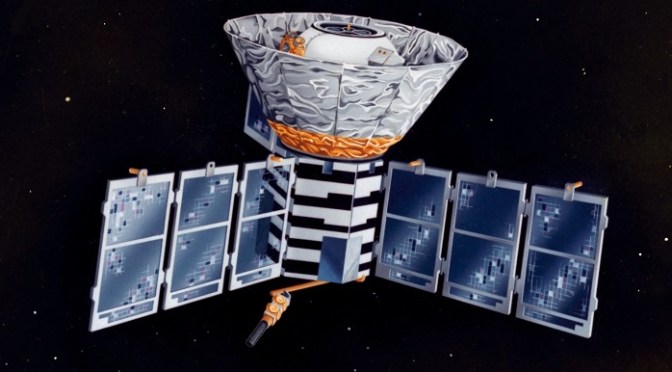
  • In 1992, the COBE space telescope allowed us to test four specific predictions of the Big Bang model, especially the predictions for light element abundances (hydrogen and helium), which matched the predictions of the creation model

Evidence #2: Simple mathematical structure of the physical laws

  • the simple mathematical structure of natural laws allows us to understand these laws, make discoveries, and engineer solutions to problems
  • early scientists saw the mathematical structure of the universe to mean that nature was designed by an intelligent to be understood
  • the fundamental equations of the laws of the universe can be easily written on one side of one sheet of paper
  • Eugene Wigner’s famous paper, “The Unreasonable Effectiveness of Mathematics in the Physical Sciences” makes the point that this simple structure is an unexpected gift that allows is to do science

Evidence #3: fine-tuning of the physical constants and quantities

  • in order for any kind of complex life to survive, we need stars that provide energy within specific ranges for long periods of time
  • in order for any kind of complex life to survive, we need planets with stable orbits that will not suffer from extreme temperature swings as it varies in distance from its star
  • in order for any kind of complex life to survive, we need stable atomic structure
  • in order for any kind of complex life to survive, we need to have chemical diversity and correct relative abundances of each element
  • organic life has minimum requirements: process energy, store information, replicate, and you can’t fulfill those functions if there is only one element, e.g. – hydrogen
  • the energy level from the photons from the sun have to match the energy levels of the different elements in order to drive the chemical bonding needed for life
  • These requirements for life of any imaginable type depend on the values of the constants and quantities. The constants and quantities cannot vary much from what they are, or the universe will lose the characteristics (above) that allow it to support complex life of any imaginable time
  • For example, ratio of strong force to electromagnetic force:
    – if 2% larger, then no stable hydrogen, no long-lived stars, no compounds containing hydrogen, e.g. – water
    – if 5% smaller, no stable stars, heavy hydrogen would be unstable, few elements other than hydrogen

Evidence #4: initial conditions for habitability

  • Universe: expansion rate of the universe must be fast enough to avoid a re-collapse, but slow enough to allow matter to clump together and form stars and planets for complex life to live on
  • Planet: right distance from the star to get the right climate
  • Planet: right mass to retain the right atmosphere

Evidence #5: origin of life and information theory

  • It’s possible to explain every process in an automobile engine using plain old naturalistic mechanisms – no supernatural explanation is necessary to understand the processes
  • But the existence of engine itself: engineering all the parts has to be explained by the work of an intelligence
  • Similarly, we can understand how living systems work, but the existence of the living systems requires an intelligence
  • Even the simplest living system has to perform minimal function: capture energy, store information and replicate
  • Living systems are composed of objects like proteins that are composed of sequences of components complex such that the order of the components gives the overall structure function
  • Developing the components for a simple living cell is very improbable – even given the large number of galaxies, stars and planets in the universe, it is unlikely that complex, embodied life would exist anywhere in the universe

Evidence #6: more initial conditions for habitability

  • Location within the galaxy: you need to be away from the center of the galaxy, because the explosions from dying stars, and excessive radiation will kill life
  • Location within the galaxy: you need to be close enough to the center in order catch the heavy elements you need for life from the explosions of other stars
  • Location within the galaxy: the best location is between two arms of  a spiral galaxy, where you can get the heavy elements you need from dying stars, but without being hit with explosions and harmful radiation
  • Star mass: determines rate at which the sun burns, determines the energy level of photons that are used to drive chemical bonding reactions, determines the length of time the star will be stable
  • Star mass: star mass must be the correct value in order to allow liquid water on the planet’s surface, while still preserving stable orbit

I wish there was more curiosity about science in churches, and young Christians understood how critical science is for grounding the rationality of the Christian worldview. We need to be training up more scientists who think about the big questions, like Dr. Walter Bradley.

William Lane Craig lectures on naturalism at the University of St. Andrews

Note: even if you have heard Dr. Craig’s arguments before, I recommend jumping to the 48 minutes of Q&A time, which starts 72 minutes in.

About Dr. William Lane Craig:

William Lane Craig (born August 23, 1949) is an American analytic philosopher, philosophical theologian, and Christian apologist. He is known for his work on the philosophy of time and the philosophy of religion, specifically the existence of God and the defense of Christian theism. He has authored or edited over 30 books including The Kalam Cosmological Argument (1979), Theism, Atheism and Big Bang Cosmology(co-authored with Quentin Smith, 1993), Time and Eternity: Exploring God’s Relationship to Time (2001), and Einstein, Relativity and Absolute Simultaneity (co-edited with Quentin Smith, 2007).

Craig received a Bachelor of Arts degree in communications from Wheaton College, Illinois, in 1971 and two summa cum laudemaster’s degrees from Trinity Evangelical Divinity School in Deerfield, Illinois, in 1975, in philosophy of religion and ecclesiastical history. He earned a Ph.D. in philosophy under John Hick at the University of Birmingham, England in 1977 and a Th.D. underWolfhart Pannenberg at the University of Munich, Germany in 1984.

Dr. Craig was in Scotland to lecture at a physics conference, but a local church organized this public lecture at the University of St. Andrews.

Here is the full lecture with Q&A: (2 hours)

Summary:

  • Naturalism defined: the physical world (matter, space and time) is all that exists
  • Dr. Craig will present 7 reasons why naturalism is false
  • 1) the contingency argument
  • 2) the kalam cosmological argument
  • 3) the fine-tuning of the universe for intelligent life
  • 4) the moral argument
  • 5) the ontological argument
  • 6) the resurrection of Jesus
  • 7) religious experience

Dr. Craig does mention an 8th argument early in the Q&A – the argument from the non-physicality of mental states (substance dualism), which is an argument that I find convincing, because a materialist conception of mind is not compatible with rationality, consciousness and moral agency.

Questions and Answers

He gets a couple of questions on the moral argument early on – one of them tries to put forward an evolutionary explanation for “moral” behaviors. There’s another question the definition of naturalism. There is a bonehead question about the non-existence of Jesus based on a Youtube movie he saw – which Craig responds to with agnostic historian Bart Ehrman’s book on that topic. There’s a question about God as the ground for morality – does morality come from his will or nature.

Then there is a question about the multiverse, which came up at the physics conference Dr. Craig attended the day before. There is a good question about the Big Bang theory and the initial singularity at time t=0. Another good question about transfinite arithmetic, cardinality and set theory. One questioner asks about the resurrection argument. The questioner asks if we can use the origin of the disciples belief as an argument when other religions have people who are willing to die for their claims. One of the questioners asks about whether the laws of nature break down at 10^-43 after the beginning of the universe. There is a question about the religious experience argument, and Craig has the opportunity to give his testimony.

I thought that the questions from the Scottish students and faculty were a lot more thoughtful and respectful than at American colleges and universities. Highly recommended.