Tag Archives: Relativism

Mulcair and Trudeau want convicted Canadian terrorists to retain citizenship

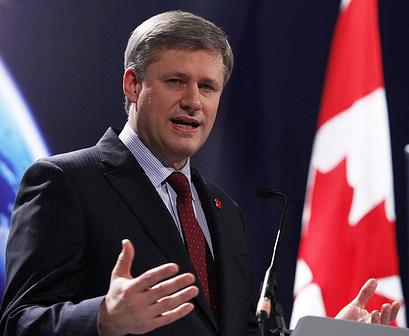
Prime Minister Stephen Harper

This is from the National Post, one of Canada’s two national newspapers.

Excerpt:

The government used its new power to revoke the citizenship of convicted terrorists for the first time on Friday against the imprisoned ringleader of the 2006 al-Qaida-inspired plot to detonate truck bombs in downtown Toronto.

Zakaria Amara was notified in a letter sent to the Quebec penitentiary where is he serving a life sentence that he is no longer a Canadian. He still holds citizenship in Jordan and could be deported there following his release from prison.

[…]Legislation that came into force in May, over the opposition of the NDP and Liberals, allows the government to revoke the citizenship of Canadians who have been convicted of terrorism offences — provided they hold citizenship in a second country.

The law also applies to dual citizens convicted of treason and spying for foreign governments, as well as members of armed groups at war against Canada. A little more than half-a-dozen Canadians have been notified so far that the government was considering revoking their citizenship.

Now, you would think that a law like this would be common sense, but in Canada, you’d be wrong. Two-thirds of the electorate are pro-terrorism in Canada, owing largely to mass immigration from Muslim countries, and and an education system that is anti-Western civilization in a suicidal way. And the leaders of the two socialist opposition parties reflect that suicidal view.

More:

NDP leader Tom Mulcair has said he would scrap the citizenship revocation law, and on Friday Liberal leader Justin Trudeau repeated his pledge to repeal it. “The bill creates second-class citizens,” he said. “No elected official should ever have the exclusive power to revoke Canadian citizenship. Under a Liberal government there will be no two-tiered citizenship. A Canadian is a Canadian is a Canadian.”

Let’s find out exactly who we are talking about here:

Amara emerged in 2005 as one of two leaders of a terrorist group that trained on a rural property north of the city and, inspired by al-Qaida, began planning attacks they thought would convince Canada to withdraw its troops from Afghanistan.

Amara led a faction that was acquiring the components for large truck bombs that were to be detonated during the morning rush hour outside the Toronto Stock Exchange and the Canadian Security Intelligence Service office beside the CN Tower. An Ontario military base was also to be attacked.

Justice Bruce Durno called the plot “spine chilling” and said “the potential for loss of life existed on a scale never before seen in Canada. It was almost unthinkable without the suggestion that metal chips would be put in the bombs. Had the plan been implemented it would have changed the lives of many, if not all Canadians forever.”

Under the liberal governments of the 1980s and 1990s, Canada experienced mass immigration from countries that had no understanding of nor allegiance to Western democratic ideals. This was desired in order to build a majority that would support bigger government, higher taxes, and more dependency. No effort was made to teach incoming immigrants to value democracy and Judeo-Christian values as the source of Canadian success. There were several terrorist attack in Canada during Harper’s 8 year run. If Canada elects leftists, these will continue. Only now, government will not have the tools they need to protect the public from their past immigration laxity. Be warned, Canadians.


Darrell Bock and Eric Chabot discuss the challenges of campus ministry

A conflict of worldviews

My good friend Eric Chabot did an episode of the The Table podcast, which is the culture podcast of Dallas Theological Seminary. Eric does campus ministry at Ohio State University, one of the largest universities in the United States. He has a frontline view of the challenges that Christians face on campus, which is a battle I am so passionate about.

Here’s the podcast:

The MP3 file is here.

Summary:

  • 00:15  What does a typical RC meeting look like at Ohio State?
  • 02:44  Key social issues facing Ohio students
  • 05:30  How do you engage with the same-sex issue on campus?
  • 11:01  How do you engage with political issues on campus?
  • 13:08  How do you engage with social justice issues on campus?
  • 16:19  How would you describe the Christian environment on campus?
  • 18:33  Advice for parents considering Ohio State for their child

I give this podcast and the discussion my highest recommendation. It’s so practical, and so different from what you hear in church from pastors who seem to be totally unaware of how worldviews conflict on the university campus. This podcast is practical and hands-on.

There is also a transcript (PDF).

I just want to excerpt a few questions to get you interested enough to listen:

Dr. Darrell Bock:

Ok. Well, that’s the intellectual background. Let’s move on to the other questions I told you we were going to discuss. The social pressures of campus? This, and I’ve done a handful of these interviews, in fact I think you’re the 5th or 6th campus that we’ve done.

We’ve done UCLA, UC Irvine, California, San Diego, A&M and Princeton, and the interesting thing is that as we move from campus to campus and I go to social issues, that – those kind of are more varied than the intellectual stuff. The intellectual stuff seems to be pretty consistent from campus to campus.

But the social challenges really are a reflection of the environment of the campus itself and certain emphasis are tied to certain campuses. So, what are the social challenges that students face in terms of their walk at Ohio State?

And:

Dr. Darrell Bock:

Ok. Well, let’s turn our attention to the final two questions that I want to be sure and get through, and that is you’re giving advice – let’s start with parents – you’re giving advice to parents. They’re thinking about, you know, sending their kid to Ohio State.

What do you regard as the, as keys for the preparation of that student that a parent should be thinking about? Perhaps in particular, thinking about their junior and senior years, they’re getting ready to think about college and the way you prepare a student for college and the choices and the freedom that they’re gonna fall into. How do you, what advice would you give to parents?

And:

Dr. Darrell Bock:

Ok. This may seem like a related question, but I do think the demands are slightly different and that is what advice do you give to youth leaders and to pastors as they are preparing kids who are going through their church programs for university?
And here, I sorta have in mind what kinds of things would you hope a youth leader who’s dealing with high school students, what kinds of issues do you hope that they’re dealing with and treating so that the student is prepared for the campus experience?

That’s why I focus so much on same-sex marriage and politics on this blog. We really have to explain to young people why natural marriage is best, and why the free enterprise system is best. We are seeing now the challenge that the combination of same-sex marriage and big secular government (socialism) poses for religious liberty.

Do moral dilemmas undermine objective moral absolutes?

I have a key that will unlock a puzzling mystery

One reason why some people reject the existence of objective morality is because moral absolutes can conflict.

Canadian philosopher Michael Horner to explains the problem.

He writes:

You may have been confronted with the story of the Nazi soldier coming to the door of the family who are hiding some Jewish people in their home and asking them point blankly, “Are there any Jews here?” The person telling the story then asks you, “What would you say?” or more precisely, “What should you say?”

[…]I think for many people the term moral absolutes connotes ideas like inflexibility and rigidity, and that there can never be exemptions. I have also found that many people believe that holding to moral absolutes means that circumstances are not relevant in a moral evaluation and that moral absolutism cannot handle moral dilemmas. But in fact it is possible to believe in moral absolutes, or as I prefer to call them objective moral values, without adhering to these connotations I have mentioned.

For many people to believe in moral absolutes is to believe in rules that no other rules can ever trump. It follows from this that moral absolutes are all equal and there can never be any exemptions. But what if moral absolutes exist in a hierarchy?

We know from experience that very often more than one moral rule applies to a situation. This often leads to moral dilemmas. So in the ‘hiding the Jews example’ the moral rule of telling the truth seems to apply to the situation, but it would seem that the moral rule to protect innocent human life from torture and murder applies also.

If absolutes are all equal there is no way out of the dilemma. You can’t choose one absolute over another because in doing so you would be violating at least one absolute which, in their view, is supposed to be inviolable.

So, in this case, it seems as if the moral absolutist is stuck in a dilemma. If you lie to save the innocent life, then that would be wrong. But if you tell the truth and hand the innocent person over to murderers, then that would be wrong. Does this really disprove objective moral absolutes?

This problem annoys me, because I know this is the kind of objection to objective morality that annoying philosophy lecturers like to push onto freshmen in order to convince them that morality is nonsense.  But does the moral dilemma objection really work?

More Horner:

[…][I]f moral absolutes exist in a hierarchy and the circumstances or the situation were relevant in determining which absolute takes precedent, then there may be a solution to the moral dilemma. That is exactly what I think is the case in the example. I for one have no difficulty knowing that the morally right thing to do in that situation is to protect the life of innocent people from torture and murder rather than tell the truth to a person who has torture and murder in their plans. My moral intuitions are very clear about this.

If someone objects and says, “No, you must always tell the truth. After all it is an absolute, and absolutes by definition can never be violated,” I would point out that they are just using a different hierarchy, putting truth telling above protecting the life of innocent people from torture and murder. There is no way to avoid making a judgment like that since more than one absolute does apply to the situation. I would just ask them to think it through again, and once they see that they have to make a judgment based on some sort of hierarchy in that situation, then I think most people’s moral intuitions will affirm that protecting the lives of innocent people from torture and murder, in that situation, trumps truth telling. There is no way to avoid choosing one over the other.

But isn’t this moral relativism? After all, we are deciding what to do based on the situation! It’s relativism, isn’t it?

No, it isn’t, because there is always one right thing to do in every situation. In every situation, you always follow the weightiest moral rule. The right thing to do does not depend on your subjective state of mind. It is an objective moral duty, and it is the same for everyone, across all times and in all places. That’s what objective morality means -what is right and wrong is not determined by personal preferences or cultural conventions, which vary by time and place.

And of course, God is the ground of this hierarchy of objective moral absolutes. They existed through him before human beings even appeared, as part of his design for us, his creatures. How we ought to behave is grounded ontologically in God’s design for us.