
Tom sent me this article from the Wall Street Journal.
Excerpt:
Nearly four million more people have left the Golden State in the last two decades than have come from other states. This is a sharp reversal from the 1980s, when 100,000 more Americans were settling in California each year than were leaving. According to Mr. Kotkin, most of those leaving are between the ages of 5 and 14 or 34 to 45. In other words, young families.
The scruffy-looking urban studies professor at Chapman University in Orange, Calif., has been studying and writing on demographic and geographic trends for 30 years. Part of California’s dysfunction, he says, stems from state and local government restrictions on development. These policies have artificially limited housing supply and put a premium on real estate in coastal regions.
“Basically, if you don’t own a piece of Facebook or Google and you haven’t robbed a bank and don’t have rich parents, then your chances of being able to buy a house or raise a family in the Bay Area or in most of coastal California is pretty weak,” says Mr. Kotkin.
While many middle-class families have moved inland, those regions don’t have the same allure or amenities as the coast. People might as well move to Nevada or Texas, where housing and everything else is cheaper and there’s no income tax.
And things will only get worse in the coming years as Democratic Gov. Jerry Brown and his green cadre implement their “smart growth” plans to cram the proletariat into high-density housing. “What I find reprehensible beyond belief is that the people pushing [high-density housing] themselves live in single-family homes and often drive very fancy cars, but want everyone else to live like my grandmother did in Brownsville in Brooklyn in the 1920s,” Mr. Kotkin declares.
[…]Meanwhile, taxes are harming the private economy. According to the Tax Foundation, California has the 48th-worst business tax climate. Its income tax is steeply progressive. Millionaires pay a top rate of 10.3%, the third-highest in the country. But middle-class workers—those who earn more than $48,000—pay a top rate of 9.3%, which is higher than what millionaires pay in 47 states.
And Democrats want to raise taxes even more. Mind you, the November ballot initiative that Mr. Brown is spearheading would primarily hit those whom Democrats call “millionaires” (i.e., people who make more than $250,000 a year). Some Republicans have warned that it will cause a millionaire march out of the state, but Mr. Kotkin says that “people who are at the very high end of the food chain, they’re still going to be in Napa. They’re still going to be in Silicon Valley. They’re still going to be in West L.A.”
That said, “It’s really going to hit the small business owners and the young family that’s trying to accumulate enough to raise a family, maybe send their kids to private school. It’ll kick them in the teeth.”
A worker in Wichita might not consider those earning $250,000 a year middle class, but “if you’re a guy working for a Silicon Valley company and you’re married and you’re thinking about having your first kid, and your family makes 250-k a year, you can’t buy a closet in the Bay Area,” Mr. Kotkin says. “But for 250-k a year, you can live pretty damn well in Salt Lake City. And you might be able to send your kids to public schools and own a three-bedroom, four-bath house.”
According to Mr. Kotkin, these upwardly mobile families are fleeing in droves. As a result, California is turning into a two-and-a-half-class society. On top are the “entrenched incumbents” who inherited their wealth or came to California early and made their money. Then there’s a shrunken middle class of public employees and, miles below, a permanent welfare class. As it stands today, about 40% of Californians don’t pay any income tax and a quarter are on Medicaid.
It’s “a very scary political dynamic,” he says. “One day somebody’s going to put on the ballot, let’s take every penny over $100,000 a year, and you’ll get it through because there’s no real restraint. What you’ve done by exempting people from paying taxes is that they feel no responsibility. That’s certainly a big part of it.
And the welfare recipients, he emphasizes, “aren’t leaving. Why would they? They get much better benefits in California or New York than if they go to Texas. In Texas the expectation is that people work.”
California used to be more like Texas—a jobs magnet. What happened? For one, says the demographer, Californians are now voting more based on social issues and less on fiscal ones than they did when Ronald Reagan was governor 40 years ago. Environmentalists are also more powerful than they used to be. And Mr. Brown facilitated the public-union takeover of the statehouse by allowing state workers to collectively bargain during his first stint as governor in 1977.
Mr. Kotkin also notes that demographic changes are playing a role. As progressive policies drive out moderate and conservative members of the middle class, California’s politics become even more left-wing. It’s a classic case of natural selection, and increasingly the only ones fit to survive in California are the very rich and those who rely on government spending. In a nutshell, “the state is run for the very rich, the very poor, and the public employees.”
Another Wall Street Journal article I just spotted talks about how states with low income taxes have much higher population growth rates than states with high income tax rates.
Excerpt:
Over the past decade, states without an income tax have seen 58% higher population growth than the national average, and more than double the growth of states with the highest income tax rates. Such interstate migration left Texas with four new congressional seats this year and spanked New York and Ohio with a loss of two seats each.
The transfer of economic power and political influence from high-tax states toward low-tax, right-to-work ones is one of America’s most momentous demographic changes in decades. Liberal utopias are losing the race for capital. The rich, the middle-class, the ambitious and others are leaving workers’ paradises such as Hartford, Buffalo and Providence for Jacksonville, San Antonio and Knoxville.
Illinois, Oregon and California are state practitioners of Obamanomics. All have passed soak-the-rich laws like the Buffett Rule (plus economically harmful regulations, like California’s cap-and-trade scheme), and all face big deficits because their economies continue to sink. Illinois has lost one resident every 10 minutes since hiking tax rates in January. California has 10.9% unemployment, having lost 4.8% of its jobs over the past decade.
Now these blue states may raise tax rates again. In California, a union-backed ballot initiative would raise the state’s highest tax rate to 13.3%. Union-funded groups in Illinois aren’t satisfied with last year’s income tax rate hike to 5% from 3%, so they now want to go as high as 11%. That would put them in the big leagues with California and New York. And in Oregon, lawmakers are considering raising the highest rate to 13% from 9.9%. In all of these states, proponents parrot Mr. Obama, insisting that the rich can afford it.
They can, but they can also afford to save hundreds of thousands or more each year by getting out of Dodge. Every time California, Illinois or New York raises taxes on millionaires, Florida, Texas and Tennessee see an influx of rich people who buy homes, start businesses and shop in the local economy.
Republican governors in Florida, Georgia, Idaho, North Dakota, South Carolina, Ohio, Tennessee, Wisconsin and even Michigan and New Jersey are cutting taxes to lure new businesses and jobs.
Asked why he wants to reduce the cost of doing business in Wisconsin, Gov. Scott Walker replies: “I’ve never seen a store get more customers by raising its prices, but I’ve seen customers knock down the doors when they cut prices.”
Georgia, Kansas, Missouri and Oklahoma are now racing to become America’s 10th state without an income tax. All of them want what Texas has (almost half of all net new jobs in America over the last decade, for one thing).
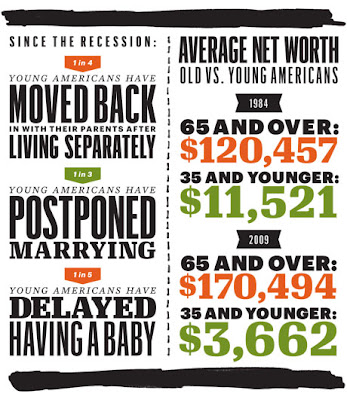
This is important because voters need to understand that when you tax and regulate people, they don’t just sit there are take it. The same thing can happen at the national level if we pursue the same policies. People just move their money and businesses out, and eventually, themselves. If young people want to vote for socialists because of abortion, gay marriage and environmentalism, they may find themselves without jobs – without enough money to even support a family.
 WINTERY KNIGHT