Sarah Palin is looking very good as a contender in 2012. I am still favoring Governor Jindal in Louisiana, with Governor Sanford in South Carolina as #2. But Palin is definitely in the mix!
I am so happy when I see women standing up for fiscal conservatism, social conservatism and a strong foreign policy. I am going to give her 2 A+ ratings for these two tough media interviews. She understands the vision of small government and low taxes. And she has a talent for explaining it in a winsome, engaging manner. The trouble is that Democrat voters are so ignorant about economics that she has to explain it very slowly.
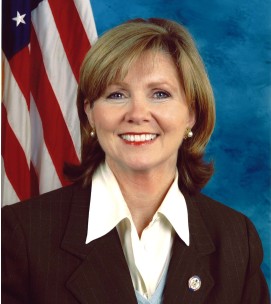
I noticed a story up at Hot Air about that Hollywood idiot David Letterman making fun of Sarah Palin, and it occurred to me to remind my readers that we have better women who can represent our views, among them Michele Bachmann and Marsha Blackburn.
First, let me just say that Sarah Palin is NOT conservative on issues like private schools and vouchers, as well on global warming. While Michele Bachmann took time off to homeschool a bunch of her children, (she has 5 natural-born and 23 foster children), we all know about Palin’s weaknesses with her children.
Here is a sample video – she wants to drill in ANWR so that we can all pay less for gas. (If you click on the video to go to YouTube, they’ve got an HQ button for high quality!)
Here is another sample video – she can defend capitalism and the rule of law as articulately as Thomas Sowell or Walter Williams might. (If you click on the video to go to YouTube, they’ve got an HQ button for high quality!)
Keith Hennessey is the go-to guy for analyzing economic policies. He takes a look at the leaked draft of the health care bill that I blogged about before. He lists 15 things you need to know about the draft bill.
Below I’ve listed a few of the scariest parts.
Mandatory coverage
The Kennedy-Dodd bill would create an individual mandate requiring you to buy a “qualified” health insurance plan, as defined by the government. If you don’t have “qualified” health insurance for a given month, you will pay a new Federal tax. Incredibly, the amount and structure of this new tax is left to the discretion of the Secretaries of Treasury and Health and Human Services (HHS), whose only guidance is “to establish the minimum practicable amount that can accomplish the goal of enhancing participation in qualifying coverage (as so defined).” The new Medical Advisory Council (see #3D) could exempt classes of people from this new tax. To avoid this tax, you would have to report your health insurance information for each month of the prior year to the Secretary of HHS, along with “any such other information as the Secretary may prescribe.”
Employer mandate
The bill would also create an employer mandate. Employers would have to offer insurance to their employees. Employers would have to pay at least a certain percentage (TBD) of the premium, and at least a certain dollar amount (TBD). Any employer that did not would pay a new tax. Again, the amount and structure of the tax is left to the discretion of the Secretaries of Treasury and HHS.
Mandatory services that I don’t use
A qualified plan would have to cover “essential health benefits,” as defined by a new Medical Advisory Council (MAC), appointed by the Secretary of Health and Human Services… The MAC would have to include items and services in at least the following categories: ambulatory patient services, emergency services, hospitalization, maternity and new born care, medical and surgical, mental health, prescription drugs, rehab and lab services, preventive/wellness services, pediatric services, and anything else the MAC thought appropriate.
That’s just redistribution of wealth for elective services, right there. I wonder whether support for contraceptives and abortion would also be required.
Premiums not related to lifestyle risks
Health insurance plans could not charge higher premiums for risky behaviors: “Such rate shall not vary by health status-related factors, … or any other factor not described in paragraph (1).” Smokers, drinkers, drug users, and those in terrible physical shape would all have their premiums subsidized by the healthy.
Guaranteed issue and renewal
All health insurance would be required to have guaranteed issue and renewal, modified community rating, no exclusions for pre-existing conditions, no lifetime or annual limits on benefits, and family policies would have to cover “children” up to age 26.
…Guaranteed issue and renewal combined with modified community rating would dramatically increase premiums for the overwhelming majority of those Americans who now have private health insurance. New Jersey is the best example of health insurance mandates gone wild. In the name of protecting their citizens, premiums are extremely high to cover the cross-subsidization of those who are uninsurable.
Massive wealth redistribution, especially to Democrats
People from 150% of poverty up to 500% (!!) would get their health insurance subsidized (on a sliding scale). If this were in effect in 2009, a family of four with income of $110,000 would get a small subsidy. The bill does not indicate the source of funds to finance these subsidies.
…People in high cost areas (e.g., New York City, Boston, South Florida, Chicago, Los Angeles) would get much bigger subsidies than those in low cost areas (e.g., much of the rest of the country, especially in rural areas). The subsidies are calculated as a percentage of the “reference premium,” which is determined based on the cost of plans sold in that particular geographic area.
Hennessey then goes on to explain all of the implications of his 15 points. READ IT ALL.



 WINTERY KNIGHT