Tag Archives: Physics

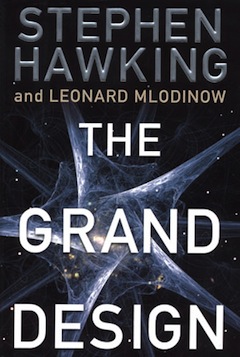
Book review of Stephen Hawking’s “The Grand Design” by Edgar Andrews

First, who is Edgar Andrews?

Professor Edgar H. Andrews (BSc, PhD, DSc, FInstP, FIMMM, CEng, CPhys.) is Emeritus Professor of Materials at the University of London and an international expert on the science of large molecules. In 1967 he set up the Department of Materials at Queen Mary College, University of London, and served both as its Head and later as Dean of Engineering. He has published well over 100 scientific research papers and books, together with two Bible Commentaries and various works on science and religion and on theology. His book From Nothing to Nature has been translated into ten languages.

Edgar Andrews was an international consultant to the Dow Chemical Company (USA) for over thirty years and to the 3M Company (USA) for twenty years. He was a non-executive director of Denbyware PLC throughout the 1970s and for five years a member of the Scientific Advisory Board of Neste Oy, the national oil company of Finland.

And now an excerpt from the book review: (H/T Apologetics 315)

Hawking and Mlodinow declare: ‘According to M-theory, ours is not the only universe. Instead, M-theory predicts that a great many universes were created out of nothing. Their creation does not require the intervention of some supernatural being or god. Rather, these multiple universes arise naturally from physical law. They are a prediction of science’ (p.9).

So what is this magical M-theory? The authors are rather coy about it. ‘M-theory’, they say, ‘Is not a theory in the usual sense. It is a whole family of different theories, each of which is a good description of observations only in some range of physical situations’ (p.8). Theoretical physicist Lee Smolin is more explicit: ‘… we still do not know what M-theory is, or whether there is any theory deserving of the name’ (The trouble with physics, Allen Lane, 2007, p.146).

The fact is that M-theory is an untestable mathematical construction which many scientists believe has no bearing on physical reality. But that doesn’t deter our authors because they don’t believe in ‘objective reality’ anyway. What we think is ‘real’, they say, is simply a model assembled in our brains from raw data input by our senses. But, confusingly, the authors then claim that the best models are those that reflect the way things really do happen in the real world — appealing to the very objective reality they say does not exist! Confused? Me too.

But it gets worse. They claim that M-theory (whatever it might be) predicts not one universe but a multiverse — a vast collection of universes which cannot be observed or known to us in any way. On their own criterion, this makes M-theory a very bad model indeed. So it’s hardly a useful replacement for God.

Here’s a better book to read if you want to understand how belief in God relates to experimental science.

My Dad just finished reading his book “Who Made God?” and called me up to tell me how much he liked the book. My Dad is not a scientist, yet he read the whole thing and learned a lot about science. This is the book for people who haven’t read a thing about science and religion. It’s easy to understand because he explains the same thing over and other giving more and more detail. Even a child can understand the first explanation, and then he keeps layering on details until he gets up to the state-of-the-art.

Remember Brian Auten of Apologetics 315 picked this book as his favorite of 2010. You can’t go wrong!

My Dad is now reading my copy of “Is God Just a Human Invention?” by Jonathan Morrow and Sean McDowell. I’m working on “Is God a Moral Monster?” by Paul Copan. I like books where difficult questions are asked and then careful answers are given. Then when people ask me the same questions, I can answer them using what I’ve learned – and often phrase the question even more clearly and forcefully than they did when they asked me.

Physicist Frank Tipler weighs in on Stephen Hawking’s theory

Physics professor Frank Tipler has written an evaluation of Dan Brown’s Stephen Hawking’s speculations theories. (H/T The ID Report via Post-Darwinist)

Excerpt:

In 1966, Stephen Hawking published his first – completely valid – proof for the existence of God. Over the next seven years, he followed this with even more powerful valid theorems proving God’s existence.

So how did Hawking, who successfully proved God’s existence, remain an atheist? Simple. He simply denied that the assumptions he used in his proofs were true. As a matter of logic, if the assumptions in a proof are not true, then the conclusions need not be true. What assumptions did the young Hawking make? He assumed that the laws of physics, mainly Einstein’s theory of gravity, were true. In the summary of his early research, namely his book The Large Scale Structure of Space-Time, Hawking wrote:

It seems to be a good principle that the prediction of [God] by a physical theory indicates that the theory has broken down, i.e. it no longer provides a correct description of observations.

Hawking then began working on quantum gravity, in hopes that God would be at last eliminated from the equations. Alas, it was not to be: God was even more prominent – and unavoidable – in quantum gravity than in Einstein’s theory of gravity. In his latest book, The Grand Design, Hawking has pinned his hope of eliminating God on M-theory, a theory with no experimental support whatsoever, hence not a theory of physics at all. Nor has it been proven that M-theory is mathematically consistent. Nor has it been proven that God has been eliminated from M-theory. There are disquieting signs (for Hawking and company) that He is also unavoidable in M-theory, as He is in Einstein’s gravity, and in quantum gravity.

In spite of what the atheist press is telling you, it’s looking bad for atheism today. And it is extraordinary the lengths an atheist like Hawking will go to avoid the obvious: God exists.

The progress of science has made the case for a Creator and Designer air-tight. Anyone who doubts the existence of a Creator and Designer today is simply not reality-based in their worldview. M-theory, global warming and Darwinian macro-evolution are the scientific heirs of alchemy, geocentrism and phrenology. And that’s why atheists don’t want these things to be debated – because they’ll lose.

Click here to hear a debate on Hawking’s theory between Oxford atheist theoretical physicist Roger Penrose and Oxford Christian microbiologist/theologian Alister McGrath.

Or watch the highlights:

Nobody is impressed by Hawking’s theory – except journalists anxious to delude the public.

Henry F. Schaefer assesses Stephen Hawking’s no-boundary proposal

A little bit about Dr. Schaefer:

Henry F. Schaefer III was born in Grand Rapids, Michigan. He attended public schools in Syracuse (New York), Menlo Park (California), and Grand Rapids (Michigan), graduating from East Grand Rapids High School in 1962. He received his B.S. degree in chemical physics from the Massachusetts Institute of Technology (1966) and Ph.D. degree in chemical physics from Stanford University (1969). For 18 years (1969-1987) he served as a professor of chemistry at the University of California, Berkeley. During the 1979-1980 academic year he was also Wilfred T. Doherty Professor of Chemistry and inaugural Director of the Institute for Theoretical Chemistry at the University of Texas, Austin. Since 1987 Dr. Schaefer has been Graham Perdue Professor of Chemistry and Director of the Center for Computational Quantum Chemistry at the University of Georgia. In 2004 he became Professor of Chemistry, Emeritus, at the University of California at Berkeley. His other academic appointments include Professeur d’Echange at the University of Paris (1977), Gastprofessur at the Eidgenössische Technische Hochshule (ETH), Zürich (1994, 1995, 1997, 2000, 2002, 2004, 2006, 2008, 2010), and David P. Craig Visiting Professor at the Australian National University (1999). He is the author of more than 1250 scientific publications, the majority appearing in the Journal of Chemical Physics or the Journal of the American Chemical Society. A total of 300 scientists from 35 countries gathered in Gyeongju, Korea for a six-day conference in February, 2004 with the title Theory and Applications of Computational Chemistry: A Celebration of 1000 Papers of Professor Henry F. Schaefer III. In May 2010, the University of California at Berkeley will host a large international conference in Professor Schaefer’s honor, the title of the conference being Molecular Quantum Mechanics: From Methylene to DNA and Beyond.

Witness how the experimental scientist disagrees with the theoretical… speculator.

Let us return to Hawking’s no boundary proposal – the idea that the universe has neither beginning nor end. By treating the universe as a wave function, Hawking hopes to rationalize the universe’s popping into existence 12-15 billion years ago. Critical to Hawking’s research in this regard is the notion of imaginary time. The concept of imaginary time is a powerful mathematical device used on occasion by theoretical chemists and physicists. I remember clearly the day in the autumn of 1965, during my Complex Variables class as a senior at M.I.T., when I learned that the result of contour integration was two pi i times the sum of the residues. For me, it was about as close to a revelation as I had received up to that time in my life. My closest colleague at Berkeley, Professor William H. Miller, in 1969 used imaginary time to understand the dynamics of chemical reactions, and it made him a household word in the world of science. The use of imaginary time is indeed a powerful tool.

Indulge me while I attempt to convey the essence of how imaginary time is exploited in theoretical physics and chemistry. One approaches a well defined problem, with all variables necessarily being real. This means, for example, real positions for all particles, real velocities, and so on. Real problems begin with all quantities real. Then one undertakes a carefully chosen excursion into the complex plane, making one or more variables complex. Subsequently we do some really cool things mathematically. Finally, all the variables revert to real values, and we find that something important has been mathematically derived that would have otherwise been impossible to prove.

Hawking and Hartle’s no boundary proposal begins by adopting a grossly oversimplified model of the universe. Then the authors make time imaginary, and prove in their terribly restricted model that the universe has neither beginning nor end. The flaw in the exercise is that the authors never go back to real time. Thus the notion that the universe has neither beginning nor end is something that exists in mathematical terms only. In real time, to which we as human beings are necessarily attached, rather than in Hawking’s use of imaginary time, there will always be a singularity, that is, a beginning of time.

In an obviously contradictory statement in A Brief History of Time, Hawking actually concedes this point. What we are seeing in this situation is Hawking versus Hawking. I view the following statement as Hawking speaking in his right mind: “When one goes back to the real time in which we live, however, there will still appear to be singularities . . . In real time, the universe has a beginning and an end at singularities that form a boundary to space-time and at which the laws of science break down” (first edition, page 144). Only if we lived in imaginary time (not coming soon to a neighborhood near you!) would we encounter no singularities. In real time the universe was created ex nihilo 12-15 billion years ago.

With some trepidation, I will venture further. A case can be made that the Hartle-Hawking “no boundary proposal” is only of marginal scientific interest. The reasons for this conclusion might include: (a) the theory is a mathematical construct that has no unique empirical support; (b) the theory makes no verifiable scientific predictions that were not achieved earlier with simpler models; (c) the theory generates no significant research agenda. The primary purpose of the theory seems to be an attempt to evade the cosmological argument for the existence of God, via the claim that nature is self-contained and effectively eternal.

I’ll stick with the experimental guy.