
Tag Archives: Life

New study: formation of life-permitting elements carbon and oxygen is fine-tuned

First, let’s review the structure of the fine-tuning argument.

The argument goes like this:

  1. The fine-tuning of the universe to support life is either due to law, chance or design
  2. It is not due to law or chance
  3. Therefore, the fine-tuning is due to design

Here are the facts on the fine-tuning:

  • Life has certain minimal requirements; long-term stable source of energy, a large number of different chemical elements, an element that can serve as a hub for joining together other elements into compounds, a universal solvent, etc.
  • In order to meet these minimal requirements, the physical constants, (such as the gravitational constant), and the ratios between physical constants, need to be withing a narrow range of values in order to support the minimal requirements for life of any kind.
  • Slight changes to any of the physical constants, or to the ratios between the constants, will result in a universe inhospitable to life.
  • The range of possible values spans 70 orders of magnitude.
  • The constants are selected by whoever creates the universe. They are not determined by physical laws. And the extreme probabilities involved required put the fine-tuning beyond the reach of chance.
  • Although each individual selection of constants and ratios is as unlikely as any other selection, the vast majority of these possibilities do not support the minimal requirements of life of any kind. (In the same way as any hand of 5 cards that is dealt is as likely as any other, but you are overwhelmingly likely NOT to get a royal flush. In our case, a royal flush is a life-permitting universe).

Carbon is that element that can serve as a hub, and oxygen is also a vital element, since it is a component of water, which is required for life. So both carbon (the hub of large molecules) and oxygen (a building block of water) are required for complex life of any imaginable kind.

Now for the new study.

Reader Jen who blogs at Victory Rolls and V8s sent me this amazing article on Science Daily about a new peer-reviewed study that supports the fine-tuning argument.

Here’s an excerpt:

Life as we know it is based upon the elements of carbon and oxygen. Now a team of physicists, including one from North Carolina State University, is looking at the conditions necessary to the formation of those two elements in the universe. They’ve found that when it comes to supporting life, the universe leaves very little margin for error.

Both carbon and oxygen are produced when helium burns inside of giant red stars. Carbon-12, an essential element we’re all made of, can only form when three alpha particles, or helium-4 nuclei, combine in a very specific way. The key to formation is an excited state of carbon-12 known as the Hoyle state, and it has a very specific energy — measured at 379 keV (or 379,000 electron volts) above the energy of three alpha particles. Oxygen is produced by the combination of another alpha particle and carbon.

NC State physicist Dean Lee and German colleagues Evgeny Epelbaum, Hermann Krebs, Timo Laehde and Ulf-G. Meissner had previously confirmed the existence and structure of the Hoyle state with a numerical lattice that allowed the researchers to simulate how protons and neutrons interact. These protons and neutrons are made up of elementary particles called quarks. The light quark mass is one of the fundamental parameters of nature, and this mass affects particles’ energies.

In new lattice calculations done at the Juelich Supercomputer Centre the physicists found that just a slight variation in the light quark mass will change the energy of the Hoyle state, and this in turn would affect the production of carbon and oxygen in such a way that life as we know it wouldn’t exist.

[…]The researchers’ findings appear in Physical Review Letters.

So that’s the latest research that supports the fine-tuning argument. But how effective is this argument really? Is it only admitted by theists, or do atheists accept the fine-tuning as well?

Is the fine-tuning real?

Yes, it’s real and it is conceded by the top-rank of atheist physicists. Let me give you a citation from the best one of all, Martin Rees. Martin Rees is an atheist and a qualified astronomer. He wrote a book called “Just Six Numbers: The Deep Forces That Shape The Universe”, (Basic Books: 2001). In it, he discusses 6 numbers that need to be fine-tuned in order to have a life-permitting universe.

Rees writes here:

These six numbers constitute a ‘recipe’ for a universe. Moreover, the outcome is sensitive to their values: if any one of them were to be ‘untuned’, there would be no stars and no life. Is this tuning just a brute fact, a coincidence? Or is it the providence of a benign Creator?

There are some atheists who deny the fine-tuning, but these atheists are in firm opposition to the progress of science. The more science has progressed, the more constants, ratios and quantities we have discovered that need to be fine-tuned. Science is going in a theistic direction. Next, let’s see how atheists try to account for the fine-tuning, on atheism.

Atheistic responses to the fine-tuning argument

There are two common responses among atheists to this argument.

The first is to speculate that there are actually an infinite number of other universes that are not fine-tuned, (i.e. – the gambler’s fallacy). All these other universes don’t support life. We just happen to be in the one universe is fine-tuned for life. The problem is that there is no way of directly observing these other universes and no independent evidence that they exist.

Here is an excerpt from an article in Discover magazine, (which is hostile to theism and Christianity).

Short of invoking a benevolent creator, many physicists see only one possible explanation: Our universe may be but one of perhaps infinitely many universes in an inconceivably vast multiverse. Most of those universes are barren, but some, like ours, have conditions suitable for life.

The idea is controversial. Critics say it doesn’t even qualify as a scientific theory because the existence of other universes cannot be proved or disproved. Advocates argue that, like it or not, the multiverse may well be the only viable non­religious explanation for what is often called the “fine-tuning problem”—the baffling observation that the laws of the universe seem custom-tailored to favor the emergence of life.

The second response by atheists is that the human observers that exist today, 14 billion years after the universe was created out of nothing, actually caused the fine-tuning. This solution would mean that although humans did not exist at the time the of the big bang, they are going to be able to reach back in time at some point in the future and manually fine-tune the universe.

Here is an excerpt from and article in the New Scientist, (which is hostile to theism and Christianity).

…maybe we should approach cosmic fine-tuning not as a problem but as a clue. Perhaps it is evidence that we somehow endow the universe with certain features by the mere act of observation… observers are creating the universe and its entire history right now. If we in some sense create the universe, it is not surprising that the universe is well suited to us.

So, there are two choices for atheists. Either an infinite number of unobservable universes that are not fine-tuned, or humans go back in time at some future point and fine-tune the beginning of the universe, billions of years in the past.

Why the fine-tuning argument matters

We need to make a decision today about how we are going to live. The evidence available today supports the fine-tuning of the universe by a supernatural mind with immense power. The progress of science has strengthened this theory against determined opposition from rival naturalistic theories.

Those are the facts, and we must all choose what to do with them.

Further study

Here is a paper by Walter L. Bradley that contains many more examples of the fine-tuning, and explanations for what happens when you change the constants, quantities and rations even slightly.
Guillermo Gonzalez lectures at UC Davis on the requirements for life

The 5 video clips that make up the full lecture.

The playlist for all 5 clips is here.

About the speaker

Guillermo Gonzalez is an Associate Professor of Physics at Grove City College. He received his Ph.D. in Astronomy in 1993 from the University of Washington. He has done post-doctoral work at the University of Texas, Austin and at the University of Washington and has received fellowships, grants and awards from such institutions as NASA, the University of Washington, the Templeton Foundation, Sigma Xi (scientific research society) and the National Science Foundation.

Learn more about the speaker here.

The lecture

Here’s part 1 of 5:

And the rest are here:

Topics:

  • What is the Copernican Principle?
  • Is the Earth’s suitability for hosting life rare in the universe?
  • Does the Earth have to be the center of the universe to be special?
  • How similar to the Earth does a planet have to be to support life?
  • What is the definition of life?
  • What are the three minimal requirements for life of any kind?
  • Requirement 1: A molecule that can store information (carbon)
  • Requirement 2: A medium in which chemicals can interact (liquid water)
  • Requirement 3: A diverse set of chemical elements
  • What is the best environment for life to exist?
  • Our place in the solar system: the circumstellar habitable zone
  • Our place in the galaxy: the galactic habitable zones
  • Our time in the universe’s history: the cosmic habitable age
  • Other habitability requirements (e.g. – metal-rich star, massive moon, etc.)
  • The orchestration needed to create a habitable planet
  • How different factors depend on one another through time
  • How tweaking one factor can adversely affect other factors
  • How many possible places are there in the universe where life could emerge?
  • Given these probabilistic resources, should we expect that there is life elsewhere?
  • How to calculate probabilities using the “Product Rule”
  • Can we infer that there is a Designer just because life is rare? Or do we need more?

The corelation between habitability and measurability.

  • Are the habitable places in the universe also the best places to do science?
  • Do the factors that make Earth habitable also make it good for doing science?
  • Some places and times in the history of the universe are more habitable than others
  • Those exact places and times also allow us to make scientific discoveries
  • Observing solar eclipses and structure of our star, the Sun
  • Observing stars and galaxies
  • Observing the cosmic microwave background radiation
  • Observing the acceleration of the universe caused by dark matter and energy
  • Observing the abundances of light elements like helium of hydrogen
  • These observations support the big bang and fine-tuning arguments for God’s existence
  • It is exactly like placing observatories on the tops of mountains
  • There are observers existing in the best places to observe things
  • This is EXACTLY how the universe has been designed for making scientific discoveries

This lecture was delivered by Guillermo Gonzalez in 2007 at the University of California at Davis.

Brian Auten interviews pro-life debater Scott Klusendorf

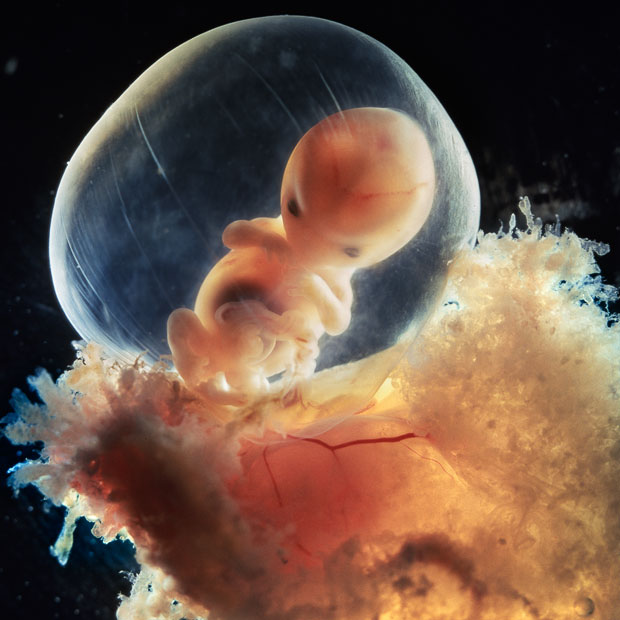
Unborn baby scheming about pro-life apologetics

Scott Klusendorf is the director of the excellent Life Training Institute, and he’s been interviewed by Brian Auten on Apologetics 315.

Details of the interview:

Today’s interview is with Scott Klusendorf, president of Life Training Institute. LTI is the first place to look for excellent resources to get better equipped to defend the pro-life position. Scott talks about defining abortion and its terms, the issue of the debate, the legal history of abortion, defending the pro-life view using science and philosophy, the four pillars of the pro-life argument, answering a litany of objections to the pro-life position, the right and wrong use of emotional appeals, taking on the right tone in the debate, how to get better equipped, and more.

Grab the MP3 file here at Apologetics 315.

The article Scott mentions “How to Defend Your Pro-Life Views in 5 Minutes or Less” is worth the read, and it’s a good summary of some of the points he makes in the lecture.

If you like this interview, please be sure and buy the best basic book on pro-life apologetics – Scott Klusendorf’s “The Case for Life“.

And there is actually a full transcript, and here’s an excerpt:

BA: Great stuff. Now I want you to go into these pillars if you will of defending the pro-life position with science and philosophy, and in your web site prolifetraining.com one of the things that you provide is sort of a four point acronym, some would say sled S-L-E-D. Can you lay out what those main pillars are and their relevance to the issue?

SK: Well as I mentioned a moment ago, pro-life advocates argue that elective abortion unjustly takes the life of a developing human being, and we defend that claim using science and philosophy. We use science to determine what kind of thing the unborn is, and we use philosophy to show that there’s no relevant deference between the embryos we once were and the adults we are today that would justify killing us at that earlier stage of development. Scientifically, as I mentioned just moments ago embryology text books worldwide indicate that from the very beginning you and I were distinct living whole human beings. You can’t see that I’m doing this right now, Brian, but at the moment I’m picking cells off the back of my hand. These cells, which we call somatic cells, contain my entire DNA and coding. But you don’t thing I just committed mass murder by sending a couple hundred of those puppies hurling to their deaths on the floor in front of me. And the reason is, you know that these cells though they contain my DNA and coding are merely part of a larger human being, me. They are not distinct whole living organisms the way that you were when you were an embryo. The way I was when I was an embryo. In other words, there is a difference in kind between each of our bodily cells and the embryonic human beings we once were. That’s what science teaches us; that’s what the science of embryology lays down for us.Philosophically, we argue using that SLED acronym that you mentioned a moment ago that there’s no difference between that embryo we once were and the adult we are today. The adults we are today that justify killing us at that earlier stage of development and as Steven Schwarz points out, the differences between that embryo and the adult that you are today are one of size, level of development, environment and degree of dependency. Think of the acronym SLED and you will remember those four differences. Size, yeah you were smaller as an embryo, but since when does body size determine the rights that you have. Shaquille O’Neal, the seven foot two basketball star with the Boston Celtics, is a foot taller than I am, but he doesn’t have a greater right to life simply because he’s bigger.

Level development? Sure, we were less developed as embryos but since when is a matter of principal does that mean we can kill you? Two-year-old girls are less developed than twenty-year-old young women. We don’t think though the two year old girl has less to a right to life simply because she can’t function at the level that the twenty year old can. Level of size, I should say level of development. What about environment; where you are located there is the letter “E” in that SLED acronym. You were once in the womb now you’re out but sense when does were you are determine what you are? When you walk from your living room into the studio to do this interview. You changed location but you didn’t stop being you. When I jump on an airplane and fly from Atlanta to London’s Heathrow airport. I get off the plane I’m in a new location, but I’m the same being as I was when I left Atlanta. If that’s true how does a journey of eight inches down the birth canal suddenly change me from non-human, non-valuable thing that we can kill? To a valuable human being that we can’t kill. And the answer is, if I wasn’t already human and valuable I’m not going to get there by changing my address. And then finally, degree of dependency—yes we depended on our mother for survival but sense when does dependency on another human being mean we can kill you? Conjoined twins depend on each other for survival and unless one of the twins is killing its partner we don’t go ahead and slit the throat of both twins simply because they can’t live independent of each other. Size, level of development, environment, degree of dependency, think “SLED” those are the only four differences between that embryo you once were and the adult you are today. And the pro-lifer would argue that not one of those four differences justifies killing you at that earlier stage.

You can see Scott in a debate about abortion right here.

And if you like that interview, I have some more things for you to read from Dr. Francis Beckwith.

Learn more by reading

Frank Beckwith is the author of “Defending Life: A Moral and Legal Case Against Abortion Choice“. He wrote that book for Cambridge University Press, a top academic press. But before Cambridge University Press, Beckwith wrote easy-to-understand essays for the Christian Research Journal.

Here are four essays that answer common arguments in favor of legalized abortion.

I have a copy of Dr. Beckwith’s previous book “Politically Correct Death”, which I read bit-by-bit on my lunch hours 10 years ago. Excellent stuff.