Tag Archives: History

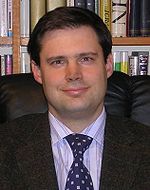
Peter Williams lectures on the historical reliability of the gospels

Peter J. Williams
Peter J. Williams

This is a lecture I found from British historian Dr. Peter J. Williams.

Here’s the main lecture: (54 minutes)

And here’s the Q&A: (9 minutes)

About Peter Williams:

Peter J. Williams is the Warden (CEO) of Tyndale House and a member of the Faculty of Divinity in the University of Cambridge. He received his MA, MPhil and PhD, in the study of ancient languages related to the Bible from Cambridge University. After his PhD, he was on staff in the Faculty of Divinity, Cambridge University (1997–1998), and thereafter taught Hebrew and Old Testament there as Affiliated Lecturer in Hebrew and Aramaic and as Research Fellow in Old Testament at Tyndale House, Cambridge (1998–2003). From 2003 to 2007 he was on the faculty of the University of Aberdeen, Scotland, where he became a Senior Lecturer in New Testament and Deputy Head of the School of Divinity, History and Philosophy. In July 2007 he became the youngest Warden in the history of Tyndale House. He also retains his position as an honorary Senior Lecturer in Biblical Studies at the University of Aberdeen.

Summary of the lecture:

  • What if the stories about Jesus are legendary?
  • were the gospels transmitted accurately?
  • were the gospels written in the same place as where the events happened?
  • do the gospel authors know the customs and locations where the events happened?
  • do the gospels use the right names for the time and place where the events took place?
  • do the gospels disambiguate people’s names depending on how common those names were?
  • how do the New Testament gospels compare to the later gnostic gospels?
  • how do the gospels refer to the main character? How non-Biblical sources refer to Jesus?
  • how does Jesus refer to himself in the gospels? do the later Christians refer to him that way?
  • how does Jesus teach? do later Christians teach the same way?
  • why didn’t Jesus say anything about early conflicts in the church (the Gentiles, church services)?
  • did the writers of the gospels know the places where the events took place?
  • how many places are named in the gospels? how about in the later gnostic gospels?
  • are the botanical details mentioned in the gospels accurate? how about the later gnostic gospels?

And here are the questions from the audience:

  • how what about the discrepancies in the resurrection narratives that Bart Ehrman is obsessed with?
  • what do you think of the new 2011 NIV translation (Peter is on the ESV translation committee)?
  • how did untrained, ordinary men produce complex, sophisticated documents like the gospels?
  • is oral tradition a strong enough bridge between the events and the writers who interviewed the eyewitnesses?
  • what does the name John mean?
  • why did the gospel writers wait so long before writing their gospels?
  • do you think that Matthew and Luke used a hypothetical source which historians call “Q”?
  • which gospel do critical historians trust the least and why?

I really enjoyed watching this lecture. He’s getting some of this material from Richard Bauckham’s awesome book “Jesus and the Eyewitnesses”, so if you aren’t familiar with it, you can get an idea of what’s in it. Peter Williams is a lot of fun to listen to – an excellent speaker.

You can read an interview with Peter Williams here on Between Two Worlds.

And you can listen to the Peter Williams vs Bart Ehrman debate. That link contains a link to the audio of the debate as well as my snarky summary. It’s very snarky.

And Apologetics 315 also posted Peter Williams’ assessment of Bart Ehrman’s “Misquoting Jesus”.

Survey: young people losing their Christian faith in record numbers

From the very liberal Washington Post.

Excerpt:

A growing tide of young Americans is drifting away from the religions of their childhood — and most of them are ending up in no religion at all.

One in four young adults choose “unaffiliated” when asked about their religion, according to a new report from the Public Religion Research Institute and Georgetown University’s Berkley Center for Religion, Peace & World Affairs.

But most within this unaffiliated group — 55 percent — identified with a religious group when they were younger.

“These younger unaffiliated adults are very nonreligious,” said Daniel Cox, PRRI’s research director. “They demonstrate much lower levels of religiosity than we see in the general population,” including participation in religious rituals or worship services.

Some of them will return to their faiths as they age, “but there’s not a lot of evidence that most will come back,” added Cox, who said the trend away from organized religion dates back to the early 1990s.

The study of 2,013 Americans ages 18-24 focused on the younger end of the cohort commonly known as the “Millennials” or “Generation Y,” which generally includes young adults as old as 29. Interviews were conducted between March 7 and 20.

Across denominations, the net losses were uneven, with Catholics losing the highest proportion of childhood adherents — nearly 8 percent — followed by white mainline Protestant traditions, which lost 5 percent.

Among Catholics, whites were twice as likely as Hispanics to say they are no longer affiliated with the church.

White evangelical and black denominations fared better, with a net loss of about 1 percent. Non-Christian groups posted a modest 1 percent net increase in followers.

But the only group that saw significant growth between childhood and young adulthood was the unaffiliated — a jump from 11 percent to 25 percent.

And this is very interesting:

An overwhelming majority of white evangelical Protestants (68 percent) said they believe that some things are always wrong, compared to 49 percent of black Protestants, 45 percent of Catholics and 35 percent of the unaffiliated.

I’m a non-white evangelical Protestant, and I think that in general, evangelical Protestants are the ones who emphasize theology, apologetics and worldview integration the most. I think that any other church that wants to stop the losses will have to get serious about apologetics and worldview. It’s especially important for churches to emphasize that Christianity is about truth, to emphasize how we know it’s true (science, history) and to explain why some things are wrong and why Hell is fair. We just don’t have the requirements straight right now – too much emphasis on Christian culture and externals, and not enough emphasis on theology and apologetics and moral reasoning. And parents – not pastors – need to take the lead in teaching their own children after church is over.

Christopher Hitchens debates William Lane Craig: Does God Exist?

Here’s the full debate on video. Hugh Hewitt is the moderator.

Now I think most people are familiar with Christopher Hitchens and his arguments – he is widely regarded as the top atheist debater in the world, and has written bestselling books on atheism. So below is a little more about the Christian debater William Lane Craig. Craig is  regarded as the top defender of Christianity in the world, although many people are unfamiliar with his arguments. Here is a written explanation of the five arguments he uses in the debate with Hitchens, if you want to follow along. This is a good debate for any of you who have never seen a debate on God’s existence before.

About William Lane Craig

Let’s review William Lane Craig’s qualifications:

William Lane Craig is Research Professor of Philosophy at Talbot School of Theology in La Mirada, California.

Dr. Craig pursued his undergraduate studies at Wheaton College (B.A. 1971) and graduate studies at Trinity Evangelical Divinity School (M.A. 1974; M.A. 1975), the University of Birmingham (England) (Ph.D. 1977), and the University of Munich (Germany) (D.Theol. 1984). From 1980-86 he taught Philosophy of Religion at Trinity… In 1987 they moved to Brussels, Belgium, where Dr. Craig pursued research at the University of Louvain until assuming his position at Talbot in 1994.

He has authored or edited over thirty books, including The Kalam Cosmological ArgumentAssessing the New Testament Evidence for the Historicity of the Resurrection of JesusDivine Foreknowledge and Human FreedomTheism, Atheism and Big Bang Cosmology; and God, Time and Eternity, as well as over a hundred articles in professional journals of philosophy and theology, including The Journal of PhilosophyNew Testament StudiesJournal for the Study of the New TestamentAmerican Philosophical QuarterlyPhilosophical StudiesPhilosophy, and British Journal for Philosophy of Science.

Craig’s CV is here.

Craig’s list of publications is here.

Here is a partial list of his past debates against the top atheist scholars. Many of those have audio and video. His best recent debate was against the British philosopher Peter Millican. Recommended for advanced students only. For a more basic debate against a very poorly prepared opponent, you can watch the Craig-Atkins debate. Atkins is a retired professor of chemistry from Oxford.