Tag Archives: Habitability

Atheist philosopher of science Bradley Monton discusses intelligent design

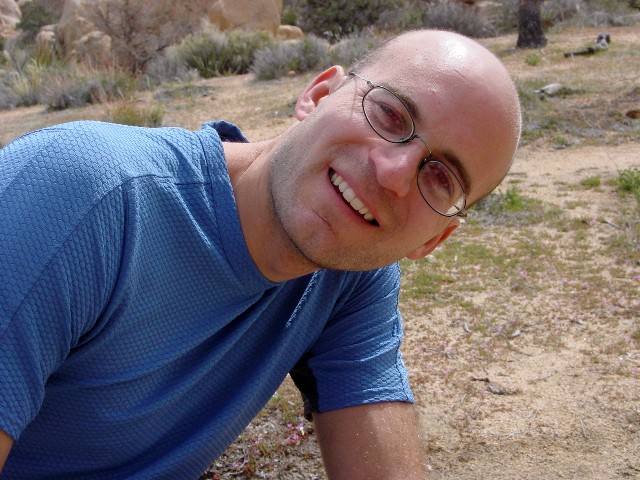
Philosopher Bradley Monton

About Bradley Monton:

I’m a philosophy professor at the University of Colorado at Boulder. I work in philosophy of time, philosophy of religion, philosophy of science (especially physics), and probabilistic epistemology.

There’s an interview with Dr. Monton in Salvo magazine’s new issue, which is on science and faith.

The interview has more about his credentials:

Bradley Monton • Associate Professor of the Philosophy of Science at the University of Colorado • BA in Physics and Philosophy from Rice University • PhD in Philosophy from Princeton University • Author of Seeking God in Science: An Atheist Defends Intelligent Design

And here are the interview questions:

  1. What makes you take intelligent design (ID) seriously?
  2. Why do you think some scientists refuse to take intelligent design seriously?
  3. You write in your book that you don’t fully endorse intelligent design. In your opinion, what are some of the weaknesses of ID?
  4. Then why can’t you fully support intelligent design?
  5. So what are the strengths of intelligent design?
  6. What do you think about the multiverse theory—this belief that there are actually an infinite number of universes out there, making the complexity of our own universe more likely and less special?
  7. Do you think intelligent design should be taught in public schools?
  8. Do you teach your own students about intelligent design?
  9. Do you think academic freedom is limited for non-tenured proponents of intelligent design?
  10. How have other academics responded to your writings and statements on intelligent design?
  11. You’ve written that intelligent-design arguments have made you less certain of your atheism. What would it take to make you abandon it altogether?
  12. So what sort of scientific evidence would be compelling enough to change your mind?
  13. Are there other atheist scientists out there who believe that intelligent-design arguments hold some merit?

Here’s my favorite question (#12) and the answer:

So what sort of scientific evidence would be compelling enough to change your mind?

It would be evidence for mind as a fundamental feature of the universe. As far as I’m concerned, God would have to be a purely mental entity, not connected to physical reality in the way that we are through our bodies. So if we could discover some kind of evidence that mind is fundamental, then that would go a long way toward making me a believer. And if we could find evidence that the physical world isn’t causally closed—that not only is mind a fundamental entity, but it likewise plays a causal role in the structure of the world—then that would also be compelling evidence for the existence of God. Now, if it is found that mind plays a role in our brain processes alone, that by itself wouldn’t make me believe in God, though it would certainly make me more open to the idea. But if we were to discover that mind is intervening in other places in the world besides our brain processes, then that would pretty much be the smoking gun.

Yeah, I think there is good evidence for a non-physical mind, both from science and philosophy.

I think a lot of Christians who grew up with young-Earth creationism are startled to find that there are non-theistic, non-Christians scholars who take ID seriously. I think if I were a smart young-Earth creationist like Paul Nelson or Marcus Ross, I would try to create common ground with scholars by discussing intelligent design with them.


Why does God allow so much natural evil from phenomena like earthquakes?

My friend Eric Chabot of Ratio Christi shared this video with me, which features chemist Fazale Rana.

The video runs under 4 minutes:

Basically, there was an atheist who challenged the idea that nature is designed because there are things in nature which cause suffering, like earthquakes and volcanoes.

Now the first thing to note is that atheists commonly think that God’s job is to make humans happy. If he doesn’t make humans feel happy – regardless of their knowledge of him and relationship with him – then he is a big failure. Many atheists think that, it is one of the most common reasons why people become atheists. But of course anyone who reads the Bible and reads the story of Jesus knows that the purpose of life on God’s view is for humans to know him and to be disciples of a suffering Messiah who sacrifices himself in order to obey God the Father.  So that’s the first thing to say – purpose of life not happiness, but knowledge of God and being a disciple of Jesus. This may involve all kinds of suffering, and that’s to be expected.

Second, there is a response to the problem of evil based on the necessity of natural laws. The argument goes that you can’t have genuine morality without a predictable, knowable system of natural laws.

But I want to talk about something different in this post. In the video, Dr. Rana thinks that many of the things that cause suffering in the natural world are actually necessary for life to exist at all. He provides the example of plate tectonics in his video above, and I want to take that one and add to it the example of heavy element production and the stellar lifecycle. These are both from a book called “Rare Earth”, which is written by two non-Christians – Peter Ward and Donald Brownlee, but I’ll link to web sites to make the case.

Plate tectonics.

Here’s an article from Reasons to Believe by Dr. David Rogstad, who has a PhD in physics from Caltech – the top school for experimental science. The article not only goes over the basic plate tectonics to carbonate-silicate cycle connection, but it adds a newer discovery to boot.

Excerpt:

Earthquakes are a byproduct of plate tectonics, a theory in geology developed in recent years for explaining motions near the surface of the Earth. One of the benefits from plate tectonics is that Earth maintains the right levels of carbon dioxide (CO2) in the atmosphere to compensate for the Sun’s increasing luminosity. This is accomplished by what is called the carbonate-silicate cycle. CO2 is removed from the atmosphere through weathering. The weathered products are eventually drawn into the Earth’s interior via plate tectonics. Processes inside the Earth’s interior release the CO2 back into the atmosphere via volcanoes. While all aspects of this mechanism are not yet fully understood, it has been instrumental in providing a stable environment for life on the Earth for billions of years.

New research provides yet another component that appears fine-tuned for life. In a letter in the September 27, 2007 issue of Nature together with a corresponding news release from the University of Bonn, Arno Rohrbach and his colleagues have discussed another mechanism similar to the carbonate-silicate cycle. It also depends on plate tectonics but, in this case, the mechanism controls the amount of oxygen on the surface of the Earth.

Oxygen becomes bound up in various oxides which are then drawn into the Earth’s interior, where various processes result in its being incorporated into an exotic mineral called majorite. The results reported in this letter established that majorite functions as a kind of “reservoir” for oxygen, and when the majorite ascends nearer to the surface of the Earth it breaks down and releases its oxygen. Some of this oxygen also binds with hydrogen released from the interior of the Earth to form water. The authors have referred to the whole process as an “oxygen elevator.”

They go on to say that “without the ‘oxygen elevator’ in its mantle the Earth would probably be a barren planet hostile to life. According to our findings, planets below a certain size hardly have any chance of forming a stable atmosphere with a high water content.”

This research confirms the existence of one more finely tuned mechanism that depends on plate tectonics and contributes to an environment that can support life. It also gives humans one more reason to be appreciative rather than dismayed when we experience an earthquake that breaks some precious possessions beyond repair.

Astronomer Dr. Hugh Ross who has a PhD in Astronomy from the University of Toronto and did a 5-year post-doctoral work at Caltech, adds to this with another discovery.

Excerpt:

In the December 2007 issue of Astrobiology Stanford University geophysicists Norman H. Sleep and Mark D. Zoback note that the higher tectonic activity during Earth’s early history could have played a key role in cycling critically important nutrients and energy sources for life. The production of numerous small faults in the brittle primordial crust released trapped nutrients. Such faults could also release pockets of methane gas and molecular hydrogen. The methane and hydrogen could then provide crucial energy sources for nonphotosynthetic life. Finally, the production of faults could bring water to otherwise arid habitats, such as rocks far below Earth’s surface.

Faulting, generated by active and widespread tectonics, allowed a youthful Earth to support diverse and abundant life. This enhanced diversity and abundance of life quickly transformed Earth’s surface into an environment safe for advanced life. Also, the buildup of biodeposits for the support of human civilization occurred more rapidly due to active tectonics.

The more rapid preparation of Earth for humanity is critical. Without such rapid preparation, humans could not come upon the terrestrial scene before the Sun’s increasing luminosity would make their presence impossible (due to excessive heat).

So that’s the science behind earthquakes. So that’s a brief look at why we need plate tectonics for life, and we just have to buck up and take the earthquakes with it. It’s not God’s job to give us happiness and health. That’s not his plan. People who complain about earthquakes have to show how God could get the life-permitting effects of earthquakes without wrecking his ability to succeed in his plan to make people know him and follow him. But how can an atheist do that? They can’t. I think that people just need to realize that humans are not in charge here and we have to live with that. We have to accept that we didn’t make the universe, and we don’t get to decide what purpose it has. God decides.

On to star formation.

Star formation

Atheists often complain that the universe is too big or too old (which is actually the same thing, since the more time passes, the more it expands). The fact of the matter is that life appeared the earliest it could appear – we needed the universe to be a certain age before it could support life.

Dr. Hugh Ross explains in this article.

Excerpt:

The second parameter of the universe to be measured was its age. For many decades astronomers and others have wondered why, given God exists, He would wait so many billions of years to make life. Why did He not do it right away? The answer is that, given the laws and constants of physics God chose to create, it takes about ten to twelve billion years just to fuse enough heavy elements in the nuclear furnaces of several generations of giant stars to make life chemistry possible.

Life could not happen any earlier in the universe than it did on Earth. Nor could it happen much later. As the universe ages, stars like the sun located in the right part of the galaxy for life (see chapter 15) and in a stable nuclear burning phase become increasingly rare. If the universe were just a few billion years older, such stars would no longer exist.

The Rare Earth book explains the details on p. 40-4:

The trick for getting from helium to the generation of planets, and ultimately to life, was the formation of carbon, the key element for the success of life and for the production of heavy elements in stars. Carbon could not form in the early moments following the Big Bang, because the density of the expanding mass was too low for the necessary collisions to occur. Carbon formation had to await the creation of giant red stars, whose dense interiors are massive enough to allow such collisions. Because stars become red giants only in the last 10% of their lifetimes (when they have used up much of the hydrogen in their cores), there was no carbon in the Universe for hundreds of millions to several billion years after the Big Bang—and hence no life as we know it for that interval of time.

[…]The sequence of element production in the Big Bang and in stars provided not only the elements necessary for the formation of Earth and the other terrestrial planets but also all of the elements critical for life—those actually needed to form living organisms and their habitats.

[…]The processes that occurred during the billions of years of Earth’s “prehistory” when its elements were produced are generally well understood. Elements are produced within stars; some are released back into space and are recycled into and out of generations of new stars. When the sun and its planets formed, they were just a random sampling of this generated and reprocessed material. Nevertheless, it is believed that the “cosmic abundance” mix of the chemical elements—the elemental composition of the sun—is representative of the building material of most stars and planets, with the major variation being the ratio of hydrogen to heavy elements.

[…]Many stars are similar in composition, but there is variation, mainly in the abundance of the heavier Earth-forming elements relative to hydrogen and helium. The sun is in fact somewhat peculiar in that it contains about 25% more heavy elements than typical nearby stars of similar mass. In extremely old stars, the abundance of heavy elements, may be as low as a thousandth of that in the sun. Abundance of heavy elements is roughly correlated with age. As time passed, the heavy-element content of the Universe as a whole increased, so newly formed stars are on the average more “enriched” in heavy elements than older ones.

[…]The matter produced in the Big Bang was enriched in heavier elements by cycling in and out of stars. Like biological entities, stars form, evolve, and die. In the process of their death, stars ultimately become compact objects such as white dwarfs, neutron stars, or even black holes. On their evolutionary paths to these ends, they eject matter back into space, where it is recycled and further enriched in heavy elements. New stars rise from the ashes of the old. This is why we say that each of the individual atoms in Earth and in all of its creatures—including us—has occupied the interior of at least a few different stars.

What he’s saying is that heavy elements are created gradually because of the star formation lifecycle. The first generation of stars are metal-poor. The next generation of stars is better. And so on until we get to stars that can support life by providing a steady, stable amount of energy – as well as other benefits like planets with an atmosphere.  Our planet is 4.5 billion years old, and the universe is about 14 billion years old. Simple life appears about 4 billion years ago on Earth. That means we got life practically immediately, given that we had to develop the heavy elements needed to make a life-supporting star, a life-supporting planet and us. 

UPDATE: Sean from ReligioPolitical Talk pointed out this related post out to me:

Another examples is that hurricanes help to regulate the earths temperature, and cause “sea deserts” to bloom… assisting in many ways earth’s climate:

“Some parts of the ocean are like deserts, because there isn’t enough food for many plants to grow. A hurricane’s high winds stir up the ocean waters and help bring nutrients and phytoplankton to the surface, where they get more sunlight, allowing the plants to bloom,” Babin said. (NASA)

To support the above, via The Columbia Tribune:

….”Most certainly,” says Steve DiMarco, a Texas A&M University oceanography professor who for 16 years has studied the Gulf of Mexico, which has a “dead zone” where oxygen-depleted water can kill marine life.

In early July, most of the Texas-Louisiana shelf from Freeport, Texas, to the Mississippi River Delta was hypoxic – meaning the salt water has lost large amounts of oxygen. Later in July, Hurricane Dolly disrupted the dead zone and re-oxygenated the shallow waters south of Louisiana and the entire shelf off Texas. Oxygen levels started to drop again within days after the storm.

In early August, Hurricane Eduard re-oxygenated the Louisiana shelf, but by mid-August oxygen concentrations dropped to hypoxic levels.

And guess what?

Hurricane Ike re-oxygenated the shelf when it made landfall Sept. 12 in Texas. The latest data collected in October showed oxygen concentrations nearly all at normal levels, DiMarco said….

Now that’s good blogging.

Four ways that the progress of science conflicts with naturalistic speculations

When people ask me whether the progress of science is more compatible with theism or atheism, I offer the follow four basic pieces of scientific evidence that are more compatible with theism than atheism.

Here are the four pieces of evidence best explained by a Creator/Designer:

  1. the kalam argument from the origin of the universe
  2. the cosmic fine-tuning (habitability) argument
  3. the biological information in the first replicator (origin of life)
  4. the sudden origin of all of the different body plans in the fossil record (Cambrian explosion)

And I point to specific examples of recent discoveries that confirm those four arguments. Here are just a few of them:

  1. An explanation of 3 of the 6 experimental evidences for the Big Bang cosmology (From an article from Caltech)
  2. Examples of cosmic fine-tuning (there at least 40 examples of cosmic fine-tuning), (From the New Scientist)
  3. Evidence that functional protein sequences are beyond the reach of chance, (from Doug Axe’s JMB article)
  4. Evidence showing that Ediacaran fauna are not precursors to the Cambrian fossils, (from the journal Nature)

Atheists will typically reply to the recent scientific discoveries that overturned their speculations like this:

  1. Maybe the Big Bang cosmology will be overturned by the Big Crunch/Bounce so that the universe is eternal and has no cause
  2. Maybe there is a multiverse: an infinite number of unobservable, untestable universes which makes our finely-tuned one more probable
  3. Maybe the origin of life could be the result of chance and natural processes
  4. Maybe we will find a seamless chain of fossils that explain how the Cambrian explosion occurred slowly, over a long period time

Ever heard any of these responses?

Below I list some resources to help you to respond to the four responses of atheists to the experimental data.

1) The Big Crunch/Bounce has been disproved theoretically and experimentally.

Theoretically:

Nature 302, 505 – 506 (07 April 1983); doi:10.1038/302505a0

The impossibility of a bouncing universe

ALAN H. GUTH* & MARC SHER†

*Center for Theoretical Physics, Laboratory for Nuclear Science and Department of Physics, Massachusetts Institute of Technology, Cambridge, Massachusetts 02139, USA

†Department of Physics, University of California, Irvine, California 92717, USA

Petrosian1 has recently discussed the possibility that the restoration of symmetry at grand unification in a closed contracting Robertson–Walker universe could slow down and halt the contraction, causing the universe to bounce. He then went on to discuss the possibility that our universe has undergone a series of such bounces. We disagree with this analysis. One of us (M.S.) has already shown2 that if a contracting universe is dominated by radiation, then a bounce is impossible. We will show here two further results: (1) entropy considerations imply that the quantity S (defined in ref. 1 and below), which must decrease by ~1075 to allow the present Universe to bounce, can in fact decrease by no more than a factor of ~2; (2) if the true vacuum state has zero energy density, then a universe which is contracting in its low temperature phase can never complete a phase transition soon enough to cause a bounce.

Experimentally:

The universe is not only expanding, but that expansion appears to be speeding up. And as if that discovery alone weren’t strange enough, it implies that most of the energy in the cosmos is contained in empty space — a concept that Albert Einstein considered but discarded as his “biggest blunder.” The new findings have been recognized as 1998’s top scientific breakthrough by Science magazine.

[…]The flood of findings about the universe’s expansion rate is the result of about 10 years of study, said Saul Perlmutter, team leader of the Supernova Cosmology Project at Lawrence Berkeley National Laboratory.

Perlmutter and others found such a yardstick in a particular kind of exploding star known as a Type 1A supernova. Over the course of several years, the astronomers developed a model to predict how bright such a supernova would appear at any given distance. Astronomers recorded dozens of Type 1A supernovae and anxiously matched them up with redshifts to find out how much the universe’s expansion was slowing down.

To their surprise, the redshift readings indicated that the expansion rate for distant supernovae was lower than the expansion rate for closer supernovae, Perlmutter said. On the largest scale imaginable, the universe’s galaxies appear to be flying away from each other faster and faster as time goes on.

“What we have found is that there is a ‘dark force’ that permeates the universe and that has overcome the force of gravity,” said Nicholas Suntzeff of the Cerro Tololo Inter-American Observatory, who is the co-founder of another group called the High-z Supernova Search Team. “This result is so strange and unexpected that it perhaps is only believable because two independent international groups have found the same effect in their data.”

There has only been one creation of the universe, and the universe will never reverse its expansion, so that it could oscillate eternally. That view is popular, perhaps in part because many people watched videos of Carl Sagan speculating about it in public school classrooms, but all it was was idle naturalistic speculation, (Sagan was a naturalist, and held out hope that science would vindicate naturalism), and has been contradicted by good experimental science. You should be familiar with the 3 evidences for the Big Bang (redshift, light element abundances (helium/hydrogen) and the cosmic microwave background radiation. There are others, (radioactive element abundances, second law of thermodynamics, stellar lifecycle), but those are the big three. Point out how the experimental evidence for the Big Bang has piled up, making the problem even worse for the eternal-universe naturalists. Leave no doubt.

2) The multiverse has not been tested experimentally, it’s pure speculation.

Speculation:

Multiverse thinking or the belief in the existence of parallel universes is more philosophy or science fiction than science. ”Cosmology must seem odd to scientists in other fields”.

George Ellis, a well-known mathematician and cosmologist, who for instance has written a book with Stephen Hawking, is sceptical of the idea that our universe is just another universe among many others.

A few weeks ago, Ellis, professor emeritus of applied mathematics at the University of Cape Town, reviewed Brian Greene’s book The Hidden Reality: Parallel Universes and the Deep Laws of the Cosmos (Knopf/Allen Lane, 2011) in the journal Nature. He is not at all convinced that the multiverse hypothesis is credible: ”Greene is not presenting aspects of a known reality; he is telling of unproven theoretical possibilities.”

According to professor Ellis, there is no evidence of multiverses, they cannot be tested and they are not science.

Ellis is not the only multiverse sceptic in this universe. A few months ago, science writer John Horgan wrote a column in Scientific American, expressing his doubt in multiverses.

When you get into a debate, you must never ever let the other side get away with asserting something they have no evidence for. Call them on it – point out that they have no evidence, and then hammer them with evidence for your point. Pile up cases of fine-tuning on top of each other and continuously point out that they have no experimental evidence for their speculations. Point out that more evidence we get, the more cases of fine-tuning we find, and the tougher the problem gets for naturalists. Leave no doubt.

3) Naturalistic theories for the origin of life have two problems: can’t make the amino acids in an oxydized atmosphere and can’t make protein and DNA sequences by chance in the time available.

Building blocks:

The oxidation state of Hadean magmas and implications for early Earth’s atmosphere

Dustin Trail, E. Bruce Watson & Nicholas D. Tailby

Nature 480, 79–82 (01 December 2011) doi:10.1038/nature10655

[…]These results suggest that outgassing of Earth’s interior later than ~200?Myr into the history of Solar System formation would not have resulted in a reducing atmosphere.

Functional protein sequences:

J Mol Biol. 2004 Aug 27;341(5):1295-315.

Estimating the prevalence of protein sequences adopting functional enzyme folds.

Axe DD.

The Babraham Institute, Structural Biology Unit, Babraham Research Campus, Cambridge CB2 4AT, UK. doug.axe@bbsrc.ac.uk

Proteins employ a wide variety of folds to perform their biological functions. How are these folds first acquired? An important step toward answering this is to obtain an estimate of the overall prevalence of sequences adopting functional folds.

[…]Starting with a weakly functional sequence carrying this signature, clusters of ten side-chains within the fold are replaced randomly, within the boundaries of the signature, and tested for function. The prevalence of low-level function in four such experiments indicates that roughly one in 10(64) signature-consistent sequences forms a working domain. Combined with the estimated prevalence of plausible hydropathic patterns (for any fold) and of relevant folds for particular functions, this implies the overall prevalence of sequences performing a specific function by any domain-sized fold may be as low as 1 in 10(77), adding to the body of evidence that functional folds require highly extraordinary sequences.

So atheists are in double jeopardy here. They don’t have a way to build the Scrabble letters needed for life, and they don’t have a way to form the Scrabble letters into words and sentences. Point out that the more research we do, the tougher the problem gets to solve for naturalists, and the more it looks like an effect of intelligence. Write out the calculations for them. Leave no doubt.

4) The best candidate to explain the sudden origin of the Cambrian era fossils was the Ediacaran fauna, but those are now recognized as not being precursors to the Cambrian fossils.

Science Daily reports on a paper from the peer-reviewed journal Science:

Evidence of the single-celled ancestors of animals, dating from the interval in Earth’s history just before multicellular animals appeared, has been discovered in 570 million-year-old rocks from South China by researchers from the University of Bristol, the Swedish Museum of Natural History, the Paul Scherrer Institut and the Chinese Academy of Geological Sciences.

[…]This X-ray microscopy revealed that the fossils had features that multicellular embryos do not, and this led the researchers to the conclusion that the fossils were neither animals nor embryos but rather the reproductive spore bodies of single-celled ancestors of animals.

Professor Philip Donoghue said: “We were very surprised by our results — we’ve been convinced for so long that these fossils represented the embryos of the earliest animals — much of what has been written about the fossils for the last ten years is flat wrong. Our colleagues are not going to like the result.”

Professor Stefan Bengtson said: “These fossils force us to rethink our ideas of how animals learned to make large bodies out of cells.”

The trend is that there is no evolutionary explanation for the body plans that emerged in the Cambrian era. If you want to make the claim that “evolution did it”, then you have to produce the data today. Not speculations about the future. The data we have today says no to naturalism. The only way to affirm naturalistic explanations for the evidence we have is by faith. We need to minimize our leaps of faith, though, and go with the simplest and most reasonable explanation – an intelligence is the best explanation responsible for rapid generation of biological information.

Conclusion

I do think it’s important for Christians to focus more on scientific apologetics and to focus their academic careers in scientific fields. So often I look at Christian blogs, and I see way too much G. K. Chesterton, Francis Chan and other untestable, ineffective jibber-jabber. We need to bring the hard science, and stop making excuses about not being able to understand it because it’s too hard. It’s not too hard. Everyone can understand “Who Made God?” by Edgar Andrews – start with that! Then get Lee Strobel’s “The Case for a Creator“. That’s more than enough for the average Christian on science apologetics. We all have to do our best to learn what works. You don’t want to be anti-science like atheists are. I recommend reading Uncommon Descent and Evolution News every day for a start.

UPDATE: Jeffery Jay Lowder (a naturalist) replies here.