
Tag Archives: Feminism

New study: single-sex schools more successful than mixed-sex schools

Do female-dominated schools discriminate against boys?

Here is the very latest study on this important topic from the Center for Economic and Policy Research (CEPR). They found that boys and girls both do better in single-sex schools, when compared to boys and girls in mixed-sex schools.

Excerpt:

We find robust evidence that pupils in single-sex schools outperform their counterparts in co-ed schools, by 5–10% of a standard deviation for boys and 4–7% for girls, with similar estimates across subjects (which include Korean, English, and maths). This is consistent with the findings reported in Park et al. (2013).

And this study was done in South Korea, where things are a lot more focused on academics than in North America!

In most schools, women comprise on average about 80% of the classroom instructors. This is not even to mention the administrators and the curriculum designers. It is not a friendly environment for boys. In fact, studies have shown that the typical curriculum is biased against boys. Teacher bias may also be a factor, since boys outperform their classroom grades on standardized tests (where there is no bias against them from the teachers).

Regarding the feminist curriculum, consider this report on a study from the UK Telegraph:

A lack of male role models at home and school is turning boys off reading at a young age as they increasingly reject books as “feminine”, it is claimed.

[…]Gavin Barwell, chairman of the All-Party Parliamentary Group on Literacy, said reading was not seen as a “masculine thing” by boys – leaving them lagging behind girls from the age of four onwards.

[…]According to Government figures, boys are less likely to read basic words or recite the alphabet by the age of five and the gap widens throughout compulsory education.

By the age of 16, fewer than 59 per cent of boys gained a good GCSE in English last year compared with 72.5 per cent of girls.

According to a brand new report from the American Enterprise Institute, this discrimination against boys is having a long-term negative effect on their participation in graduate school:

For the eighth year in a row, women earned a majority of doctoral degrees awarded at US universities in 2016. Of the 78,744 doctoral degrees awarded in 2016 (Table B.25), women earned 40,407 of those degrees and 52.1% of the total, compared to 37,145 degrees awarded to men who earned 47.9% of the total…

[…]Women represent 57.5% of all graduate students in the US, meaning that there are now 135 women enrolled in graduate school for every 100 men.

Here is one of the AEI charts:

Graduate school enrollment, male vs female, 2016

You can read about a couple more studies here that also argue that the male-underformance problem is a lack of male teachers in the classroom. It’s important to understand this, because it shows why ignorant cries of “man up” are not going to get men to perform better in school and at work. And men only marry if they feel comfortable taking on the roles of husband and father – which costs money. Men have to be able to earn money in order to engage in marriage and family, and the schools we have right now are set up against them doing that. If you want your daughters to have husbands (instead of marrying government social programs), then you’d better pay attention to these studies and vote accordingly. If you can pull your boys put of mixed-sex schools, it’s a good idea to do that. Homeschooling or single-sex private schools work better for boys.

Why sexual permissiveness is not compatible with the welfare of children

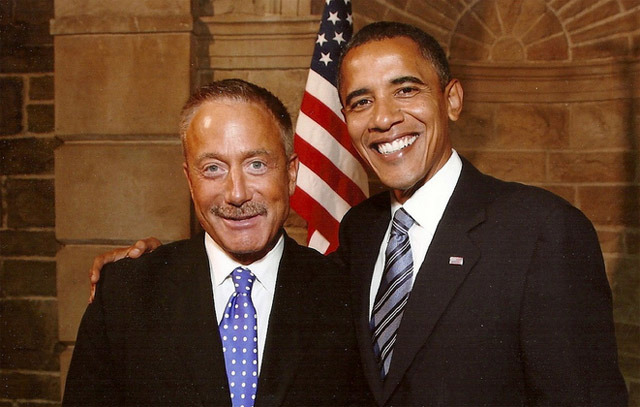
Gay activist Terry Bean and Barack Obama

Here is a striking essay from the Public Discourse. It talks about how we, as a society, have generally taken on an anything-goes approach with respect to sex. The one exception (for now) is pedophilia, which is the sexual abuse of children by adults. The essay points out that there is no moral reason for having this one exception, on secularism. The exception exists because of a sort of “ick” factor – not because we have a moral framework that makes anything right or wrong objectively. The essay argues that we are not shy about harming children in a million other ways, and lists some examples. I just want to quote a few and then I’ll comment about my own moral views around sexuality.

Quick summary of his argument:

The moral structure of pedophilia is simply this: the welfare of children is subordinate to the sexual gratification of adults.

[…]We should be thankful that the Sanduskys and Laheys are still considered monstrous. But in contemporary America that condemnation rests on sentiment and not on moral reasoning. No one can simultaneously explain why their actions were so vile and uphold the first commandment of the sexual revolution: fulfill thy desires.

[…]No, it isn’t how Sandusky and Lahey did what they did, or under what circumstances, that explains the disgust. It’s what they did—but nobody wants to acknowledge that.

The reason for that reluctance becomes clear, if we keep in mind the moral structure of pedophilia. Sexual gratification trumps. Thank goodness that for now, there aren’t many men who are sexually attracted to youngsters. In that single case, we raise the banner for the children. But in no other case.

That’s his argument.

Now, a quick excerpt:

If we altered the question, and asked not how many people have done sexually abusive things with children, but how many people have done sexual things that redounded to the suffering of children, then we might confess that the only thing that separates millions of people from Jerry Sandusky is inclination. Everything that was once considered a sexual evil and that is now winked at or cheered, everything without exception, has served to hurt children, and badly.

We might point here to divorce. Unless it is necessary to remove oneself and one’s children from physical danger and moral corruption, the old wisdom regarding divorce should hold, if children themselves have anything to say about it. Parents will say, “My children can never be happy unless I am happy,” but they should not lay that narcissistic unction to their souls. Children need parents who love them, not parents who are happy; they are too young to be asked to lay down their lives for someone else. It is not the job of the child to suffer for the parent, but the job of the parent to endure, to make the best of a poor situation, to swallow his pride, to bend her knees, for the sake of the child.

We might point to births out of wedlock. The child has a right to enter more than a little nursery decorated with presents from a baby shower. He should enter a human world, a story, a people. He should be born of a mother and a father among uncles and aunts and cousins and grandparents, stretching into the distant past, with all their interrelated histories, with his very being reflected in all those mirrors of relation, not to mention his eyes and his hair, the talents in his fingers and the cleverness in his mind. This belonging to a big and dependable world can be secured only in the context of the permanent love of his mother and father, declared by a vow before the community and before the One in whom there is no shadow of alteration.

And now my comments about this article.

So pretty much all my regular readers know that I take extremely conservative views on social issues, since I am an evangelical Protestant Christian. But I don’t just have conservative views – I am also chaste at a personal level. I am not one of these re-virgins – I have never had sex. Not once. And I don’t mean I have never had sexual intercourse only, I mean that I have never even kissed a woman on the lips. I am a radical on the issue of chastity. I don’t view chastity as depriving oneself of something good, I view it is as a thing that serious Christian men do when we want to enable and develop other capabilities. It’s my conviction that chastity enables the capability to see women as God sees them, which is a precursor to growing them up to serve him. That’s what women are for, on my view – exactly like men are for knowing and serving God. It’s my belief that once a man has premarital sex, it becomes much harder for him to view women that way.

So, I am really really really against any kind of sexual activity of any kind prior to marriage. I think that if a man wants to show affection to a woman, then sex before marriage is not the way to do that. There are other ways, and men ought to know how to speak the language of love to a woman in many different ways apart from sex, assuming that this is his goal for her. A man needs to create a context for sex before he can have it. Marriage is how a man provides a context for sex. Not just by giving a woman safety, but by specifying a shared vision which the woman agrees to support when she agrees to marriage. Men shouldn’t have intimate experiences with women who are not committed to a constructive partnership with specific goals, e.g. – birthing or adopting children in order to give them a stable, loving sane environment to grow up in. That is so rare nowadays, especially on college campuses which are inundated with sexual liberalism, thanks to radical feminism. My conviction that sex is not something that should be done before marriage emerges partly from a concern that children should have the best opportunity for that stable environment. And that’s what I want to focus on – sexual restraint as a means of providing for children and protecting children.

First, premarital sex creates a situations where abortion happens. Men and women should not engage in activities for recreational reasons that could possibility lead to the death of another human being, period. I am not one of these people who thinks “oh, poor woman who is pregnant, what a beastly man who did that to her – but she can do the right thing and keep the baby”. I think that women are equally to blame with men for even having sex before marriage – the mistake was having sex in the first place. So getting pregnant and keeping the baby is good, but preventing fatherlessness and not putting burdens on taxpayers is much, much better. People who engage in premarital sex are not only selfish, immature and irresponsible, but they are actually acting in a negligent fashion towards the child that may result from their choices. We should not make choices that put innocent children at risk. Premarital sex can be compared with driving while drunk in that regard. You might think it’s fun, but it’s not a good, moral thing to do because of the harm that may result. Saying “but I didn’t mean to” after the fact doesn’t change the harm.

Second, I’ve blogged before about many studies (like this one) that show that premarital sex reduces relationship stability, duration, and quality. Another study I blogged about showed that the number of sexual partners that a man or woman has before marriage directly affects the probability that the relationship will provide a stable environment for raising children. So one of my reasons for being chaste is to maximize the probability of giving my future children that stable environment. Another reason to be chaste is to give my future wife that gift of fidelity. When a man has proven that he has the ability to restrain himself with his wife during the courtship, that is a signal to her that he is good at self-control. The ability to court without premarital sex shows her that he is able to think about her as a person, and that he is able to evaluate her objectively for the purpose of filling the roles of wife and mother. And that this is, in fact, his whole purpose for her. A purpose that will survive the decline of her appearance and youth. Security is another gift that a chaste man gives his wife, so that she can age confidently.

Thirdly, I have in the past blogged about research on gay unions showing how various factors that are more probable in gay relationships, (e.g. – elevated rates of domestic violence, low relationship stability, drug abuse, high rates of promiscuity, etc.), undermine the stability of the environment in which children grow up. More here. Dr. Ryan Anderson has argued that the norms present in gay relationships will undermine the norms of traditional marriage, (permanence, sexual exclusivity, etc.), if marriage is redefined to eliminate the gender requirement. I think we need to keep the traditional definition of marriage because it’s better for children if we do (and there are other reasons to prefer natural marriage, as I’ve written about before).

I think I’ve said enough here to show that very often when it comes to sexual activity what is driving my conservative views is concern for others. Concern not just for the future children, but for the future wife. And not just for them, but for society as a whole, who would have to pay the social costs of things like divorce, and the social costs of children of divorce, etc. And not just for society, but also for God, who intends sexuality for a very specific purpose – it is a form of communication for two people who have been bonded to each other for life. Marriage has to count for God and achieve his goals. One of those goals is raising up children well for his sake. And adults need to control themselves in order to provide children with what they need.

Debating forgiveness: must a person admit wrongdoing before being forgiven?

Two horses fight it out, may the best horse win!

I’ve listened to this debate three times because I liked it so much. I even ordered Chris’ book for my best friend Dina. She has listened to the debate, and is currently split between the two debaters. I am in firm agreement with the pastor Chris, although Remy has some useful things to say that I agree with.

Here’s a link to the debate page on Moody Bible Institute’s “Up For Debate” program with Julie Roys.

Details:

Should Christians Forgive No Matter What?

Should Christians forgive someone even if he’s not sorry?  Or does true forgiveness require repentance and a desire to reconcile?  This Saturday, on Up For Debate, Julie Roys will explore this issue with Chris Brauns, a pastor who believes forgiveness requires repentance, and Remy Diederich who believes it does not.

Although I disagree with Remy, I only disagree with him about whether the guilty person must admit guilt and feel remorse and make restitution (depending on the severity of the offense). I agree with him on other things like no revenge, attitude of love, expressing willingness to forgive and be reconciled, etc. I also disagree with Remy on “forgiving God”, which I think is just crazy, because when God is engineering a person’s salvation, he never fails. I think that God is the Great General, and his strategies never fail to achieve the outcomes he desires (while still respecting free will). Whatever suffering or inadequacy or longing that you experience as a Christian is not some sort of mistake, horrible as it may be for you at the time. God is not your cosmic butler, although a lot of people these days seem to think that he is, and then they get disappointed.

Anyway, please listen to that debate and comment on it about who you think is right. I think my view (and Chris’ view) is in the minority in the church, because the church is so utterly dominated by feelings and radical feminism. I think my view (and Chris’ view) is the masculine view – the view that upholds moral standards, sets moral boundaries and defends the rightness of making moral judgments.

Below, I have pasted in some of my other thoughts on forgiveness from a previous post.

I think this is the key passage – Luke 17:3-4:

Be on your guard! If your brother sins, rebuke him; and if he repents, forgive him.

And if he sins against you seven times a day, and returns to you seven times, saying, ‘I repent,’ forgive him.”

That’s Jesus speaking, there.

Also, I was having a debate with someone who disagrees with all this, and while debating with her, I thought of another example.

Luke 18:9-14:

And He also told this parable to some people who trusted in themselves that they were righteous, and viewed others with contempt:

10 “Two men went up into the temple to pray, one a Pharisee and the other a tax collector.

11 The Pharisee stood and was praying this to himself: ‘God, I thank You that I am not like other people: swindlers, unjust, adulterers, or even like this tax collector.

12 I fast twice a week; I pay tithes of all that I get.’

13 But the tax collector,standing some distance away, was even unwilling to lift up his eyes to heaven, but was beating his breast, saying, ‘God, be merciful to me, the sinner!’

14 I tell you, this man went to his house justified rather than the other; for everyone who exalts himself will be humbled, but he who humbles himself will be exalted.”

So again, no forgiveness without repentance.

Forgiveness is what happens when someone who is sinned against treats the sinner as if he had never sinned. It is not on the balance sheet. It is not brought to mind. It is not held against them in the future. The forgiver trusts the sinner again as if the previous sin had never happened.

In divine (vertical) forgiveness, there is no forgiveness without repentance. There are Bible verses above to show that.

My argument is twofold. First, there is a clear teaching of Jesus explaining the sequence of sin and forgiveness. Repentance precedes forgiveness, between humans (Luke 17:3). The verses cited by the forgive without repentance crowd don’t show the mechanics of how to forgive, they are making the point that if you want God to forgive you, you should forgive others. The parable in Luke 18:9-14 affirms this again – repentance always precedes forgiveness.

Second, we have an obligation to imitate God, and that means imitating the way he forgives those who sin against him. When I raise that with the unconditional forgiveness crowd, they want to insist that there is a difference, that the word “forgive” means different things. I’m not convinced.

Finally, I do think that forgiving someone is obligatory if they sincerely repent, and even if they screw up again and again. So long as the repentance is sincere, (like if there is restitution and a genuine effort to show an understanding how the sin affected the wronged party in writing), then forgiveness should be automatic. Depending on how bad the sin is, there maybe be more to do than just say “I’m sorry”. If the repentance is genuine, then I think the person who is sinned against must forgive, if they expect to be forgiven by God for the things they repent of.

Alan E. Kurschner adds one final point about the unconditional forgiveness view. He argues that there is serious textual doubt about the originality of Luke 23:34a, a text used by the pro-unconditional-forgiveness crowd. He has a journal article coming out on it, but a synopsis of his argument is here.

He also wrote this in a comment on this blog:

Second, on Matt 6:15, this is what I have to say. Notice the then-clause: “neither will your Father forgive your sins.” This would require universalism on the Father’s part according to the unconditional interpretation given the first half: “But if you do not forgive others their sins.” Since everyone has wronged the Father is the Father required to forgive everyone even if they are not seeking forgiveness?

So I think the case for the forgiveness being conditional on repentance is pretty strong, especially when serious harm has been caused.