Tag Archives: Feminism

If unborn babies don’t have consciousness or don’t feel pain, may we kill them?

Unborn baby scheming about pro-life apologetics

Was having a conversation by e-mail yesterday with a pro-abortion atheist, and he gave two reasons why he supported abortion in the first and second trimester. First, he said that unborn babies can’t feel pain, so it’s OK to kill them. Second, he said that unborn babies don’t have consciousness, so it’s OK to kill them. I thought it might be useful to link to something that answers both of these objections.

Frank Beckwith is the author of “Defending Life: A Moral and Legal Case Against Abortion Choice“. He wrote that book for Cambridge University Press, a top academic press. But before Cambridge University Press, Beckwith wrote four easy-to-understand essays for the Christian Research Journal. Part IV is the one that has the response to the two questions raised by my atheist friend.

Part I. The Appeal to Pity

Part II. Arguments from Pity, Tolerance, and Ad Hominem

Part III. Is The Unborn Human Less Than Human?

Part IV. When Does a Human Become a Person?

Excerpt:

Some ethicists argue that the unborn becomes fully human sometime after brain development has begun, when it becomes sentient: capable of experiencing sensations such as pain. The reason for choosing sentience as the criterion is that a being that cannot experience anything (i.e., a presentient unborn entity) cannot be harmed. Of course, if this position is correct, then the unborn becomes fully human probably during the second trimester and at least by the third trimester. Therefore, one does not violate anyone’s rights when one aborts a nonsentient unborn entity. [13]

There are several problems with this argument. First, it confuses harm with hurt and the experience of harm with the reality of harm. [14] One can be harmed without experiencing the hurt that sometimes follows from that harm, and which we often mistake for the harm itself. For example, a temporarily comatose person who is suffocated to death “experiences no harm,” but he is nevertheless harmed. Hence, one does not have to experience harm, which is sometimes manifested in hurt, in order to be truly harmed.

Second, if sentience is the criterion of full humanness, then the reversibly comatose, the momentarily unconscious, and the sleeping would all have to be declared nonpersons. Like the presentient unborn, these individuals are all at the moment nonsentient though they have the natural inherent capacity to be sentient. Yet to countenance their executions would be morally reprehensible. Therefore, one cannot countenance the execution of some unborn entities simply because they are not currently sentient.

Someone may reply that while these objections make important points, there is a problem of false analogy in the second objection: the reversibly comatose, the momentarily unconscious, and the sleeping once functioned as sentient beings, though they are now in a temporary state of nonsentience. The presentient unborn, on the other hand, were never sentient. Hence, one is fully human if one was sentient “in the past” and will probably become sentient again in the future, but this cannot be said of the presentient unborn.

There are at least three problems with this response. First, to claim that a person can be sentient, become nonsentient, and then return to sentience is to assume there is some underlying personal unity to this individual that enables us to say that the person who has returned to sentience is the same person who was sentient prior to becoming nonsentient. But this would mean that sentience is not a necessary condition for personhood. (Neither is it a sufficient condition, for that matter, since nonhuman animals are sentient.) Consequently, it does not make sense to say that a person comes into existence when sentience arises, but it does make sense to say that a fully human entity is a person who has the natural inherent capacity to give rise to sentience. A presentient unborn human entity does have this capacity. Therefore, an ordinary unborn human entity is a person, and hence, fully human.

Second, Ray points out that this attempt to exclude many of the unborn from the class of the fully human is “ad hoc and counterintuitive.” He asks us to “consider the treatment of comatose patients. We would not discriminate against one merely for rarely or never having been sentient in the past while another otherwise comparable patient had been sentient….In such cases, potential counts for everything.” [15]

Third, why should sentience “in the past” be the decisive factor in deciding whether an entity is fully human when the presentient human being “is one with a natural, inherent capacity for performing personal acts?” [16] Since we have already seen that one does not have to experience harm in order to be harmed, it seems more consistent with our moral sensibilities to assert that what makes it wrong to kill the reversibly comatose, the sleeping, the momentarily unconscious, and the presentient unborn is that they all possess the natural inherent capacity to perform personal acts. And what makes it morally right to kill plants and to pull the plug on the respirator-dependent brain dead, who were sentient “in the past,” is that their deaths cannot deprive them of their natural inherent capacity to function as persons, since they do not possess such a capacity.

These four essays are a very good introduction to common responses to pro-abortion arguments. I recommend that people get familiar with this, as once you look into it, you will see that the abortion issue can be debated with as much confidence as William Lane Craig defends Christian theism. You will have the same access to scientific evidence and rational arguments on this topic, and so you will have the upper hand. And that’s fun.

The best introductory book on the abortion / right to life issue is “The Case for Life” by pro-life debater Scott Klusendorf. The best comprehensive book is a tie between “The Ethics of Abortion” by Christopher Kaczor, and Frank Beckwith’s “Defending Life: A Moral and Legal Case Against Abortion Choice“.

Can we raise declining marriage rates by telling men to “man up”?

Marine prays with his wife on their wedding day

The latest Prager University video features pro-marriage scholar Brad Wilcox:

I watched this video, and, as a card-carrying member of the Christian men’s rights movement, I was concerned that nothing was said about how radical feminism has weakened the attractiveness of marriage to men. I mean specifically things like women carrying debt, having liberal political views, being unchaste and even promiscuous, initiating the majority of divorces (70%), withholding sex if they do marry, and denying men child visitation if they divorce, single mother welfare making men superfluous, big government replacing men as providers, etc. The consequences of divorce for men are catastrophic, and I don’t just mean financially, but emotionally as well.

I contacted Wilcox to ask him why he did not recognize how radical feminism undermines the value of marriage to men, and he pointed me to this article he wrote in the leftist Washington Post.

He writes:

These days, 20something marriage has gotten a reputation for being a bad idea. That’s partly because parents, peers, and the popular culture encourage young adults to treat their twenties as a decade for exploration and getting one’s ducks in a row, not for settling down. In the immortal words of Jay-Z, “Thirty’s the new twenty.”

Indeed, the median age-at-first marriage has climbed to nearly 30 for today’s young adults, up from about 22 in 1970. Of course, there’s an upside to that. As my coauthors and I report in  Knot Yet: the Benefits and Costs of Delayed Marriage in America, women who put off marriage and starting a family earn markedly more money than their peers who marry earlier.

And here he sort of takes on my concerns about chastity, delayed marriage, and fertility:

First, you are more likely to marry someone who shares your basic values and life experiences, and less likely to marry someone with a complicated romantic or family history.  Those who marry in their twenties, for instance, are more likely to marry someone who isn’t previously married and shares their level of educational attainment as well as their religious faith. Marrying at this stage in your life also allows couples to experience early adulthood together. In the words of Elizabeth Gilbert, a 31-year-old woman who married in her mid-twenties, “My husband and I got to grow up together—not apart. We learned sacrifice, selflessness, compromise, and became better people for it.”

Women who marry in their 20s generally have an easier time getting pregnant, and having more than one child, than their peers who wait to marry in their thirties.  You’ll also be around to enjoy the grandchildren for longer.

You’re less likely to lose the best possible mate for fear of getting started too young on the adventure that is married life. One single, thirtysomething woman struggling to find a good partner put it this way to psychologist Meg Jay, the author of The Defining Decade: Why Your Twenties Matter and How to Make the Most of Them Now, and whose TED Talk on twentysomethings has garnered 6.9 million views: “The best boyfriend I ever had was in my mid-twenties. I just didn’t think I was supposed to be [married] with someone then.” And as psychotherapist Lori Gottlieb explains in her book, Marry Him, there’s a higher likelihood of finding a true peer and more appealing partner-for-life in one’s twenties, before those most appealing potential mates marry somebody else by their thirties.

I cannot fault Wilcox or Prager for being ignorant of the social changes that have undermined the value proposition of marriage for men, and that have also undermined men’s ability to fulfill their roles. Far from being a man-blamer, Prager is a warrior against radical feminism, and just today Wilcox tweeted a study showing the boys benefit from single-sex education – a position I favor myself. But I do want to head off the common “men need to man up” objection made by those who deny that the real problem is radical feminism.

Contrary to the “be a man / man up” crowd, my objections to marriage don’t come from a desire to be lazy about education, career and finance. Rest assured that I have a BS and MS in STEM, and nearly two decades of STEM work experience (internships, summer jobs, full-time employment). I do make six figures, like the person Wilcox discussed in the video, and I have the savings you would expect with a gapless STEM resume. So, complaining about “man up” isn’t going to work on me, and probably not on most men who have concerns about marriage.

Radical feminism causes women to delay marriage in order to have fun, travel and ride the carousel of promiscuity in their 20s. Women have been told that they will have more fun by delaying marriage and staying single in their 20s. Church leaders, friends and family should be discussing and demonstrating the value of marriage to women, and showing them how the lasting contentment of marriage is better than the temporary fun of drinking, sex, travel and career. Marriage is a better platform for lasting joy and for quality relationships. It’s up to the woman’s friends and family to make the case for marriage as more fun and fulfilling than the alternatives offered by radical feminism. Her friends and family need to be countering the feminist message that is everywhere in the culture: marriage is boring, children are a burden, and that husbands are needy and demanding fools. And women need to be told how spending a decade being selfish in their 20s undermines their suitability for marriage.

A woman’s friends and family should train her not to view the moral and spiritual leadership of a man as threatening and dangerous, just because it disagrees with her feelings and desires. Instead of recoiling in horror when a well-educated, successful, wealthy man tells a woman with a history of poor decision-making to get a full-time job, pay off her debts, and start investing, her friends and family ought to welcome it. A good man’s practical advice should not be seen as stifling a woman’s freedom to “follow her heart”. And her friends and family certainly should not celebrate when she chooses a penniless, unemployed, empty-resume man who never questions her reckless decisions. Women should be encouraged to choose men who have demonstrated ability as protectors, providers and moral and spiritual leaders, even if she would rather have a doormat who lets her be wild, selfish and irresponsible. Doormats are not intimidating, but they are also not decisive about marriage. When a man wants to marry a woman, he is very interested in encouraging her to be practical and responsible. This is a good thing.

Lesbian relationships are the most unstable and shortest-lived relationships. This suggests that there is a tendency in women to reject commitment when it goes against their feelings and self-interest. Women’s emotions can make them unstable, and less capable of commitment. Friends and family need to recognize that tendency, and help women to learn practicality, responsibility and unselfishness at a young age, so that they are capable of making commitments.Men look for women who have demonstrated that they are able to complete things that they start. We know that women initiate 70% of divorces, and mostly because of feelings of unhappiness. Finish a tough STEM degree, work a tough job for a few years, pay off debts, pay off a car loan, etc. Men look for women who can make and keep commitments through good times and bad times, even when it goes against their self-interest.

A good basic book to read on this issue is Helen Smith’s “Men On Strike“.

Here’s a short video about her book:

A longer interview from News Max:

And an even longer interview with a homeschooling man:

Some men are ignorant of how radical feminism makes women less suitable for marriage while simultaneously making school and work more difficult to boys and men. It is these men who need to “man up” and “be a man” by challenging women to reject radical feminism and embrace early marriage to strong men who lead. If you’re not willing to fight the radical feminism that causes the underlying problems, then you can’t complain when men wisely reject marriage to women who aren’t ready to be wives and mothers.

Should Christians be motivated by the fear of missing out (FOMO)?

Bible study that hits the spot

My best friend Dina and I recently spent some time talking over some articles that we found on the culture. We specifically talked about what is motivating young people, so I wanted to write something about that.

FOMO: Fear Of Missing Out

Here’s a leftist New York Times article explaining where FOMO comes from:

It’s known as FOMO, or “fear of missing out,” and refers to the blend of anxiety, inadequacy and irritation that can flare up while skimming social media like Facebook, Twitter, Foursquare and Instagram. Billions of Twitter messages, status updates and photographs provide thrilling glimpses of the daily lives and activities of friends, “frenemies,” co-workers and peers.

[…]When we scroll through pictures and status updates, the worry that tugs at the corners of our minds is set off by the fear of regret, according to Dan Ariely, author of “Predictably Irrational” and a professor of psychology and behavioral economics at Duke University. He says we become afraid that we’ve made the wrong decision about how to spend our time.

[…]A friend who works in advertising told me that she felt fine about her life — until she opened Facebook. “Then I’m thinking, ‘I am 28, with three roommates, and oh, it looks like you have a precious baby and a mortgage,’ ” she said. “And then I wanna die.”

It’s like they want to run a race to do fun and exotic things with their peers, and not finish last.

Anyway, I want to begin this post with examples of FOMO behavior I have personally encountered.

FOMO Travel

Dina and I read and discussed this article by Alain de Botton in The European – notice the emphasis on travel and having fun, sophisticated experiences:

We’re continually being bombarded with suggestions about what we might do (go jet skiing, study in Colorado, visit the Maldives or see the Pyramids). We’re always hearing of the amazing things friends have done or are going to do: ‘there was this great bar we all went to …’; ‘she’s getting married in a little country church, then we’re having a picnic…’; ‘the sun was glinting on Sydney Harbour…’ There are endless hints of the allure of life in other places: an article about family-friendly restaurants in Brooklyn, a crime novel set in Trieste, the departure board at the airport with its list of places only a plane trip away: Moscow, Bangkok, Addis Ababa… The modern world makes sure we know at all times just how much we’re missing. It is a culture in which intense and painful doses of FOMO (Fear Of Missing Out) are almost inevitable.

What’s interesting is this – how does FOMO travel affect young, unmarried Christians?

Travel through missions work seems to be the FOMO activity of choice for at least a few young, unmarried Christians. One of my best friends who is married to another of my best friends told me about her missions trip to a European country. I asked her why she did it, since it meant lost savings, lost earnings, lost work experience, etc. (She gave up a year of earnings, and she had a great job in engineering). Her answer was that she did it for the adventure. I have a hard time hearing Jesus say that he was going to do something because he was bored and wanted an adventure. Especially when it’s $30,000 in costs, $60,000 of lost income, and lost work experience – per year. This was before the time of the Internet, though, when missionary work actually made sense. I just don’t think it’s worth spending that kind of money for the impact you make. The people I know who went on missionary trips just wanted to feel spiritual, look spiritual, and have a fun “life experience” vacation. One missionary told me that she was desperate to get away from her boring mid-Western roots.

If you really want to share Christ effectively with people in other countries, then you can start a blog and pay the tiny costs for it out of your earnings from your day job – that’s what I do. I get more people from Europe reading my blog than I could contact in a year of missionary work. I Skype with the people who are interested in Christianity from these countries (Scotland, Northern Ireland, England, Canada, etc.), as well. Meanwhile, I keep working my not-exciting job, so my savings increase, and my resume remains gap-less. This is good stewardship of finances, and self-denial prepares your character for the hard work of marriage and parenting. The Bible says that those who do not work should not eat. And Paul says that he built tents so that no one could accuse him of taking on missionary work for financial gain.

You can tell whether a person is sincere in their missionary intentions by looking at how responsible they’ve been in their decision-making. If a person has gone into debt paying for fun, thrilling activities like skydiving, ziplining, surfing, etc., then it’s FOMO travel. We must look past the spiritual smokescreen, and tell young people to grow up.

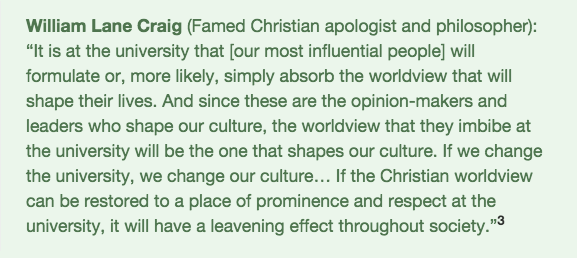
After all, if defending God’s honor was the missionary’s main goal, then the real battlefield would be the university.

Bill Craig puts it best:

If serving God is your goal, look to the university

There is already a perfectly fine university right next door – no need to fly to Europe to find one! Remember, the university that took your faith away, or maybe the faith of someone you cared about? Yeah, it’s still sitting there in your home town! And it’s still ruining the lives of thousands of young people, by peer-pressuring them into secular, liberal views – and behaviors. It seems to me that it’s better stewardship to stay here and work, then give money to groups like Reasonable Faith. And you can start a blog, teach in church and invite scholars to the local university, too. That costs almost nothing, and it produces better results.

What about Jesus?

Sometimes, it’s a good idea to look beyond the words of the Bible and reflect on the overall message of it at a higher level. When I look in the Bible, I see that Jesus went through a lot of suffering in obedience to God in order to secure the salvation of people who did not even like him. And it’s from this sacrifice on our behalf that his claim on our obedience comes. There are things that I don’t like to do that I do anyway because they work to serve God. Jesus life’s ambition was not to do things that were easy, or that made him happy. Experienced Christians do things that are not fun, because these things are right and because they solve the real problem.