
Tag Archives: Feelings

Judge rules that man must pay $50,000 a month to ex-girlfriend for 10 years

When I was younger, I got the impression from young women that men with strong views on theology and morality made them uncomfortable. I had my share of rejections by Christian women who didn’t like my strong Biblical views. At the time, I was worried that I might not be able to get married at all. But looking at how the family courts operate, that turned out to be a good thing.

The news story is from one of Canada’s national newspapers, the National Post:

A wealthy businessman will have to pay more than $50,000 a month in spousal support for 10 years to a woman with whom he had a long-term romantic relationship even though they kept separate homes and had no children together, Ontario’s top court has ruled.

Under Ontario law, an unmarried couple are considered common-law spouses if they have cohabited — lived together in a conjugal relationship — continuously for at least three years. But that doesn’t necessarily mean living in the same home, the court found.

[…]When their 14-year relationship finally broke down in May 2015, Climans asked the courts to recognize her as Latner’s spouse and order him to pay her support. He argued she had been a travel companion and girlfriend, nothing more. As such, he said, they were never legally spouses and he owed no support. An eight-day trial ensued.

In her decision in February 2019, Superior Court Justice Sharon Shore sided with Climans. She ruled they were in fact long-time spouses, finding that despite their separate home, they lived under one roof at Latner’s cottage for part of the summer, and during winter vacations in Florida. Shore ordered him to pay her $53,077 monthly indefinitely.

Superior Court Justice Sharon Shore didn’t care that the man never married this woman, or lived with her, or had children with her. He had money, and she wanted it, so the judge gave it to her.

Elsewhere in the article, we learn that he had asked her to sign a pre-nuptial agreement many times, and each time she refused. (Those are not even enforced in divorce courts) It’s like her plan all along was to demand that a judge awarded her all of this man’s money.

Some people will say “well, these are Ontario family courts, this is normal. Haven’t you heard about what happened to Dave Foley?” I think every man knows the story of what the Ontario divorce courts did to Dave Foley.

Here is a story about it from the far-left Toronto Star, otherwise known as the Toronto Red Star.

It says:

Dave Foley of beloved Toronto sketch troupe the Kids in the Hall is starting a new career in standup comedy, but not in Toronto — he suspects he’ll be arrested if he returns to Canada.

The 48-year-old faces a back child-support bill in Ontario of more than half a million dollars: the accumulation of a debt that accrues steadily at more than $17,000 per month. On the set of Servitude, a film shot in Toronto last year, “I told the production guys, I have a court appearance on Monday and there’s a good chance I’ll be in jail on Monday afternoon,’” Foley said in an interview with the Star.

During an appearance on comic Marc Maron’s WTF podcast last month, Foley explained that his marriage to Toronto writer Tabatha Southey ended during his run on NBC’s five-year hit comedy NewsRadio, and he has failed in his efforts to adjust his child support downward to reflect his new life after sitcom stardom.

“My income has dropped in the last 10 years, as anyone can tell from the number of s—ty movies I’ve been in,” says Foley. “I’m not exactly picking and choosing my projects.” However, four years ago, Superior Justice Nancy Backhouse denied his motion to vary his support payments.

[…]Foley says that Ontario’s Family Responsibility Office now has an enforcement order and last year sought a six-month jail sentence for him, which was to extend indefinitely, until the overdue support was paid.

Ontario family courts are notoriously anti-male, and men know this. Unfortunately, the female judges who make these rulings don’t seem to understand that men know what they are doing, and then opt out of marriage. It must be so wonderful for these judges to punish the men who appear before them. But they can’t punish the men who respond to what they are doing by declining to marry women, and then declining to date women, and then declining to even speak to women.

I looked up Superior Justice Nancy Backhouse, and found another article about her decisions, entitled “Judge rejects pre-nup, awards ex-wife $5.3-million”. So, pre-nuptial agreements are also thrown out in Ontario divorce courts.

But it’s not just Ontario. I have two Christian friends here in America who married their Christian wives as virgins, and then their wives divorced them. I heard what happened to them in divorce court. They lost custody of their kids, and they are forced to pay alimony and child support even though their ex-wives poison the children against them, and deny them communication rights and visitation rights. And men know that this is happening to other men. How can women expect men to marry when the financial risks are so high?

Forbes magazine explains:

Of the 400,000 people in the United States receiving post-divorce spousal maintenance, just 3 percent were men, according to Census figures. Yet 40 percent of households are headed by female breadwinners — suggesting that hundreds of thousands of men are eligible for alimony, yet don’t receive it.

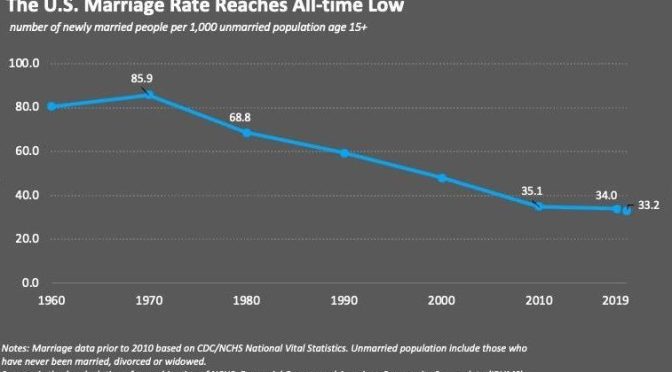
The divorced courts are biased against men, and men are getting the message. They look at these cases, and they understand that marriage is not worth the financial risks. They don’t want to have their possessions stolen by radical feminist judges.

Further reading

An excellent book to read about this issue is Dr. Stephen Baskerville’s book “Taken Into Custody: The War Against Fathers, Marriage, and the Family“. You can read what the book is about here. Dr. Baskerville is a Christian and a conservative. He has a PhD from London School of Economics and does a good job of explaining the negative view that society has about men, and male leadership. And sadly, these negative man-blaming views are often shared by Christians, too.


Mark D. Linville: does Darwinian evolution make morality rational?

Have you ever heard an atheist tell you that naturalistic evolution is an answer to the moral argument? I have. And I found a good reply to this challenge in the book “Contending With Christianity’s Critics“. The chapter that responds to the challenge is authored by Dr. Mark D. Linville.

First, a bit about the author:

Blog: The Tavern at the End of the World
Current positions:

  • PhD Research Fellow
  • Tutoring Fellow in Philosophy

Education:

  • PhD in Philosophy with a minor in South Asian Studies and a specialization in Philosophy of Religion, University of Wisconsin-Madison
  • MA in Philosophy, University of Wisconsin-Madison
  • MA in Philosophy of Religion, Trinity Evangelical Divinity School
  • MA in Theology, Cincinnati Christian Seminary
  • BA in Biblical Studies, Florida Christian College

Here is his thesis of the essay:

Darwin’s account of the origins of human morality is at once elegant, ingenious, and, I shall argue, woefully inadequate. In particular, that account, on its standard interpretation, does not explain morality, but, rather, explains it away . We learn from Darwin not how there could be objective moral facts, but how we could have come to believe—perhaps erroneously—that there are.

Further, the naturalist, who does not believe that there is such a personal being as God, is in principle committed to Darwinism, including a Darwinian account of the basic contours of human moral psychology. I’ll use the term evolutionary naturalism to refer to this combination of naturalism and Darwinism. And so the naturalist is saddled with a view that explains morality away. Whatever reason we have for believing in moral facts is also a reason for thinking naturalism is false. I conclude the essay with a brief account of a theistic conception of morality, and argue that the theist is in a better position to affirm the objectivity of morality.

And here’s a sample to get your attention:

But even if we are assured that a “normal” person will be prompted by the social instincts and that those instincts are typically flanked and reinforced by a set of moral emotions, we still do not have a truly normative account of moral obligation. There is nothing in Darwin’s own account to indicate that the ensuing sense of guilt—a guilty feeling—is indicative of actual moral guilt resulting from the violation of an objective moral law. The revenge taken by one’s own conscience amounts to a sort of second-order propensity to feel a certain way given one’s past relation to conflicting first-order propensities (e.g., the father’s impulse to save his child versus his impulse to save himself). Unless we import normative considerations from some other source, it seems that, whether it is a first or second-order inclination,one’s being prompted by it is more readily understood as a descriptive feature of one’s own psychology than material for a normative assessment of one’s behavior or character. And, assuming that there is anything to this observation, an ascent into even higher levels of propensities (“I feel guilty for not having felt guilty for not being remorseful over not obeying my social instincts…”) introduces nothing of normative import. Suppose you encounter a man who neither feels the pull of social, paternal or familial instincts nor is in the least bit concerned over his apparent lack of conscience. What, from a strictly Darwinian perspective, can one say to him that is of any serious moral import? “You are not moved to action by the impulses that move most of us.” Right. So?

The problem afflicts contemporary construals of an evolutionary account of human morality. Consider Michael Shermer’s explanation for the evolution of a moral sense—the “science of good and evil.” He explains,

By a moral sense, I mean a moral feeling or emotion generated by actions. For example, positive emotions such as righteousness and pride are experienced as the psychological feeling of doing “good.” These moral emotions likely evolved out of behaviors that were reinforced as being good either for the individual or for the group.2

Shermer goes on to compare such moral emotions to other emotions and sensations that are universally experienced, such as hunger and the sexual urge. He then addresses the question of moral motivation.

In this evolutionary theory of morality, asking “Why should we be moral?” is like asking “Why should we be hungry?” or “Why should we be horny?” For that matter, we could ask, “Why should we be jealous?” or “Why should we fall in love?” The answer is that it is as much a part of human nature to be moral as it is to be hungry, horny, jealous, and in love.3

Thus, according to Shermer, given an evolutionary account, such a question is simply a non-starter. Moral motivation is a given as it is wired in as one of our basic drives. Of course, one might point out that Shermer’s “moral emotions” often do need encouragement in a way that, say, “horniness,” does not. More importantly, Shermer apparently fails to notice that if asking “Why should I be moral?” is like asking, “Why should I be horny?” then asserting, “You ought to be moral” is like asserting, “You ought to be horny.” As goes the interrogative, so goes the imperative. But if the latter seems out of place, then, on Shermer’s view, so is the former.

One might thus observe that if morality is anything at all, it is irreducibly normative in nature. But the Darwinian account winds up reducing morality to descriptive features of human psychology. Like the libido, either the moral sense is present and active or it is not. If it is, then we might expect one to behave accordingly. If not, why, then, as a famous blues man once put it, “the boogie woogie just ain’t in me.” And so the resulting “morality” is that in name only.

In light of such considerations, it is tempting to conclude with C. S. Lewis that, if the naturalist remembered his philosophy out of school, he would recognize that any claim to the effect that “I ought” is on a par with “I itch,” in that it is nothing more than a descriptive piece of autobiography with no essential reference to any actual obligations.

When it comes to morality, we are not interested in mere descriptions of behavior. We want to know about prescriptions of behavior, and whether why we should care about following those prescriptions. We are interested in what grounds our sense of moral obligation in reality. What underwrites our sense of moral obligation? If it is just rooted in feelings, then why should we obey our moral sense when obeying it goes against out self-interest? Feelings are subjective things, and doing the right thing in a real objective state of affairs requires more than just feelings. There has to be a real objective state of affairs that makes it rational for us to do the right thing, even when the right thing is against our own self-interest. That’s what morality is – objective moral obligations overriding subjective feelings. I wouldn’t trust someone to be moral if it were just based on their feelings.

Is having a burning bosom a good test for truth in religion?

Here’s a good post from Christian apologist Clay Jones. He’s talking about how Mormons embrace Mormonism because of a burning in their bosom. (A subjective feeling) In the quote below, I reproduce the main thrust of the post – which he makes as part of his conversation with some Mormon missionaries. If you ever run into Mormons, this might help you.

Excerpt:

I pointed out that the Mormons base the truth of their religion on a subjective personal experience—namely, they base the truth of Mormonism on praying a prayer to ask God whether the Book of Mormon is trustworthy and if they get a warm feeling, which is described in some of their works a “a burning in the bosom,” then they conclude that Mormonism is true. They agreed.

I said that we evangelicals base our faith in historic Christianity on the evidence of Jesus being raised from the dead.

[…]But then I pointed out that the Mormons base their beliefs on a subjective personal experience that has led them to believe that Joseph Smith was a prophet, that historic Christianity is mistaken, that there was a great falling away, that there are many gods, that Mormons one day believe that they are going to become gods (just the males, actually), and that the Aaronic and Melchizedek priesthoods still function today (they didn’t disagree with even one word of this). I explained that you couldn’t get any of these ideas from the New Testament.

He goes to explain why subjective experiences are unreliable for determining truth.

When facing Mormons, and other cults, I also argue against subjectivism. But I supplement that with evidence. For Mormons, I use scientific evidence for the creation of the universe out of nothing. Mormons think that the matter in the universe existed eternally. They don’t accept the Big Bang theory! So you just roll through the scientific advances, show that the cause of the universe was non-physical, eternal, powerful and endowed with free will (to create an effect in time without antecedent conditions), and that’s the end of that.

I think that people in cults like Jehovah’s Witnesses and Christian Science have similar ways of forming their beliefs. They just filter out evidence falsifying their religion. JWs made all kinds of silly predictions about the end of the world that are not true – they’re false prophets, in other words. And Christian Science thinks that Jesus didn’t actually die, which no credentialed historian believes. (Just like Islam)