Tag Archives: Darwinism

Zack Kopplin debates Casey Luskin on science education

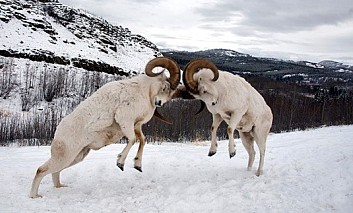
Two Rams butting heads: may the best ram win!

The Michael Medved show is a national radio show broadcast out of Seattle, Washington. According to Talkers magazine, he has the fifth largest radio audience.

The MP3 file is available for download. (38 minutes)

The description is:

On this episode of ID the Future, the Medved Show hosts the CSC’s Casey Luskin and student Zack Kopplin, a leading activist in the effort to repeal the Louisiana Science Education Act. Luskin and Kopplin debate the implications of the Louisiana law for science education standards and whether or not the law promotes the teaching of creationism.

Topics:

  • Medved: Should teachers be forced to teach creationism in public schools?
  • Luskin: The Discovery Institute has never advocated that creationism be taught in public schools
  • Medved: Does the Louisiana law mandate that creationism be taught in public schools
  • Kopplin: Yes, the bill does because Bobby Jindal said that the bill teaches creationism
  • Luskin: (Reads the actual text of the law) the law EXPLICITLY STATES that teaching creationism is forbidden
  • Luskin: Governor Jindal is misinformed about the law, but if you look at the law it says NO CREATIONISM
  • Kopplin: I don’t care about what the law actually says, I’ll just repeat that Bobby Jindal thinks it’s creationism
  • Kopplin: Thirty years ago, there was an attempt to mandate creationism, therefore this law is doing the same thing
  • Medved: Are there any complaints that creationism is being taught in any schools after this law has been passed
  • Kopplin: No, I don’t know of any, but that’s not because there are none! Maybe there are some that I haven’t heard about yet
  • Medved: If you are taught something that you think is stupid, then is that automatically a violation of your rights?
  • Kopplin: Because you cannot allow the progress of science to call the religion of naturalism into question
  • Luskin: About that Jindal quote – he was talking about what he wanted to pass, not the law that actually passed
  • Luskin: (reads the text of the law again) The law explicitly says that teaching creationism in the classroom is prohibited
  • Luskin: Intelligent design is not creationism. Creationism starts with the Bible. Intelligent Design starts with science
  • Luskin: The law only supports teaching both sides of things that are already in the curriculum
  • Luskin: ID is not already in the curriculum, therefore, the law does not allow it to be discussed
  • Medved: Take Stephen C. Meyer’s book on the origin of life, could that be used in the classroom?
  • Kopplin: I am not very familiar with Meyer’s book, but if it is critical of Darwinism and naturalism, then it should not be taught. I don’t need to read it before I can censor it
  • Luskin: Meyer’s book advocates for ID, so it should not be taught in science classrooms
  • Luskin: non-ID science papers that are critical of Darwinism should be allowed in science classroom so students get both sides
  • Medved: Consider this brand new Oxford University Press book that is critical of Darwinian mechanisms, authored by Masatoshi Nei who is at Penn State University professor (written up on Evolution News)
  • Medved: Should this research critical of Darwinism be allowed in science classrooms?
  • Kopplin: I don’t know if this book should be allowed in science classrooms
  • Kopplin: I already know without reading anything though that there will never be evidence that supports intelligent design
  • Kopplin: There is no evidence against Darwinism and there is no controversy and there is no disagreement among scientists
  • Luskin: There are hundreds of papers in mainstream science peer-reviewed publications critical of Darwinism
  • Luskin: (lists a stack of papers critical of core tenets of Darwinian theory from respect science journals in the last few years)
  • Luskin: Masatoshi Nei recently posted a comment critical of the usefulness of the mutation-selection mechanism
  • Luskin: The real issue is whether students are allowed to hear mainstream scientific criticisms of Darwinism in the science classroom
  • Medved: Is it OK for a teacher to admit that on a specific issue in science, that there is no credible naturalistic explanation?
  • Kopplin: I am a history major, so I don’t want to comment on whether it is OK to admit that naturalism doesn’t explain everything
  • Luskin: A Harvard chemist says that the origin of life is an open issue in this peer-reviewed journal article
  • Luskin: Teachers should be allowed to say that there is no accepted naturalistic explanation for the origin of life
  • Luskin: teachers should NOT be teaching religion, or creationism, or even intelligent design in science classrooms
  • Luskin: but teachers should be allowed to say what the Harvard chemist said in that peer-reviewed article in the science classroom
  • Kopplin: there was a creationist woman who sat next to the Discovery Institute person when the law was being debated
  • Kopplin: so based on that there is a scary hidden creationist agenda behind the law which is not reflected in the actual text law
  • Luskin: Um, that woman has no connection to the Discovery Institute
  • Luskin: seating arrangement at the hearings were pre-determined, not selected by those in attendance
  • Luskin: what about people who are pushing Darwinism, who are anti-religious atheists and humanists? should they be disqualified?
  • Luskin: we should not discredit the arguments of either side based on speculations about their motives – what counts is the evidence
  • Kopplin: but I have a letter signed by lots of Nobel-prize winning scientists that opposes the Louisiana science education law
  • Luskin: but that letter never actually quotes from the law, it is critiquing views that have nothing to do with the actual law
  • Medved: Summarize your views
  • Kopplin: Criticism of Darwinism and naturalism using mainstream scientific evidence SHOULD NOT be allowed in the science classroom
  • Luskin: Criticism of Darwinism and naturalism using mainstream scientific evidence SHOULD be allowed in the science classroom

And there is a period of questions from the callers.

This episode features a debate, so it is not to be missed. it is always a good idea to hear both sides. Unfortunately, ID people are the only ones who think that both sides should be heard.

I subscribe to the ID the Future podcast, and I really recommend that you do as well!

Can atheists condemn slavery as immoral? Do atheists believe that slavery is wrong?

Note: For a Christian response to the complaint that the Bible doesn’t condemn slavery, see this article and this article for slavery in the Old Testament, and this article for slavery in the New Testament. These are all by Christian philosopher Paul Copan. You can watch a lecture with Paul Copan on the slavery challenge here, and buy a book where he answers the challenge in more detail. There is also a good debate on whether the Bible condones slavery here, featuring David Instone-Brewer and Robert Price. My post is not a formal logical essay on this issue, it is more that I am outraged that atheists, who cannot even rationally ground objective morality, insist on criticizing the morality of the Bible. I think that atheists who are serious about finding the truth about these issues should check out those links, if they are interested in getting to the truth of these matters.

In other posts, I’ve argued that without an objective moral standard of what is right and wrong, any judgments about right and wrong are just individual opinions. So, when an atheist says slavery is wrong, what he really means is that he thinks slavery is wrong for him, in the same way that he thinks that,say, that chocolate ice cream is right for him. He isn’t saying what is wrong objectively, because on atheism there are no objective moral rules or duties. He is speaking for himself: “I wouldn’t own a slave, just like I wouldn’t eat broccoli – because it’s yucky!”. But he has no rational argument against other people owning slaves in other times and places, because their justification for owning slaves is the same as his justification for not owning slaves : personal preference and cultural conventions.

So do atheists oppose slavery? Do they believe in an objective human right to liberty? Well, there are no objective human rights of any kind on atheism. Human beings are just accidents in an accidental universe, and collections of atoms do not mysteriously accrue “rights”. There is no natural right to liberty on atheism. Now consider abortion, which is favored by most atheists. Like slavery, abortion declares an entire class of human beings as non-persons in order to justify preserving their own happiness and prosperity by means of violence. That’s exactly what slavery does, except abortion is worse than slavery, because you actually kill the person you are declaring as a non-person instead of just imprisoning them.

So how many atheists have this pro-abortion view that it is OK to declare unborn children  as non-persons so they can kill them?

Well, according to Gallup, the “non-religious” are the group most likely to support abortion. In fact, 68% favor legalized abortion, compared to only 19% who oppose it.

Take a look at the Gallup poll data from 2012:

Atheists are OK with the strong killing the weak
Most atheists are OK with the strong killing the weak

The Gallup numbers might actually be low, because “No religion” might include people who are spiritual, but not religious. But what about atheists alone?

As a group, atheists tend to be among the most radical supporters of legalized abortion. The Secular Census of 2012 found that 97% of atheists vote for abortion. There are almost no pro-life atheists. Why is it that atheists look at unborn children and think it’s OK to kill them? Well, let’s see what atheists scholars think about morality, and from that we’ll find out why they think abortion is morally permissible.

Atheist scholars think morality is nonsense

Atheist William Provine says atheists have no free will, no moral accountability and no moral significance:

Let me summarize my views on what modern evolutionary biology tells us loud and clear — and these are basically Darwin’s views. There are no gods, no purposes, and no goal-directed forces of any kind. There is no life after death. When I die, I am absolutely certain that I am going to be dead. That’s the end of me. There is no ultimate foundation for ethics, no ultimate meaning in life, and no free will for humans, either.

Source: http://www.arn.org/docs/orpages/or161/161main.htm

Atheists Michael Ruse says atheists have no objective moral standards:

The position of the modern evolutionist is that humans have an awareness of morality because such an awareness of biological worth. Morality is a biological adaptation no less than are hands and feet and teeth. Considered as a rationally justifiable set of claims about an objective something, ethics is illusory. I appreciate when someone says, ‘Love thy neighbor as thyself,’ they think they are referring above and beyond themselves. Nevertheless, such reference is truly without foundation. Morality is just an aid to survival and reproduction, . . . and any deeper meaning is illusory.(Michael Ruse, “Evolutionary Theory and Christian Ethics,” in The Darwinian Paradigm (London: Routledge, 1989), pp. 262-269).

Atheist Richard Dawkins says atheists have no objective moral standards:

In a universe of blind physical forces and genetic replication, some people are going to get hurt, other people are going to get lucky, and you won’t find any rhyme or reason in it, or any justice. The universe that we observe has precisely the properties we should expect if there is, at bottom, no design, no purpose, no evil and no good, nothing but blind, pitiless indifference… DNA neither knows nor cares. DNA just is. And we dance to its music. (Richard Dawkins, River Out of Eden: A Darwinian View of Life (1995))

Most atheists are like this – although some affirm objective morality, without really having a rational basis for it. In general though, when atheists use moral language to condemn God, the Bible, or Christians, it’s very important to understand that it is just theater. They are trying to use words that describe realities that they do not even believe in, usually with the goal of getting you to stop judging them for their own sin. I blogged about two examples of this before – Richard Carrier and Michael Shermer.

Let’s take a closer look at Richard Dawkins’ statement that there is “no evil and no good”.

Richard Dawkins and morality

Here’s Richard Dawkins’ view of abortion:

Richard Dawkins explains morality on atheism

But wait! He goes even further than mere abortion:

Dawkins believes in Darwinian evolution. Survival of the fittest. The strong kill the weak. Where is protection for the unborn in that narrative?

Richard Dawkins even advocates for adultery.

So, what Dawkins really believes is that morality is nonsense. But in order to get you to stop condemning abortion, adultery, infanticide and a whole host of other atheistic misbehaviors, he will try to condemn you using moral language to stop you from making moral judgments. But the goal here is to intimidate you into not judging. By his own words, he thinks that the whole notion of objective moral values and objective moral duties is just nonsense.

Who does oppose slavery?

How did slavery end?

Dinesh D’Souza explains:

Slavery was mostly eradicated from Western civilization–then called Christendom–between the fourth and the tenth century. The Greco-Roman institution of slavery gave way to serfdom. Now serfdom has its problems but at least the serf is not a “human tool” and cannot be bought and sold like property. So slavery was ended twice in Western civilization, first in the medieval era and then again in the modern era.

In the American South, Christianity proved to be the solace of the oppressed. As historian Eugene Genovese documents in Roll, Jordan, Roll, when black slaves sought to find dignity during the dark night of slavery, they didn’t turn to Marcus Aurelius or David Hume; they turned to the Bible. When they sought hope and inspiration for liberation, they found it not in Voltaire or D’Holbach but in the Book of Exodus.

The anti-slavery movements led by Wilberforce in England and abolitionists in America were dominated by Christians. These believers reasoned that since we are all created equal in the eyes of God, no one has the right to rule another without consent. This is the moral basis not only of anti-slavery but also of democracy.

And, in fact, you can see Christians pushing the culture hard against abortion today, just as we did with slavery. We also oppose frivolous divorce, and redefining marriage in a way that normalizes removing mothers and/or fathers away from their children. Defending the weak is what we do.

Define biomimetics and give two examples from peer-reviewed science journals?

I'm baby octopus, and I approve this message
I’m baby octopus, and I approve this message

Today, I have two examples of biomimetics.

But first, here’s what that is:

Biomimetic refers to human-made processes, substances, devices, or systems that imitate nature. The art and science of designing and building biomimetic apparatus is called biomimetics, and is of special interest to researchers in nanotechnology, robotics, artificial intelligence (AI), the medical industry, and the military.

Here’s the first example from Science Daily.

A robotic arm that can bend, stretch and squeeze through cluttered environments has been created by a group of researchers from Italy.

Inspired by the eight arms of the octopus, the device has been specifically designed for surgical operations to enable surgeons to easily access remote, confined regions of the body and, once there, manipulate soft organs without damaging them.

It is believed the device could reduce the number of instruments, and thus entry incisions, necessary in surgical operations, with part of the arm being used to manipulate organs whilst another part of the arm operates.

The device, which has been presented 14 May, in IOP Publishing’s journal Bioinspiration and Biomimetics, holds a key advantage over traditional surgical tools due to its ability to quickly transform from a bending, flexible instrument into a stiff and rigid instrument.

It has been inspired by the eight highly flexible arms of the octopus which have no rigid skeletal support and can thus easily adapt to the surrounding environment by twisting, changing their length or bending in any direction at any point along the arm.

The octopus can, however, vary the stiffness of its arms, temporarily transforming the flexible limbs into stiffened segments to allow the octopus to move and interact with objects.

[…]The ability of the robotic arm to manipulate organs while surgical tasks are performed was successfully demonstrated in simulated scenarios where organs were represented by water-filled balloons.

‘Traditional surgical tasks often require the use of multiple specialized instruments such as graspers, retractors, vision systems and dissectors, to carry out a single procedure,’ Dr Ranzani continued.

‘We believe our device is the first step to creating an instrument that is able to perform all of these tasks, as well as reach remote areas of the body and safely support organs around the target site.’

Fascinating, and useful. If we are reverse engineering these designs, should we assume that they were designed in the first place? Especially when there is zero evidence for macroevolution either in the lab or in the fossil record.

The shorebird's beak is more interesting than you might think
The shorebird’s beak is more interesting than you might think

My second example of biomimetics is also from Science Daily.

Excerpt:

A UT Arlington engineering professor and his doctoral student have designed a device based on a shorebird’s beak that can accumulate water collected from fog and dew.

The device could provide water in drought-stricken areas of the world or deserts around the globe.

Xin Heng… a doctoral student in Mechanical and Aerospace Engineering, and Cheng Luo, MAE professor, have made a device that can use fog and dew to collect water.

Cheng Luo, professor in the Mechanical & Aerospace Engineering Department, and Xin Heng, PhD candidate in the same College of Engineering department, published “Bioinspired Plate-Based Fog Collectors” in the Aug. 25 edition of ACS’ (American Chemical Society) Applied Materials & Interfaces journal.

The idea began when Heng saw an article that explained the physical mechanism shorebirds use to collect their food — driving food sources into their throats by opening and closing their beaks. Luo said that inspired the team to try to replicate the natural beak in the lab.

“We wanted to see if we could do that first,” Luo said. “When we made the artificial beaks, we saw that multiple water drops were transported by narrow, beak-like glass plates. That made us think of whether we could harvest the water from fog and dew.”

Their experiments were successful. They found out they could harvest about four tablespoons of water in a couple of hours from glass plates that were about 26 centimeters long by 10 centimeters wide.

Now, if we are lifting designs out of nature, then shouldn’t we give honor to God for putting the designs in there in the first place? I really think it’s important to give God credit where due for his clever designs, even if you’re not a big fan of the shorebird. I also think it’s interesting that it’s engineers who made this application of something in nature, not biologists.  Also, I feel I have to mention that the birdy is also cute, which is not insignificant, if you like birds as much as I do. I blog about birds a lot on this blog. And dragonflies too! Because wings are awesome!