
Tag Archives: Church

If you accept Jesus and become a Christian, will God make you happy?

Navy SEAL Matthew "Axe" Axelson
Navy SEAL Matthew “Axe” Axelson

This is a wonderful, wonderful post from Amy Hall, who writes for the Stand to Reason blog.

She writes:

I had a brief interaction with an atheist on Twitter a couple of weeks ago that unexpectedly turned to the issue of suffering when she said:

You clearly never had a time you were hurt. I don’t mean sick. I don’t mean heart broken. I mean literally a near death experience or rape or abusive relationship…. You can keep floating on a [expletive] cloud thinking Jesus will do everything for you but it’s a lie. What makes you so special?

That surprised me at first because it didn’t seem to have anything to do with the tweet she was responding to, and I was confused as to why she would assume I’d never been through anything traumatic. But then in subsequent tweets, when she revealed she had been raped, it became clear that her trauma had played a central role in her becoming an outspoken, obviously angry “antitheist.” She’s a self-described antitheist now because she thinks Christianity teaches Jesus “will do everything for you” to give you a perfect life, and now she knows that’s a lie. The rape proved her understanding of Christianity false.

So it made sense for her to reason that since I believe Christianity is true, I must still be under the delusion that Jesus is making my life special, which means I obviously never encountered any evil or suffering to shake that delusion.

All right, readers. I don’t want any of you to be thinking that if you become a Christian that these things should be expected to happen:

  • you will feel happy all the time
  • you will be able to sense God’s secret plan for your life through your feelings
  • God’s secret plan for your life will automatically work, even though it’s crazy
  • God will give you a perfect spouse and lots of money without you having to do any work
  • you get permission to do things that that make you happy, even if they are expressly forbidden by the Bible
  • you don’t have to do anything that makes you feel bad (e.g. – go to work), because God wants you to be happy

No! Where do people get this idea that if they convert to Christianity, then God will become their cosmic butler?

Amy has the answer: (emphasis mine)

Hear me, everyone: This is a failure of the church.

A friend of mine who was deeply suffering once said to me that many Christians are in for “an epic letdown” when they realize their preconceived notions about what God is expected to do for us are false. Pastors who preach a life-improvement Jesus are leading people down this precarious path to disillusionment.

If suffering disproves your Christianity, you’ve missed Christianity. The Bible is filled with the suffering of those whom God loves. The central event of the Bible is one of suffering. Love involves suffering. “We know love by this, that He laid down His life for us; and we ought to lay down our lives for the brethren.” That means suffering.

It’s the church. It’s all the singing about happy things and having of happy feelings and happy preaching designed to make us feel good. I would say the comforting devotional reading doesn’t help to make us any tougher or more practical, either. People seem to use Bible study and devotion as a way to artificially create good feelings of happiness, peace and comfort, instead of just doing hard things to serve God. I don’t think it’s a “spiritual” Christian thing to read A. W. Tozer, etc. just so that you can feel comforted and spiritual. That stuff just gives you a false sense of safety about your precarious situation. God’s job is not to prevent you from suffering. In fact, even if you make really smart, practical decisions, you can expect to get creamed anyway.

Please take 15 minutes and read the book of 1 Peter in the New Testament.

Here’s a summary from GotQuestions.org:

Purpose of Writing: 1 Peter is a letter from Peter to the believers who had been dispersed throughout the ancient world and were under intense persecution. If anyone understood persecution, it was Peter. He was beaten, threatened, punished and jailed for preaching the Word of God. He knew what it took to endure without bitterness, without losing hope and in great faith living an obedient, victorious life. This knowledge of living hope in Jesus was the message and Christ’s example was the one to follow.

Brief Summary: Though this time of persecution was desperate, Peter reveals that it was actually a time to rejoice. He says to count it a privilege to suffer for the sake of Christ, as their Savior suffered for them. This letter makes reference to Peter’s personal experiences with Jesus and his sermons from the book of Acts. Peter confirms Satan as the great enemy of every Christian but the assurance of Christ’s future return gives the incentive of hope.

Practical Application: The assurance of eternal life is given to all Christians. One way to identify with Christ is to share in His suffering. To us that would be to endure insults and slurs from those who call us “goodie two shoes” or “holier than thou.” This is so minor compared to what Christ suffered for us on the Cross. Stand up for what you know and believe is right and rejoice when the world and Satan aim to hurt you.

Recently, I blogged about how suffering is compatible with an all-powerful God, so you might want to read that too if you missed it.
New study: homeschooled children less likely to leave their faith

Lindsay, a super-mom who homeschools her kids with her super-husband Doug, sent me this article from Christian News.

Quick blurb:

The recently-released findings from an in-depth study of nearly 10,000 young adults show that Millennials who were homeschooled are less likely to leave the faith than individuals who attended private or public schools.

Late last month, Generations with Vision and the National Home Education Research Institute published the results of their Gen2 Survey. The study explores the correlations between different educational methods and the spiritual decisions of Millennials who were raised in the church.

“The purpose of the study is to examine these adults who were churched growing up and to understand the key influences which either encouraged or deterred them from believing and practicing the faith of their parents,” said the survey’s director and lead researcher, Dr. Brian Ray.

Using a sample size of 9,369 18-to 38-year-olds who were churched while growing up, the Gen2 Survey collected data on Millennials’ educational backgrounds, worldviews, and religious beliefs. The study found that individuals who were homeschooled, attended church regularly, and had good relationships with their parents were most likely to remain involved in the Christian faith.

“Having a strong relationship with the child’s mother and father, attending church as a child, and years homeschooled were all clearly positively associated with Millennials’ basic Christian orthodoxy, broader biblical beliefs, Christian behaviors (e.g., attending church, keeping sex in marriage, prayer, not using pornography), satisfaction in life, civic and community involvement, and having beliefs similar to one’s parents,” Ray stated.

87% of study participants who were homeschooled said they have strong Christian beliefs. Conversely, Millennials who were enrolled in public schools or private Christian schools were more likely to walk away from the faith later in life.

“Number of years in Christian school and number of years in public school were negatively associated with most of the adult beliefs and behaviors just mentioned,” Ray explained.

Statistically, homeschooled young adults were six times as likely to be believers and seven times as likely to be stronger in their Christian beliefs as Millennials attending private schools. Homeschooled Millennials were also two times as likely to be stronger in Christian beliefs as those who attended Christian schools or public schools.

I find that when I court Christian women, they pretty much have the idea that kids are like skydiving, ziplining or surfing. They are fun, and if you make a plan to make them achieve anything, then that is bad because it’s less fun. Sometimes they try to dress it up in emotional or religious language when they are explaining it to others, but under cross-examination, it really turns out to be “marriage and parenting are better when we do whatever I feel like moment by moment”. If the man does not step up during the courtship with the research and get agreement on issues like homeschooling, then he needs to shut it down and move on. Women who are guided by their feelings instead of studies in decisions about how to parent are not safe to marry. Either they accept the the best practices from research, or they are out of the running.

So if a couple determines that they are going to have no strict approach to how to parent the kids and no goals and no information about what works, then they should not be surprised their children fall away from the faith. Either you are aware of who is teaching your kids, and what they are teaching them, or you are not. It is no coincidence that the secular left pushes for earlier and earlier starts to schooling and more and more free college. They know that the more they get the kids away from their parents and in with peers of the same age and secular leftist professors and teaches, the more those kids are likely to adopt their values – not the values of their parents.

David Axelrod: Obama lied about gay marriage in 2008 in order to get elected

This is from Life Site News.

Excerpt:

A former senior adviser to President Obama has confirmed what his most strident critics have said all along: Barack Obama lied to the American people about opposing gay “marriage” to boost his chances of winning the 2008 presidential elections.

David Axelrod, a veteran of Chicago left-wing politics who advised Obama during the campaign, makes the admission in a new book Believer: My Forty Years in Politics, which hits book shelves today.

Obama first indicated his support for redefining marriage while running for state office in Illinois in 1996, filling out a questionnaire that said, “I favor legalizing same-sex marriages, and would fight efforts to prohibit such marriages.”

Candidate Obama wanted to publicly broadcast his views during his campaigns for national office but was afraid the position – then radically unpopular – would end his chances of becoming president. Axelrod writes that campaign manager Jim Messina warned Obama that backing same-sex “marriage” could cost him the electoral votes of North Carolina.

Instead, both he and Hillary Clinton said they held to the traditional definition of marriage, although they supported “civil unions” for homosexuals.

During a 2008 debate, Obama told Saddleback Church megapastor Rick Warren, “I believe that marriage is the union between a man and a woman. Now, for me as a Christian, it is also a sacred union. God’s in the mix.”

But Axelrod reveals in his new book that, after proclaiming his support for marriage at one campaign event, Obama dismissed his rhetoric as nothing more than a bout of “bullsh—ing.”

Axelrod said that the candidate agreed to conceal his views, but “Obama never felt comfortable with his compromise and, no doubt, compromised position. He routinely stumbled over the question when it came up in debates or interviews.”

When others asked about Obama’s 1996 campaign statement, his supporters played it off as a campaign snafu. White House Communications Director Dan Pfeiffer said in 2011, “That questionnaire was actually filled out by someone else.”

As a candidate, he walked a thin line, stating his support for traditional marriage – but opposing any efforts that would legally codify that belief and backing government policies that would grant greater acceptance (and benefits) to homosexuals. In 2008, he dismissed opposition to homosexuality as based on “an obscure passage in Romans.”

Obama did, in fact, carry North Carolina in 2008 on his way to the White House, where he chose to bide his time until he could come out in favor of gay “marriage.”

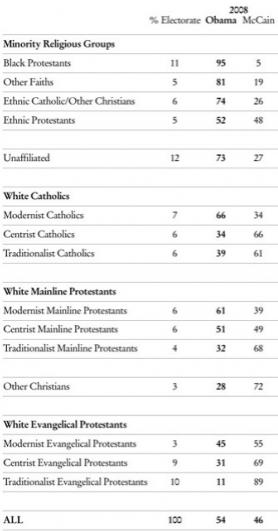
I can remember like yesterday talking to two black Christians in the parking lot outside my office after work about Obama, just before the 2008 elections. Both of them went to church, and both claimed to be evangelical Christians. One in particular loved the writing of Alistair Begg and read lots of Reformed theology. I asked them who they were voting for, and they said “we are voting for Obama”. I told them both about his votes on the Born-Alive Infant Protection Act in Illinois (he voted in favor of infanticide multiple times), his 1996 position in support of gay marriage, his support for cap and trade carbon taxes, his weak stance on national security, and more. I told them that if we ever hoped to repeal Roe v. Wade, that we could not elect this man President. I told him he would pick two pro-abortion Supreme Court judges, at least (and he already has picked two, and will get more in all likelihood). They told me I was wrong about everything and that Obama was pro-life, pro-marriage and really tough on Islamic terrorism.

I also spoke to a black Christian woman in my office. She loved to read books on Bible Study and theology so that she could teach in the church. She even knew some basic apologists, something that the two black guys did not know. She was a much more avid reader than the two guys, who seemed to be more focused on sports, movies and music. She also voted for Obama. I remember her saying she would vote for him, and I could not believe my ears. She was very strong on being pro-life and pro-marriage.

Should Christians have voted for Obama?

I was one of the 5 percent who did not vote for Obama in 2008, despite having dark skin just like my 3 co-workers who voted for him. Those conversations with those three people will stay with me till the day I die. I don’t think I have ever really understand how much people could suppress evidence in order to keep their beliefs before, until I spoke to those people. When I asked them if they were conservative Christians, they told me that they were. I went to a barbecue at one of their houses and saw bookshelves filled with Christian books. And yet they voted for a radical on abortion and a supporter of gay marriage, even when I told them about Obama’s voting record.

Skin color doesn’t matter to me when I am picking a candidate, but to some people it mattered more than facts.